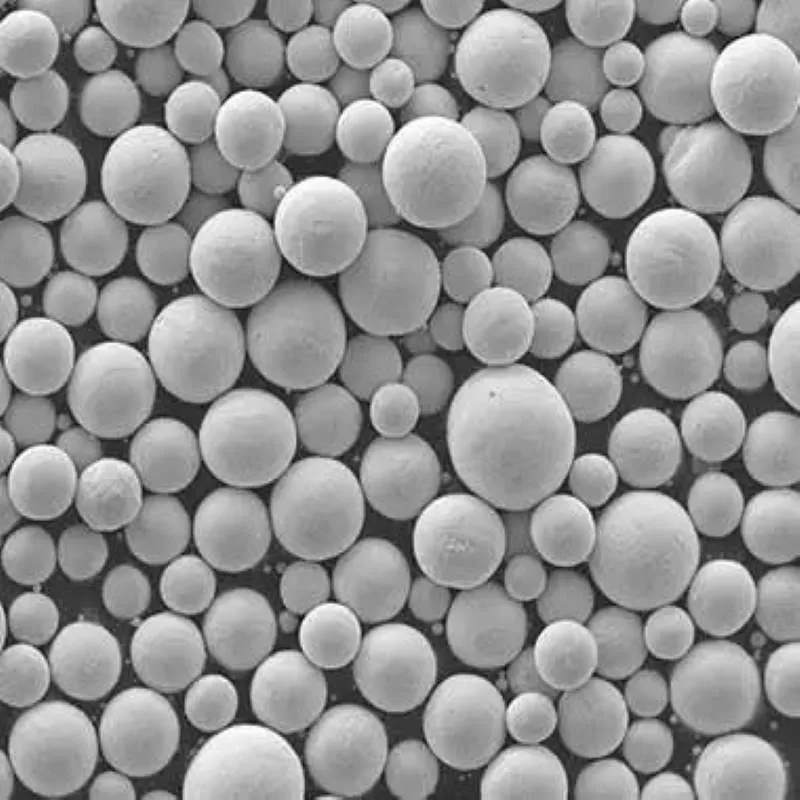
ASTM A570 Steel Spherical Powder, grade 36 Product Information
-:-
For detailed product information, please contact sales.
-:
ASTM A570 Steel Spherical Powder, grade 36 Synonyms
-:-
For detailed product information, please contact sales.
-:
-:-
For detailed product information, please contact sales.
-:
Spherical ASTM A570 Steel Powder, grade 36 characteristics
-:-
For detailed product information, please contact sales.
-:
Spherical ASTM A570 Steel Powder, grade 36 Particle Size
-:-
For detailed product information, please contact sales.
-:
-:-
-:-
0-15μm ,5-25μm, 15-45μm, 15-53μm,20-63um, 45-75μm, 45-105μm, 45-150μm ,75-150μm.
(Various granularities can be customized according to customer requirements)
-:-
For detailed product information, please contact sales.
-:
Spherical ASTM A570 Steel Powder, grade 36 Applicable processes
-:-
For detailed product information, please contact sales.
-:
Laser/electron beam additive manufacturing (SLM/EBM, 3D printing)
Direct laser deposition (DLD)
Used in thermal spray (TSA)
Powder hot isostatic pressing (HIP)
Metal injection molding (MIM)
Powder metallurgy (PM)
Laser cladding (LC), etc.
-:-
For detailed product information, please contact sales.
-:
Spherical ASTM A570 Steel Powder, grade 36 Chemical Composition
-:-
For detailed product information, please contact sales.
-:
-:-
For detailed product information, please contact sales.
-:
ASTM A570 Steel, grade 36 Product Information
-:-
For detailed product information, please contact sales.
-:
# **Technical Data Sheet: ASTM A570 Steel, Grade 36**
## **1. Product Overview**
ASTM A570 Grade 36 is a widely used hot-rolled carbon steel sheet and strip material that provides a balanced combination of strength, formability, and cost-effectiveness for structural applications. As one of the most commonly specified grades within the A570 family, Grade 36 offers a minimum yield strength of **36 ksi (250 MPa)** – matching the strength level of the popular ASTM A36 structural steel, but in sheet and strip form. This versatile material is particularly valued for its excellent fabricability, reliable mechanical properties, and broad availability, making it suitable for a diverse range of manufactured components, light structural members, and general fabrication projects where consistent performance and economic value are paramount.
## **2. International Standards & Specifications**
- **Primary Standard:** ASTM A570/A570M - *Standard Specification for Steel, Sheet and Strip, Carbon, Hot-Rolled, Structural Quality*
- **Dimensional Standards:**
- ASTM A568/A568M: *General Requirements for Steel, Sheet, Carbon, and High-Strength, Hot-Rolled and Cold-Rolled*
- ASTM A749/A749M: *General Requirements for Steel, Strip, Carbon and High-Strength, Hot-Rolled*
- **International Equivalents:**
- **EN Standard:** EN 10025-2 Grade **S275JR** (closest mechanical equivalent, 275 MPa yield)
- **JIS Standard:** JIS G3131 **SPHC** (Hot-rolled mild steel sheets and strips)
- **ISO Standard:** ISO 3573 Grade **CR2** (Commercial quality hot-rolled carbon steel)
- **GB/T Standard:** GB/T 912 **Q235B/Q235C** (Carbon structural steel hot-rolled sheets)
- **Canadian Standard:** CSA G40.21 **300W** (similar strength category, 300 MPa yield)
- **Australian Standard:** AS 1594 **HA300** (hot-rolled steel sheet)
- **German Standard:** DIN 17100 **St44-2** (similar structural quality)
- **Indian Standard:** IS 2062 Grade **E250** (structural steel plates and sheets)
## **3. Chemical Composition (Heat Analysis, % by Weight)**
| Element | Maximum (%) | Typical Range (%) | Metallurgical Function |
|---------|-------------|------------------|------------------------|
| Carbon (C) | 0.25 | 0.12 - 0.23 | Primary strengthening element, provides strength through interstitial solid solution |
| Manganese (Mn) | 0.90 | 0.45 - 0.75 | Solid solution strengthener, improves hardenability and deoxidizes |
| Phosphorus (P) | 0.04 | 0.008 - 0.025 | Impurity control, improves machinability at higher levels but reduces ductility |
| Sulfur (S) | 0.05 | 0.015 - 0.030 | Impurity control, improves machinability but can cause hot shortness |
| Silicon (Si)* | 0.40 | 0.15 - 0.30 | Deoxidizer, strengthens ferrite, improves cleanliness |
| Copper (Cu)** | 0.20 min (when specified) | 0.20 - 0.35 | Provides atmospheric corrosion resistance when specified |
*Note:*
- *Silicon content may be specified when killed or semi-killed steel is required for improved internal soundness
- **Copper is required only when specified for enhanced atmospheric corrosion resistance; when specified, minimum 0.20% Cu provides approximately 2× better corrosion resistance than plain carbon steel
**Key Chemical Characteristics:**
- **Carbon Equivalent (CE):** 0.20 - 0.32 (calculated per IIW formula: C + Mn/6)
- **Deoxidation Practice:** Typically rimmed, capped, semi-killed, or fully killed as specified
- **Quality Level:** Structural quality with guaranteed mechanical properties
- **Sulphur Content:** Standard levels for good weldability and formability
- **Phosphorus Content:** Controlled to prevent cold brittleness while maintaining strength
## **4. Mechanical Properties**
### **Minimum Required Properties (Per ASTM A570)**
| Property | Requirement | Test Standard | Notes |
|----------|-------------|---------------|-------|
| **Tensile Strength, min** | **53 ksi (365 MPa)** | ASTM A370 | Guaranteed minimum tensile strength |
| **Yield Strength (0.5% extension), min** | **36 ksi (250 MPa)** | ASTM A370 | Measured at 0.5% extension under load |
| **Elongation in 2 in. (50 mm), min** | **20%** (for thickness ≤ 0.229 in./5.8 mm) | ASTM A370 | Gauge length = 2 inches |
| | **22%** (for thickness > 0.229 in./5.8 mm) | ASTM A370 | Higher ductility in thicker sections |
### **Typical Achieved Properties**
| Property | Typical Range | Comments |
|----------|---------------|----------|
| **Tensile Strength** | 56 - 64 ksi (385 - 440 MPa) | Consistently exceeds minimum requirements |
| **Yield Strength** | 38 - 44 ksi (260 - 305 MPa) | Typically 5-10 ksi above minimum |
| **Yield-to-Tensile Ratio** | 0.65 - 0.72 | Excellent for forming operations |
| **Elongation (2")** | 24% - 30% | Superior ductility for fabrication |
| **Hardness** | 75 - 90 HRB | Rockwell B scale |
| **Modulus of Elasticity** | 29,000 ksi (200 GPa) | Standard for carbon steels |
| **Shear Strength** | ~22 ksi (150 MPa) | Approximately 0.6 × tensile strength |
| **Fatigue Strength** | ~24 ksi (165 MPa) | At 2×10⁶ cycles, R=0 |
### **Impact Properties (When Specified)**
- **Charpy V-Notch:** Not routinely tested for Grade 36 unless specified
- **When Required:** Typically tested at room temperature (70°F/21°C)
- **Minimum Energy:** 15-20 ft-lb (20-27 J) when specified
- **Test Temperature:** Can be specified for lower temperatures if required
- **Typical Values:** 30-50 ft-lb at room temperature
## **5. Physical Properties**
| Property | Value | Unit | Notes |
|----------|-------|------|-------|
| **Density** | 0.283 | lb/in³ (7.85 g/cm³) | At 20°C/68°F |
| **Modulus of Elasticity (E)** | 29,000 | ksi (200 GPa) | In tension, typical for carbon steels |
| **Shear Modulus (G)** | 11,200 | ksi (77 GPa) | - |
| **Poisson's Ratio (ν)** | 0.29 | - | Standard for steel |
| **Thermal Conductivity** | 50.2 | W/m·K | At 100°C |
| **Coefficient of Thermal Expansion (α)** | 6.5 × 10⁻⁶ | /°F (11.7 × 10⁻⁶/°C) | Linear expansion, 68-212°F range |
| **Specific Heat (cₚ)** | 0.46 | kJ/kg·K | At 20°C |
| **Electrical Resistivity (ρ)** | 0.17 | μΩ·m | At 20°C |
| **Magnetic Properties** | Ferromagnetic | - | Strongly magnetic, Curie temp ~770°C |
| **Melting Range** | 2,600-2,800 | °F (1,425-1,540°C) | Liquidus-solidus range |
## **6. Material Forms & Availability**
### **Standard Product Forms**
- **Sheet:** Thickness range: 0.059 - 0.229 inch (1.5 - 5.8 mm)
- **Strip:** Narrow width coils for continuous processing, typically 0.5-24 inches wide
- **Width Range:** Up to 72 inches (1829 mm) typically available
- **Lengths:** Coils or cut lengths as specified
- **Edges:** Mill edge (as-rolled), slit edge, or sheared edge options
- **Weights:** Coils typically 10-40 tons, cut lengths as required
### **Surface Conditions**
- **As-Hot-Rolled:** With characteristic blue-gray mill scale (most common)
- **Pickled & Oiled:** Scale removed by acid pickling, oiled for rust prevention
- **Blast Cleaned:** Abrasive cleaned to near-white metal (Sa 2.5)
- **Temper Passed:** Light cold reduction for improved flatness and surface
- **Bonderized:** Phosphate coated for paint adhesion
## **7. Processing Characteristics**
### **Hot-Rolled Condition**
- **As-Supplied:** Hot-rolled without subsequent cold reduction
- **Grain Structure:** Equiaxed ferrite with pearlite islands (typically 20-30% pearlite)
- **Grain Size:** ASTM 7-9 (fine to medium grain size)
- **Surface Scale:** Typical mill scale 0.001-0.003 inch thick (25-75 μm)
- **Flatness:** Commercial standards apply, typically 0.5% of width
- **Residual Stress:** Moderate, generally compressive at surfaces
### **Heat Treatment Capabilities**
- **Stress Relieving:** 1100-1200°F (593-649°C) for 1 hour per inch of thickness
- **Normalizing:** 1600-1700°F (871-927°C) followed by air cooling
- **Annealing:** Full annealing at 1550-1650°F (843-899°C), slow furnace cool
- **Process Annealing:** 1200-1300°F (649-704°C) for cold-worked material
- **As-Rolled Properties:** No additional heat treatment typically required
## **8. Key Product Characteristics**
1. **Balanced Strength & Ductility:** Optimal combination for structural applications
2. **Excellent Formability:** High elongation permits complex forming operations
3. **Superior Weldability:** Low carbon equivalent minimizes preheat requirements
4. **Good Machinability:** Free-machining characteristics with standard tooling
5. **Cost-Effective:** Economical alternative to higher strength grades
6. **Predictable Performance:** Consistent mechanical properties across production lots
7. **Wide Fabrication Window:** Tolerant of various manufacturing processes
8. **Broad Availability:** Readily stocked by steel service centers worldwide
9. **Compatible Coatings:** Excellent substrate for various protective coatings
## **9. Primary Applications**
### **Construction & Building Industry**
- **Metal Building Systems:** Purlins, girts, eave struts, bridging
- **Structural Framing:** Light structural members, studs, joists, rafters
- **Building Components:** Door frames, window frames, trim, flashing
- **Roofing & Siding:** Substrates for architectural panels, standing seam roofs
- **Support Systems:** Brackets, hangers, mounting plates, anchor plates
- **Temporary Structures:** Shoring, scaffolding, concrete formwork
- **Bridge Components:** Approach plates, sidewalk supports, guardrail posts
### **Transportation Equipment**
- **Commercial Vehicles:** Truck body panels, trailer side walls, flooring
- **Automotive Components:** Chassis brackets, suspension components, body reinforcements
- **Material Handling:** Conveyor frames, cart components, pallet rack uprights
- **Shipping & Containers:** Container side walls, doors, structural members
- **Railroad Equipment:** Car underframe components, interior structures
- **Marine Applications:** Small boat components, dock equipment, marine hardware
### **Industrial Equipment & Machinery**
- **Equipment Housings:** Machine guards, electrical enclosures, control cabinets
- **Machine Components:** Bases, frames, supports, mounting plates
- **Storage Systems:** Industrial shelving, rack components, bin supports
- **Work Stations:** Workbenches, assembly tables, industrial fixtures
- **Ventilation Systems:** HVAC ductwork, exhaust hoods, fan housings
- **Process Equipment:** Hopper liners, chutes, conveyor components
### **Agricultural Equipment**
- **Implement Components:** Tractor attachments, cultivator frames, plow components
- **Storage Equipment:** Grain bin components, silo reinforcements, hopper bottoms
- **Animal Housing:** Stall components, feeding troughs, fencing systems
- **Equipment Protection:** Brush guards, skid plates, implement covers
- **Irrigation Systems:** Pipe supports, pivot components, valve boxes
### **Consumer & Commercial Products**
- **Furniture Manufacturing:** Office furniture frames, shelving units, display stands
- **Appliance Industry:** Washer/dryer bases, refrigerator frames, oven housings
- **Display Fixtures:** Store fixtures, merchandise displays, exhibition stands
- **Recreational Equipment:** Playground structures, sports equipment, bleacher seats
- **Hardware Products:** Brackets, supports, fastening components, tools
- **Signage:** Sign frames, support posts, mounting hardware
## **10. Fabrication Guidelines**
### **Welding Processes**
| Process | Suitability | Electrode/Filler | Shielding Gas | Notes |
|---------|-------------|-----------------|---------------|-------|
| **SMAW (Stick)** | Excellent | E6010, E6011, E6013, E7018 | - | Most versatile, all-position |
| **GMAW (MIG)** | Excellent | ER70S-3, ER70S-6 | 75% Ar/25% CO₂ | High productivity, clean welds |
| **FCAW (Flux-Cored)** | Excellent | E71T-1, E71T-11 | CO₂ or self-shielded | High deposition, outdoor use |
| **GTAW (TIG)** | Excellent | ER70S-2 | 100% Argon | Highest quality, thin sections |
| **Resistance Welding** | Excellent | - | - | Spot, seam, projection welding |
| **SAW (Submerged Arc)** | Good | EM12K, F7A2-EM12K | Flux | High deposition, flat position |
**Welding Parameters:**
- **Preheat:** Generally not required for thicknesses < 0.75 inch (19 mm)
- **Interpass Temperature:** Maximum 400°F (204°C)
- **Heat Input:** 20-40 kJ/inch recommended
- **Post-Weld Treatment:** Usually not required, stress relieve if needed at 1100°F
- **Weld Preparation:** Standard bevels (30-37.5°), root face 1/16-1/8 inch
### **Cutting Operations**
| Method | Thickness Range | Cutting Speed | Edge Quality | Notes |
|--------|----------------|---------------|--------------|-------|
| **Shearing** | Up to 0.25 in (6.4 mm) | - | Clean, square | Minimum clearance 5-10% of thickness |
| **Plasma Cutting** | All thicknesses | 20-200 ipm | Good, slight taper | Minimal HAZ, CNC compatible |
| **Laser Cutting** | Up to 0.50 in (12.7 mm) | 50-400 ipm | Excellent, precise | Smooth edges, minimal distortion |
| **Oxy-Fuel Cutting** | > 0.25 in (6.4 mm) | 10-20 ipm | Good, scale on edges | Economical for thicker sections |
| **Waterjet Cutting** | All thicknesses | 2-20 ipm | Excellent, no HAZ | No thermal distortion, precise |
| **Punching** | Up to 0.1875 in (4.8 mm) | - | Clean holes | Minimum hole diameter = thickness |
### **Forming Operations**
| Operation | Minimum Radius | Tool Clearance | Notes |
|-----------|----------------|----------------|-------|
| **90° Bending** | 1× thickness (with grain) | 8-10% of thickness | Springback 1-2° |
| | 1.5× thickness (across grain) | | |
| **Roll Forming** | Varies by profile | Progressive tooling | Excellent for continuous sections |
| **Stamping** | 2× thickness (punch radius) | 5-7% per side | Lubrication recommended |
| **Deep Drawing** | 4-6× thickness | 7-10% per side | Intermediate annealing may be needed |
| **Spinning** | As-tooled | Follow contour | Good for axisymmetric parts |
| **Hemming** | 0.5× thickness | Tight | For edge stiffening |
**Forming Guidelines:**
- **Bend Allowance:** BA = [π × (IR + K × T) × A]/180 where K=0.33 for mild steel
- **Grain Direction:** Form across grain for tighter bends
- **Springback Compensation:** Overbend 1-2° for 90° bends
- **Tooling Materials:** D2, A2, or carbide for production runs
### **Machining Operations**
| Operation | Speed (SFM) | Feed (ipr/ipt) | Depth of Cut | Tool Material |
|-----------|-------------|----------------|--------------|---------------|
| **Turning** | 300-500 | 0.008-0.015 | 0.100-0.250 | HSS or carbide |
| **Face Milling** | 250-400 | 0.004-0.008 | 0.100-0.200 | Carbide inserts |
| **End Milling** | 200-350 | 0.002-0.005 | 0.050-0.150 | HSS or carbide |
| **Drilling** | 60-100 | 0.005-0.010 | Full | HSS drills |
| **Tapping** | 30-50 | - | - | HSS taps |
| **Sawing** | 150-250 FPM | - | - | 4-6 TPI bi-metal |
**Machining Tips:**
- Use positive rake angles (5-10°) for better chip control
- Water-soluble coolants for heat dissipation and chip removal
- Rigid setups to minimize vibration and chatter
- Sharp tools to prevent work hardening
- Consider climb milling for better surface finish
## **11. Surface Treatment & Finishing**
### **Scale Removal Methods**
| Method | Process Details | Surface Profile | Typical Ra |
|--------|----------------|-----------------|------------|
| **Acid Pickling** | HCl or H₂SO₄ bath, inhibitors | Smooth, slightly etched | 40-80 μin |
| **Abrasive Blasting** | Steel grit/shot, 80-100 psi | Uniform anchor pattern | 100-150 μin |
| **Mechanical Brushing** | Rotary brushes, varying pressure | Directional texture | 60-100 μin |
| **Grinding** | Abrasive belts/disks | Controlled removal | Varies |
| **Chemical Descaling** | Inhibited acids, ambient temp | Uniform | 30-60 μin |
### **Coating Systems**
| Coating Type | Thickness | Application | Cure Method | Typical Uses |
|--------------|-----------|-------------|-------------|--------------|
| **Liquid Paint** | 1-4 mils | Spray, dip, roll | Air dry or bake | General protection |
| **Powder Coating** | 2-8 mils | Electrostatic spray | Oven cure (350-400°F) | Durable finishes |
| **Hot-Dip Galvanizing** | 2-4 mils | Molten zinc immersion | Air cool | Outdoor, corrosion |
| **Electro-galvanizing** | 0.2-1.0 mils | Electroplating | - | Automotive, appliances |
| **Zinc-Rich Primer** | 3-6 mils | Spray, brush | Air dry | Industrial, marine |
| **Epoxy Coatings** | 3-10 mils | Spray, roller | Chemical cure | Chemical resistance |
### **Corrosion Protection Strategies**
| Environment | Protection System | Expected Life | Maintenance |
|-------------|------------------|---------------|-------------|
| **Indoor, dry** | Paint or no coating | Indefinite | None |
| **Indoor, humid** | Paint system (primer + topcoat) | 10-20 years | Periodic inspection |
| **Outdoor, rural** | Galvanizing or 3-coat paint | 15-25 years | 5-10 year repaint |
| **Outdoor, industrial** | Heavy-duty coating system | 10-15 years | Regular inspection |
| **Marine coastal** | Hot-dip galvanize + paint | 20-30 years | Regular maintenance |
| **Chemical exposure** | Specialized coatings (epoxy, vinyl) | Varies | Based on exposure |
## **12. Quality Assurance & Testing**
### **Standard Testing Requirements**
- **Chemical Analysis:** Spectrographic analysis from each heat of steel
- **Tensile Testing:** One test per heat or as specified in purchase order
- **Bend Testing:** When required by supplementary requirements
- **Visual Inspection:** For surface defects, dimensions, and straightness
- **Dimensional Verification:** Per ASTM A568/A568M requirements
### **Supplementary Requirements (When Specified)**
| Designation | Requirement | Purpose | Test Method |
|-------------|-------------|---------|-------------|
| **S1** | Bend test (180° flat bend) | Formability verification | ASTM E290 |
| **S2** | Copper-bearing steel | Enhanced corrosion resistance | Chemical analysis |
| **S3** | Special killed steel | Improved internal soundness | Chemical analysis (Si content) |
| **S4** | Chemistry only | No mechanical testing required | Chemical analysis only |
| **S5** | Cold bending test | Specific bending requirements | Customer specification |
| **S6** | Ultrasonic testing | Internal quality assessment | ASTM A578 |
| **S7** | Charpy impact testing | Toughness evaluation | ASTM A370 |
### **Certification & Documentation**
- **Mill Test Reports:** Certified test results with heat number
- **Heat Numbers:** Full traceability from melt to final product
- **Material Certificates:** Compliance statements to ASTM A570
- **Third-Party Inspection:** Available when specified (ABS, DNV, etc.)
- **Shipping Documents:** Include heat numbers, dimensions, weight
### **Non-Destructive Testing Options**
- **Visual Inspection:** Surface defects, dimensions
- **Dye Penetrant:** Surface-breaking discontinuities
- **Magnetic Particle:** Surface and near-surface defects
- **Ultrasonic Testing:** Internal flaws, thickness verification
- **Eddy Current:** Surface cracks, material properties
## **13. Comparison with Similar Steels**
| Characteristic | A570 Grade 36 | ASTM A36 Plate | A1011 SS Grade 36 | EN 10025-2 S275JR |
|----------------|---------------|----------------|-------------------|-------------------|
| **Yield Strength** | 36 ksi (250 MPa) | 36 ksi (250 MPa) | 36 ksi (250 MPa) | 38 ksi (265 MPa) min |
| **Tensile Strength** | 53 ksi (365 MPa) min | 58 ksi (400 MPa) min | 49 ksi (340 MPa) min | 43-56 ksi (300-390 MPa) |
| **Product Form** | Sheet & Strip | Plate, Shapes, Bars | Sheet & Strip | Plates, sections |
| **Cost Index** | 1.0 (Baseline) | 1.1 - 1.3 | 0.9 - 1.0 | 1.2 - 1.5 |
| **Formability** | Excellent | Good | Very Good | Good |
| **Weldability** | Excellent | Excellent | Excellent | Excellent |
| **Availability** | Excellent | Excellent | Very Good | Good (Europe) |
| **Typical Applications** | Fabricated parts, light structures | General structures | Automotive, appliances | European structures |
## **14. Design Considerations**
### **Structural Design Guidelines**
- **Allowable Stress Design:**
- Tension: 0.60 × Fy = 21.6 ksi (149 MPa)
- Shear: 0.40 × Fy = 14.4 ksi (99 MPa)
- Bearing: 0.90 × Fy = 32.4 ksi (223 MPa)
- **Load and Resistance Factor Design (LRFD):**
- φ = 0.90 for tension, flexure
- φ = 0.75 for shear
- **Deflection Limits:**
- L/240 for floors under live load
- L/180 for roofs under live load
- L/360 for plaster ceilings
- **Buckling Considerations:**
- Slenderness ratio limits per AISI S100
- Local buckling for thin sections
### **Connection Design**
- **Bolted Connections:**
- Bolt grades: A325, A490 compatible
- Edge distances: 1.5 × bolt diameter minimum
- Spacing: 3 × bolt diameter minimum
- **Welded Connections:**
- Fillet welds: Minimum size = material thickness (max 1/4 inch)
- Complete joint penetration welds for full strength
- **Adhesive Bonding:**
- Surface preparation critical
- Test adhesive compatibility
### **Fatigue Design**
- **Category A:** Base metal, rolled surfaces (24 ksi fatigue strength)
- **Category B:** Bolted connections, no slip (16 ksi)
- **Category C:** Fillet welds (10 ksi)
- **Category E:** Intermittent welds, attachments (4 ksi)
- **Design Life:** 2×10⁶ cycles typical
## **15. Economic Considerations**
### **Cost Factors Analysis**
| Cost Component | Relative Cost | Factors Affecting Cost |
|----------------|---------------|------------------------|
| **Raw Material** | Low | Volume, mill extras, market conditions |
| **Processing** | Low to Moderate | Cutting, forming complexity |
| **Finishing** | Variable | Coating type, surface preparation |
| **Tooling** | Low | Standard tooling typically adequate |
| **Labor** | Moderate | Depends on fabrication complexity |
| **Quality Control** | Low | Standard inspection usually sufficient |
### **Value Engineering Opportunities**
1. **Material Optimization:** Use thinner gauges where possible
2. **Fabrication Efficiency:** Design for standard processes
3. **Coating Selection:** Match protection to actual environment
4. **Standardization:** Use common sizes and shapes
5. **Life Cycle Costing:** Consider total cost of ownership
### **Market Pricing Factors**
- **Volume Discounts:** Significant for large orders
- **Mill Extras:** Charges for special processing
- **Transportation:** Distance from mill/service center
- **Market Conditions:** Global steel price fluctuations
- **Availability:** Lead times for special sizes/quantities
## **16. Industry Codes & Standards**
### **Design Standards**
- **AISI S100:** North American Specification for the Design of Cold-Formed Steel Structural Members
- **AWS D1.1/D1.3:** Structural Welding Code / Sheet Steel Supplement
- **ASCE 7:** Minimum Design Loads for Buildings and Other Structures
- **IBC:** International Building Code (Chapters 22, 23)
- **AISC 360:** Specification for Structural Steel Buildings
- **NFPA 5000:** Building Construction and Safety Code
### **Material & Testing Standards**
- **ASTM A370:** Standard Test Methods and Definitions for Mechanical Testing of Steel Products
- **ASTM E8/E8M:** Standard Test Methods for Tension Testing of Metallic Materials
- **ASTM A751:** Standard Test Methods, Practices, and Terminology for Chemical Analysis of Steel Products
- **ASTM A568/A568M:** Standard Specification for Steel, Sheet, Carbon, and High-Strength, Hot-Rolled and Cold-Rolled
### **Industry-Specific Standards**
- **MBMA:** Metal Building Systems Manual
- **AISI:** Cold-Formed Steel Design Manual
- **SSPC:** Steel Structures Painting Council standards
- **NACE:** Corrosion protection standards
## **17. Limitations & Special Considerations**
### **Application Limitations**
1. **Not Recommended For:**
- Primary structural members in high-rise buildings
- Pressure vessels or boiler applications (use A516 instead)
- Continuous service above 800°F (427°C)
- Cryogenic applications without impact testing
- Highly corrosive environments without adequate protection
- Dynamic loading applications without fatigue analysis
2. **Thickness Limitations:**
- Maximum practical thickness: 0.229 inch (5.8 mm)
- Thinner gauges (<0.036 inch) may have different properties
- Properties may vary through thickness in heavier gauges
3. **Environmental Limitations:**
- Poor corrosion resistance in unprotected conditions
- Not suitable for marine immersion service
- Limited chemical resistance without coatings
- Galvanic corrosion when coupled with dissimilar metals
### **Fabrication Limitations**
- **Forming Limits:** Maximum draw depth approximately 50% of blank diameter
- **Welding Restrictions:** High heat input may affect properties in HAZ
- **Machining:** Work hardening may occur with dull tools
- **Heat Treatment:** Properties may change if heated above 1000°F
### **Safety Considerations**
- **Sharp Edges:** Burrs and sheared edges can be sharp
- **Welding Fumes:** Provide adequate ventilation
- **Heavy Lifting:** Use proper equipment for handling
- **Fire Safety:** Steel conducts heat rapidly
- **Eye Protection:** Required for cutting and grinding
## **18. Environmental & Sustainability**
### **Environmental Profile**
- **Recyclability:** 100% recyclable without degradation of properties
- **Recycled Content:** Typically 25-35% post-consumer recycled content
- **Energy Content:** ~20 MJ/kg (production energy)
- **CO₂ Emissions:** ~1.8-2.2 tons CO₂ per ton of steel produced
- **Water Usage:** ~2-3 m³ per ton of steel
- **Waste Generation:** Minimal, most scrap is recycled
### **Sustainable Design Considerations**
- **Life Cycle Assessment:** Favorable for long-life applications
- **Resource Efficiency:** High strength-to-weight ratio reduces material use
- **Durability:** Long service life with proper protection
- **Maintainability:** Easy to repair and maintain
- **End-of-Life:** Fully recyclable, high scrap value
- **LEED Contributions:** Possible credits in Materials & Resources, Regional Materials
### **Green Building Applications**
- **Energy Efficiency:** Can be used in high-performance building envelopes
- **Daylighting:** Structural support for glazing systems
- **Renewable Energy:** Supports for solar panels, wind turbines
- **Water Conservation:** Structural components in water management systems
- **Indoor Air Quality:** Can be used in low-VOC coating systems
## **19. Project Specification Guidelines**
### **Essential Specification Elements**
```plaintext
MATERIAL SPECIFICATION
1. Standard: ASTM A570/A570M
2. Grade: 36
3. Product Form: [Sheet/Strip/Coil/Cut Length]
4. Dimensions:
- Thickness: [Specify with tolerance]
- Width: [Specify with tolerance]
- Length: [For cut lengths]
5. Condition:
- Surface: [As-rolled/Pickled & Oiled/Blast Cleaned]
- Edges: [Mill Edge/Slit Edge/Sheared Edge]
6. Supplementary Requirements: [S1, S2, S3, etc. as needed]
7. Certification: Mill test reports required [Yes/No]
8. Marking: Heat numbers, grade designation
9. Packaging: [Standard/Protected/Special]
```
### **Sample Specification Language**
"All structural steel sheet shall conform to ASTM A570, Grade 36. Material shall have minimum yield strength of 36 ksi and minimum tensile strength of 53 ksi when tested in accordance with ASTM A370. Sheet shall be supplied pickled and oiled, with slit edges. Mill test reports shall be provided showing chemical analysis and tensile test results for each heat of steel. Material shall be marked with heat number and grade designation."
### **Quality Assurance Requirements**
1. **Inspection:** Visual inspection upon receipt
2. **Testing:** Random testing of mechanical properties if required
3. **Documentation:** Complete mill certifications
4. **Non-conformance:** Procedures for rejection and replacement
5. **Traceability:** Maintain heat number tracking through fabrication
## **20. Future Developments & Market Trends**
### **Technical Developments**
- **Advanced Rolling Technology:** Improved surface quality and dimensional control
- **Alloy Optimization:** Enhanced properties through microalloying
- **Surface Engineering:** Improved coatings for corrosion protection
- **Digital Quality Control:** AI-based defect detection systems
- **Sustainable Production:** Reduced carbon footprint manufacturing
### **Market Trends**
- **Increased Demand:** Growth in prefabricated construction
- **Global Competition:** Pressure from international producers
- **Customization:** More tailored products for specific applications
- **Digital Integration:** Smart manufacturing and supply chain optimization
- **Sustainability Focus:** Greater emphasis on environmental performance
### **Industry Challenges**
- **Raw Material Costs:** Volatility in iron ore and scrap prices
- **Environmental Regulations:** Stricter emissions standards
- **Energy Costs:** Increasing energy prices affecting production costs
- **Trade Policies:** Tariffs and trade agreements impacting global markets
- **Technological Disruption:** Competition from alternative materials
## **21. Disclaimer & Important Notes**
### **User Responsibilities**
1. **Material Selection:** Verify suitability for intended application through engineering analysis
2. **Design Verification:** Ensure design accounts for actual material properties and service conditions
3. **Fabrication Procedures:** Follow recommended practices and qualified procedures
4. **Quality Control:** Implement appropriate inspection and testing protocols
5. **Code Compliance:** Adhere to all applicable building codes, standards, and regulations
6. **Safety:** Follow all safety procedures during handling, fabrication, and installation
### **Manufacturer's Limitations**
- **Property Guarantees:** Limited to test results as reported per ASTM A570 requirements
- **Performance Claims:** Based on standard testing conditions and typical applications
- **Fitness for Purpose:** User must verify suitability for specific applications and conditions
- **Corrosion Resistance:** No warranty against corrosion without appropriate protective systems
- **Dimensional Tolerances:** As specified in ASTM A568/A568M
### **Legal & Regulatory Considerations**
- **Building Codes:** Must comply with local building code requirements
- **Professional Engineering:** Critical applications require engineering design and approval
- **Liability:** Proper documentation of material properties and fabrication procedures
- **Warranties:** Specific warranties may be available for certain applications
- **Insurance:** May affect insurance requirements and premiums
### **Technical Support Resources**
- **Steel Producers:** Provide technical data and application assistance
- **Industry Associations:** AISI, MBMA, AWS offer technical resources
- **Testing Laboratories:** Independent verification of properties
- **Engineering Consultants:** Specialized expertise for complex applications
- **Fabrication Experts:** Experience-based guidance on best practices
---
*ASTM A570 Grade 36 represents a versatile, reliable, and cost-effective solution for a wide range of structural and fabricated applications. Its balanced properties, excellent fabricability, and broad availability make it a preferred choice for manufacturers, fabricators, and builders seeking consistent performance and economic value. Proper specification, fabrication, and protection ensure optimal performance and service life in diverse applications.*
-:-
For detailed product information, please contact sales.
-:
ASTM A570 Steel, grade 36 Specification
Dimensions
Size:
Diameter 20-1000 mm Length <5936 mm
Size:We can customized as required
Standard:
Per your request or drawing
We can customized as required
Properties(Theoretical)
Chemical Composition
-:-
For detailed product information, please contact sales.
-:
ASTM A570 Steel, grade 36 Properties
-:-
For detailed product information, please contact sales.
-:
Spherical ASTM A570 Steel Powder, grade 36 Particle Size Description
-:-
For detailed product information, please contact sales.
-:
Applications of Spherical ASTM A570 Steel Powder, grade 36
-:-
For detailed product information, please contact sales.
-:
-:-
For detailed product information, please contact sales.
-:
Applications of ASTM A570 Steel Spherical Powder, grade 36
-:-
For detailed product information, please contact sales.
-:
Chemical Identifiers ASTM A570 Steel Spherical Powder, grade 36
-:-
For detailed product information, please contact sales.
-:
Packing of ASTM A570 Steel Spherical Powder, grade 36
-:-
For detailed product information, please contact sales.
-:
Standard Packing:
-:-
For detailed product information, please contact sales.
-:
Typical bulk packaging includes palletized plastic 5 gallon/25 kg. pails, fiber and Steel Spherical Powder drums to 1 ton super sacks in full container (FCL) or truck load (T/L) quantities. Research and sample quantities and hygroscopic, oxidizing or other air sensitive materials may be packaged under argon or vacuum. Solutions are packaged in polypropylene, plastic or glass jars up to palletized 2407 gallon liquid totes Special package is available on request. E FORUs’ is carefully handled to minimize damage during storage and transportation and to preserve the quality of our products in their original condition