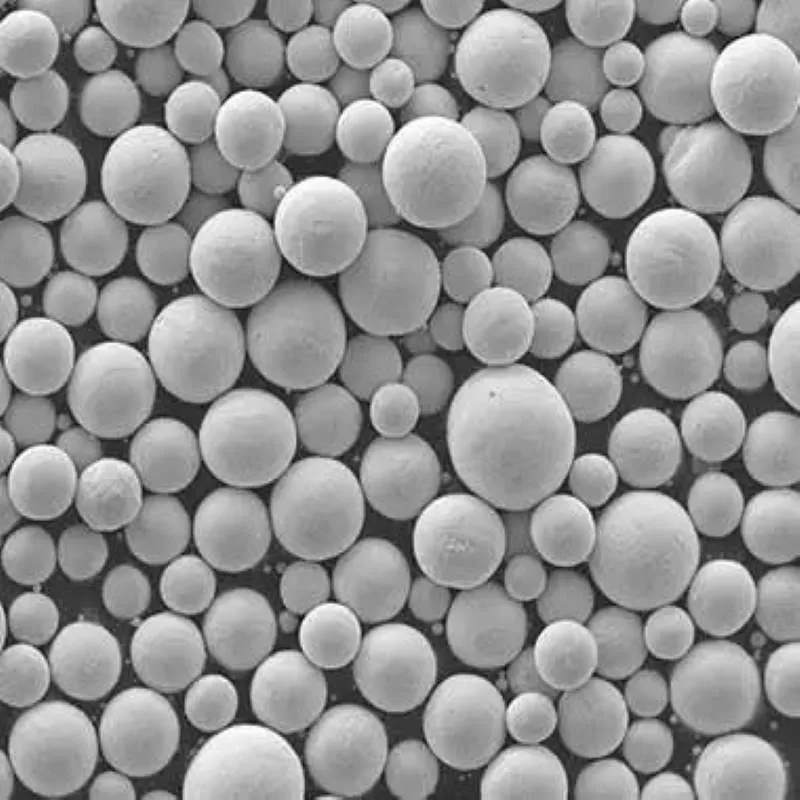
Spherical ASTM A570 Steel Powder, grade 50
Product Code : SP-CSTI-554-CU
We provide Spherical ASTM A570 Steel Powder, grade 50,Spherical ASTM A570 Steel Powder, grade 50 is suitable for laser/electron beam augmentation, hot isostatic pressing, laser cladding, hot/cold spraying, and so on. The particles can be irregular and spherical. The particle distribution can reach the nanometer scale.,Spherical Particle Size,0-15μm,,15-45um,15-53μm, 20-63um,45-105um,45-150μm , 50-150um,75-150μm,or customized,Product purity and oxygen content can be customized according to requirements.
ASTM A570 Steel Spherical Powder, grade 50 Product Information
-:-
For detailed product information, please contact sales.
-:
ASTM A570 Steel Spherical Powder, grade 50 Synonyms
-:-
For detailed product information, please contact sales.
-:
-:-
For detailed product information, please contact sales.
-:
Spherical ASTM A570 Steel Powder, grade 50 characteristics
-:-
For detailed product information, please contact sales.
-:
Spherical ASTM A570 Steel Powder, grade 50 Particle Size
-:-
For detailed product information, please contact sales.
-:
-:-
-:-
0-15μm ,5-25μm, 15-45μm, 15-53μm,20-63um, 45-75μm, 45-105μm, 45-150μm ,75-150μm.
(Various granularities can be customized according to customer requirements)
-:-
For detailed product information, please contact sales.
-:
Spherical ASTM A570 Steel Powder, grade 50 Applicable processes
-:-
For detailed product information, please contact sales.
-:
Laser/electron beam additive manufacturing (SLM/EBM, 3D printing)
Direct laser deposition (DLD)
Used in thermal spray (TSA)
Powder hot isostatic pressing (HIP)
Metal injection molding (MIM)
Powder metallurgy (PM)
Laser cladding (LC), etc.
-:-
For detailed product information, please contact sales.
-:
Spherical ASTM A570 Steel Powder, grade 50 Chemical Composition
-:-
For detailed product information, please contact sales.
-:
-:-
For detailed product information, please contact sales.
-:
ASTM A570 Steel, grade 50 Product Information
-:-
For detailed product information, please contact sales.
-:
# **Technical Data Sheet: ASTM A570 Steel, Grade 50**
## **1. Product Overview**
ASTM A570 Grade 50 is a high-strength hot-rolled carbon steel sheet and strip material designed for structural applications requiring superior load-bearing capacity. Representing one of the highest strength grades within the A570 specification, Grade 50 offers a minimum yield strength of **50 ksi (345 MPa)**, making it suitable for demanding structural components and heavy-duty applications. This material provides an optimal balance between enhanced strength and practical fabricability, serving as a cost-effective alternative to high-strength low-alloy (HSLA) steels for applications where maximum strength within the carbon steel range is required. Its reliable mechanical properties and good fabrication characteristics make it ideal for structural members, industrial equipment, and manufactured products subjected to significant loads.
## **2. International Standards & Specifications**
- **Primary Standard:** ASTM A570/A570M - *Standard Specification for Steel, Sheet and Strip, Carbon, Hot-Rolled, Structural Quality*
- **Dimensional Standards:**
- ASTM A568/A568M: *General Requirements for Steel, Sheet, Carbon, and High-Strength, Hot-Rolled and Cold-Rolled*
- ASTM A749/A749M: *General Requirements for Steel, Strip, Carbon and High-Strength, Hot-Rolled*
- **International Equivalents:**
- **EN Standard:** EN 10025-2 Grade **S355JR/S355J2** (closest mechanical equivalent, 355 MPa yield)
- **JIS Standard:** JIS G3131 **SPHC/SPHD** (Hot-rolled steel sheets for general/forming applications)
- **ISO Standard:** ISO 3573 Grade **CR3/CR4** (Commercial quality hot-rolled carbon steel)
- **GB/T Standard:** GB/T 912 **Q345B/Q345C** (Low-alloy high-strength structural steel sheets)
- **Canadian Standard:** CSA G40.21 **350W/400W** (similar strength categories)
- **Australian Standard:** AS 1594 **HA450** (hot-rolled steel sheet)
- **German Standard:** DIN 17100 **St52-3** (structural quality steel)
- **Indian Standard:** IS 2062 Grade **E350** (structural steel plates and sheets)
## **3. Chemical Composition (Heat Analysis, % by Weight)**
| Element | Maximum (%) | Typical Range (%) | Metallurgical Function |
|---------|-------------|------------------|------------------------|
| Carbon (C) | 0.30 | 0.20 - 0.28 | Primary strengthening element, increases strength through solid solution and pearlite formation |
| Manganese (Mn) | 0.90 | 0.65 - 0.85 | Solid solution strengthening, improves hardenability, grain refinement |
| Phosphorus (P) | 0.04 | 0.010 - 0.025 | Impurity control, contributes to strength but reduces ductility at higher levels |
| Sulfur (S) | 0.05 | 0.015 - 0.030 | Impurity control, affects hot workability and machinability |
| Silicon (Si)* | 0.40 | 0.15 - 0.30 | Deoxidizer, strengthens ferrite, improves internal cleanliness |
| Copper (Cu)** | 0.20 min (when specified) | 0.20 - 0.35 | Atmospheric corrosion resistance enhancement |
*Note:*
- *Silicon content typically specified when killed or semi-killed steel is required for improved internal soundness and consistent mechanical properties
- **Copper required only when specified for enhanced atmospheric corrosion resistance; provides approximately 2-2.5× better corrosion resistance than plain carbon steel
**Key Chemical Characteristics:**
- **Carbon Equivalent (CE):** 0.30 - 0.42 (calculated per IIW formula: C + Mn/6)
- **Deoxidation Practice:** Typically killed or semi-killed for improved internal quality
- **Quality Level:** Structural quality with guaranteed mechanical properties
- **Strength Mechanism:** Combination of solid solution strengthening and increased pearlite content (typically 35-45% pearlite)
- **Weldability Index:** Moderate (CE < 0.50), requires proper welding procedures and may need preheat
## **4. Mechanical Properties**
### **Minimum Required Properties (Per ASTM A570)**
| Property | Requirement | Test Standard | Notes |
|----------|-------------|---------------|-------|
| **Tensile Strength, min** | **65 ksi (450 MPa)** | ASTM A370 | Guaranteed minimum tensile strength |
| **Yield Strength (0.5% extension), min** | **50 ksi (345 MPa)** | ASTM A370 | Measured at 0.5% extension under load |
| **Elongation in 2 in. (50 mm), min** | **15%** (for thickness ≤ 0.229 in./5.8 mm) | ASTM A370 | Gauge length = 2 inches |
| | **17%** (for thickness > 0.229 in./5.8 mm) | ASTM A370 | Higher ductility in thicker sections |
### **Typical Achieved Properties**
| Property | Typical Range | Comments |
|----------|---------------|----------|
| **Tensile Strength** | 68 - 75 ksi (470 - 515 MPa) | Consistently exceeds minimum requirements by 3-10 ksi |
| **Yield Strength** | 52 - 58 ksi (360 - 400 MPa) | Typically 2-8 ksi above minimum specification |
| **Yield-to-Tensile Ratio** | 0.72 - 0.80 | Higher ratio indicates less capacity for plastic deformation |
| **Elongation (2")** | 17% - 24% | Adequate ductility for most forming operations |
| **Hardness** | 90 - 105 HRB | Rockwell B scale, indicates moderate to high hardness |
| **Modulus of Elasticity** | 29,000 ksi (200 GPa) | Standard for carbon steels |
| **Shear Strength** | ~30 ksi (205 MPa) | Approximately 0.6 × tensile strength |
| **Fatigue Strength** | ~30 ksi (205 MPa) | At 2×10⁶ cycles, R=0, suitable for moderate cyclic loading |
### **Impact Properties (When Specified)**
- **Charpy V-Notch:** Not routinely tested unless specified
- **When Required:** Typically tested at room temperature (70°F/21°C)
- **Minimum Energy:** 15 ft-lb (20 J) when specified
- **Typical Values:** 15-30 ft-lb at room temperature
- **Ductile-to-Brittle Transition:** Generally below 50°F (10°C) for standard material
- **Lateral Expansion:** Typically 0.010-0.025 inches when impact tested
## **5. Physical Properties**
| Property | Value | Unit | Notes |
|----------|-------|------|-------|
| **Density** | 0.283 | lb/in³ (7.85 g/cm³) | At 20°C/68°F |
| **Modulus of Elasticity (E)** | 29,000 | ksi (200 GPa) | In tension |
| **Shear Modulus (G)** | 11,200 | ksi (77 GPa) | Standard value for steel |
| **Poisson's Ratio (ν)** | 0.29 | - | Standard for steel |
| **Thermal Conductivity** | 49.2 | W/m·K | At 100°C, lower than lower carbon grades |
| **Coefficient of Thermal Expansion (α)** | 6.5 × 10⁻⁶ | /°F (11.7 × 10⁻⁶/°C) | Linear expansion, 68-212°F range |
| **Specific Heat (cₚ)** | 0.46 | kJ/kg·K | At 20°C |
| **Electrical Resistivity (ρ)** | 0.19 | μΩ·m | At 20°C, higher than lower carbon steels |
| **Magnetic Properties** | Ferromagnetic | - | Strongly magnetic |
| **Melting Range** | 2,600-2,800 | °F (1,425-1,540°C) | Liquidus-solidus range |
## **6. Material Forms & Availability**
### **Standard Product Forms**
- **Sheet:** Thickness range: 0.059 - 0.229 inch (1.5 - 5.8 mm)
- **Strip:** Narrow width coils for continuous processing, typically 0.5-24 inches wide
- **Width Range:** Up to 72 inches (1829 mm) typically available
- **Lengths:** Coils or cut lengths as specified, with coils typically 10-40 tons
- **Edges:** Mill edge, slit edge, or sheared edge options
- **Standard Thicknesses:** Commonly available in standard gauges
### **Surface Conditions**
- **As-Hot-Rolled:** With characteristic blue-gray mill scale
- **Pickled & Oiled:** Scale removed, oiled for rust prevention
- **Blast Cleaned:** Abrasive cleaned to near-white metal
- **Temper Passed:** Light cold reduction for improved flatness
- **Phosphatized:** Chemical conversion coating for paint adhesion
## **7. Processing Characteristics**
### **Hot-Rolled Condition**
- **As-Supplied:** Hot-rolled without subsequent cold reduction
- **Grain Structure:** Fine-grained ferrite with increased pearlite content (typically 40-50% pearlite)
- **Grain Size:** ASTM 7-8 (fine to medium grain size)
- **Surface Scale:** Typical mill scale 0.001-0.003 inch thick
- **Flatness:** Commercial standards apply, typically 0.5% of width
- **Residual Stress:** Moderate levels, may require stress relieving for precision applications
### **Heat Treatment Capabilities**
- **Stress Relieving:** 1100-1200°F (593-649°C) for 1 hour per inch of thickness
- **Normalizing:** 1600-1700°F (871-927°C) followed by air cooling
- **Annealing:** Full annealing at 1550-1650°F (843-899°C) with slow furnace cooling
- **Process Annealing:** 1200-1300°F (649-704°C) for cold-worked material
- **As-Rolled Properties:** Typically used without additional heat treatment
## **8. Key Product Characteristics**
1. **High Strength:** 50 ksi minimum yield strength provides significant load-bearing capacity
2. **Good Formability:** Maintains adequate ductility for most forming operations
3. **Moderate Weldability:** Requires proper procedures but can be successfully welded
4. **Cost-Effective:** Provides high strength without premium alloy costs
5. **Predictable Performance:** Consistent mechanical properties
6. **Good Machinability:** Can be machined with proper tooling and techniques
7. **Broad Availability:** Available from steel service centers
8. **Coating Compatibility:** Good substrate for protective coatings
9. **Dimensional Stability:** Good flatness and consistency
## **9. Primary Applications**
### **Structural & Construction**
- **Heavy Structural Framing:** Primary building members, heavy beams, columns
- **Industrial Structures:** Heavy-duty purlins, girts, structural supports
- **Bridge Components:** Structural members for medium span bridges
- **Transmission Structures:** Heavy tower components, bracing members
- **Heavy Equipment Bases:** Machinery supports, equipment mounting plates
### **Transportation Equipment**
- **Heavy Truck Components:** Chassis components, suspension parts, trailer frames
- **Automotive Structural Parts:** Frame components, safety reinforcements
- **Railroad Equipment:** Car underframe components, structural parts
- **Material Handling:** Heavy conveyor frames, lift equipment components
### **Industrial Equipment**
- **Heavy Machinery Bases:** Machine tool bases, press frames, equipment supports
- **Process Equipment:** Industrial equipment structural components
- **Material Handling:** Heavy-duty conveyor systems, sorting equipment
- **Storage Systems:** Industrial rack components, heavy shelving
### **Agricultural & Construction Equipment**
- **Implement Frames:** Heavy tractor attachments, equipment frames
- **Construction Machinery:** Equipment structural components, supports
- **Farm Structures:** Heavy-duty gate components, storage supports
### **Energy & Infrastructure**
- **Power Generation:** Equipment supports, structural components
- **Renewable Energy:** Solar panel mounting structures, wind turbine supports
- **Utility Structures:** Heavy equipment supports, structural components
## **10. Fabrication Guidelines**
### **Welding Processes**
| Process | Suitability | Recommended Electrode/Filler | Notes |
|---------|-------------|-------------------------------|-------|
| **SMAW (Stick)** | Good | E7018, E7016 | Preheat often required |
| **GMAW (MIG)** | Good | ER70S-6, ER70S-3 | Proper procedures essential |
| **FCAW (Flux-Cored)** | Good | E71T-1, E71T-11 | High deposition rates |
| **GTAW (TIG)** | Fair | ER70S-2 | For critical welds |
| **Resistance Welding** | Fair | - | Possible with proper settings |
| **SAW (Submerged Arc)** | Good | EM12K, F7A2-EM12K | High deposition |
**Welding Parameters:**
- **Preheat:** Recommended for thicknesses > 0.375 inch, typically 250-350°F
- **Interpass Temperature:** Maximum 400°F (204°C)
- **Heat Input:** 30-55 kJ/inch recommended
- **Post-Weld Heat Treatment:** May be beneficial for thick sections
- **Weld Preparation:** Clean surfaces, proper bevels essential
### **Cutting Operations**
| Method | Thickness Range | Edge Quality | Notes |
|--------|----------------|--------------|-------|
| **Shearing** | Up to 0.25 inch | Clean | Higher forces required |
| **Plasma Cutting** | All thicknesses | Good | Most common method |
| **Laser Cutting** | Up to 0.50 inch | Excellent | Good for precision |
| **Oxy-Fuel Cutting** | > 0.25 inch | Good | Economical for thick sections |
| **Waterjet Cutting** | All thicknesses | Excellent | No thermal effects |
| **Punching** | Up to 0.1875 inch | Clean holes | Higher tonnage required |
### **Forming Operations**
| Operation | Minimum Radius | Springback | Notes |
|-----------|----------------|------------|-------|
| **90° Bending** | 2.5× thickness | 4-6° | Across grain requires larger radius |
| **Roll Forming** | Varies | Controlled | Suitable for continuous sections |
| **Stamping** | 3× thickness | Moderate | Lubrication essential |
| **Deep Drawing** | 6-8× thickness | Significant | Intermediate annealing may help |
| **Spinning** | As-tooled | Controlled | Suitable for axisymmetric parts |
### **Machining Operations**
| Operation | Speed (SFM) | Feed (ipr/ipt) | Tool Material |
|-----------|-------------|----------------|---------------|
| **Turning** | 180-350 | 0.006-0.010 | Carbide preferred |
| **Face Milling** | 150-250 | 0.003-0.005 | Carbide inserts |
| **End Milling** | 120-200 | 0.002-0.003 | HSS or carbide |
| **Drilling** | 35-60 | 0.003-0.006 | HSS drills |
| **Tapping** | 15-25 | - | HSS taps |
| **Sawing** | 80-150 FPM | - | 3-5 TPI bi-metal |
## **11. Surface Treatment & Finishing**
### **Scale Removal Methods**
- **Acid Pickling:** Most common method
- **Abrasive Blasting:** For optimal coating adhesion
- **Mechanical Brushing:** For less critical applications
- **Grinding:** For local surface preparation
### **Coating Systems**
| Coating Type | Thickness | Application | Typical Uses |
|--------------|-----------|-------------|--------------|
| **Liquid Paint** | 1-5 mils | Spray, dip, roll | General protection |
| **Powder Coating** | 2-8 mils | Electrostatic spray | Durable finishes |
| **Hot-Dip Galvanizing** | 2-5 mils | Molten zinc immersion | Outdoor corrosion |
| **Electro-galvanizing** | 0.2-1.0 mils | Electroplating | Automotive, appliances |
| **Zinc-Rich Primer** | 3-8 mils | Spray, brush | Industrial, marine |
## **12. Quality Assurance & Testing**
### **Standard Testing Requirements**
- **Chemical Analysis:** From each heat of steel
- **Tensile Testing:** One test per heat or as specified
- **Bend Testing:** When required
- **Visual Inspection:** For surface defects and dimensions
### **Supplementary Requirements (When Specified)**
- **S1:** Bend test
- **S2:** Copper-bearing steel
- **S3:** Special killed steel
- **S4:** Chemistry only
- **S5:** Cold bending test
- **S6:** Ultrasonic testing
- **S7:** Charpy impact testing
### **Certification & Documentation**
- **Mill Test Reports:** Certified test results
- **Heat Numbers:** Full traceability
- **Material Certificates:** Compliance statements
- **Third-Party Inspection:** Available when specified
## **13. Comparison with Similar Steels**
| Characteristic | A570 Grade 50 | A572 Grade 50 | A36 Plate | EN 10025-2 S355JR |
|----------------|---------------|---------------|-----------|-------------------|
| **Yield Strength** | 50 ksi (345 MPa) | 50 ksi (345 MPa) | 36 ksi (250 MPa) | 51 ksi (355 MPa) |
| **Tensile Strength** | 65 ksi (450 MPa) | 65 ksi (450 MPa) | 58 ksi (400 MPa) | 63-88 ksi (430-610 MPa) |
| **Product Form** | Sheet & Strip | Plates, Shapes | Plate, Shapes | Plates, sections |
| **Cost Index** | 1.15 - 1.25 | 1.25 - 1.35 | 1.0 (Baseline) | 1.30 - 1.50 |
| **Formability** | Fair to Good | Fair | Excellent | Good |
| **Weldability** | Good (with procedures) | Good (with procedures) | Excellent | Good |
| **Typical Applications** | Heavy structures | Heavy structures | Light structures | European structures |
## **14. Design Considerations**
### **Structural Design Guidelines**
- **Allowable Stress Design:**
- Tension: 0.60 × Fy = 30 ksi (207 MPa)
- Shear: 0.40 × Fy = 20 ksi (138 MPa)
- Bearing: 0.90 × Fy = 45 ksi (310 MPa)
- **Load and Resistance Factor Design (LRFD):**
- φ = 0.90 for tension, flexure
- φ = 0.75 for shear, bearing
- **Deflection Limits:**
- L/240 for floors under live load
- L/180 for roofs under live load
### **Connection Design**
- **Bolted Connections:** Compatible with high-strength bolts
- **Welded Connections:** Require qualified procedures
- **Fatigue Considerations:** Important for cyclic loading applications
## **15. Economic Considerations**
### **Cost Factors**
- **Material Cost:** Moderate premium over lower strength grades
- **Fabrication Cost:** Slightly higher due to special procedures
- **Tooling Cost:** Moderate, standard tooling generally adequate
- **Life Cycle Cost:** Competitive for heavy-duty applications
### **Value Engineering Opportunities**
1. **Material Optimization:** Use appropriate thickness for load requirements
2. **Fabrication Efficiency:** Design for standard processes
3. **Coating Selection:** Match protection to environment
4. **Standardization:** Use common sizes and connection details
## **16. Industry Codes & Standards**
### **Design Standards**
- **AISI S100:** Cold-Formed Steel Design
- **AWS D1.1/D1.3:** Structural Welding Code
- **ASCE 7:** Minimum Design Loads
- **IBC:** International Building Code
- **AISC 360:** Structural Steel Buildings
### **Material & Testing Standards**
- **ASTM A370:** Mechanical Testing
- **ASTM E8/E8M:** Tension Testing
- **ASTM A751:** Chemical Analysis
## **17. Limitations & Special Considerations**
### **Application Limitations**
1. **Not Recommended For:**
- Seismic applications without special design
- Pressure vessel applications
- Continuous service above 700°F (371°C)
- Cryogenic applications without testing
- Highly corrosive environments without protection
2. **Thickness Limitations:**
- Maximum thickness: 0.229 inch (5.8 mm)
- Properties vary with thickness
3. **Environmental Limitations:**
- Requires protective coatings for outdoor use
- Not suitable for marine immersion
### **Safety Considerations**
- **Sharp Edges:** Proper handling required
- **Welding Fumes:** Adequate ventilation needed
- **Heavy Lifting:** Use proper equipment
- **Eye Protection:** Essential for fabrication
## **18. Environmental & Sustainability**
### **Environmental Profile**
- **Recyclability:** 100% recyclable
- **Recycled Content:** Typically 25-40% post-consumer recycled
- **Energy Content:** ~22 MJ/kg
- **CO₂ Emissions:** ~2.0-2.4 tons CO₂ per ton
### **Sustainable Design Considerations**
- **Life Cycle Assessment:** Favorable for long-life applications
- **Resource Efficiency:** Good strength-to-weight ratio
- **Durability:** Long service life with protection
- **End-of-Life:** Fully recyclable
## **19. Project Specification Guidelines**
### **Essential Specification Elements**
```plaintext
1. Standard: ASTM A570/A570M
2. Grade: 50
3. Product Form: [Sheet/Strip/Coil/Cut Length]
4. Dimensions: Thickness, width, length
5. Condition: [As-rolled/Pickled & Oiled/Blast Cleaned]
6. Edges: [Mill Edge/Slit Edge/Sheared Edge]
7. Supplementary Requirements: [As needed]
8. Certification: Mill test reports required
```
### **Sample Specification Language**
"Steel sheet shall conform to ASTM A570, Grade 50. Material shall have minimum yield strength of 50 ksi and minimum tensile strength of 65 ksi. Sheet to be supplied pickled and oiled. Mill test reports shall be provided."
## **20. Future Developments & Market Trends**
### **Technical Developments**
- **Processing Improvements:** Better property control
- **Alloy Optimization:** Enhanced performance
- **Digital Quality Control:** Improved inspection
- **Sustainable Production:** Reduced environmental impact
### **Market Trends**
- **Increased Demand:** Growth in heavy industry
- **Global Competition:** International market pressures
- **Customization:** More tailored products
- **Sustainability Focus:** Environmental performance
## **21. Disclaimer & Important Notes**
### **User Responsibilities**
1. Verify suitability for intended application
2. Ensure design accounts for material properties
3. Follow recommended fabrication procedures
4. Implement appropriate quality control
5. Comply with applicable codes and regulations
### **Manufacturer's Limitations**
- Properties guaranteed as tested per ASTM A570
- Performance based on standard testing conditions
- User must verify fitness for specific applications
- No warranty against corrosion without protection
---
*ASTM A570 Grade 50 provides high strength for demanding structural applications while maintaining adequate fabricability. Its 50 ksi minimum yield strength makes it suitable for heavy-duty components where maximum strength within the carbon steel range is required, offering a cost-effective alternative to alloy steels for many applications.*
-:-
For detailed product information, please contact sales.
-:
ASTM A570 Steel, grade 50 Specification
Dimensions
Size:
Diameter 20-1000 mm Length <5939 mm
Size:We can customized as required
Standard:
Per your request or drawing
We can customized as required
Properties(Theoretical)
Chemical Composition
-:-
For detailed product information, please contact sales.
-:
ASTM A570 Steel, grade 50 Properties
-:-
For detailed product information, please contact sales.
-:
Spherical ASTM A570 Steel Powder, grade 50 Particle Size Description
-:-
For detailed product information, please contact sales.
-:
Applications of Spherical ASTM A570 Steel Powder, grade 50
-:-
For detailed product information, please contact sales.
-:
-:-
For detailed product information, please contact sales.
-:
Applications of ASTM A570 Steel Spherical Powder, grade 50
-:-
For detailed product information, please contact sales.
-:
Chemical Identifiers ASTM A570 Steel Spherical Powder, grade 50
-:-
For detailed product information, please contact sales.
-:
Packing of ASTM A570 Steel Spherical Powder, grade 50
-:-
For detailed product information, please contact sales.
-:
Standard Packing:
-:-
For detailed product information, please contact sales.
-:
Typical bulk packaging includes palletized plastic 5 gallon/25 kg. pails, fiber and Steel Spherical Powder drums to 1 ton super sacks in full container (FCL) or truck load (T/L) quantities. Research and sample quantities and hygroscopic, oxidizing or other air sensitive materials may be packaged under argon or vacuum. Solutions are packaged in polypropylene, plastic or glass jars up to palletized 2410 gallon liquid totes Special package is available on request. E FORUs’ is carefully handled to minimize damage during storage and transportation and to preserve the quality of our products in their original condition