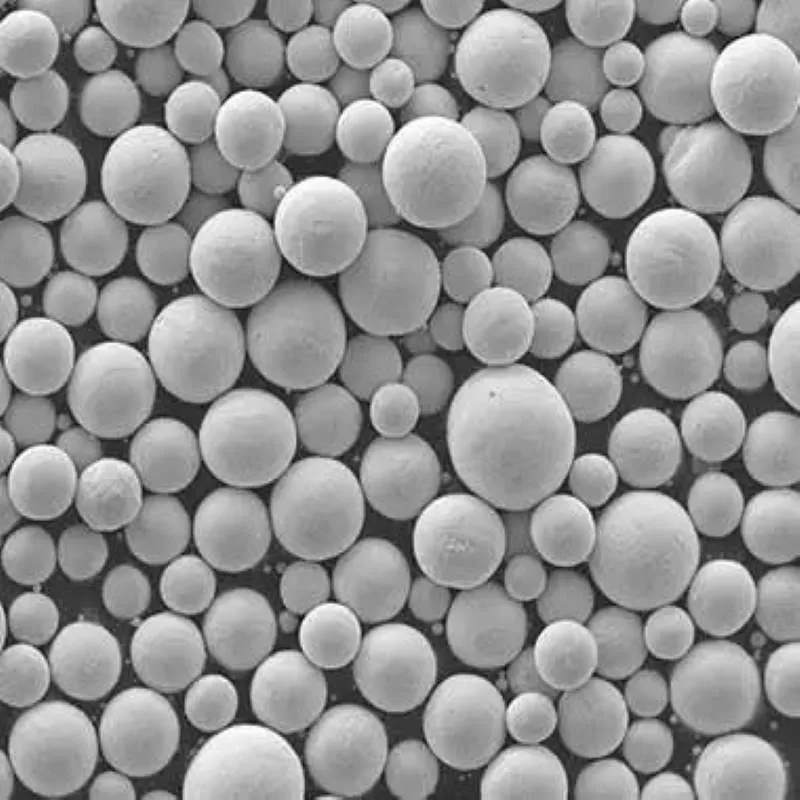
Spherical ASTM A302 Alloy Steel Powder, Grade D
Product Code : SP-CSTI-594-CU
We provide Spherical ASTM A302 Alloy Steel Powder, Grade D,Spherical ASTM A302 Alloy Steel Powder, Grade D is suitable for laser/electron beam augmentation, hot isostatic pressing, laser cladding, hot/cold spraying, and so on. The particles can be irregular and spherical. The particle distribution can reach the nanometer scale.,Spherical Particle Size,0-15μm,,15-45um,15-53μm, 20-63um,45-105um,45-150μm , 50-150um,75-150μm,or customized,Product purity and oxygen content can be customized according to requirements.
Please contact us if you need customized services. We will contact you with the price and availability in 24 hours.
ASTM A302 Alloy Steel Spherical Powder, Grade D Product Information
-:-
For detailed product information, please contact sales.
-:
ASTM A302 Alloy Steel Spherical Powder, Grade D Synonyms
-:-
For detailed product information, please contact sales.
-:
-:-
For detailed product information, please contact sales.
-:
Spherical ASTM A302 Alloy Steel Powder, Grade D characteristics
-:-
For detailed product information, please contact sales.
-:
Spherical ASTM A302 Alloy Steel Powder, Grade D Particle Size
-:-
For detailed product information, please contact sales.
-:
-:-
-:-
0-15μm ,5-25μm, 15-45μm, 15-53μm,20-63um, 45-75μm, 45-105μm, 45-150μm ,75-150μm.
(Various granularities can be customized according to customer requirements)
-:-
For detailed product information, please contact sales.
-:
Spherical ASTM A302 Alloy Steel Powder, Grade D Applicable processes
-:-
For detailed product information, please contact sales.
-:
Laser/electron beam additive manufacturing (SLM/EBM, 3D printing)
Direct laser deposition (DLD)
Used in thermal spray (TSA)
Powder hot isostatic pressing (HIP)
Metal injection molding (MIM)
Powder metallurgy (PM)
Laser cladding (LC), etc.
-:-
For detailed product information, please contact sales.
-:
Spherical ASTM A302 Alloy Steel Powder, Grade D Chemical Composition
-:-
For detailed product information, please contact sales.
-:
-:-
For detailed product information, please contact sales.
-:
ASTM A302 Alloy Steel, Grade D Product Information
-:-
For detailed product information, please contact sales.
-:
## **ASTM A302 Grade D High-Strength Manganese-Molybdenum-Nickel Alloy Steel for Critical Pressure Vessel Applications**
### **1. Product Overview**
**ASTM A302 Grade D** is a **premium high-strength manganese-molybdenum-nickel alloy steel plate** designed for **the most demanding pressure vessel applications requiring exceptional strength, toughness, and elevated temperature performance**. As the highest-strength grade within the ASTM A302 specification (*Standard Specification for Pressure Vessel Plates, Alloy Steel, Manganese-Molybdenum and Manganese-Molybdenum-Nickel*), Grade D represents the culmination of the series, offering **superior mechanical properties through optimized carbon and manganese levels while maintaining the nickel-enhanced toughness** of the higher grades.
This advanced grade is specifically engineered for **heavy-section pressure vessels operating at elevated temperatures (up to 900°F/480°C) where maximum strength-to-weight ratios are critical**, such as in modern high-pressure boilers, thick-walled reactors, and components requiring extended design life under severe service conditions. Grade D provides the best combination of strength and toughness in the A302 family, making it suitable for applications where material efficiency and reliability are paramount.
### **2. Key International Standards & Specifications**
| Standard System | Equivalent Designation | Notes |
|-----------------|------------------------|-------|
| **ASTM/ASME** | **ASTM A302/A302M Grade D** / **SA-302 Grade D** | Primary specification, ASME Boiler & Pressure Vessel Code Section I & VIII approved |
| **European (EN)** | **EN 10028-2: P460NH/NLH** or **P500Q** | Similar high-strength normalized fine grain steels |
| **Japanese (JIS)** | **JIS G3119 SBV 480/540** | High-strength pressure vessel quality steel plates |
| **ISO** | **ISO 9328-2** | Steel plates for pressure purposes - elevated temperatures |
| **Chinese** | **GB 713 13MnNiMoR** or **18MnMoNbR** | Similar high-strength pressure vessel steels |
| **Classification Societies:** Widely accepted by ABS, DNV, LR, BV, and other major societies with supplementary requirements. |
### **3. Chemical Composition (% by Weight)**
| Element | ASTM A302 Grade D Requirements | Metallurgical Purpose |
|---------|--------------------------------|------------------------|
| **Carbon (C)** | **0.23% maximum** | **Elevated from lower grades** - provides increased strength while maintaining weldability |
| **Manganese (Mn)** | **1.15-1.50%** | **Enhanced range** - maximizes solid solution strengthening and hardenability for heavy sections |
| **Phosphorus (P)** | 0.035% maximum | Strict impurity control for toughness preservation |
| **Sulfur (S)** | 0.040% maximum | Controlled for improved through-thickness properties |
| **Silicon (Si)** | 0.15-0.40% | Deoxidizer, contributes to strength through solid solution |
| **Molybdenum (Mo)** | **0.45-0.60%** | Enhances elevated temperature strength and creep resistance |
| **Nickel (Ni)** | **0.70-1.00%** | **Higher nickel content** - maximizes low-temperature toughness improvement |
| **Chromium (Cr)** | 0.25% maximum (residual) | May be present |
| **Copper (Cu)** | 0.35% maximum (residual) | May be present |
| **Vanadium (V)** | 0.05% maximum (residual) | May be present in trace amounts |
| **Columbium/Niobium (Cb/Nb)** | 0.02% maximum (if added) | May be added for grain refinement in heavy sections |
**Key Metallurgical Features:**
- **Carbon Equivalent (CE):** Typically 0.50-0.60% (IIW formula) - higher than other grades
- **Optimized Strengthening:** C-Mn-Ni-Mo synergy for maximum strength with good toughness
- **Heavy-Section Chemistry:** Specifically balanced for plates up to 12 inches thick
- **Nickel Enhancement:** Highest nickel content in series for maximum toughness improvement
- **Normalized Microstructure:** Typically fine bainitic-ferritic structure with optimized carbide distribution
### **4. Mechanical & Physical Properties**
#### **4.1 Tensile Properties (Normalized and Tempered Condition)**
| Property | Minimum Requirement | Typical Range (≤ 2" thickness) | Test Standard |
|----------|---------------------|--------------------------------|---------------|
| **Yield Strength (0.2% offset)** | **50 ksi (345 MPa)** | **52-65 ksi (360-450 MPa)** | ASTM A370 |
| **Tensile Strength** | **75-95 ksi (515-655 MPa)** | **80-95 ksi (550-655 MPa)** | ASTM A370 |
| **Elongation (in 8" gauge)** | **17%** minimum | 18-22% | ASTM A370 |
| **Reduction of Area** | Not specified | Typically 45-55% | ASTM A370 |
| **Yield-to-Tensile Ratio** | Not specified | 0.65-0.75 typical | - |
**Strength Advantages Over Other Grades:**
- **Higher minimum tensile strength** maintained across thickness range
- **Better strength retention** in heavy sections (> 4 inches)
- **Superior elevated temperature strength** compared to Grades A-C
#### **4.2 Elevated Temperature Properties**
| Temperature | Yield Strength Retention | Tensile Strength Retention | Creep Design Allowable |
|-------------|--------------------------|----------------------------|------------------------|
| **600°F (315°C)** | ~85% of RT value | ~90% of RT value | Excellent short-term creep resistance |
| **800°F (425°C)** | ~75% of RT value | ~80% of RT value | Suitable for extended service |
| **900°F (480°C)** | ~65% of RT value | ~70% of RT value | Maximum recommended for pressure parts |
#### **4.3 Toughness Properties (Exceptional for Strength Level)**
| Condition | Charpy V-Notch Minimum (When Specified) | Typical Values | Test Temperature |
|-----------|------------------------------------------|----------------|------------------|
| **Standard Requirement** | 20 ft-lb (27 J) average | 40-70 ft-lb (54-95 J) | +68°F (+20°C) |
| **Enhanced Toughness** | 25 ft-lb (34 J) average | 35-60 ft-lb (47-81 J) | -20°F (-29°C) |
| **Low Temperature** | 15 ft-lb (20 J) average | 25-50 ft-lb (34-68 J) | -50°F (-45°C) |
*Note: Despite higher carbon, nickel content maintains excellent toughness properties*
#### **4.4 Physical Properties**
| Property | Value | Conditions |
|----------|-------|------------|
| **Density** | 7.86 g/cm³ (0.284 lb/in³) | Room temperature (slightly higher due to Ni) |
| **Modulus of Elasticity** | 29,000 ksi (200 GPa) | 20°C (68°F) |
| **Shear Modulus** | 11,200 ksi (77 GPa) | 20°C (68°F) |
| **Poisson's Ratio** | 0.29 | - |
| **Thermal Conductivity** | 44 W/m·K | 20°C (68°F) |
| **Specific Heat Capacity** | 475 J/kg·K | 20°C (68°F) |
| **Coefficient of Thermal Expansion** | 11.7 × 10⁻⁶/°C | 20-100°C (68-212°F) |
| **Electrical Resistivity** | 0.23 μΩ·m | 20°C (68°F) |
#### **4.5 Hardness Characteristics**
- **Typical Brinell Hardness:** 180-230 HB
- **Through-Thickness Variation:** ≤ 35 HB points in normalized and tempered condition
- **Maximum Recommended:** 240 HB for weldability considerations
### **5. Heat Treatment Requirements**
**Mandatory Delivery Condition:**
- **Normalized and Tempered** (required for all thicknesses of Grade D)
**Heat Treatment Parameters:**
- **Normalizing Temperature:** 1600-1700°F (870-925°C)
- **Tempering Temperature:** 1150-1350°F (620-730°C)
- **Soaking Time:** Minimum 1.5 hours per inch of thickness for heavy plates
- **Cooling:** Controlled air cooling for tempering
**Microstructural Requirements:**
- **Grain Size:** ASTM No. 5 or finer (typically 6-8)
- **Microstructure:** Tempered bainite with fine carbide dispersion
- **Inclusion Control:** Stringent - ASTM E45 Method A, maximum severity 1.5
- **Uniformity:** Through-thickness microstructure consistency required
### **6. Product Applications**
#### **6.1 Primary Industries & Applications**
| Industry | Specific Applications | Typical Thickness | Why Grade D is Essential |
|----------|----------------------|-------------------|--------------------------|
| **Power Generation** | - Supercritical boiler drums
- High-pressure steam headers (>2500 psi)
- Advanced USC plant components | 3-8 inches (75-200 mm) | Maximum strength for high-pressure designs |
| **Petrochemical** | - High-pressure hydrocrackers
- Thick-walled reactors
- High-pressure separators | 2-6 inches (50-150 mm) | Superior strength-to-weight for large diameters |
| **Oil & Gas** | - High-pressure FPSO components
- Offshore processing vessels
- Deepwater applications | 1.5-5 inches (38-125 mm) | Weight reduction for offshore structures |
| **Chemical Processing** | - High-pressure synthesis reactors
- Thick-walled autoclaves
- Pressure vessels for new processes | 1-4 inches (25-100 mm) | Extended design life under severe conditions |
| **Nuclear (Secondary)** | - High-pressure secondary system components
- Thick-walled auxiliary vessels | 2-5 inches (50-125 mm) | Enhanced safety margins |
#### **6.2 Special Application Advantages**
- **High-Pressure Design:** Enables thinner walls for same pressure rating
- **Weight Optimization:** Critical for transportation and support structures
- **Extended Design Life:** Superior properties for longer service intervals
- **Advanced Plant Designs:** Suitable for next-generation process equipment
### **7. Fabrication Characteristics**
#### **7.1 Weldability**
**Weldability Rating:** **Good** (requires careful procedure control)
| Parameter | Requirements/Recommendations |
|-----------|------------------------------|
| **Carbon Equivalent (CE)** | 0.55-0.65% (IIW formula) - highest in series |
| **Preheat Temperature** | 300-400°F (150-205°C) for all thicknesses |
| **Recommended Processes** | SMAW (E11018), SAW, GMAW with gas shielding |
| **Interpass Temperature** | ≤ 400°F (205°C) strict control |
| **Post-Weld Heat Treatment** | **Mandatory:** 1150-1250°F (620-675°C)
Extended times: 2+ hours per inch for thick sections |
#### **7.2 Welding Consumables**
- **AWS Classification:** AWS A5.5 E11018 or equivalent
- **Strength Matching:** Must match or exceed base metal strength
- **Nickel Matching:** Consumables with 0.5-1.0% Ni recommended
- **Special Considerations:** Ultra-low hydrogen practices essential
#### **7.3 Forming & Machining**
| Operation | Requirements |
|-----------|--------------|
| **Hot Forming** | 1650-1800°F (900-980°C)
Complete re-heat treatment required |
| **Cold Forming** | Limited - requires stress relief for severe deformation |
| **Machining** | 55-60% of free-cutting steel
Requires rigid setups and positive rake tools |
| **Cutting** | Plasma or laser preferred; oxy-fuel requires preheat |
### **8. Comparative Analysis**
#### **8.1 Within A302 Series Comparison**
| Property | Grade B | Grade C | **Grade D** |
|----------|---------|---------|-------------|
| **Carbon Maximum** | 0.20% | 0.20% | **0.23%** |
| **Nickel Content** | 0.40-0.70% | 0.70-1.00% | **0.70-1.00%** |
| **Manganese Range** | 1.00-1.50% | 1.00-1.50% | **1.15-1.50%** |
| **Tensile Strength** | 75-95 ksi | 75-95 ksi | **75-95 ksi (higher typical)** |
| **Typical Yield Strength** | 50-60 ksi | 50-60 ksi | **52-65 ksi** |
| **Cost Premium** | Base | +5-10% | **+10-20%** |
#### **8.2 Versus Competing High-Strength Grades**
| Aspect | **A302 Grade D** | A387 Grade 11 | A533 Type B |
|--------|-----------------|---------------|-------------|
| **Alloy System** | **Mn-Mo-Ni** | 1.25Cr-0.5Mo | Ni-Mo-Cr |
| **Min Yield Strength** | 50 ksi | 45 ksi | 50 ksi |
| **Max Service Temp** | 900°F | 1000°F | 700°F |
| **Fabrication Complexity** | Moderate | High | High |
| **Cost Factor** | 1.0x | 1.3-1.5x | 1.5-2.0x |
| **Heavy Section Weldability** | **Best in class** | Good | Good |
### **9. Technical Advantages**
#### **9.1 Key Benefits**
1. **Maximum Strength in Series:** Highest practical strength levels while maintaining toughness
2. **Superior Toughness Retention:** Nickel maintains excellent CVN despite higher carbon
3. **Heavy-Section Performance:** Optimized for plates up to 12 inches thick
4. **Elevated Temperature Capability:** Suitable for sustained service to 900°F
5. **Design Efficiency:** Enables weight-optimized pressure vessel designs
#### **9.2 Special Metallurgical Advantages**
- **Optimized Carbon-Nickel Balance:** Carbon for strength, nickel for toughness
- **Enhanced Manganese:** Provides solid solution strengthening without excessive hardenability
- **Microstructural Stability:** Resists tempering effects during PWHT
- **Through-Thickness Uniformity:** Consistent properties in heavy sections
### **10. Design Considerations**
#### **10.1 Optimal Application Areas**
- **High-pressure boiler drums** (>2000 psi design)
- **Thick-walled reactors** requiring maximum strength
- **Weight-critical applications** where material efficiency is paramount
- **Components** with extended design life requirements
#### **10.2 Design Guidelines**
- **Pressure Vessel Codes:** ASME Section I & VIII design rules apply
- **Fatigue Analysis:** Good fatigue properties but require proper analysis for cyclic service
- **Fracture Mechanics:** Enhanced fracture toughness compared to lower grades
- **Corrosion Allowance:** Standard allowances apply; no enhanced corrosion resistance
### **11. Quality Assurance**
#### **11.1 Standard Testing Requirements**
1. **Comprehensive Chemical Analysis:** Multiple verification points
2. **Tensile Testing:** Surface and quarter-thickness locations for heavy plates
3. **Impact Testing:** Typically specified due to critical applications
#### **11.2 Special Testing for Grade D**
- **Through-Thickness Tensile Tests:** For plates > 3 inches
- **Charpy Testing at Multiple Temperatures:** Often -20°F and -50°F
- **Ultrasonic Examination:** 100% scanning per ASTM A578 Level II minimum
- **Hardness Surveys:** Multiple locations including centerline
### **12. Procurement & Specification**
#### **12.1 Essential Ordering Information**
When ordering ASTM A302 Grade D:
- Full designation: ASTM A302/A302M Grade D
- Mandatory: Normalized and tempered condition
- Specific impact test requirements
- Ultrasonic testing acceptance criteria
- Certification level (typically EN 10204 3.2)
#### **12.2 Supply Chain Considerations**
- **Lead Time:** 10-16 weeks typical
- **Mill Qualifications:** Requires mills with heavy plate and alloy steel experience
- **Testing Facilities:** Mill must have extensive testing capabilities
- **Traceability:** Complete documentation essential
### **13. Case Studies**
#### **13.1 Supercritical Boiler Drum**
**Application:** 600 MW advanced supercritical coal plant
**Requirements:** 6-inch thick drum, 3200 psi at 1100°F steam temperature
**Grade D Advantages:**
- Met ASME Section I requirements for high-pressure service
- Provided weight savings over alternative materials
- Maintained properties through thick section
- Successful 10+ year service with minimal degradation
#### **13.2 High-Pressure Hydrocracker**
**Industry:** Petroleum refining
**Conditions:** 5-inch wall, 3000 psi at 800°F, hydrogen service
**Results:**
- Withstood severe hydrogen partial pressures
- Maintained mechanical properties after years of service
- Enabled thinner wall design than lower grades
- Extended run lengths between maintenance
### **14. Industry Trends**
#### **14.1 Growing Applications**
- **Advanced Power Plants:** Ultra-supercritical and advanced USC designs
- **High-Pressure Processing:** Modern refining and chemical processes
- **Energy Transition:** Components for hydrogen and carbon capture systems
- **Offshore Development:** Weight-optimized designs for floating structures
#### **14.2 Technical Developments**
- **Enhanced Steelmaking:** Improved cleanliness and homogeneity
- **Advanced Heat Treatment:** More precise control for heavy sections
- **Welding Technology:** Procedures matching base metal capabilities
- **Digital Design Integration:** Simulation of complex stress states
### **15. Conclusion**
**ASTM A302 Grade D** represents the **pinnacle of the manganese-molybdenum-nickel steel series**, offering **maximum strength while maintaining excellent toughness** for critical pressure vessel applications. Its optimized composition provides:
**Primary Strengths:**
1. **Superior Strength:** Highest practical strength levels in the A302 family
2. **Exceptional Toughness:** Nickel content maintains excellent fracture resistance
3. **Heavy-Section Capability:** Specifically designed for thick-plate applications
4. **Elevated Temperature Performance:** Suitable for service to 900°F
5. **Design Efficiency:** Enables material-optimized pressure vessel designs
**Optimal Application Scenarios:**
- High-pressure boiler drums in advanced power plants
- Thick-walled reactors for severe service conditions
- Weight-critical applications where material efficiency is essential
- Components requiring extended design life under demanding conditions
**Critical Success Factors:**
- Rigorous material specification and testing
- Specialized fabrication procedures for high-strength materials
- Comprehensive quality assurance programs
- Experienced fabricators familiar with high-strength alloy steels
ASTM A302 Grade D fills a **critical performance niche** for applications requiring the **highest strength levels combined with good toughness** in the manganese-molybdenum-nickel alloy family. While representing a **premium material choice**, its ability to enable more efficient, reliable designs makes it a **cost-effective solution** for the most demanding pressure vessel applications.
For engineers designing **high-pressure, high-temperature equipment** where material performance directly impacts safety, efficiency, and lifecycle costs, Grade D offers a **proven, code-approved material solution** that has demonstrated its value in some of the world's most demanding industrial applications. Its continued specification in advanced power generation and processing plants confirms its position as a **premium material choice** for applications where performance cannot be compromised.
-:-
For detailed product information, please contact sales.
-:
ASTM A302 Alloy Steel, Grade D Specification
Dimensions
Size:
Diameter 20-1000 mm Length <5985 mm
Size:We can customized as required
Standard:
Per your request or drawing
We can customized as required
Properties(Theoretical)
Chemical Composition
-:-
For detailed product information, please contact sales.
-:
ASTM A302 Alloy Steel, Grade D Properties
-:-
For detailed product information, please contact sales.
-:
Spherical ASTM A302 Alloy Steel Powder, Grade D Particle Size Description
-:-
For detailed product information, please contact sales.
-:
Applications of Spherical ASTM A302 Alloy Steel Powder, Grade D
-:-
For detailed product information, please contact sales.
-:
-:-
For detailed product information, please contact sales.
-:
Applications of ASTM A302 Alloy Steel Spherical Powder, Grade D
-:-
For detailed product information, please contact sales.
-:
Chemical Identifiers ASTM A302 Alloy Steel Spherical Powder, Grade D
-:-
For detailed product information, please contact sales.
-:
Packing of ASTM A302 Alloy Steel Spherical Powder, Grade D
-:-
For detailed product information, please contact sales.
-:
Standard Packing:
-:-
For detailed product information, please contact sales.
-:
Typical bulk packaging includes palletized plastic 5 gallon/25 kg. pails, fiber and Steel Spherical Powder drums to 1 ton super sacks in full container (FCL) or truck load (T/L) quantities. Research and sample quantities and hygroscopic, oxidizing or other air sensitive materials may be packaged under argon or vacuum. Solutions are packaged in polypropylene, plastic or glass jars up to palletized 2456 gallon liquid totes Special package is available on request. E FORUs’ is carefully handled to minimize damage during storage and transportation and to preserve the quality of our products in their original condition