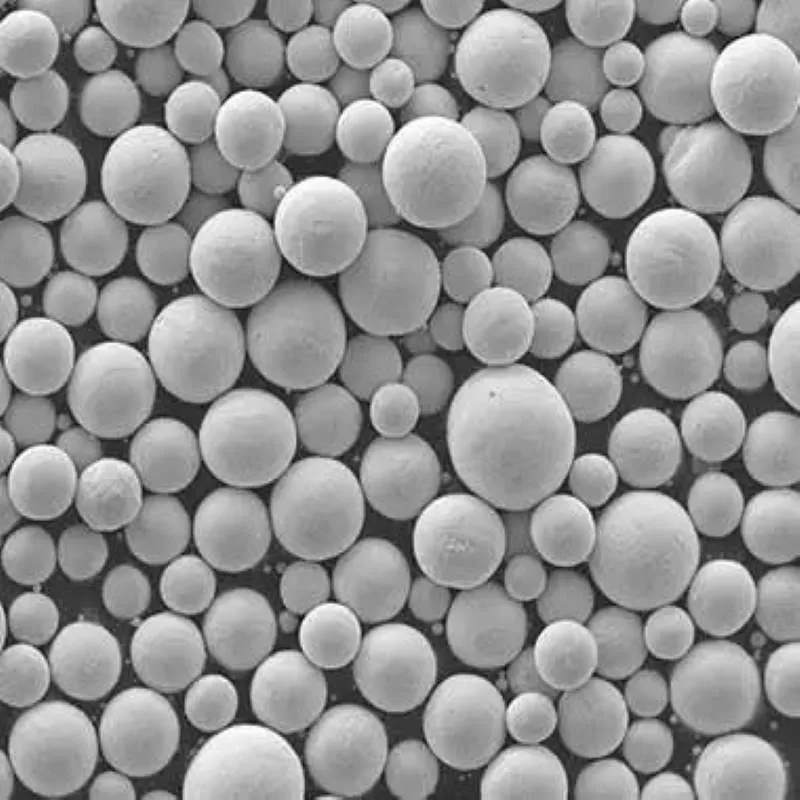
Spherical ASTM A517 Low Alloy Steel Powder, Grade H
Product Code : SP-CSTI-634-CU
We provide Spherical ASTM A517 Low Alloy Steel Powder, Grade H,Spherical ASTM A517 Low Alloy Steel Powder, Grade H is suitable for laser/electron beam augmentation, hot isostatic pressing, laser cladding, hot/cold spraying, and so on. The particles can be irregular and spherical. The particle distribution can reach the nanometer scale.,Spherical Particle Size,0-15μm,,15-45um,15-53μm, 20-63um,45-105um,45-150μm , 50-150um,75-150μm,or customized,Product purity and oxygen content can be customized according to requirements.
Please contact us if you need customized services. We will contact you with the price and availability in 24 hours.
ASTM A517 Low Alloy Steel Spherical Powder, Grade H Product Information
-:-
For detailed product information, please contact sales.
-:
ASTM A517 Low Alloy Steel Spherical Powder, Grade H Synonyms
-:-
For detailed product information, please contact sales.
-:
-:-
For detailed product information, please contact sales.
-:
Spherical ASTM A517 Low Alloy Steel Powder, Grade H characteristics
-:-
For detailed product information, please contact sales.
-:
Spherical ASTM A517 Low Alloy Steel Powder, Grade H Particle Size
-:-
For detailed product information, please contact sales.
-:
-:-
-:-
0-15μm ,5-25μm, 15-45μm, 15-53μm,20-63um, 45-75μm, 45-105μm, 45-150μm ,75-150μm.
(Various granularities can be customized according to customer requirements)
-:-
For detailed product information, please contact sales.
-:
Spherical ASTM A517 Low Alloy Steel Powder, Grade H Applicable processes
-:-
For detailed product information, please contact sales.
-:
Laser/electron beam additive manufacturing (SLM/EBM, 3D printing)
Direct laser deposition (DLD)
Used in thermal spray (TSA)
Powder hot isostatic pressing (HIP)
Metal injection molding (MIM)
Powder metallurgy (PM)
Laser cladding (LC), etc.
-:-
For detailed product information, please contact sales.
-:
Spherical ASTM A517 Low Alloy Steel Powder, Grade H Chemical Composition
-:-
For detailed product information, please contact sales.
-:
-:-
For detailed product information, please contact sales.
-:
ASTM A517 Low Alloy Steel, Grade H Product Information
-:-
For detailed product information, please contact sales.
-:
# **Product Introduction: ASTM A517 Grade H Quenched & Tempered High-Strength Alloy Steel Plate**
**ASTM A517 Grade H** is a specialized **high-strength, quenched and tempered (Q&T) alloy steel plate** within the A517/A514 family, specifically formulated for applications requiring **enhanced performance characteristics**. Offering the characteristic minimum yield strength of **100 ksi (690 MPa)** common to the "T-1" steel family, Grade H represents a distinct chemical composition that has been qualified to meet specific application needs. Unlike some grades which may be manufacturer-specific variants, **Grade H typically has a standardized or semi-standardized chemistry** that provides a particular balance of properties, often optimized for specific processing advantages or application requirements.
---
## **1. Key International Standards & Specifications**
* **Primary Standard:** **ASTM A517/A517M** - Standard Specification for Pressure Vessel Plates, Alloy Steel, High-Strength, Quenched and Tempered
* **Alternative Designation:** **ASTM A514 Grade H** - Essentially identical specification
* **ASME Code Adoption:** **SA-517 Grade H** in ASME Boiler and Pressure Vessel Code, Section II, Part A
* **Industry Terminology:** **"T-1 Type H"** - Recognized as a specific variant with distinct characteristics
* **Military Specifications:** Can meet **MIL-S-23284** with appropriate testing
* **International Equivalents:**
* **EN 10025-6:** S690Q, S690QL (similar strength class)
* **ISO 4950-3:** High yield strength flat steel products - Quenched and tempered steels
* **JIS G3124:** SHT690 (Japanese high tensile strength steel)
* **GB/T 16270:** Q690D/E (Chinese high strength structural steels)
---
## **2. Chemical Composition (Weight %)**
**Grade H features a defined chemistry optimized for specific performance characteristics:**
| Element | Composition Range (%) | Metallurgical Function & Grade H Specifics |
|---------|----------------------|--------------------------------------------|
| Carbon (C) | 0.12-0.21 | Balanced for optimal strength-toughness combination |
| Manganese (Mn) | 0.70-1.00 | Provides solid solution strengthening and hardenability |
| Phosphorus (P) | 0.035 max | Controlled for adequate toughness |
| Sulfur (S) | 0.040 max | Controlled with standard inclusion shape control |
| Silicon (Si) | 0.15-0.35 | Deoxidizer, contributes to strength |
| Chromium (Cr) | 0.60-0.90 | **Elevated range** for enhanced hardenability and tempering resistance |
| Molybdenum (Mo) | 0.15-0.25 | Standard range for tempering stability |
| Vanadium (V) | 0.03-0.08 | Grain refinement, precipitation strengthening |
| **Boron (B)** | **0.001-0.005** | **Critical:** Maximizes hardenability efficiently |
| Nickel (Ni) | Typically 0.20-0.50% (varies) | Often present for toughness enhancement |
| Copper (Cu) | ≤0.35 (typical) | May be present |
### **Carbon Equivalent Analysis:**
- **IIW Formula:** CE = C + Mn/6 + (Cr+Mo+V)/5 + (Ni+Cu)/15 ≈ **0.48-0.63**
- **Pcm Formula:** C + Si/30 + (Mn+Cu+Cr)/20 + Ni/60 + Mo/15 + V/10 + 5B ≈ **0.22-0.31**
- **Weldability Classification:** Good with proper procedures
### **Key Composition Features (Grade H Distinctives):**
1. **Elevated Chromium Content:** 0.60-0.90% - higher than Grades A and B, similar to some other specialized grades
2. **Boron-Enhanced:** Maintains boron for hardenability (key to A517 chemistry)
3. **Often Nickel-Containing:** Typically includes nickel for toughness enhancement
4. **Standardized Chemistry:** Generally a defined composition, not manufacturer-proprietary
5. **Balanced Alloying:** Optimized for specific processing or application advantages
### **Grade H vs. Other Grades Composition Comparison:**
| Element | Grade H | Grade A | Grade E | Grade H Positioning |
|---------|---------|---------|---------|---------------------|
| **Chromium** | 0.60-0.90% | 0.40-0.65% | 0.45-0.75% | Higher than A and E |
| **Nickel** | Typically 0.20-0.50% | Not specified | 0.25-0.50% | Similar to E, more than A |
| **Primary Characteristic** | Elevated Cr with Ni | Basic T-1 | Ni-enhanced toughness | Cr-enhanced with Ni |
### **Metallurgical Philosophy of Grade H:**
1. **Chromium Enhancement:** Provides good hardenability and tempering resistance
2. **Toughness Consideration:** Typically includes nickel for adequate fracture resistance
3. **Processing Optimization:** Chemistry may be optimized for specific manufacturing processes
4. **Application Focus:** May be developed for particular application requirements
---
## **3. Mechanical & Physical Properties**
### **Minimum Mechanical Properties (Up to 2.5 in / 63.5 mm thick):**
- **Tensile Strength:** **760-895 MPa** (110,000-130,000 psi)
- **Yield Strength (0.2% offset):** **690 MPa minimum** (100,000 psi minimum)
- **Elongation in 2 in. (50 mm):** **16% minimum**
- **Reduction of Area:** Typically 40-55%
- **Hardness Range:** 235-293 HB (Brinell)
### **Impact Toughness Requirements:**
- **Charpy V-Notch Testing:** Mandatory
- **Standard Test Temperature:** **-18°C (0°F)** or as specified
- **Minimum Absorbed Energy:** **34 J (25 ft-lb)** minimum average
- **Individual Specimens:** Typically no single value < 27 J (20 ft-lb)
### **Thickness-Dependent Properties:**
| Thickness Range | Minimum Yield Strength | Notes |
|-----------------|------------------------|-------|
| ≤ 1.5 in (38 mm) | 690 MPa (100 ksi) | Full properties |
| 1.5-2.5 in (38-63.5 mm) | 690 MPa (100 ksi) | Maintains properties |
| 2.5-4.0 in (63.5-102 mm) | 620 MPa (90 ksi) | Reduced properties |
| > 4.0 in (>102 mm) | Consult manufacturer | Special processing required |
### **Physical Properties:**
| Property | Value | Notes |
|----------|-------|-------|
| Density | 7.85 g/cm³ (0.284 lb/in³) | Similar to other steels |
| Modulus of Elasticity | 200 GPa (29×10⁶ psi) | Room temperature |
| Shear Modulus | 77 GPa (11.2×10⁶ psi) | Room temperature |
| Poisson's Ratio | 0.29 | - |
| Coefficient of Thermal Expansion | 11.8×10⁻⁶/°C | 20-100°C |
| Thermal Conductivity | 41-45 W/m·K | 100°C |
| Specific Heat | 460-480 J/kg·K | 100°C |
| Electrical Resistivity | 0.26-0.31 μΩ·m | Room temperature |
### **Grade H Specific Property Characteristics:**
1. **Good Hardenability:** Elevated chromium enhances through-thickness properties
2. **Adequate Toughness:** Nickel content provides reasonable fracture resistance
3. **Tempering Stability:** Chromium contributes to good tempering resistance
4. **Processing Consistency:** Standardized chemistry supports reliable production
---
## **4. Heat Treatment & Microstructure**
### **Standard Heat Treatment:**
1. **Austenitizing:** 900-955°C (1650-1750°F)
2. **Quenching:** Accelerated cooling (water or polymer quench)
3. **Tempering:** 595-690°C (1100-1275°F)
4. **Cooling:** Air cool after tempering
### **Grade H Processing Characteristics:**
- **Good Hardenability:** Chromium + boron combination provides effective hardening
- **Standard Processing:** Follows typical T-1 steel heat treatment practices
- **Consistent Results:** Chemistry supports reliable property development
### **Microstructural Characteristics:**
- **Primary Phase:** Tempered martensite
- **Carbide Distribution:** Chromium-rich carbides along with other alloy carbides
- **Grain Size:** ASTM 7 or finer
- **Prior Austenite Grain:** Controlled through processing
### **Through-Thickness Properties:**
- **Good Hardenability:** Suitable for moderate to thick sections
- **Property Uniformity:** Adequate in properly processed material
- **Section Sensitivity:** Minimal up to standard thickness limits
---
## **5. Key Characteristics & Advantages**
### **Strength & Performance:**
- **High Strength:** 100 ksi yield strength
- **Good Hardenability:** Chromium-enhanced for consistent properties
- **Adequate Toughness:** Provides reasonable fracture resistance
- **Weldability:** Good with proper procedures
### **Fabrication Characteristics:**
- **Standard Fabrication:** Follows established T-1 steel practices
- **Machinability:** Similar to other 100 ksi steels
- **Formability:** Limited cold formability; hot forming recommended
- **Predictable Behavior:** Well-documented processing guidelines
### **Grade H Specific Advantages:**
1. **Standardized Chemistry:** Defined composition offers consistency
2. **Availability:** Produced by multiple qualified manufacturers
3. **Proven Performance:** Established track record in specific applications
4. **Cost Effectiveness:** Typically priced competitively within the 100 ksi family
### **Economic & Application Benefits:**
- **Cost Competitive:** Similar to other standard 100 ksi grades
- **Reliable Performance:** Proven in various demanding applications
- **Code Acceptance:** Fully approved for pressure vessel and structural use
- **Technical Support:** Well-documented from producers
### **Considerations:**
- **Not Specialized:** Does not offer extreme toughness like Grade F
- **Standard Properties:** Meets but does not exceed standard requirements
- **Application Specific:** May be preferred for certain applications based on history or specification
---
## **6. Product Applications**
### **General High-Strength Applications:**
- **Construction Equipment:**
- Crane components
- Excavator structural members
- Mining equipment components
- **Material Handling:**
- Heavy-duty equipment frames
- Conveyor system structures
- Material handling equipment
### **Industrial & Energy:**
- **Heavy Machinery:** Frames and structural components
- **Energy Components:** Support structures and non-critical components
- **Industrial Equipment:** High-strength frames and supports
### **Transportation:**
- **Specialized Vehicle Components:** Frames for heavy haul applications
- **Railroad Equipment:** Structural members and couplers
- **Trailer Components:** High-stress elements
### **When Grade H is Typically Specified:**
1. **When specific engineering standards** call for Grade H
2. **Historical preference** based on proven performance
3. **When Grade H offers cost or availability advantages**
4. **For applications where its specific chemistry** provides benefits
5. **When specified by customers with established specifications**
### **Industry Usage Patterns:**
- Some industries may standardize on Grade H based on historical performance
- Certain engineering specifications may specifically call for Grade H
- Applications where Grade H has established a reliable service record
- Situations where Grade H offers the optimal balance of properties and cost
---
## **7. Fabrication Guidelines**
### **Welding Procedures:**
#### **Preheat Requirements:**
| Thickness Range | Minimum Preheat | Recommended Range |
|-----------------|-----------------|-------------------|
| ≤ ¾ in (19 mm) | 150°C (300°F) | 150-200°C (300-400°F) |
| ¾ to 1½ in (19-38 mm) | 175°C (350°F) | 175-225°C (350-440°F) |
| 1½ to 2½ in (38-63.5 mm) | 200°C (400°F) | 200-250°C (400-480°F) |
| > 2½ in (>63.5 mm) | 225°C (440°F) | 225-275°C (440-530°F) |
#### **Interpass Temperature Control:**
- **Maximum Interpass:** 250°C (480°F)
- **Optimal Range:** 150-230°C (300-450°F)
#### **Filler Metal Selection:**
- **SMAW:** E11018, E12018 (low hydrogen essential)
- **FCAW:** E111T1-K3, E121T1-K3
- **SAW:** F12A8-EL12, F13A2-EM12K
- **GMAW:** ER110S, ER120S
#### **Post-Weld Heat Treatment:**
- **Generally Not Required:** For most applications with proper procedures
- **Optional Stress Relief:** 595-650°C (1100-1200°F) for highly restrained joints
### **Cutting & Machining:**
- **Plasma Cutting:** Preferred method
- **Oxy-Fuel Cutting:** Requires controlled procedures
- **Machining:** Carbide tools recommended
### **Forming Operations:**
- **Cold Forming:** Limited to simple bends with large radii
- **Hot Forming:** Recommended at 870-925°C (1600-1700°F)
---
## **8. Design Considerations**
### **Structural Design:**
- **Allowable Stresses:** Typically 0.60 × yield strength (414 MPa / 60 ksi)
- **Fatigue Design:** Standard considerations for high-strength steel
- **Connection Design:** Both welded and bolted connections suitable
### **Temperature Considerations:**
- **Minimum Service Temperature:** Typically -18°C (0°F) based on standard testing
- **Maximum Service Temperature:** ~400°C (750°F) for intermittent service
- **For Extreme Conditions:** Consult manufacturer for specific capabilities
### **Grade H Selection Considerations:**
1. **Specification Requirements:** When standards or codes specify Grade H
2. **Historical Performance:** When Grade H has proven successful in similar applications
3. **Cost-Availability Balance:** When Grade H offers optimal value
4. **Manufacturer Recommendation:** When producers suggest Grade H for specific needs
---
## **9. Comparison with Other Grades**
### **Grade H vs. Grade A:**
| Parameter | Grade H | Grade A | Differences |
|-----------|---------|---------|-------------|
| **Chromium Content** | 0.60-0.90% | 0.40-0.65% | Grade H significantly higher |
| **Nickel Content** | Typically present | Not specified | Grade H often includes nickel |
| **Hardenability** | Enhanced | Good | Grade H better for thick sections |
| **Applications** | Similar | Similar | Often interchangeable |
### **Grade H vs. Grade E:**
| Aspect | Grade H | Grade E | Selection Considerations |
|--------|---------|---------|--------------------------|
| **Chromium** | 0.60-0.90% | 0.45-0.75% | Grade H generally higher |
| **Nickel** | Typically 0.20-0.50% | 0.25-0.50% | Similar ranges |
| **Primary Focus** | Cr-enhanced with Ni | Ni-enhanced toughness | Different emphasis |
| **Toughness** | Adequate | Enhanced | Grade E better for low temperature |
### **Grade H in the A517 Grade Spectrum:**
| Grade | Primary Characteristic | Relative Position |
|-------|------------------------|-------------------|
| **A** | Basic T-1 chemistry | Foundation grade |
| **B** | Nickel-enhanced toughness | Enhanced toughness |
| **E** | Optimized toughness | Premium toughness |
| **F** | Maximum toughness | Ultimate toughness |
| **H** | Cr-enhanced with Ni | Specialized balance |
| **Other Grades** | Various specializations | Manufacturer-specific |
---
## **10. Quality Control & Certification**
### **Testing Requirements:**
- **Chemical Analysis:** Ladle analysis required
- **Tensile Tests:** Per heat treatment charge
- **Impact Tests:** Per heat treatment charge at specified temperature
- **Hardness Tests:** Often specified
### **Certification:**
- **Mill Test Certificate:** Complete with test results
- **Heat Treatment Records:** Full documentation
- **Traceability:** Complete from melt to plate
- **Third-Party Inspection:** As required
### **Special Considerations for Grade H:**
1. **Chemistry Verification:** Must confirm specified ranges
2. **Standard Testing:** Follows same requirements as other grades
3. **Documentation:** Standard MTC with Grade H specific chemistry
---
**Technical Summary:** ASTM A517 Grade H represents a specialized variant within the 100 ksi yield strength quenched and tempered alloy steel family, featuring elevated chromium content (0.60-0.90%) and typically including nickel for toughness enhancement. As a defined chemistry grade (not manufacturer-proprietary), Grade H offers consistency across producers and provides a specific balance of hardenability, strength, and toughness. While not offering the extreme toughness of premium grades like F, Grade H delivers reliable performance for demanding applications where its specific characteristics are advantageous. The grade is particularly suitable for applications where elevated chromium content provides benefits, such as enhanced hardenability for thicker sections or improved tempering resistance. Grade H maintains the excellent strength-to-weight ratio characteristic of T-1 steels while offering a particular metallurgical approach that may be preferred for specific applications or manufacturing processes. As with all high-strength quenched and tempered steels, proper fabrication procedures, particularly regarding welding and heat treatment, are essential to maintain the material's properties in finished components. Grade H represents a proven, reliable option within the 100 ksi steel family with established performance in various structural and pressure vessel applications.
-:-
For detailed product information, please contact sales.
-:
ASTM A517 Low Alloy Steel, Grade H Specification
Dimensions
Size:
Diameter 20-1000 mm Length <6029 mm
Size:We can customized as required
Standard:
Per your request or drawing
We can customized as required
Properties(Theoretical)
Chemical Composition
-:-
For detailed product information, please contact sales.
-:
ASTM A517 Low Alloy Steel, Grade H Properties
-:-
For detailed product information, please contact sales.
-:
Spherical ASTM A517 Low Alloy Steel Powder, Grade H Particle Size Description
-:-
For detailed product information, please contact sales.
-:
Applications of Spherical ASTM A517 Low Alloy Steel Powder, Grade H
-:-
For detailed product information, please contact sales.
-:
-:-
For detailed product information, please contact sales.
-:
Applications of ASTM A517 Low Alloy Steel Spherical Powder, Grade H
-:-
For detailed product information, please contact sales.
-:
Chemical Identifiers ASTM A517 Low Alloy Steel Spherical Powder, Grade H
-:-
For detailed product information, please contact sales.
-:
Packing of ASTM A517 Low Alloy Steel Spherical Powder, Grade H
-:-
For detailed product information, please contact sales.
-:
Standard Packing:
-:-
For detailed product information, please contact sales.
-:
Typical bulk packaging includes palletized plastic 5 gallon/25 kg. pails, fiber and Steel Spherical Powder drums to 1 ton super sacks in full container (FCL) or truck load (T/L) quantities. Research and sample quantities and hygroscopic, oxidizing or other air sensitive materials may be packaged under argon or vacuum. Solutions are packaged in polypropylene, plastic or glass jars up to palletized 2500 gallon liquid totes Special package is available on request. E FORUs’ is carefully handled to minimize damage during storage and transportation and to preserve the quality of our products in their original condition