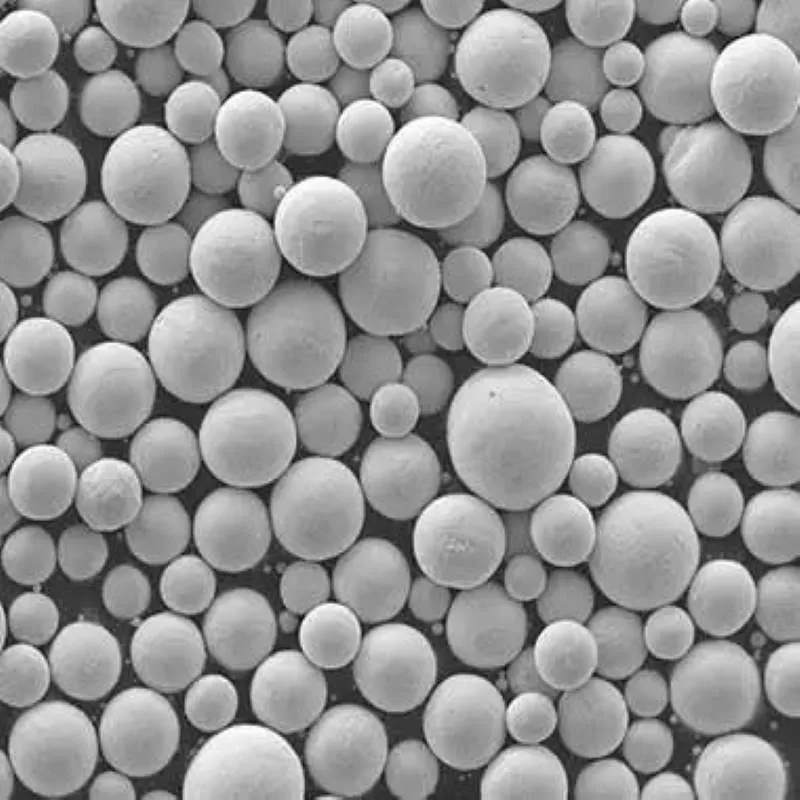
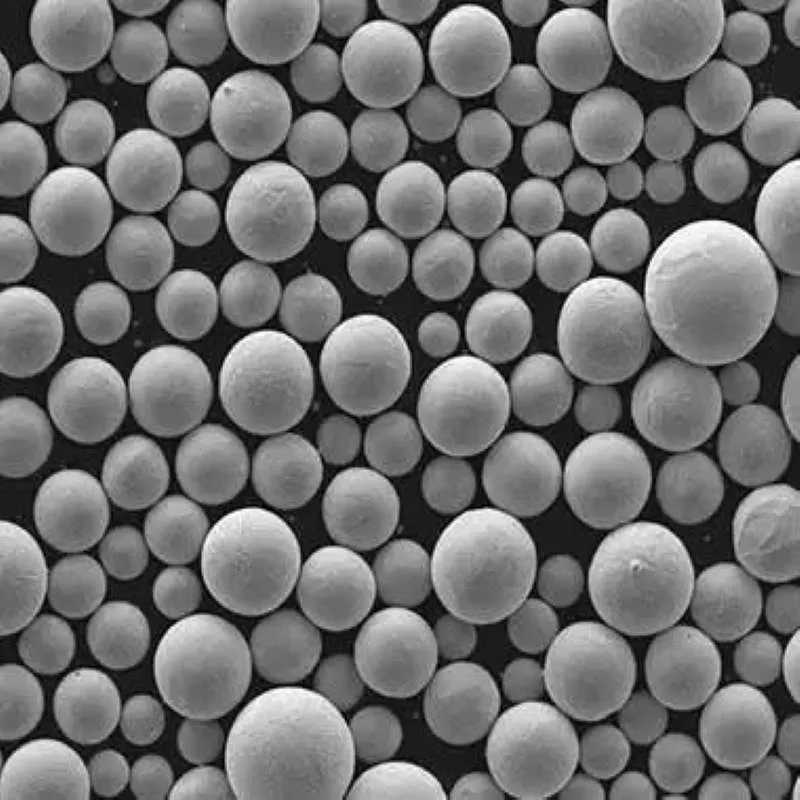
Spherical AISI 1009 Steel Powder
Product Code : SP-CSTI-312-CU
We provide Spherical AISI 1009 Steel Powder,Spherical AISI 1009 Steel Powder is suitable for laser/electron beam augmentation, hot isostatic pressing, laser cladding, hot/cold spraying, and so on. The particles can be irregular and spherical. The particle distribution can reach the nanometer scale.,Spherical Particle Size,0-15μm,,15-45um,15-53μm, 20-63um,45-105um,45-150μm , 50-150um,75-150μm,or customized,Product purity and oxygen content can be customized according to requirements.
Please contact us if you need customized services. We will contact you with the price and availability in 24 hours.
AISI 1009 Steel Spherical Powder Product Information
-:-
For detailed product information, please contact sales.
-:
AISI 1009 Steel Spherical Powder Synonyms
-:-
For detailed product information, please contact sales.
-:
-:-
For detailed product information, please contact sales.
-:
Spherical AISI 1009 Steel Powder characteristics
-:-
For detailed product information, please contact sales.
-:
Spherical AISI 1009 Steel Powder Particle Size
-:-
For detailed product information, please contact sales.
-:
-:-
-:-
0-15μm ,5-25μm, 15-45μm, 15-53μm,20-63um, 45-75μm, 45-105μm, 45-150μm ,75-150μm.
(Various granularities can be customized according to customer requirements)
-:-
For detailed product information, please contact sales.
-:
Spherical AISI 1009 Steel Powder Applicable processes
-:-
For detailed product information, please contact sales.
-:
Laser/electron beam additive manufacturing (SLM/EBM, 3D printing)
Direct laser deposition (DLD)
Used in thermal spray (TSA)
Powder hot isostatic pressing (HIP)
Metal injection molding (MIM)
Powder metallurgy (PM)
Laser cladding (LC), etc.
-:-
For detailed product information, please contact sales.
-:
Spherical AISI 1009 Steel Powder Chemical Composition
-:-
For detailed product information, please contact sales.
-:
-:-
For detailed product information, please contact sales.
-:
AISI 1009 Steel Product Information
-:-
For detailed product information, please contact sales.
-:
# **AISI 1009 Steel: Low Carbon Steel for General Applications**
## **Product Overview**
AISI 1009 is a low-carbon, non-alloy steel grade within the American Iron and Steel Institute (AISI) 10xx series, characterized by a carbon content range of 0.07-0.13%. This steel represents a balanced material option between the ultra-low carbon grades (1005-1008) and the slightly higher carbon 1010-1015 grades, offering improved strength over 1008 while maintaining good weldability and formability. As a mild steel, AISI 1009 provides a cost-effective solution for applications requiring moderate strength combined with ease of fabrication through welding, forming, and machining operations.
Primarily supplied in hot-rolled condition, AISI 1009 serves as a versatile workhorse material across multiple industries where consistent performance and economy are prioritized over specialized properties. Its composition makes it unsuitable for heat treatment to develop high hardness but ideal for case hardening processes when surface wear resistance is required.
---
## **Chemical Composition (Weight %)**
### **Standard Composition per AISI/SAE Specification**
| Element | Minimum | Maximum | Typical Analysis |
|---------|---------|---------|-----------------|
| Carbon (C) | 0.07 | 0.13 | 0.10 |
| Manganese (Mn) | 0.30 | 0.60 | 0.45 |
| Phosphorus (P) | - | 0.030 | 0.015 |
| Sulfur (S) | - | 0.035 | 0.020 |
| Silicon (Si) | - | 0.10 | 0.06 |
| Iron (Fe) | Balance | Balance | Balance |
### **Additional Processing Elements**
* **Deoxidation Practice:** Typically semi-killed or aluminum-killed (0.02-0.06% Al optional)
* **Residual Elements (Typical Maximum):**
* Copper (Cu): 0.20%
* Nickel (Ni): 0.20%
* Chromium (Cr): 0.15%
* Molybdenum (Mo): 0.05%
* Tin (Sn): 0.03%
* **Nitrogen Content:** 0.005-0.009% (not typically specified)
### **Key Composition Features**
* **Carbon Range:** Optimized for balanced strength and formability
* **Manganese Content:** Higher than 1008 for improved strength
* **Standard Impurity Control:** Commercial quality phosphorus and sulfur levels
* **Consistent Chemistry:** Ensures predictable manufacturing performance
* **Weldability:** Carbon Equivalent (CE) ≈ 0.20-0.25 (excellent)
---
## **Physical & Mechanical Properties**
### **Physical Properties**
| Property | Typical Value | Test Standard |
|----------|---------------|---------------|
| Density | 7.87 g/cm³ (0.284 lb/in³) | ASTM A1032 |
| Melting Point | 1,510-1,525°C (2,750-2,777°F) | - |
| Thermal Conductivity | 51.5 W/m·K | ASTM E1225 |
| Coefficient of Thermal Expansion | 11.7 × 10⁻⁶/K (20-100°C) | ASTM E228 |
| Electrical Resistivity | 0.124 μΩ·m | ASTM B193 |
| Modulus of Elasticity | 200-205 GPa (29.0-29.7 Msi) | ASTM E111 |
| Poisson's Ratio | 0.29-0.30 | ASTM E132 |
### **Mechanical Properties (Hot-Rolled Condition)**
| Property | Typical Range | Test Standard |
|----------|---------------|---------------|
| Yield Strength (Rp0.2) | 250-320 MPa | ASTM A370 |
| Tensile Strength (Rm) | 370-440 MPa | ASTM A370 |
| Elongation (50mm gauge) | 25-35% | ASTM A370 |
| Reduction of Area | 55-65% | ASTM A370 |
| Brinell Hardness (HB) | 110-135 | ASTM E10 |
| Rockwell Hardness | B60-B80 | ASTM E18 |
| Charpy V-Notch Impact (20°C) | 70-100 J | ASTM A370 |
| Shear Strength | 230-280 MPa | - |
| Fatigue Strength (10⁷ cycles) | 180-220 MPa | ASTM E466 |
### **Property Variation by Processing Condition**
| Condition | Yield Strength | Tensile Strength | Elongation | Typical Hardness |
|-----------|----------------|------------------|------------|-------------------|
| Hot-Rolled | 250-320 MPa | 370-440 MPa | 25-35% | HB 110-135 |
| Cold-Drawn | 300-370 MPa | 390-460 MPa | 15-25% | HB 125-150 |
| Annealed | 220-280 MPa | 350-410 MPa | 30-40% | HB 95-120 |
| Normalized | 260-330 MPa | 380-450 MPa | 25-35% | HB 115-140 |
### **Formability Characteristics**
* **Minimum Bend Radius:** 0.5-1.0 × thickness (depending on orientation)
* **Work Hardening Coefficient (n):** 0.18-0.22
* **Plastic Strain Ratio (r-value):** 0.9-1.1 (mildly anisotropic)
* **Limiting Drawing Ratio:** 1.8-2.0
* **Springback:** Moderate, predictable
---
## **Manufacturing & Processing Characteristics**
### **Hot Working Properties**
* **Forging Temperature Range:** 1150-1260°C (2100-2300°F)
* **Hot Rolling Temperature:** 870-925°C finishing temperature
* **Scale Formation:** Typical hot-rolled mill scale (0.05-0.20 mm)
* **Hot Formability:** Excellent within proper temperature range
* **Decarburization:** 0.1-0.4 mm typical on hot-rolled surfaces
### **Cold Working Capability**
* **Cold Forming:** Good for moderate deformation
* **Bending:** Minimum radius approximately 1× thickness for 90° bends
* **Work Hardening Rate:** Moderate (approximately 50-70 MPa per 10% reduction)
* **Intermediate Annealing:** May be required for severe forming
* **Cold Heading:** Suitable with proper processing
### **Machinability**
* **Machinability Rating:** 65-70% (relative to AISI 1212 = 100%)
* **Chip Formation:** Continuous, stringy chips
* **Surface Finish:** Good with proper tooling and parameters
* **Recommended Cutting Parameters:**
* Speed: 60-90 m/min (200-300 SFM)
* Feed: 0.20-0.35 mm/rev (0.008-0.014 in/rev)
* Depth of Cut: Up to 5 mm for roughing
* **Tool Materials:** Coated carbide or high-speed steel recommended
* **Coolant:** Water-soluble oil for improved tool life
### **Heat Treatment Response**
* **Annealing:** 650-700°C (1200-1290°F), furnace cool
* **Normalizing:** 870-920°C (1600-1690°F), air cool
* **Stress Relieving:** 550-600°C (1020-1110°F), air cool
* **Not Through-Hardenable:** Cannot be hardened by quenching due to low carbon content
* **Case Hardening:** Suitable for carburizing (0.5-0.8 mm case depth achievable)
### **Welding Characteristics**
* **Excellent Weldability:** Carbon Equivalent ≈ 0.20-0.25
* **Preheat Requirements:** Not required for thicknesses <25 mm
* **Recommended Processes:** SMAW, GMAW, GTAW, SAW, resistance welding
* **Filler Metals:** ER70S-3, ER70S-6, E7018 for matching properties
* **Post-Weld Treatment:** Generally not required for non-critical applications
* **Heat Affected Zone:** Minimal hardening, some grain growth possible
### **Surface Treatment Compatibility**
* **Excellent for:** Painting, powder coating, electroplating
* **Good for:** Hot-dip galvanizing, phosphate coating, black oxide
* **Surface Preparation:** Descaling required for hot-rolled material
* **Paint Adhesion:** Good with proper surface preparation
* **Plating Quality:** Excellent for zinc, nickel, chrome plating
---
## **Product Forms & Availability**
### **Standard Product Forms**
* **Hot-Rolled Bars:** Rounds, squares, flats, hexagons
* **Cold-Finished Bars:** Cold-drawn, turned, ground, polished
* **Sheets & Plates:** Hot-rolled and cold-rolled
* **Structural Shapes:** Angles, channels, beams (when specified)
* **Wire Products:** In coil or straight lengths
* **Forging Stock:** Billets and blooms
### **Common Sizes & Conditions**
* **Round Bars:** 6-150 mm diameter typically available
* **Flat Bars:** 3-50 mm thick, 25-300 mm wide
* **Sheets/Plates:** 1.6-25 mm thickness
* **Surface Conditions:** Hot-rolled (with scale), pickled & oiled, cold-drawn bright
### **Quality Designations**
* **Commercial Quality (CQ):** General purpose applications
* **Drawing Quality (DQ):** Improved formability for moderate drawing
* **Structural Quality:** For non-critical structural applications
* **Forging Quality:** Optimized for hot forging operations
### **Tolerance Classes**
* **Hot-Rolled:** Standard mill tolerances (ASTM A29)
* **Cold-Drawn:** Tighter tolerances (ASTM A108)
* **Precision Ground:** For close tolerance applications
* **Special Tolerances:** Available upon request
---
## **Product Applications**
### **Automotive & Transportation**
* **Non-critical Shafts:** Idler shafts, linkage components, pivot pins
* **Bracket & Mount Components:** Engine mounts, suspension brackets
* **Fastener Stock:** Raw material for bolts, studs, pins
* **Structural Components:** Frame reinforcements, cross members
* **Hardware Components:** Hinges, latches, brackets
### **Industrial Machinery & Equipment**
* **General Purpose Shafting:** Line shafts, conveyor rollers, drive shafts
* **Machine Components:** Non-precision axles, rollers, guide rods
* **Agricultural Equipment:** Implement components, structural parts
* **Material Handling:** Roller stock, guide rails, support structures
* **Tooling Components:** Jigs, fixtures, workholding elements
### **Construction & Infrastructure**
* **Structural Components:** Non-critical building elements
* **Reinforcement:** Secondary reinforcing elements
* **Formwork & Scaffolding:** Temporary structure components
* **Architectural Elements:** Decorative metalwork, trim
* **Hardware:** Door/window components, fasteners
### **Consumer Products & Appliances**
* **Appliance Components:** Internal brackets, supports, frames
* **Furniture Components:** Structural members, hardware
* **Recreational Equipment:** Non-critical structural components
* **Hand Tools:** Tool bodies, handles (after processing)
* **Storage Products:** Shelving, racks, container components
### **Specialized Applications**
* **Forging Stock:** For hot forged components
* **Case Hardened Parts:** Where surface hardness is required
* **Welded Fabrications:** General welded structures
* **Prototype Development:** Cost-effective material for prototypes
* **Educational Use:** Material for engineering and trades training
---
## **International Standards & Equivalents**
### **North American Standards**
* **AISI/SAE:** 1009
* **ASTM:** A29/A29M (Standard Specification for Steel Bars, Carbon and Alloy)
* **ASTM:** A576 (Special Quality Carbon Steel Bars)
* **UNS:** G10090
* **SAE:** J403, J412 (Chemical Composition)
* **CSA:** G10090 (Canadian Standards Association)
### **European Equivalents**
* **EN:** DC01 (1.0330) - Similar formability characteristics
* **DIN:** C10 (1.0301), RRSt 14
* **BS:** 040A10
* **NF:** XC10
* **UNI:** C10
### **Asian Standards**
* **JIS:** S10C, SPCC (Japanese Industrial Standards)
* **GB:** 10, 15 (China National Standards)
* **KS:** SM10C (Korean Standards)
* **IS:** 1079 (Indian Standards)
### **Global Material Designations**
* **ISO 683-1:** Heat-treatable steels - Part 1: Non-alloy steels
* **ISO 3574:** Cold-reduced carbon steel sheet of commercial and drawing qualities
* **ISO 4954:** Cold rolled steel strips
### **Important Notes on Equivalents**
* While these international grades have similar carbon content, exact chemical limits may vary
* Mechanical property requirements differ between standards
* Processing and quality requirements vary by region and standard
* Always verify specific requirements when substituting materials
---
## **Quality Control & Testing**
### **Standard Testing Requirements**
* **Chemical Analysis:** Required for each heat/lot (spectroscopic or wet chemical)
* **Tensile Testing:** Typically required for each heat (ASTM A370)
* **Bend Testing:** For formability assessment when specified
* **Hardness Testing:** Optional, typically Brinell or Rockwell B
* **Surface Inspection:** Visual examination for defects
### **Additional Tests (When Specified)**
* **Charpy Impact Testing:** For low-temperature applications
* **Macroetch Testing:** For internal quality assessment
* **Grain Size Determination:** Per ASTM E112
* **Non-Destructive Testing:** Ultrasonic, magnetic particle, or dye penetrant
* **Decarburization Measurement:** Per ASTM E1077
### **Certification Requirements**
* **Mill Test Certificate:** Typically 2.2 or 3.1 per EN 10204
* **Heat/Lot Traceability:** Maintained through processing
* **Chemical Analysis Certificate:** For each heat
* **Mechanical Test Reports:** When properties are specified
* **Origin Certification:** Country of origin documentation
### **Acceptance Criteria**
* **Chemical Composition:** Must meet specified ranges
* **Mechanical Properties:** Meet minimum requirements when specified
* **Surface Quality:** Free from excessive defects
* **Dimensional Accuracy:** Within specified tolerances
* **Internal Quality:** No harmful imperfections
---
## **Technical Advantages & Limitations**
### **Advantages**
* **Balanced Properties:** Good strength with reasonable ductility
* **Excellent Weldability:** Easy joining with all common processes
* **Good Formability:** Suitable for moderate bending and forming
* **Cost-Effective:** Economical material choice
* **Wide Availability:** Readily available in multiple forms
* **Versatile Processing:** Compatible with various manufacturing methods
### **Limitations**
* **Not Heat Treatable:** Cannot be through-hardened
* **Limited Strength:** Lower than higher carbon or alloy steels
* **Fatigue Performance:** Not optimized for high-cycle fatigue
* **Corrosion Susceptibility:** Requires protection in corrosive environments
* **Temperature Limitations:** Properties degrade above 300°C
### **Design Considerations**
* **Factor of Safety:** Use appropriate safety factors for low-carbon steel
* **Corrosion Protection:** Specify coatings for outdoor or corrosive environments
* **Fatigue Design:** Consider reduced fatigue strength in cyclic loading applications
* **Welding Design:** Account for potential HAZ softening
* **Forming Limitations:** Consider work hardening in severe forming operations
---
## **Selection Guidelines**
### **When to Choose AISI 1009**
* General fabrication with moderate strength requirements
* Applications requiring good weldability
* Cost-sensitive projects with performance requirements
* Components requiring case hardening for wear resistance
* Prototypes and development projects
* Educational and training applications
### **When to Consider Alternatives**
* Applications requiring high strength (>450 MPa yield)
* Critical structural components
* High-cycle fatigue applications
* Pressure vessel or pressure-containing parts
* High-temperature service (>300°C)
* Corrosive environments without adequate protection
### **Quality Level Selection**
| Application Type | Recommended Quality | Rationale |
|-----------------|-------------------|-----------|
| General fabrication | Commercial Quality | Cost-effective, adequate properties |
| Moderate forming | Drawing Quality | Improved formability |
| Structural applications | Structural Quality | Better property consistency |
| Welded structures | Any, with proper filler | Excellent inherent weldability |
| Case hardened parts | As-rolled or normalized | Good core toughness with hard surface |
---
## **Economic Considerations**
### **Cost Factors**
* **Material Cost:** Economical compared to alloy steels
* **Processing Cost:** Standard manufacturing methods apply
* **Tooling Cost:** Lower than for harder materials
* **Welding Cost:** Minimal due to excellent weldability
* **Total Cost:** Often most economical for suitable applications
### **Value Proposition**
* **Performance/Cost Ratio:** Excellent for many applications
* **Manufacturing Efficiency:** Easy to process with standard equipment
* **Reduced Rejects:** Forgiving material tolerates process variations
* **Supply Chain Benefits:** Widely available with short lead times
* **Total Cost of Ownership:** Competitive for many applications
### **Market Position**
* **Volume Applications:** Cost-effective for high production volumes
* **Distributor Networks:** Commonly stocked by service centers
* **Global Sourcing:** Available from multiple international sources
* **Price Stability:** Relatively stable pricing structure
* **Competitive Environment:** Multiple suppliers ensure competitive pricing
---
## **Environmental & Sustainability**
### **Environmental Impact**
* **Production Energy:** Standard for carbon steel production
* **Carbon Footprint:** Approximately 1.8-2.2 kg CO₂ per kg steel
* **Recycled Content:** Typically 25-35% in production
* **Water Usage:** 2-4 m³ per metric ton in production
* **Waste Generation:** Minimal during manufacturing
### **Sustainability Factors**
* **Recyclability:** 100% recyclable without quality loss
* **Life Cycle Assessment:** Favorable compared to many alternatives
* **Energy Efficiency:** Good in use phase with proper design
* **Resource Efficiency:** Efficient material utilization possible
* **Environmental Compliance:** Meets global environmental regulations
### **Regulatory Compliance**
* **REACH:** Compliant with EU regulations
* **RoHS:** Free from restricted hazardous substances
* **International Standards:** Meets global requirements
* **Industry Certifications:** Accepted across multiple industries
* **Safety Standards:** Complies with relevant safety regulations
---
## **Storage & Handling**
### **Storage Recommendations**
* **Indoor Storage:** Preferred to prevent excessive rusting
* **Moisture Control:** Maintain <60% relative humidity
* **Stacking:** Proper support to prevent bending or distortion
* **Separation:** Different grades and sizes should be separated
* **Identification:** Clear marking for easy identification
### **Handling Best Practices**
* **Lifting Equipment:** Use proper tools for heavy sections
* **Surface Protection:** Prevent damage during handling
* **Cutting Operations:** Use appropriate methods and equipment
* **Safety Precautions:** Follow standard material handling safety protocols
* **Inventory Management:** Implement first-in, first-out system
### **Corrosion Prevention**
* **Protective Coatings:** Oil or rust preventives for storage
* **Proper Packaging:** Maintain protective packaging until use
* **Regular Inspection:** Check for corrosion during storage
* **Surface Preparation:** Remove rust before processing or coating
* **Environmental Control:** Control storage environment when possible
---
## **Why Choose AISI 1009?**
### **For Manufacturing Operations**
* **Process Compatibility:** Works with standard manufacturing methods
* **Consistent Performance:** Reliable material behavior
* **Reduced Downtime:** Minimal processing issues
* **Quality Consistency:** Good batch-to-batch consistency
* **Technical Support:** Well-documented material with industry experience
### **For Design Engineering**
* **Design Flexibility:** Suitable for various applications
* **Predictable Properties:** Well-understood material behavior
* **Code Acceptance:** Accepted in many industry standards
* **Material Data:** Extensive technical data available
* **Industry Experience:** Proven track record in multiple applications
### **For Economic Considerations**
* **Cost Optimization:** Excellent value for performance
* **Supply Chain Efficiency:** Readily available with short lead times
* **Inventory Management:** Easy to stock and manage
* **Total Cost Control:** Predictable costs throughout project lifecycle
* **Competitive Sourcing:** Multiple supplier options available
### **For Quality Assurance**
* **Testing Simplicity:** Standard testing methods apply
* **Certification Availability:** Comprehensive certifications available
* **Traceability:** Good traceability systems in place
* **Consistency:** Reliable material performance
* **Documentation:** Complete technical documentation available
---
*Note: AISI 1009 is a versatile, general-purpose carbon steel suitable for a wide range of applications where moderate strength and good fabricability are required. For applications with specific performance requirements, consult with material engineers or suppliers to ensure the material meets all necessary criteria. Always consider the complete application requirements including loading conditions, environmental factors, and service life expectations when selecting materials.*
-:-
For detailed product information, please contact sales.
-:
AISI 1009 Steel Specification
Dimensions
Size:
Diameter 20-1000 mm Length <5401 mm
Size:We can customized as required
Standard:
Per your request or drawing
We can customized as required
Properties(Theoretical)
Chemical Composition
-:-
For detailed product information, please contact sales.
-:
AISI 1009 Steel Properties
-:-
For detailed product information, please contact sales.
-:
Spherical AISI 1009 Steel Powder Particle Size Description
-:-
For detailed product information, please contact sales.
-:
Applications of Spherical AISI 1009 Steel Powder
-:-
For detailed product information, please contact sales.
-:
-:-
For detailed product information, please contact sales.
-:
Applications of AISI 1009 Steel Spherical Powder
-:-
For detailed product information, please contact sales.
-:
Chemical Identifiers AISI 1009 Steel Spherical Powder
-:-
For detailed product information, please contact sales.
-:
Packing of AISI 1009 Steel Spherical Powder
-:-
For detailed product information, please contact sales.
-:
Standard Packing:
-:-
For detailed product information, please contact sales.
-:
Typical bulk packaging includes palletized plastic 5 gallon/25 kg. pails, fiber and Steel Spherical Powder drums to 1 ton super sacks in full container (FCL) or truck load (T/L) quantities. Research and sample quantities and hygroscopic, oxidizing or other air sensitive materials may be packaged under argon or vacuum. Solutions are packaged in polypropylene, plastic or glass jars up to palletized 1872 gallon liquid totes Special package is available on request. E FORUs’ is carefully handled to minimize damage during storage and transportation and to preserve the quality of our products in their original condition