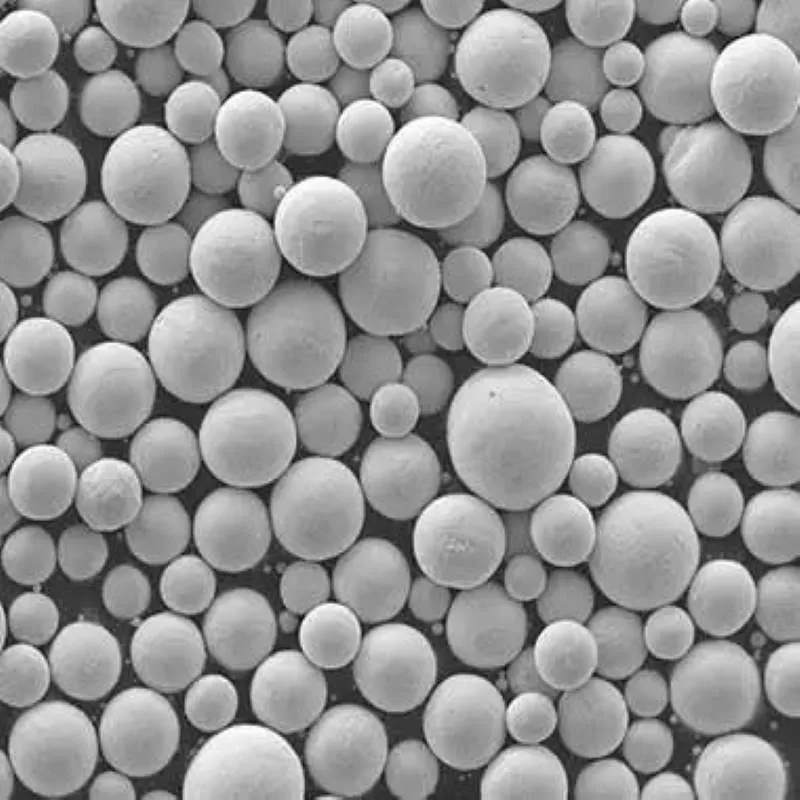
Spherical ASTM A203 Low Alloy Steel Powder, Grade D
Product Code : SP-CSTI-582-CU
We provide Spherical ASTM A203 Low Alloy Steel Powder, Grade D,Spherical ASTM A203 Low Alloy Steel Powder, Grade D is suitable for laser/electron beam augmentation, hot isostatic pressing, laser cladding, hot/cold spraying, and so on. The particles can be irregular and spherical. The particle distribution can reach the nanometer scale.,Spherical Particle Size,0-15μm,,15-45um,15-53μm, 20-63um,45-105um,45-150μm , 50-150um,75-150μm,or customized,Product purity and oxygen content can be customized according to requirements.
Please contact us if you need customized services. We will contact you with the price and availability in 24 hours.
ASTM A203 Low Alloy Steel Spherical Powder, Grade D Product Information
-:-
For detailed product information, please contact sales.
-:
ASTM A203 Low Alloy Steel Spherical Powder, Grade D Synonyms
-:-
For detailed product information, please contact sales.
-:
-:-
For detailed product information, please contact sales.
-:
Spherical ASTM A203 Low Alloy Steel Powder, Grade D characteristics
-:-
For detailed product information, please contact sales.
-:
Spherical ASTM A203 Low Alloy Steel Powder, Grade D Particle Size
-:-
For detailed product information, please contact sales.
-:
-:-
-:-
0-15μm ,5-25μm, 15-45μm, 15-53μm,20-63um, 45-75μm, 45-105μm, 45-150μm ,75-150μm.
(Various granularities can be customized according to customer requirements)
-:-
For detailed product information, please contact sales.
-:
Spherical ASTM A203 Low Alloy Steel Powder, Grade D Applicable processes
-:-
For detailed product information, please contact sales.
-:
Laser/electron beam additive manufacturing (SLM/EBM, 3D printing)
Direct laser deposition (DLD)
Used in thermal spray (TSA)
Powder hot isostatic pressing (HIP)
Metal injection molding (MIM)
Powder metallurgy (PM)
Laser cladding (LC), etc.
-:-
For detailed product information, please contact sales.
-:
Spherical ASTM A203 Low Alloy Steel Powder, Grade D Chemical Composition
-:-
For detailed product information, please contact sales.
-:
-:-
For detailed product information, please contact sales.
-:
ASTM A203 Low Alloy Steel, Grade D Product Information
-:-
For detailed product information, please contact sales.
-:
## **ASTM A203 Grade D 3.5% Nickel Alloy Steel for Cryogenic Service**
### **1. Product Overview**
**ASTM A203 Grade D** is a **3.5% nickel-alloy steel plate** designed specifically for **pressure vessel applications requiring exceptional toughness at extremely low temperatures**. As a premium grade within the ASTM A203 specification (*Standard Specification for Pressure Vessel Plates, Alloy Steel, Nickel*), Grade D offers superior cryogenic performance compared to the 2.25% nickel grades (A and B), making it suitable for critical applications where material reliability at temperatures as low as **-150°F (-101°C)** is essential.
This grade combines enhanced nickel content with controlled carbon and manganese levels to achieve outstanding resistance to brittle fracture while maintaining good weldability and fabricability. The material is universally supplied in the **normalized** or **normalized and tempered** condition to ensure optimal grain structure and property consistency throughout thick sections.
### **2. Key International Standards & Specifications**
| Standard System | Equivalent Designation | Notes |
|-----------------|------------------------|-------|
| **ASTM/ASME** | **ASTM A203/A203M Grade D** / **SA-203 Grade D** | Primary specification for ASME Code construction |
| **European (EN)** | **EN 10028-4: 13Ni14** | Similar 3.5% Ni steel for low temperature service |
| **Japanese (JIS)** | **JIS G3127 SLA 365A** | 3.5% Ni steel for low temperature pressure vessels |
| **German (DIN)** | **DIN 17155: 13Ni14** | Historic designation, largely superseded by EN |
| **International** | **ISO 9328-4** | Equivalent international standardization |
**Classification Society Approvals:** Available with supplementary requirements from major societies including ABS (American Bureau of Shipping), DNV (Det Norske Veritas), LR (Lloyd's Register), and BV (Bureau Veritas) for marine and offshore applications.
### **3. Chemical Composition (% by Weight)**
| Element | ASTM A203 Grade D Requirements | Metallurgical Purpose |
|---------|--------------------------------|------------------------|
| **Carbon (C)** | 0.17% maximum | Minimized for optimal weldability and low-temperature toughness |
| **Manganese (Mn)** | 0.70% maximum | Controlled to balance strength and toughness |
| **Phosphorus (P)** | 0.035% maximum | Harmful impurity strictly limited |
| **Sulfur (S)** | 0.040% maximum | Controlled for improved transverse properties |
| **Silicon (Si)** | 0.15-0.40% | Deoxidizer and solid solution strengthener |
| **Nickel (Ni)** | **3.25-3.75%** | **Primary alloying element** - dramatically lowers ductile-brittle transition temperature |
| **Copper (Cu)** | 0.35% maximum (residual) | - |
**Key Metallurgical Features:**
- **Low Carbon Equivalent (CE):** Typically 0.35-0.45% (IIW formula: C + Mn/6 + (Cr+Mo+V)/5 + (Ni+Cu)/15)
- **Nickel Function:** Nickel expands the austenite phase field, stabilizes microstructure at cryogenic temperatures
- **Purity Requirements:** Strict control of tramp elements (Sn, As, Sb) to minimize temper embrittlement susceptibility
### **4. Mechanical & Physical Properties**
#### **4.1 Tensile Properties (Normalized Condition)**
| Property | Minimum Requirement | Typical Range | Test Standard |
|----------|---------------------|---------------|---------------|
| **Yield Strength (0.2% offset)** | 37 ksi (255 MPa) | 40-48 ksi (275-330 MPa) | ASTM A370 |
| **Tensile Strength** | 65-77 ksi (450-530 MPa) | 68-74 ksi (470-510 MPa) | ASTM A370 |
| **Elongation (in 8" gauge)** | 23% minimum | 25-30% | ASTM A370 |
| **Reduction of Area** | Not specified | Typically 55-65% | ASTM A370 |
#### **4.2 Impact Properties (Mandatory Requirement)**
| Test Temperature | Minimum Charpy V-Notch Energy | Requirements |
|------------------|-------------------------------|--------------|
| **-150°F (-101°C)** | **15 ft-lb (20 J) average** | 3 specimens minimum, single specimen not less than 10 ft-lb (14 J) |
**Note:** Impact testing is performed on longitudinal specimens. Transverse testing may be specified for critical applications.
#### **4.3 Physical Properties**
| Property | Value | Conditions |
|----------|-------|------------|
| **Density** | 7.88 g/cm³ (0.285 lb/in³) | Room temperature |
| **Modulus of Elasticity** | 29,000 ksi (200 GPa) | 20°C (68°F) |
| **Poisson's Ratio** | 0.29 | - |
| **Thermal Conductivity** | 44 W/m·K | 20°C (68°F) |
| **Specific Heat** | 450 J/kg·K | 20°C (68°F) |
| **Coefficient of Thermal Expansion** | 11.3 × 10⁻⁶/°C | 20-100°C (68-212°F) |
| **Electrical Resistivity** | 0.22 μΩ·m | 20°C (68°F) |
#### **4.4 Hardness Characteristics**
- **Typical Brinell Hardness:** 150-185 HB
- **Maximum Hardness:** 200 HB (often specified for weldability)
- **Hardness Uniformity:** ≤ 30 HB points variation across plate
### **5. Heat Treatment & Microstructure**
#### **5.1 Required Heat Treatment**
ASTM A203 Grade D must be supplied in one of the following conditions:
1. **Normalized:**
- Austenitizing temperature: 900-925°C (1650-1700°F)
- Cooling: Still air to room temperature
- Grain size requirement: ASTM No. 5 or finer
2. **Normalized and Tempered:**
- Normalized as above + Tempered at 595-650°C (1100-1200°F)
- Minimum tempering time: 1 hour per inch of thickness
- Cooling: Air cool from tempering temperature
#### **5.2 Resulting Microstructure**
- **Primary Phase:** Fine-grained ferrite
- **Secondary Phases:** Pearlite and/or bainite
- **Grain Size:** ASTM 5-7 (typically)
- **Inclusion Rating:** ASTM E45 Method A, maximum severity:
- Thin series: 2.0
- Heavy series: 1.5
- Sulfides: 2.5
### **6. Product Applications**
#### **6.1 Primary Industries & Applications**
| Industry | Specific Applications | Service Temperature Range |
|----------|----------------------|----------------------------|
| **LNG Industry** | - LNG storage tank inner shells
- LNG transport vessel containment
- LNG processing equipment | -162°C (-260°F) and above |
| **Industrial Gases** | - Liquid oxygen/nitrogen/argon storage vessels
- Cryogenic transport trailers
- Air separation unit components | -150°C to -196°C (-238°F to -321°F) |
| **Chemical Processing** | - Ethylene storage tanks
- Low-temperature reactors
- Cryogenic separation columns | -50°C to -100°C (-58°F to -148°F) |
| **Energy & Power** | - Hydrogen storage systems
- Superconducting magnet structures
- Cryogenic power transmission | -200°C to -269°C (-328°F to -452°F) |
| **Aerospace** | - Rocket fuel storage
- Space simulation chambers
- Cryogenic test equipment | -196°C to -269°C (-321°F to -452°F) |
#### **6.2 Design Temperature Limits**
- **Minimum Design Metal Temperature (MDMT):** -150°F (-101°C) with impact testing
- **Maximum Service Temperature:** 425°C (800°F) for pressure parts
- **Creep Considerations:** Not recommended for sustained service above 370°C (700°F)
### **7. Fabrication Characteristics**
#### **7.1 Weldability**
**Weldability Rating:** **Excellent** (for a low-alloy steel)
| Parameter | Value/Recommendation |
|-----------|----------------------|
| **Carbon Equivalent (Pcm)** | 0.18-0.22% (Pcm = C + Si/30 + Mn/20 + Cu/20 + Ni/60 + Cr/20 + Mo/15 + V/10 + 5B) |
| **Recommended Processes** | SMAW, GTAW, GMAW, SAW, FCAW |
| **Preheat Temperature** | ≤ 1" thickness: None required
1-2": 50-100°F (10-40°C)
> 2": 200-250°F (95-120°C) |
| **Interpass Temperature** | ≤ 300°F (150°C) |
| **Post-Weld Heat Treatment** | Recommended: 1100-1200°F (595-650°C)
Holding time: 1 hour/inch minimum |
#### **7.2 Welding Consumables**
- **AWS Classification:** AWS A5.23 F9PZ-EB3-Ni3 or equivalent
- **Nickel Matching:** Consumables should contain 2.5-3.5% Ni for weld metal toughness matching
- **Special Considerations:** Low hydrogen practices essential, moisture control critical
#### **7.3 Forming & Machining**
| Operation | Conditions/Recommendations |
|-----------|----------------------------|
| **Hot Forming** | Temperature: 1700-1900°F (925-1040°C)
Post-forming normalization required if exceeding 1200°F (650°C) |
| **Cold Forming** | Minimum bend radius: 3× thickness (typical)
Annealing may be required for severe deformation |
| **Machinability** | 60-65% of free-cutting steel (1212)
Recommended speeds: 70-90 SFM with HSS tools |
| **Cutting Methods** | Plasma, laser, waterjet preferred
Oxy-fuel requires care due to nickel content |
### **8. Quality Assurance & Testing**
#### **8.1 Mandatory Testing Requirements**
1. **Chemical Analysis**
- Ladle analysis from each heat
- Product verification from each plate or 50 tons
2. **Tensile Testing**
- One test per plate or 50 tons, whichever is less
- Location: 1/4 thickness from mid-width
3. **Impact Testing**
- One set of 3 Charpy specimens per heat treatment charge
- Test temperature: -150°F (-101°C)
- Orientation: Longitudinal (transverse optional)
#### **8.2 Optional Supplementary Tests**
- **Ultrasonic Examination:** ASTM A578 Level II or III
- **Hardness Survey:** ASTM E10/E18
- **Bend Tests:** ASTM E290
- **Microexamination:** ASTM E3/E112
- **NDT Methods:** RT, MT, PT as specified
### **9. Material Availability & Specifications**
#### **9.1 Standard Sizes & Forms**
- **Thickness Range:** 0.25 to 6 inches (6 to 150 mm)
- **Width Range:** Up to 150 inches (3800 mm)
- **Length Range:** Up to 600 inches (15,000 mm)
- **Weight Limitations:** Typically ≤ 20 tons per single plate
#### **9.2 Delivery Conditions**
- **Surface Condition:** Mill scale, blasted, or pickled as specified
- **Edge Preparation:** Mill edge, sheared, or machined
- **Identification:** Permanent heat number marking per ASTM A20
- **Certification:** Mill Test Certificate per EN 10204 3.1 or 3.2
### **10. Comparative Analysis with Other Grades**
| Grade | Ni Content | Min. Test Temp | Yield Strength | Relative Cost | Primary Application |
|-------|------------|----------------|----------------|---------------|----------------------|
| **A203 Grade D** | **3.5%** | **-150°F (-101°C)** | 37 ksi min | 2.2-2.5× | Critical cryogenic |
| **A203 Grade B** | 2.25% | -75°F (-59°C) | 37 ksi min | 1.8-2.0× | Moderate cryogenic |
| **A516 Grade 70** | None | Optional | 38 ksi min | 1.0× | Ambient temperature |
| **A553 Type I** | 8.0-9.0% | -320°F (-196°C) | 75 ksi min | 4.0-5.0× | LNG primary containment |
### **11. Design & Engineering Considerations**
#### **11.1 Advantages**
1. **Proven Cryogenic Performance:** Decades of successful service in LNG and industrial gas applications
2. **Code Recognition:** Fully approved by ASME, EN, and other international codes
3. **Good Fabricability:** Excellent weldability and forming characteristics
4. **Cost-Effective:** Most economical 3.5% Ni steel for cryogenic service
5. **Technical Support:** Extensive industry experience and documentation available
#### **11.2 Limitations & Constraints**
1. **Strength Limitation:** Not suitable for high-pressure applications requiring >50 ksi yield
2. **Thickness Limitations:** Properties degrade above 4 inches (100 mm) without special processing
3. **Availability:** Longer lead times than carbon steels (typically 8-12 weeks)
4. **Specialized Fabrication:** Requires qualified procedures and experienced fabricators
#### **11.3 Fracture Mechanics Considerations**
- **Kᵢₐ Values:** Typically > 100 ksi√in at -150°F (-101°C)
- **CTOD Values:** > 0.10 mm at design temperature
- **Leak-Before-Break:** Demonstrated capability in properly designed vessels
### **12. Procurement Guidelines**
#### **12.1 Specification Requirements**
When ordering ASTM A203 Grade D, specify:
- ASTM A203/A203M Grade D
- Heat treatment condition (normalized or normalized and tempered)
- Impact test temperature (-150°F/-101°C)
- Any supplementary requirements (ultrasonic testing, hardness limits, etc.)
- Certification requirements (EN 10204 3.1 or 3.2)
#### **12.2 Mill Qualification**
- **Audited Mills:** Prefer mills with ASME, ISO 9001, and AD2000-Merkblatt HP0 certifications
- **Production History:** Minimum 5 years experience with nickel alloy steels
- **Testing Facilities:** In-house chemical and mechanical testing capabilities
### **13. Environmental & Sustainability Aspects**
#### **13.1 Life Cycle Considerations**
- **Service Life:** 30-50 years with proper maintenance
- **Recyclability:** 100% recyclable without property loss
- **Embodied Energy:** ~35 MJ/kg (typical for alloy steels)
- **Carbon Footprint:** 2.5-3.0 kg CO₂/kg steel
#### **13.2 Environmental Performance**
- **Corrosion Resistance:** 2-3× better than carbon steel in marine atmospheres
- **Maintenance Requirements:** Reduced compared to carbon steels
- **End-of-Life:** High scrap value supports recycling economics
### **14. Industry Trends & Future Outlook**
#### **14.1 Market Drivers**
1. **LNG Expansion:** Global LNG trade growth driving demand for cryogenic materials
2. **Hydrogen Economy:** Emerging applications for liquid hydrogen storage
3. **Space Exploration:** Increased demand for cryogenic rocket fuels
4. **Scientific Research:** Expansion of superconducting and low-temperature physics
#### **14.2 Technological Developments**
- **Improved Processing:** Advanced TMCP (Thermomechanical Controlled Processing) variants
- **Enhanced Testing:** Digital fracture mechanics and predictive modeling
- **Welding Advances:** Automated and robotic welding for improved quality
- **NDT Innovations:** Phased array UT and digital radiography
### **15. Case Studies & Historical Performance**
#### **15.1 Notable Applications**
1. **LNG Carrier Fleet:** Over 500 vessels built with A203 Grade D since 1970
2. **Baseload LNG Plants:** Major facilities worldwide using Grade D for storage
3. **Space Program:** Apollo and Space Shuttle cryogenic systems
4. **Research Facilities:** CERN, Fermilab, and ITER cryogenic infrastructure
#### **15.2 Performance Record**
- **Failure Rate:** < 0.001% in properly fabricated vessels
- **In-Service Issues:** Primarily related to fabrication defects, not material deficiencies
- **Longevity:** Numerous vessels exceeding 40 years of continuous service
### **16. Conclusion**
**ASTM A203 Grade D** represents the **industry standard for 3.5% nickel cryogenic steel**, offering an optimal balance of low-temperature toughness, fabricability, and cost-effectiveness for critical cryogenic applications. Its proven track record in LNG, industrial gases, and scientific applications spanning over 50 years provides engineers with a material of known reliability and performance.
**Key Strengths:**
- Guaranteed toughness at -150°F (-101°C)
- Excellent weldability with established procedures
- Comprehensive code recognition worldwide
- Extensive industry experience and technical data
- Cost-effective solution for demanding cryogenic service
**Recommended For:**
- LNG storage and transport systems
- Industrial gas production and storage
- Chemical processing at cryogenic temperatures
- Any application requiring reliable performance below -100°F (-73°C)
When properly specified, fabricated according to qualified procedures, and maintained within design limits, ASTM A203 Grade D provides decades of safe, reliable service in the world's most demanding cryogenic applications. Its continued specification in new LNG projects and expanding cryogenic markets ensures its position as a cornerstone material for low-temperature engineering well into the future.
-:-
For detailed product information, please contact sales.
-:
ASTM A203 Low Alloy Steel, Grade D Specification
Dimensions
Size:
Diameter 20-1000 mm Length <5973 mm
Size:We can customized as required
Standard:
Per your request or drawing
We can customized as required
Properties(Theoretical)
Chemical Composition
-:-
For detailed product information, please contact sales.
-:
ASTM A203 Low Alloy Steel, Grade D Properties
-:-
For detailed product information, please contact sales.
-:
Spherical ASTM A203 Low Alloy Steel Powder, Grade D Particle Size Description
-:-
For detailed product information, please contact sales.
-:
Applications of Spherical ASTM A203 Low Alloy Steel Powder, Grade D
-:-
For detailed product information, please contact sales.
-:
-:-
For detailed product information, please contact sales.
-:
Applications of ASTM A203 Low Alloy Steel Spherical Powder, Grade D
-:-
For detailed product information, please contact sales.
-:
Chemical Identifiers ASTM A203 Low Alloy Steel Spherical Powder, Grade D
-:-
For detailed product information, please contact sales.
-:
Packing of ASTM A203 Low Alloy Steel Spherical Powder, Grade D
-:-
For detailed product information, please contact sales.
-:
Standard Packing:
-:-
For detailed product information, please contact sales.
-:
Typical bulk packaging includes palletized plastic 5 gallon/25 kg. pails, fiber and Steel Spherical Powder drums to 1 ton super sacks in full container (FCL) or truck load (T/L) quantities. Research and sample quantities and hygroscopic, oxidizing or other air sensitive materials may be packaged under argon or vacuum. Solutions are packaged in polypropylene, plastic or glass jars up to palletized 2444 gallon liquid totes Special package is available on request. E FORUs’ is carefully handled to minimize damage during storage and transportation and to preserve the quality of our products in their original condition