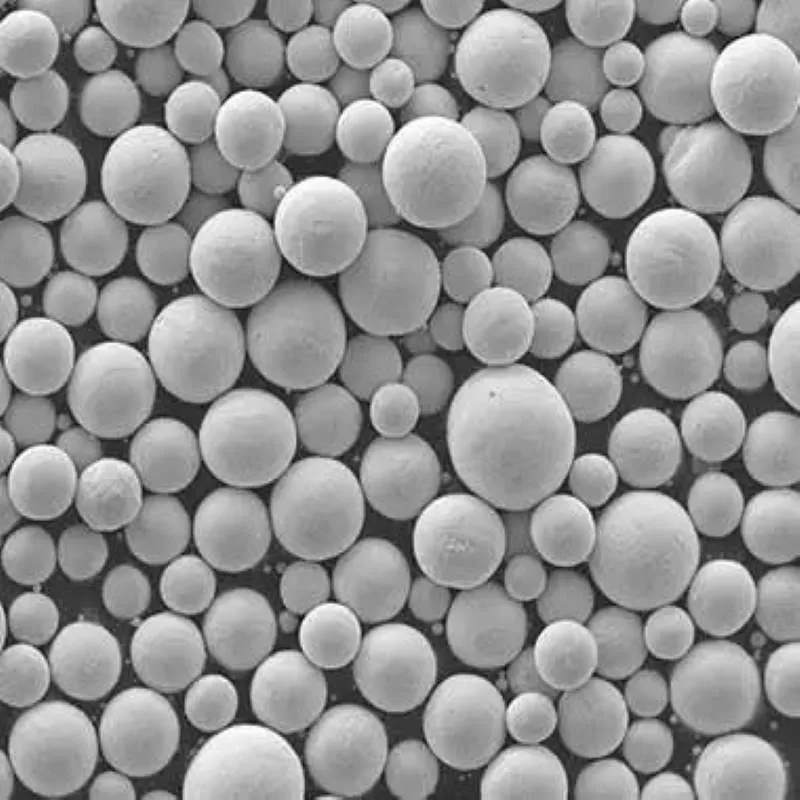
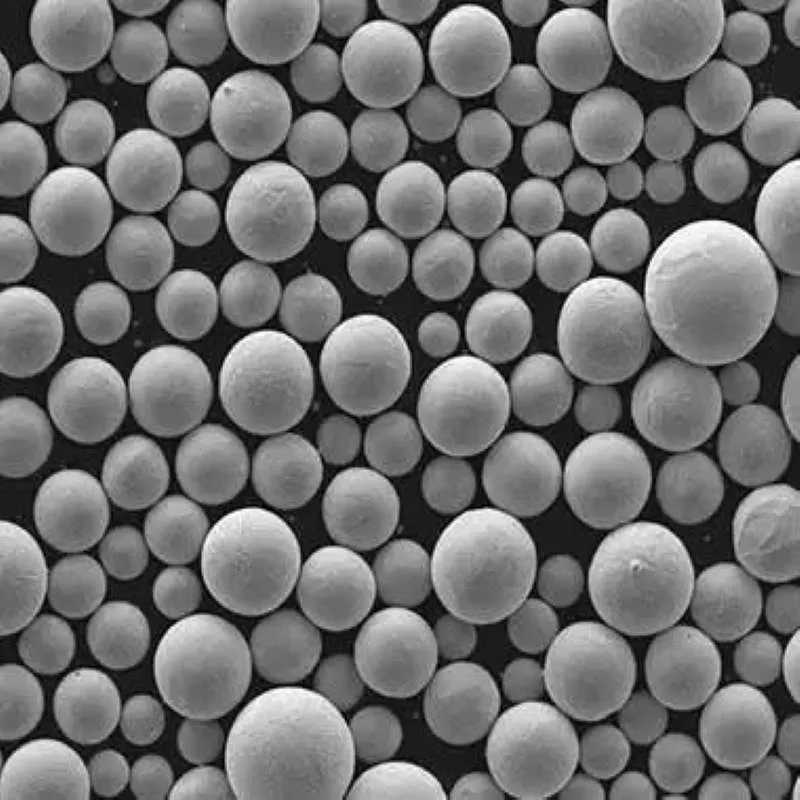
Spherical ASTM A227 Steel Powder, Class I
Product Code : SP-CSTI-763-CU
We provide Spherical ASTM A227 Steel Powder, Class I,Spherical ASTM A227 Steel Powder, Class I is suitable for laser/electron beam augmentation, hot isostatic pressing, laser cladding, hot/cold spraying, and so on. The particles can be irregular and spherical. The particle distribution can reach the nanometer scale.,Spherical Particle Size,0-15μm,,15-45um,15-53μm, 20-63um,45-105um,45-150μm , 50-150um,75-150μm,or customized,Product purity and oxygen content can be customized according to requirements.
Please contact us if you need customized services. We will contact you with the price and availability in 24 hours.
ASTM A227 Steel Spherical Powder Wire, Class I Product Information
-:-
For detailed product information, please contact sales.
-:
ASTM A227 Steel Spherical Powder Wire, Class I Synonyms
-:-
For detailed product information, please contact sales.
-:
-:-
For detailed product information, please contact sales.
-:
Spherical ASTM A227 Steel Powder, Class I characteristics
-:-
For detailed product information, please contact sales.
-:
Spherical ASTM A227 Steel Powder, Class I Particle Size
-:-
For detailed product information, please contact sales.
-:
-:-
-:-
0-15μm ,5-25μm, 15-45μm, 15-53μm,20-63um, 45-75μm, 45-105μm, 45-150μm ,75-150μm.
(Various granularities can be customized according to customer requirements)
-:-
For detailed product information, please contact sales.
-:
Spherical ASTM A227 Steel Powder, Class I Applicable processes
-:-
For detailed product information, please contact sales.
-:
Laser/electron beam additive manufacturing (SLM/EBM, 3D printing)
Direct laser deposition (DLD)
Used in thermal spray (TSA)
Powder hot isostatic pressing (HIP)
Metal injection molding (MIM)
Powder metallurgy (PM)
Laser cladding (LC), etc.
-:-
For detailed product information, please contact sales.
-:
Spherical ASTM A227 Steel Powder, Class I Chemical Composition
-:-
For detailed product information, please contact sales.
-:
-:-
For detailed product information, please contact sales.
-:
ASTM A227 Steel Wire, Class I Product Information
-:-
For detailed product information, please contact sales.
-:
# **Product Datasheet: ASTM A227 Class I Hard-Drawn Steel Wire**
## **1. Product Overview**
**ASTM A227 Class I** is a **cold-drawn, high-carbon steel wire** manufactured without a subsequent heat treatment process, resulting in its characteristic high tensile strength and moderate toughness. Class I represents the **standard tensile strength range** within the A227 specification, which also includes Class II for higher strengths. This hard-drawn spring wire is known for its excellent surface finish, dimensional consistency, and cost-effectiveness, making it a widely used material for a variety of general-purpose mechanical spring applications where high strength and moderate flexibility are required.
## **2. International Standards & Designations**
| System/Authority | Designation | Specification Title |
| :--- | :--- | :--- |
| **ASTM International** | **ASTM A227/A227M** | Standard Specification for Steel Wire, Cold-Drawn for Mechanical Springs |
| **SAE** | **SAE J178** | Spring Wire - Hard Drawn (Carbon) |
| **ISO** | **ISO 8458-2** | Mechanical springs - Steel spring wire - Part 2: Oil hardened and tempered spring wire *(Note: A227 is not oil-tempered)* |
| **JIS** | **JIS G 3521** | Hard Drawn Steel Wire for Springs (SW) |
| **DIN** | **DIN 17223-1** | (Similar material concept, though specific grades differ) |
| **Common Names** | Hard Drawn Spring Wire, HD Wire, Music Wire Grade (General Purpose) |
## **3. Chemical Composition (% by Weight)**
The composition is based on high-carbon steel grades to achieve the necessary strength through cold drawing.
| Element | ASTM A227 Requirement (Typical Basis Grade) | Typical % (for wire drawn from AISI 1065 or similar) |
| :--- | :--- | :--- |
| **Carbon (C)** | **0.60 - 0.75** | 0.65 - 0.75 |
| **Manganese (Mn)** | 0.30 - 0.80 | 0.60 - 0.80 |
| **Phosphorus (P)** | ≤ 0.040 | 0.020 - 0.030 |
| **Sulfur (S)** | ≤ 0.050 | 0.020 - 0.035 |
| **Silicon (Si)** | 0.15 - 0.35 | 0.15 - 0.30 |
| **Iron (Fe)** | Balance | Balance |
**Key Manufacturing Process:** The wire starts as hot-rolled rod of a specified high-carbon steel (typically similar to AISI 1065 or 1070). It is then patented (heat-treated to a fine pearlitic structure) and subsequently cold drawn through a series of dies to the final diameter. **No final heat treatment (tempering) is applied after the final draw,** which defines its "hard-drawn" condition.
## **4. Mechanical & Physical Properties**
Properties are specified by wire diameter. Strength decreases slightly as diameter increases. Values below are representative.
| Property | Typical Values for ASTM A227 Class I | Test Standard | Notes |
| :--- | :--- | :--- | :--- |
| **Condition** | **Hard Drawn (as-drawn, not tempered)** | -- | Final strength achieved through cold work. |
| **Tensile Strength** | **Varies by Diameter:**
• 0.5 mm (0.020 in): ~2150-2400 MPa (312-348 ksi)
• 2.0 mm (0.080 in): ~1750-1950 MPa (254-283 ksi)
• 4.0 mm (0.160 in): ~1550-1700 MPa (225-247 ksi)
• 6.0 mm (0.250 in): ~1400-1550 MPa (203-225 ksi) | ASTM A370 / E8 | Consult standard for full diameter-strength table. |
| **Torsion Test** | Required. Minimum number of twists specified per diameter before fracture. | ASTM A938 | Ensures adequate ductility and freedom from defects. |
| **Coiling Test** | Wire must coil satisfactorily around a mandrel of specified diameter without fracture. | Visual/Functional | Mandrel diameter is a multiple of the wire diameter. |
| **Surface Finish** | Smooth, bright, and free from scale and seams detrimental to performance. | Visual/Microscopic | Essential for fatigue life. |
| **Dimensional Tolerance** | Very tight (e.g., ±0.025 mm for finer diameters). | ASTM A227, Table 1 | |
| **Modulus of Elasticity (E)** | ~200 GPa (29,000 ksi) | -- | Typical for high-carbon steel. |
| **Modulus in Torsion (G)** | ~77 GPa (11,200 ksi) | -- | |
## **5. Key Characteristics & Advantages**
* **High Strength-to-Cost Ratio:** Provides significant tensile strength at a lower cost than oil-tempered or stainless spring wires.
* **Good Surface Finish:** The drawing process produces a smooth, bright surface that minimizes notch effects and is suitable for plating or painting.
* **Excellent Dimensional Accuracy:** Cold drawing ensures precise diameter control and roundness.
* **Adequate Formability:** Can be cold-coiled into springs at room temperature, though it is less formable than oil-tempered wire (ASTM A229).
* **No Decarburization Risk:** Since it is not heat-treated after final drawing, it does not suffer from surface decarburization, preserving full surface hardness.
## **6. Primary Applications**
ASTM A227 Class I is used in a vast array of general-purpose spring applications that do not require the highest levels of fatigue resistance or shock loading capability.
* **Extension & Torsion Springs:** For appliances, industrial equipment, furniture, and toys.
* **Low-Cycle Compression Springs:** In electrical switches, latch mechanisms, and consumer products.
* **Wire Forms:** Clips, clamps, retainers, and general-purpose bent wire components.
* **Agricultural Equipment:** Springs for planters, harvesters, and gates.
* **General Industrial Components:** Cotter pins, retaining rings, and light-duty brush springs.
* **Upholstery & Bedding:** Spring coils in lower-stress applications.
## **7. Processing & Fabrication Guidelines**
* **Spring Coiling:** Can be coiled on automatic spring coiling machines. **Stress relieving is highly recommended after coiling** to relieve internal stresses from cold forming, stabilize dimensions, and improve performance.
* **Stress Relieving:** Typically performed at **230-290°C (450-550°F)** for 30-60 minutes. This is **not a tempering process** and does not significantly reduce tensile strength; it relieves coiling stresses.
* **Plating/Coating:** Readily accepts electroplating (zinc, cadmium, nickel) or organic coatings. Baking after plating is critical to avoid hydrogen embrittlement (typically 190-220°C / 375-430°F for 2-4 hours).
* **Welding:** Generally not recommended. The high carbon content and cold-worked structure make it prone to cracking in the heat-affected zone.
* **Limitation:** Not suitable for applications involving high dynamic fatigue, extreme temperatures, or severe shock loads. For such applications, oil-tempered (A229) or music wire (A228) is preferred.
## **8. Comparison with Other Spring Wires**
| Wire Type (ASTM) | Key Process | Key Characteristic | Typical Application |
| :--- | :--- | :--- | :--- |
| **A227 Class I (Hard Drawn)** | Cold drawn, no final temper | **Cost-effective, high static strength** | General-purpose, low-cost springs |
| **A229 (Oil-Tempered)** | Cold drawn, then oil tempered | **Better formability & fatigue life** | Automotive suspension, higher-duty springs |
| **A228 (Music Wire)** | Patented and cold drawn to highest reductions | **Highest tensile strength, excellent surface** | Critical dynamic springs (valves, high-cycle) |
| **A232 (Chrome Vanadium)** | Oil tempered alloy wire | **High fatigue & shock resistance** | High-performance automotive & aerospace |
## **9. Quality Assurance**
Material is supplied with certification including:
* Chemical analysis of the heat
* Mechanical test results (tensile, torsion) for sampled sizes
* Dimensional report
* Compliance statement to ASTM A227 Class I
---
**Disclaimer:** This datasheet provides general information. For design and procurement, the complete requirements of the latest edition of **ASTM A227/A227M** shall govern. The tensile strength is diameter-dependent; designers must use the correct table from the standard. Consultation with a spring manufacturer is recommended for specific application engineering.
-:-
For detailed product information, please contact sales.
-:
ASTM A227 Steel Wire, Class I Specification
Dimensions
Size:
Diameter 20-1000 mm Length <6409 mm
Size:We can customized as required
Standard:
Per your request or drawing
We can customized as required
Properties(Theoretical)
Chemical Composition
-:-
For detailed product information, please contact sales.
-:
ASTM A227 Steel Wire, Class I Properties
-:-
For detailed product information, please contact sales.
-:
Spherical ASTM A227 Steel Powder, Class I Particle Size Description
-:-
For detailed product information, please contact sales.
-:
Applications of Spherical ASTM A227 Steel Powder, Class I
-:-
For detailed product information, please contact sales.
-:
-:-
For detailed product information, please contact sales.
-:
Applications of ASTM A227 Steel Spherical Powder Wire, Class I
-:-
For detailed product information, please contact sales.
-:
Chemical Identifiers ASTM A227 Steel Spherical Powder Wire, Class I
-:-
For detailed product information, please contact sales.
-:
Packing of ASTM A227 Steel Spherical Powder Wire, Class I
-:-
For detailed product information, please contact sales.
-:
Standard Packing:
-:-
For detailed product information, please contact sales.
-:
Typical bulk packaging includes palletized plastic 5 gallon/25 kg. pails, fiber and Steel Spherical Powder drums to 1 ton super sacks in full container (FCL) or truck load (T/L) quantities. Research and sample quantities and hygroscopic, oxidizing or other air sensitive materials may be packaged under argon or vacuum. Solutions are packaged in polypropylene, plastic or glass jars up to palletized 2880 gallon liquid totes Special package is available on request. E FORUs’ is carefully handled to minimize damage during storage and transportation and to preserve the quality of our products in their original condition