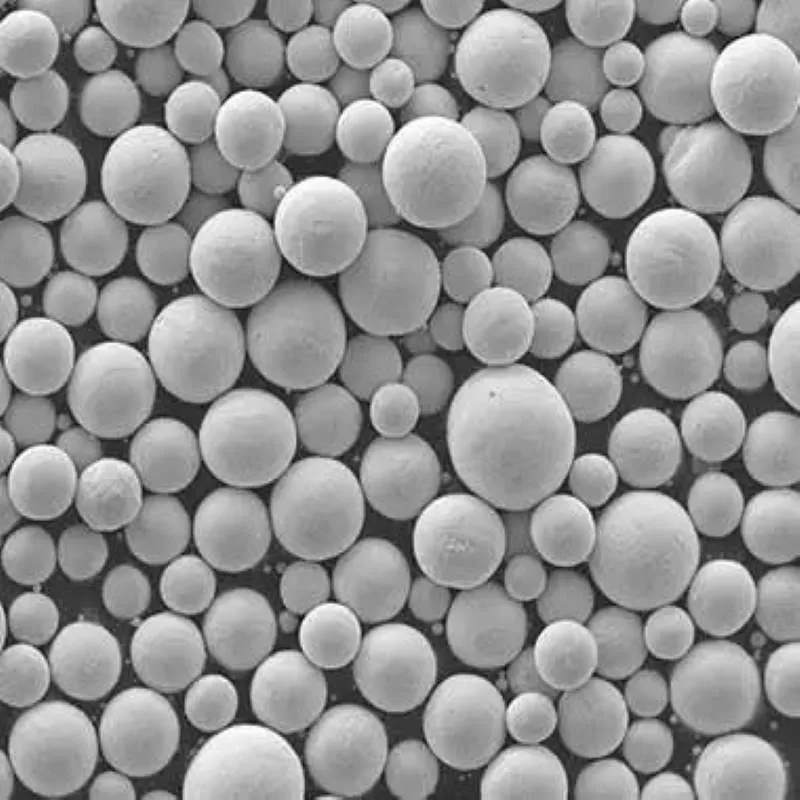
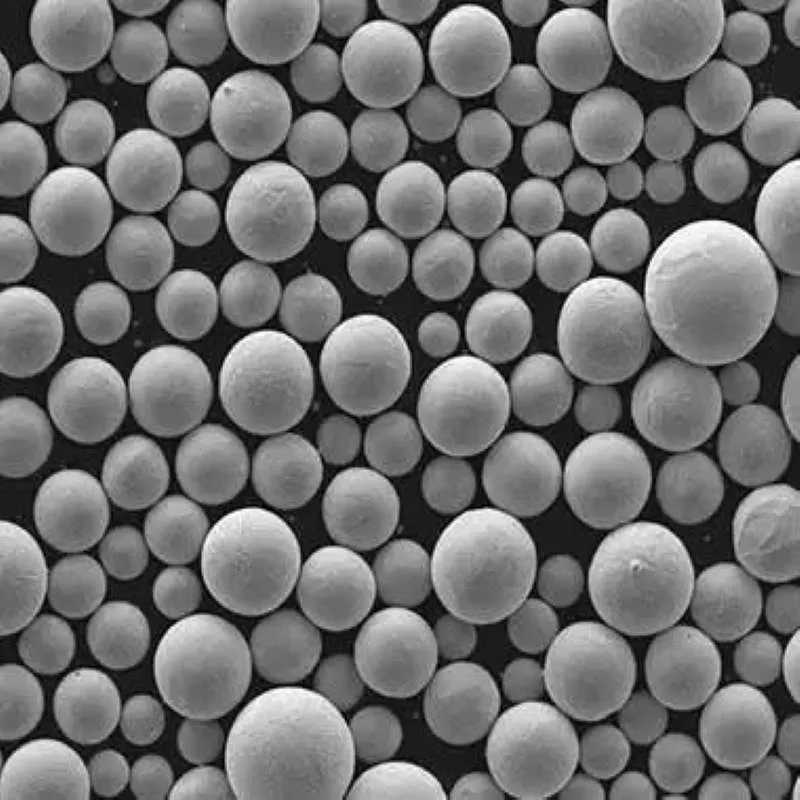
Spherical ASTM A387 Alloy Steel Powder, Grade 91
Product Code : SP-CSTI-612-CU
We provide Spherical ASTM A387 Alloy Steel Powder, Grade 91,Spherical ASTM A387 Alloy Steel Powder, Grade 91 is suitable for laser/electron beam augmentation, hot isostatic pressing, laser cladding, hot/cold spraying, and so on. The particles can be irregular and spherical. The particle distribution can reach the nanometer scale.,Spherical Particle Size,0-15μm,,15-45um,15-53μm, 20-63um,45-105um,45-150μm , 50-150um,75-150μm,or customized,Product purity and oxygen content can be customized according to requirements.
Please contact us if you need customized services. We will contact you with the price and availability in 24 hours.
ASTM A387 Alloy Steel Spherical Powder, Grade 91 Product Information
-:-
For detailed product information, please contact sales.
-:
ASTM A387 Alloy Steel Spherical Powder, Grade 91 Synonyms
-:-
For detailed product information, please contact sales.
-:
-:-
For detailed product information, please contact sales.
-:
Spherical ASTM A387 Alloy Steel Powder, Grade 91 characteristics
-:-
For detailed product information, please contact sales.
-:
Spherical ASTM A387 Alloy Steel Powder, Grade 91 Particle Size
-:-
For detailed product information, please contact sales.
-:
-:-
-:-
0-15μm ,5-25μm, 15-45μm, 15-53μm,20-63um, 45-75μm, 45-105μm, 45-150μm ,75-150μm.
(Various granularities can be customized according to customer requirements)
-:-
For detailed product information, please contact sales.
-:
Spherical ASTM A387 Alloy Steel Powder, Grade 91 Applicable processes
-:-
For detailed product information, please contact sales.
-:
Laser/electron beam additive manufacturing (SLM/EBM, 3D printing)
Direct laser deposition (DLD)
Used in thermal spray (TSA)
Powder hot isostatic pressing (HIP)
Metal injection molding (MIM)
Powder metallurgy (PM)
Laser cladding (LC), etc.
-:-
For detailed product information, please contact sales.
-:
Spherical ASTM A387 Alloy Steel Powder, Grade 91 Chemical Composition
-:-
For detailed product information, please contact sales.
-:
-:-
For detailed product information, please contact sales.
-:
ASTM A387 Alloy Steel, Grade 91 Product Information
-:-
For detailed product information, please contact sales.
-:
# **Product Introduction: ASTM A387 Grade 91 Alloy Steel Plate**
**ASTM A387 Grade 91** is a high-performance, advanced chromium-molybdenum-vanadium-niobium (9Cr-1Mo-V-Nb) alloy steel plate designed specifically for **ultra-high temperature and high-pressure service** in modern power generation and demanding petrochemical applications. It represents a significant technological advancement over traditional chromium-molybdenum steels, offering exceptional **creep strength, oxidation resistance, and microstructural stability** at temperatures up to **600°C (1112°F)** and beyond. This grade revolutionized high-temperature component design by allowing higher operating temperatures and pressures, leading to increased thermal efficiency in power plants.
---
## **1. Key International Standards**
* **Primary Material Standard:** **ASTM A387/A387M** - Standard Specification for Pressure Vessel Plates, Alloy Steel, Chromium-Molybdenum
* **Common Supplementary Standards:**
* **ASTM A20/A20M:** General Requirements for Steel Plates for Pressure Vessels
* **ASME Section II, Part A:** Adopted as **SA-387 Grade 91** in the ASME Boiler and Pressure Vessel Code
* **EN 10028-2:** Comparable European standard is **P91** (1.4903)
* **ASME SA-182:** For forged fittings (F91)
* **ASME SA-213:** For seamless tubes (T91)
* **ASME SA-335:** For seamless pipes (P91)
* **Key Technical Guidelines:**
* **ASME Code Case N-47:** For nuclear Class 1 components
* **VdTÜV Data Sheet 450/1:** European specification
---
## **2. Chemical Composition (Weight %, ASTM A387)**
| Element | Composition (%) | Critical Function |
|---------|----------------|-------------------|
| Carbon (C) | 0.08-0.12 | Strength, carbide formation |
| Manganese (Mn) | 0.30-0.60 | Deoxidizer, hardenability |
| Phosphorus (P) | 0.020 max | Impurity control (toughness) |
| Sulfur (S) | 0.010 max | Impurity control (inclusions) |
| Silicon (Si) | 0.20-0.50 | Deoxidizer, solid solution strengthening |
| **Chromium (Cr)** | **8.00-9.50** | **Oxidation/corrosion resistance, solid solution strengthening** |
| **Molybdenum (Mo)** | **0.85-1.05** | **Solid solution strengthening, carbide formation** |
| Nickel (Ni) | 0.40 max | Austenite stabilizer, toughness |
| **Vanadium (V)** | **0.18-0.25** | **Precipitation strengthening (V-rich MX carbonitrides)** |
| **Niobium (Nb)** | **0.06-0.10** | **Precipitation strengthening (Nb-rich MX carbonitrides)** |
| Nitrogen (N) | 0.030-0.070 | **Crucial: Forms fine carbonitrides for precipitation strengthening** |
| Aluminum (Al) | 0.020 max | Deoxidizer control |
| **Total: (V+Nb)** | **0.24-0.35** | **Critical for precipitation strengthening** |
*Note: The precise balance of V, Nb, and N is critical for developing the optimal microstructure through heat treatment.*
---
## **3. Mechanical & Physical Properties**
### **Room Temperature Mechanical Properties (After Proper Heat Treatment):**
- **Tensile Strength:** **585 MPa min** (85,000 psi min)
- **Yield Strength (0.2% offset):** **415 MPa min** (60,000 psi min)
- **Elongation in 2 in. (50 mm):** 18% minimum
- **Reduction of Area:** Typically 45-60%
- **Hardness:** 190-250 HB (max 250 HB)
- **Charpy V-Notch Impact Toughness:** 27 J (20 ft-lb) minimum average at 21°C (70°F)
### **Elevated Temperature Properties (Typical):**
- **Maximum Service Temperature:** Up to **625°C (1157°F)** for long-term service
- **Creep Strength:** Excellent - 100,000-hour rupture strength of ~100 MPa at 600°C
- **Stress Rupture:** Superior to conventional 9Cr-1Mo steels by a factor of 2-3
### **Physical Properties:**
| Property | Value | Conditions |
|----------|-------|------------|
| Density | 7.77 g/cm³ (0.281 lb/in³) | Room temperature |
| Modulus of Elasticity | 203 GPa (29.5×10⁶ psi) | 21°C (70°F) |
| Thermal Conductivity | 26-28 W/m·K | 500°C (932°F) |
| Specific Heat | 650 J/kg·K | 500°C (932°F) |
| Thermal Expansion Coefficient | 12.4×10⁻⁶/K | 20-600°C (68-1112°F) |
| Melting Range | 1425-1510°C (2597-2750°F) | - |
---
## **4. Microstructure & Heat Treatment Requirements**
### **Critical Heat Treatment Sequence:**
1. **Normalizing:** **1040-1065°C (1904-1949°F)** for sufficient time (typically 1 hour per inch of thickness), followed by air cooling
2. **Tempering:** **730-800°C (1346-1472°F)** for minimum 1 hour, followed by air cooling
*Note: Temperature control is critical - even small deviations (±10°C) can significantly affect properties.*
### **Resulting Microstructure:**
- **Tempered Martensite** with fine dispersion of:
- M₂₃C₆ carbides (Cr-rich)
- **MX carbonitrides** (V, Nb-rich) - **Primary strengthening mechanism**
- Laves phase (Fe₂Mo) - Forms during long-term aging
### **Transformation Temperatures:**
- **Ac₁:** ~800-830°C (1472-1526°F)
- **Ac₃:** ~890-920°C (1634-1688°F)
- **Mₛ (Martensite start):** ~380-400°C (716-752°F)
- **Mf (Martensite finish):** ~100-150°C (212-302°F)
---
## **5. Key Characteristics & Advantages**
### **Superior High-Temperature Performance:**
- **Exceptional Creep Strength:** 2-3 times better than conventional 9Cr-1Mo steel at 600°C
- **Oxidation Resistance:** Good resistance up to 650°C (1200°F)
- **Microstructural Stability:** Resists degradation during long-term service
- **Thermal Fatigue Resistance:** Good resistance to thermal cycling damage
### **Enhanced Mechanical Properties:**
- **High Yield Strength:** Maintains strength at elevated temperatures
- **Good Toughness:** Properly heat-treated material exhibits good impact properties
- **Low Thermal Expansion:** Similar to austenitic stainless steels, reducing thermal stresses
### **Design Advantages:**
- **Thinner Sections:** Higher allowable stresses permit thinner walls, reducing weight and thermal stresses
- **Higher Efficiency:** Enables higher steam parameters in power plants
- **Cost-Effective:** Lower lifecycle costs compared to austenitic stainless steels
---
## **6. Product Applications**
### **Power Generation (Primary Application):**
- **Supercritical & Ultra-Supercritical Boilers:**
- Steam headers and manifolds
- Main steam piping
- Superheater and reheater headers
- Attemperator piping
- **Heat Recovery Steam Generators (HRSGs):**
- High-pressure evaporators
- Superheater sections
- **Nuclear Power Plants:**
- Reactor coolant system components (where specified)
- Steam generator supports
### **Petrochemical & Refining:**
- **Hydrocracking Units:** Reactor effluent lines, transfer lines
- **Catalytic Cracking:** High-temperature piping
- **Synthesis Gas Plants:** High-temperature components
- **Hydrogen Production:** Reformers and associated piping
### **Other Applications:**
- **High-Temperature Heat Exchangers**
- **Process Industry Reactors**
- **Aerospace and advanced energy systems**
---
## **7. Fabrication Guidelines**
### **Welding Requirements:**
- **Preheat Temperature:** **200-250°C (392-482°F)** minimum
- **Interpass Temperature:** **250-300°C (482-572°F)** maximum
- **Filler Metals:** AWS A5.5 E90XX-B9 or equivalent
- Common electrodes: E9015-B9, E9016-B9
- Common wires: ER90S-B9
- **Post-Weld Heat Treatment (PWHT):** **Mandatory**
- Temperature: **730-800°C (1346-1472°F)**
- Time: Minimum 1 hour, typically 2-4 hours
- Cooling: Air cool only
### **Critical Fabrication Considerations:**
1. **Heat Treatment Control:** Strict temperature monitoring essential
2. **Avoid Contamination:** Particularly from copper, lead, and low-melting-point metals
3. **Cold Working:** Generally not recommended - may require re-heat treatment
4. **Non-Destructive Testing:** Essential after fabrication and heat treatment
### **Common Challenges:**
- **Type IV Cracking:** In heat-affected zone during creep service
- **Temper Embrittlement:** If cooled too slowly through 375-575°C range
- **Delta Ferrite Formation:** If composition or heat treatment incorrect
---
## **8. Comparison with Similar Grades**
| Property | Grade 91 vs. Grade 9 | Grade 91 vs. Grade 92 | Grade 91 vs. 316H Stainless |
|----------|----------------------|------------------------|-----------------------------|
| **Creep Strength** | 2-3× better | ~15-20% lower | Similar at 600°C |
| **Maximum Temperature** | ~625°C vs. ~600°C | ~650°C vs. ~625°C | ~650°C vs. ~625°C |
| **Thermal Expansion** | Lower | Similar | Higher |
| **Thermal Conductivity** | Higher | Similar | Lower |
| **Cost** | Higher than Grade 9 | Similar | Higher |
| **Weldability** | More challenging | More challenging | Easier |
---
## **9. Quality Control & Testing Requirements**
### **Mandatory Testing:**
- Chemical analysis (ladle and product)
- Tensile testing at room temperature
- Impact testing (Charpy V-notch)
- Hardness testing
- Dimensional inspection
### **Additional Testing (as specified):**
- Ultrasonic examination
- Elevated temperature tensile tests
- Creep and stress rupture testing (for qualification)
- Microstructural examination
### **Certification Requirements:**
- Mill test certificates to EN 10204 3.1 or equivalent
- Heat treatment charts with full temperature-time records
- Traceability to original heat number
---
## **10. Limitations & Special Considerations**
### **Service Limitations:**
- Not recommended for service below **-30°C (-22°F)** without special consideration
- Maximum recommended metal temperature: **625°C (1157°F)**
- Susceptible to steamside oxidation above 600°C in certain conditions
### **Handling & Storage:**
- Protect from contamination during storage
- Prevent damage to heat-treated surfaces
- Store in dry conditions to prevent corrosion
### **In-Service Monitoring:**
- Regular hardness checks to detect overtempering
- Creep strain monitoring in critical applications
- Microstructural examination during outages for high-temperature components
---
**Technical Summary:** ASTM A387 Grade 91 represents the pinnacle of ferritic-martensitic high-temperature steels, offering an exceptional combination of creep strength, oxidation resistance, and fabricability. Its development enabled significant advances in power plant efficiency through higher operating parameters. Successful application requires strict adherence to composition controls, precise heat treatment, and careful fabrication practices. When properly manufactured and installed, Grade 91 provides reliable, cost-effective performance in the world's most demanding high-temperature pressure vessel applications, particularly in advanced power generation systems where efficiency and reliability are paramount.
-:-
For detailed product information, please contact sales.
-:
ASTM A387 Alloy Steel, Grade 91 Specification
Dimensions
Size:
Diameter 20-1000 mm Length <6005 mm
Size:We can customized as required
Standard:
Per your request or drawing
We can customized as required
Properties(Theoretical)
Chemical Composition
-:-
For detailed product information, please contact sales.
-:
ASTM A387 Alloy Steel, Grade 91 Properties
-:-
For detailed product information, please contact sales.
-:
Spherical ASTM A387 Alloy Steel Powder, Grade 91 Particle Size Description
-:-
For detailed product information, please contact sales.
-:
Applications of Spherical ASTM A387 Alloy Steel Powder, Grade 91
-:-
For detailed product information, please contact sales.
-:
-:-
For detailed product information, please contact sales.
-:
Applications of ASTM A387 Alloy Steel Spherical Powder, Grade 91
-:-
For detailed product information, please contact sales.
-:
Chemical Identifiers ASTM A387 Alloy Steel Spherical Powder, Grade 91
-:-
For detailed product information, please contact sales.
-:
Packing of ASTM A387 Alloy Steel Spherical Powder, Grade 91
-:-
For detailed product information, please contact sales.
-:
Standard Packing:
-:-
For detailed product information, please contact sales.
-:
Typical bulk packaging includes palletized plastic 5 gallon/25 kg. pails, fiber and Steel Spherical Powder drums to 1 ton super sacks in full container (FCL) or truck load (T/L) quantities. Research and sample quantities and hygroscopic, oxidizing or other air sensitive materials may be packaged under argon or vacuum. Solutions are packaged in polypropylene, plastic or glass jars up to palletized 2476 gallon liquid totes Special package is available on request. E FORUs’ is carefully handled to minimize damage during storage and transportation and to preserve the quality of our products in their original condition