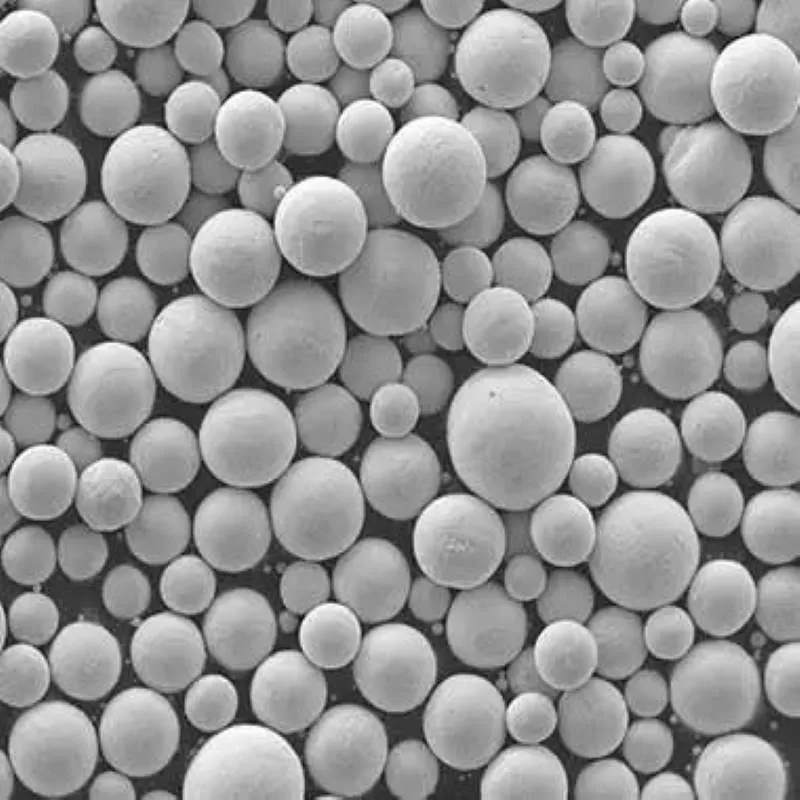
Spherical ASTM A441 Steel Powder
Product Code : SP-CSTI-616-CU
We provide Spherical ASTM A441 Steel Powder,Spherical ASTM A441 Steel Powder is suitable for laser/electron beam augmentation, hot isostatic pressing, laser cladding, hot/cold spraying, and so on. The particles can be irregular and spherical. The particle distribution can reach the nanometer scale.,Spherical Particle Size,0-15μm,,15-45um,15-53μm, 20-63um,45-105um,45-150μm , 50-150um,75-150μm,or customized,Product purity and oxygen content can be customized according to requirements.
Please contact us if you need customized services. We will contact you with the price and availability in 24 hours.
ASTM A441 Steel Spherical Powder, 19 mm thick Product Information
-:-
For detailed product information, please contact sales.
-:
ASTM A441 Steel Spherical Powder, 19 mm thick Synonyms
-:-
For detailed product information, please contact sales.
-:
-:-
For detailed product information, please contact sales.
-:
Spherical ASTM A441 Steel Powder characteristics
-:-
For detailed product information, please contact sales.
-:
Spherical ASTM A441 Steel Powder Particle Size
-:-
For detailed product information, please contact sales.
-:
-:-
-:-
0-15μm ,5-25μm, 15-45μm, 15-53μm,20-63um, 45-75μm, 45-105μm, 45-150μm ,75-150μm.
(Various granularities can be customized according to customer requirements)
-:-
For detailed product information, please contact sales.
-:
Spherical ASTM A441 Steel Powder Applicable processes
-:-
For detailed product information, please contact sales.
-:
Laser/electron beam additive manufacturing (SLM/EBM, 3D printing)
Direct laser deposition (DLD)
Used in thermal spray (TSA)
Powder hot isostatic pressing (HIP)
Metal injection molding (MIM)
Powder metallurgy (PM)
Laser cladding (LC), etc.
-:-
For detailed product information, please contact sales.
-:
Spherical ASTM A441 Steel Powder Chemical Composition
-:-
For detailed product information, please contact sales.
-:
-:-
For detailed product information, please contact sales.
-:
ASTM A441 Steel, 19 mm thick Product Information
-:-
For detailed product information, please contact sales.
-:
# **Product Introduction: ASTM A441 High-Strength Low-Alloy Structural Manganese-Vanadium Steel (19 mm Plate)**
**ASTM A441** is a discontinued high-strength low-alloy (HSLA) structural steel specification that covered plates, bars, and shapes, with specific mechanical properties guaranteed for material under **19 mm (3/4 inch)** in thickness. This manganese-vanadium steel represented an important evolutionary step in structural steel development, offering higher strength than traditional carbon steels while maintaining adequate weldability and formability. Its development in the mid-20th century helped bridge the gap between conventional structural steels and modern microalloyed HSLA grades.
*Note: ASTM A441 has been officially withdrawn and replaced by more advanced HSLA steels, primarily ASTM A572 Grade 50.*
---
## **1. Historical Context & Current Status**
### **Specification Timeline:**
- **Active Period:** Mid-20th century to 1996
- **Last Active Version:** ASTM A441/A441M-89
- **Withdrawal Year:** 1996 (superseded by ASTM A572)
- **Current Status:** **Historical specification only** - Not for new construction
### **Technical Evolution:**
- **Predecessor:** Evolved from earlier high-strength steels
- **Successor:** ASTM A572 Grade 50 (direct replacement)
- **Significance:** One of the first widely used vanadium-microalloyed structural steels
- **Why Withdrawn:** Replaced by steels with better weldability, toughness, and more consistent properties
---
## **2. Chemical Composition (Weight %, Historical Typical for 19 mm Plate)**
| Element | Composition Range (%) | Metallurgical Function |
|---------|----------------------|------------------------|
| Carbon (C) | 0.22 max (0.18-0.22 typical) | Primary strengthener |
| Manganese (Mn) | 0.85-1.25 | Solid solution strengthening, improves hardenability |
| Phosphorus (P) | 0.04 max | Impurity control |
| Sulfur (S) | 0.05 max | Impurity control |
| Silicon (Si) | 0.30 max (0.15-0.30 typical) | Deoxidizer |
| **Vanadium (V)** | **0.02 min** (0.02-0.08 typical) | **Key microalloy: Precipitation strengthening via V(CN)** |
| Copper (Cu) | 0.20 min (when specified) | Atmospheric corrosion resistance |
### **Carbon Equivalent (Typical for 19 mm):**
- **IIW Formula:** CE = C + Mn/6 + (Cr+Mo+V)/5 + (Ni+Cu)/15 ≈ **0.38-0.42**
- **Weldability Classification:** Fair - requires controlled procedures
---
## **3. Mechanical & Physical Properties (19 mm Thick Plate)**
### **Minimum Guaranteed Properties:**
- **Tensile Strength:** **480-620 MPa** (70,000-90,000 psi)
- **Yield Strength (min):** **345 MPa** (50,000 psi) - **Key advantage over A36 (250 MPa)**
- **Elongation in 2 in. (50 mm):** 19% minimum
- **Elongation in 8 in. (200 mm):** 15% minimum
### **Typical Achieved Properties (19 mm hot-rolled plate):**
| Property | Typical Range | Direction |
|----------|---------------|-----------|
| Yield Strength | 360-400 MPa (52-58 ksi) | Longitudinal |
| Tensile Strength | 500-550 MPa (73-80 ksi) | Longitudinal |
| Elongation (50mm) | 22-28% | Longitudinal |
| Reduction of Area | 45-55% | Longitudinal |
| Brinell Hardness | 180-220 HB | - |
### **Physical Properties:**
| Property | Value | Condition |
|----------|-------|-----------|
| Density | 7.85 g/cm³ (0.284 lb/in³) | Room temperature |
| Modulus of Elasticity | 200 GPa (29×10⁶ psi) | Room temperature |
| Poisson's Ratio | 0.29 | - |
| Coefficient of Thermal Expansion | 11.5×10⁻⁶/°C | 20-100°C |
| Thermal Conductivity | 52 W/m·K | 100°C |
| Specific Heat | 450 J/kg·K | 100°C |
---
## **4. Key Characteristics & Historical Advantages**
### **Strength Advantages (vs. Contemporary Steels):**
- **34% higher yield strength** than ASTM A36 (345 vs. 250 MPa)
- **Good strength-to-weight ratio** allowing lighter structures
- **Maintained reasonable ductility** (19% elongation minimum)
### **Microstructural Features:**
- **Ferrite-pearlite microstructure** with vanadium carbonitride precipitates
- **Grain refinement** from controlled rolling (where applied)
- **Moderate hardenability** from manganese content
### **Fabrication Characteristics:**
- **Formability:** Adequate for moderate bending (minimum bend radius ~2t)
- **Machinability:** Approximately 65% of free-cutting steel
- **Shearability:** Suitable for mechanical shearing up to 19 mm
### **Atmospheric Corrosion Resistance:**
- **Base material:** Similar to carbon steel
- **Copper-bearing version:** ~2x better corrosion resistance than carbon steel
- **No weathering steel properties** (unlike modern A588)
---
## **5. Historical & Niche Applications**
### **Primary Historical Applications (19 mm plate):**
#### **Building & Construction:**
- **Floor plates and decking** for industrial facilities
- **Wall panels and cladding** support members
- **Platforms, walkways, and stair treads**
- **Light structural frames** for commercial buildings
- **Purlin and girt systems** in pre-engineered buildings
#### **Bridge Engineering:**
- **Decking and approach plates**
- **Secondary members** in medium-span bridges
- **Pedestrian bridge components**
- **Bridge rail and barrier supports**
#### **Industrial Equipment:**
- **Machine bases and frames**
- **Conveyor support structures**
- **Storage rack components**
- **Material handling equipment frames**
#### **Transportation:**
- **Trailer and truck body components**
- **Railcar structural members**
- **Container corner posts and frames**
### **Why 19 mm Thickness Was Significant:**
- **Optimal balance** of strength and weight for many applications
- **Good availability** in standard mill production
- **Adequate stiffness** for many structural applications
- **Economical choice** between thinner, lighter plates and thicker, heavier sections
---
## **6. International Standards & Equivalents**
### **Historical International Equivalents:**
| Country/Region | Standard | Approximate Grade | Notes |
|----------------|----------|-------------------|-------|
| **International** | ISO 4951 | GR 50 | Similar strength grade |
| **European** | EN 10025 | S355JR (1.0045) | Closest modern equivalent |
| **Japan** | JIS G3106 | SM490YA | Weathering version similar |
| **Germany** | DIN 17100 | St 52-3 | Historical equivalent |
| **United Kingdom** | BS 4360 | Grade 50B | Similar properties |
### **Modern Direct Replacements:**
1. **ASTM A572 Grade 50:** Primary replacement with better weldability
2. **ASTM A588 Grade A:** For corrosion-resistant applications
3. **ASTM A529 Grade 50:** For simpler shapes and bars
4. **ASTM A709 Grade 50:** For bridge applications
---
## **7. Fabrication & Welding Guidelines (Historical Practice)**
### **Cutting & Preparation:**
- **Oxy-fuel cutting:** Suitable with proper technique
- **Plasma cutting:** Produces good edge quality
- **Mechanical shearing:** Appropriate for 19 mm thickness
- **Edge preparation:** May require grinding for critical welds
### **Welding Considerations:**
#### **Preheat Requirements (19 mm thickness):**
- **Minimum preheat:** **65°C (150°F)** for most applications
- **Recommended range:** 95-150°C (200-300°F) for restrained joints
- **Interpass temperature:** ≤200°C (400°F)
#### **Filler Metal Selection:**
| Process | Electrode/Filter Classification | Notes |
|---------|---------------------------------|-------|
| **SMAW** | E7018, E7016 | Low-hydrogen essential |
| **FCAW** | E71T-1, E70T-1 | Gas-shielded or self-shielded |
| **GMAW** | ER70S-6 | Most common wire choice |
| **SAW** | F7A2-EM12K | For high-production welding |
#### **Post-Weld Considerations:**
- **Stress relief:** Generally not required for 19 mm thickness
- **Peening:** May be beneficial for highly restrained joints
- **Inspection:** Visual and magnetic particle testing recommended
### **Forming & Bending:**
- **Minimum bend radius:** 2× thickness for 90° bends
- **Hot forming:** Possible but may affect properties
- **Punching:** Use adequate clearance and sharp tools
---
## **8. Design Considerations for Existing Structures**
### **Current Condition Assessment:**
1. **Material Verification:**
- Chemical analysis (spectroscopy)
- Mechanical testing (hardness correlation)
- Microstructural examination
2. **Degradation Evaluation:**
- Corrosion assessment (particularly for non-copper-bearing material)
- Fatigue damage in cyclic loading applications
- Weld inspection for historical fabrication flaws
3. **Load Rating Analysis:**
- Use 345 MPa yield strength for assessment
- Consider potential strength loss from corrosion
- Evaluate connection integrity
### **Retrofit & Repair Strategies:**
- **Material replacement:** Use ASTM A572 Grade 50 or equivalent
- **Welding repairs:** Follow modern procedures for HSLA steels
- **Bolted upgrades:** Often preferred over welding for existing structures
- **Corrosion protection:** Enhanced coating systems for continued service
---
## **9. Comparison with Modern Steels**
### **ASTM A441 vs. ASTM A572 Grade 50:**
| Parameter | ASTM A441 (Historical) | ASTM A572 Grade 50 (Modern) | Advantage |
|-----------|------------------------|-----------------------------|-----------|
| **Yield Strength** | 345 MPa min | 345 MPa min | Same |
| **Carbon Content** | ≤0.22% | ≤0.23% | Similar |
| **Vanadium Content** | ≥0.02% | Optional (0.01-0.15%) | More flexible |
| **CE (Weldability)** | 0.38-0.42 | 0.35-0.40 | Better for A572 |
| **Toughness** | Not specified | Often specified by purchase | A572 better |
| **Availability** | None (discontinued) | Excellent | A572 clearly better |
### **Performance Comparison:**
| Application Need | A441 Capability | Modern Alternative | Reason for Change |
|------------------|-----------------|-------------------|-------------------|
| **General Structure** | Adequate | A572 Grade 50 | Better consistency |
| **Corrosion Resistance** | Moderate (if Cu) | A588 Grade A | 4x better corrosion |
| **Weldability** | Fair | A572 Grade 50 | Much better |
| **Low-Temperature** | Not recommended | A709 Grade 50 | Certified toughness |
| **Fabrication** | Challenging | Multiple options | More fabricator-friendly |
---
## **10. Historical Significance & Technical Legacy**
### **Contributions to Steel Technology:**
1. **Early Microalloy Application:** Demonstrated benefits of vanadium addition
2. **Strength Advancement:** Pushed yield strength from 250 MPa to 345 MPa
3. **Production Innovation:** Helped develop controlled rolling practices
4. **Design Methodology:** Influenced move to higher strength steels in design codes
### **Lessons for Modern Practice:**
- **Importance of weldability** in structural steel selection
- **Value of toughness specifications** for structural integrity
- **Benefits of standardized testing** and certification
- **Need for corrosion consideration** in material selection
### **Case Studies of Historical Use:**
- **Mid-20th Century Bridges:** Several notable structures used A441
- **Industrial Facilities:** Many still in service with proper maintenance
- **Commercial Buildings:** Part of construction boom of 1960s-1970s
---
## **11. Modern Replacement Selection Guide**
### **For Different Application Requirements:**
#### **Direct Strength Replacement:**
- **Primary choice:** ASTM A572 Grade 50
- **Why:** Same strength, better weldability, readily available
- **Cost:** Economical and competitive
#### **Enhanced Corrosion Resistance:**
- **Primary choice:** ASTM A588 Grade A
- **Why:** 4x better atmospheric corrosion resistance
- **Note:** Slightly higher cost but reduced maintenance
#### **Bridge Applications:**
- **Primary choice:** ASTM A709 Grade 50
- **Why:** Certified properties, proven bridge performance
- **Applications:** New bridge construction and major repairs
#### **Structural Shapes:**
- **Primary choice:** ASTM A992
- **Why:** Optimized for wide-flange shapes, consistent properties
- **Yield strength:** 345-450 MPa (50-65 ksi)
#### **Simple Shapes & Bars:**
- **Primary choice:** ASTM A529 Grade 50
- **Why:** Economical for non-critical applications
- **Limitations:** Thickness restrictions apply
---
**Technical Summary:** ASTM A441 represents an important historical high-strength low-alloy steel that served the construction industry during a period of significant advancement in structural engineering. For 19 mm thickness applications, it provided a 34% strength advantage over conventional A36 steel while maintaining reasonable fabricability. However, its withdrawal in favor of ASTM A572 and other modern HSLA steels reflects the industry's move toward materials with better weldability, toughness, and consistency. For existing structures containing A441, careful assessment and appropriate maintenance are essential. For new designs, numerous superior alternatives exist that offer better combinations of properties, performance, and value. The specification remains relevant primarily for understanding and maintaining existing infrastructure built during its period of use.
-:-
For detailed product information, please contact sales.
-:
ASTM A441 Steel, 19 mm thick Specification
Dimensions
Size:
Diameter 20-1000 mm Length <6009 mm
Size:We can customized as required
Standard:
Per your request or drawing
We can customized as required
Properties(Theoretical)
Chemical Composition
-:-
For detailed product information, please contact sales.
-:
ASTM A441 Steel, 19 mm thick Properties
-:-
For detailed product information, please contact sales.
-:
Spherical ASTM A441 Steel Powder Particle Size Description
-:-
For detailed product information, please contact sales.
-:
Applications of Spherical ASTM A441 Steel Powder
-:-
For detailed product information, please contact sales.
-:
-:-
For detailed product information, please contact sales.
-:
Applications of ASTM A441 Steel Spherical Powder, 19 mm thick
-:-
For detailed product information, please contact sales.
-:
Chemical Identifiers ASTM A441 Steel Spherical Powder, 19 mm thick
-:-
For detailed product information, please contact sales.
-:
Packing of ASTM A441 Steel Spherical Powder, 19 mm thick
-:-
For detailed product information, please contact sales.
-:
Standard Packing:
-:-
For detailed product information, please contact sales.
-:
Typical bulk packaging includes palletized plastic 5 gallon/25 kg. pails, fiber and Steel Spherical Powder drums to 1 ton super sacks in full container (FCL) or truck load (T/L) quantities. Research and sample quantities and hygroscopic, oxidizing or other air sensitive materials may be packaged under argon or vacuum. Solutions are packaged in polypropylene, plastic or glass jars up to palletized 2480 gallon liquid totes Special package is available on request. E FORUs’ is carefully handled to minimize damage during storage and transportation and to preserve the quality of our products in their original condition