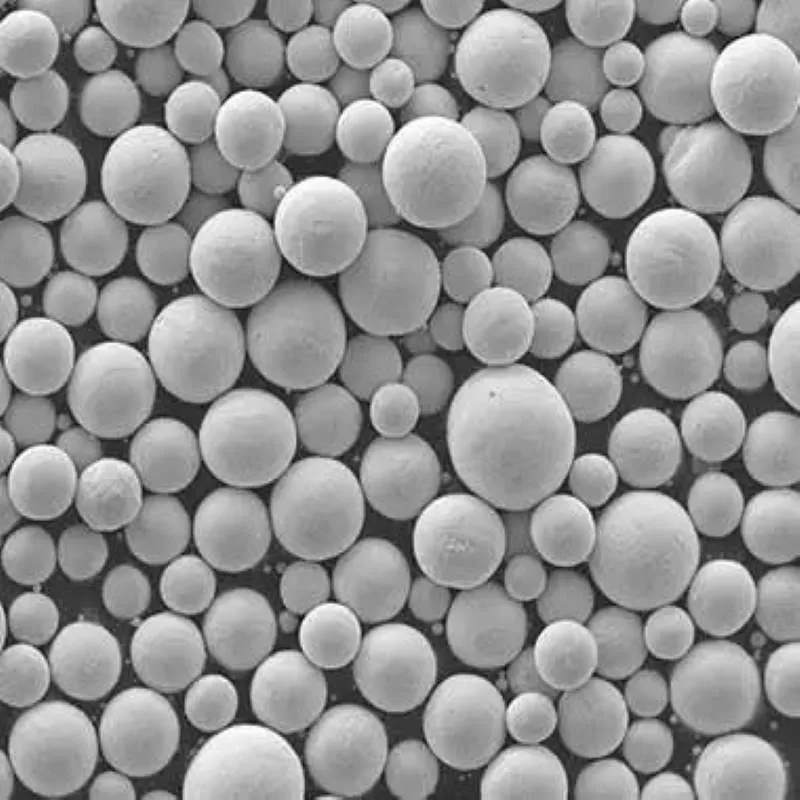
Spherical ASTM A455 Carbon Steel Powder
Product Code : SP-CSTI-619-CU
We provide Spherical ASTM A455 Carbon Steel Powder,Spherical ASTM A455 Carbon Steel Powder is suitable for laser/electron beam augmentation, hot isostatic pressing, laser cladding, hot/cold spraying, and so on. The particles can be irregular and spherical. The particle distribution can reach the nanometer scale.,Spherical Particle Size,0-15μm,,15-45um,15-53μm, 20-63um,45-105um,45-150μm , 50-150um,75-150μm,or customized,Product purity and oxygen content can be customized according to requirements.
Please contact us if you need customized services. We will contact you with the price and availability in 24 hours.
ASTM A455 Carbon Steel Spherical Powder Product Information
-:-
For detailed product information, please contact sales.
-:
ASTM A455 Carbon Steel Spherical Powder Synonyms
-:-
For detailed product information, please contact sales.
-:
-:-
For detailed product information, please contact sales.
-:
Spherical ASTM A455 Carbon Steel Powder characteristics
-:-
For detailed product information, please contact sales.
-:
Spherical ASTM A455 Carbon Steel Powder Particle Size
-:-
For detailed product information, please contact sales.
-:
-:-
-:-
0-15μm ,5-25μm, 15-45μm, 15-53μm,20-63um, 45-75μm, 45-105μm, 45-150μm ,75-150μm.
(Various granularities can be customized according to customer requirements)
-:-
For detailed product information, please contact sales.
-:
Spherical ASTM A455 Carbon Steel Powder Applicable processes
-:-
For detailed product information, please contact sales.
-:
Laser/electron beam additive manufacturing (SLM/EBM, 3D printing)
Direct laser deposition (DLD)
Used in thermal spray (TSA)
Powder hot isostatic pressing (HIP)
Metal injection molding (MIM)
Powder metallurgy (PM)
Laser cladding (LC), etc.
-:-
For detailed product information, please contact sales.
-:
Spherical ASTM A455 Carbon Steel Powder Chemical Composition
-:-
For detailed product information, please contact sales.
-:
-:-
For detailed product information, please contact sales.
-:
ASTM A455 Carbon Steel Product Information
-:-
For detailed product information, please contact sales.
-:
# **Product Introduction: ASTM A455 High-Strength Carbon-Manganese Steel Plate**
**ASTM A455** is a high-strength carbon-manganese-silicon steel plate specification designed for **pressure vessel applications requiring superior strength at elevated temperatures**. This specification represents a bridge between conventional carbon steels and alloy steels, offering enhanced elevated temperature strength while maintaining reasonable cost and fabricability. The grade is characterized by a carefully controlled carbon-manganese balance that provides improved high-temperature properties without chromium or molybdenum additions.
---
## **1. Key International Standards & Status**
* **Primary Material Standard:** **ASTM A455/A455M** - Standard Specification for Pressure Vessel Plates, Carbon Steel, High-Strength Manganese
* **Current Status:** **This standard has been withdrawn (no replacement listed)** and is considered obsolete for new construction
* **Historical Framework:**
* **ASTM A20/A20M:** General Requirements for Steel Plates for Pressure Vessels
* **ASME Adoption:** Historically referenced as SA-455 in earlier ASME Boiler and Pressure Vessel Codes
* **Withdrawal Reason:** Superseded by more advanced microalloyed steels with better weldability and toughness
* **Modern Alternatives:**
* ASTM A516 Grades 70/65 for general pressure vessels
* ASTM A537 Class 2 for low-temperature applications
* ASTM A299 for high-temperature carbon-manganese steels
---
## **2. Chemical Composition (Weight %, Historical Data)**
| Element | Composition Range (%) | Metallurgical Function |
|---------|----------------------|------------------------|
| Carbon (C) | 0.24-0.35 | Primary strengthener, contributes to high-temperature strength |
| Manganese (Mn) | 1.00-1.60 | Enhances strength, hardenability, and high-temperature properties |
| Phosphorus (P) | 0.035 max | Impurity control |
| Sulfur (S) | 0.040 max | Impurity control |
| Silicon (Si) | 0.15-0.30 | Deoxidizer, solid solution strengthening |
| Copper (Cu) | Not specified (typically ≤0.35) | Optional for corrosion resistance |
### **Carbon Equivalent Analysis:**
- **Typical CE (IIW):** 0.45-0.55 (relatively high, indicating welding challenges)
- **Pcm Formula:** C + Si/30 + Mn/20 + Cu/20 + Ni/60 + Cr/20 + Mo/15 + V/10 + 5B
- **Weldability Classification:** Poor to fair, requiring strict control procedures
### **Key Composition Features:**
- **Higher carbon range** than most modern pressure vessel steels
- **Elevated manganese content** for solid solution strengthening
- **Balanced silicon** for deoxidation without excessive hardening
- **No microalloying additions** (V, Nb, Ti) characteristic of modern HSLA steels
---
## **3. Mechanical & Physical Properties**
### **Room Temperature Mechanical Properties:**
- **Tensile Strength:** **550-690 MPa** (80,000-100,000 psi)
- **Yield Strength (min):** **380 MPa** (55,000 psi)
- **Elongation in 2 in. (50 mm):** 18% minimum
- **Elongation in 8 in. (200 mm):** 14% minimum
### **Elevated Temperature Properties (Historical Typical):**
- **Maximum Service Temperature:** Up to **425°C (800°F)**
- **High-Temperature Yield Strength:** Significantly better than standard carbon steels
- **Creep Resistance:** Moderate, better than A285 but less than alloy steels
### **Physical Properties:**
| Property | Value | Conditions |
|----------|-------|------------|
| Density | 7.85 g/cm³ (0.284 lb/in³) | Room temperature |
| Modulus of Elasticity | 200 GPa (29×10⁶ psi) | 21°C (70°F) |
| Thermal Expansion Coefficient | 12.0×10⁻⁶/°C | 20-300°C |
| Thermal Conductivity | 48-50 W/m·K | 100°C |
| Specific Heat | 460 J/kg·K | 100°C |
| Poisson's Ratio | 0.29 | - |
### **Heat Treatment Condition:**
- Typically supplied in **normalized condition**
- Normalizing temperature: 900-925°C (1650-1700°F)
- Could also be supplied as-rolled for thinner sections
---
## **4. Key Characteristics & Historical Advantages**
### **Strength Advantages:**
- **High Room Temperature Strength:** 55 ksi yield strength minimum
- **Improved Elevated Temperature Strength:** Better than standard carbon steels
- **Cost-Effective Strength:** Between carbon steels and alloy steels in cost
### **Microstructural Features:**
- **Ferrite-pearlite microstructure** with pearlite content controlled by carbon
- **Grain refinement** through normalizing treatment
- **Moderate hardenability** from manganese content
### **Limitations (Why Withdrawn):**
- **Poor Weldability:** High carbon equivalent necessitating extensive preheat and post-weld heat treatment
- **Limited Toughness:** No guaranteed impact properties
- **Thickness Limitations:** Properties degraded in thicker sections
- **Modern Alternatives:** Better options available with microalloying
---
## **5. Historical Applications**
### **Pressure Vessels:**
- **Medium Temperature Pressure Vessels:**
- Steam drums and accumulators
- Feedwater heaters
- Low-pressure boilers
- Process vessels operating at 300-425°C
- **Storage Vessels:**
- High-pressure gas storage
- Industrial chemical storage
- Compressed air receivers
### **Power Generation Components:**
- **Fossil Fuel Plant Components:**
- Intermediate temperature piping
- Non-critical boiler components
- Turbine bypass systems
### **Industrial Equipment:**
- **Heat Exchangers:** Shells and tube sheets
- **Reaction Vessels:** For moderate temperature processes
- **Distillation Columns:** Lower sections
---
## **6. International Equivalents & Replacements**
### **Historical International Equivalents:**
| Country | Standard | Grade | Status |
|---------|----------|-------|--------|
| **United Kingdom** | BS 1501 | 221 Grade 32 | Withdrawn |
| **Japan** | JIS G3103 | SB 49 | Still active but different |
| **Germany** | DIN 17155 | H II | Historical |
| **France** | NF A36-205 | A 52 C | Historical |
### **Modern Replacement Grades:**
| Application Need | Modern Replacement | Advantages |
|------------------|-------------------|------------|
| **General Pressure Vessels** | ASTM A516 Grade 70 | Better weldability, toughness |
| **Elevated Temperature** | ASTM A299 | Specifically designed for high temperature |
| **High Strength + Toughness** | ASTM A537 Class 2 | Low temperature capability |
| **Cost-Effective Strength** | ASTM A572 Grade 50 | Better fabricability, readily available |
---
## **7. Fabrication Guidelines (Historical Practice)**
### **Welding Procedures:**
- **Preheat Temperature:** **150-200°C (300-400°F)** minimum
- **Interpass Temperature:** 200-250°C (400-480°F) maximum
- **Post-Weld Heat Treatment:** **Mandatory** for most applications
- **PWHT Temperature:** 600-650°C (1110-1200°F)
### **Filler Metal Selection:**
- **Primary Choice:** E7018 low-hydrogen electrodes
- **Alternatives:** E7016, E7015
- **Wire Choices:** ER70S-6 for GMAW, E71T-1 for FCAW
### **Forming & Machining:**
- **Cold Forming:** Limited due to high strength and carbon content
- **Hot Forming:** Recommended for complex shapes
- **Machinability:** ~60% of free-cutting steel
- **Shearing:** Possible but requires heavy equipment
---
## **8. Design Considerations for Existing Structures**
### **Assessment of A455 Components:**
1. **Material Verification:**
- Chemical analysis to confirm grade
- Hardness testing to estimate current strength
- Microstructural examination
2. **Condition Evaluation:**
- Corrosion assessment
- Weld inspection (cracking common in HAZ)
- Dimensional checks for creep deformation
3. **Fitness-for-Service:**
- Remaining life assessment
- Weld repair feasibility
- Replacement considerations
### **Retrofit Strategies:**
- **Complete Replacement:** With modern equivalent material
- **Local Repair:** Using compatible modern filler metals
- **Re-rating:** If degradation is minimal
---
## **9. Comparison with Modern Steels**
### **A455 vs. A516 Grade 70:**
| Parameter | ASTM A455 | ASTM A516 Grade 70 | Advantage |
|-----------|-----------|-------------------|-----------|
| **Yield Strength** | 380 MPa min | 380 MPa min | Equal |
| **Carbon Content** | 0.24-0.35% | 0.27% max | A516 more controlled |
| **Manganese** | 1.00-1.60% | 0.85-1.20% | A455 higher |
| **CE Value** | 0.45-0.55 | 0.40-0.47 | A516 better weldability |
| **Impact Testing** | Not required | Often required | A516 better toughness |
| **Availability** | None | Excellent | A516 clearly better |
### **Technical Evolution Perspective:**
1. **1950s-1970s:** A455 used where higher strength needed
2. **1980s:** Microalloyed steels began replacing A455
3. **1990s:** A455 withdrawn from ASTM standards
4. **2000s-Present:** Modern HSLA steels dominate
---
## **10. Legacy & Modern Implications**
### **Technical Legacy:**
- **Demonstrated** the importance of controlled chemistry for specific properties
- **Highlighted** weldability challenges with high carbon-manganese steels
- **Paved the way** for microalloying technology development
### **Lessons for Modern Practice:**
1. **Weldability** must be considered alongside strength requirements
2. **Toughness** specifications are essential for pressure equipment
3. **Microalloying** provides better property combinations
4. **Standardization** should evolve with technology advances
### **For Engineers Evaluating Existing Equipment:**
- **Assume** welding issues may exist in A455 components
- **Consider** material degradation over long service
- **Evaluate** replacement with modern materials during major repairs
- **Document** all findings for future reference
---
**Technical Summary:** ASTM A455 represents a historical high-strength carbon-manganese steel that filled a specific need for elevated temperature strength in pressure vessels before the development of modern microalloyed steels. Its withdrawal from standards reflects the industry's move toward materials with better weldability, toughness, and consistent properties. While obsolete for new construction, understanding A455 is important for engineers maintaining legacy equipment. The material's relatively high carbon equivalent made welding challenging, and its lack of toughness specifications limited its application range. Modern equivalents like ASTM A516 Grade 70 offer similar strength with significantly better fabricability and reliability. When encountering A455 in existing structures, careful assessment and consideration of replacement with modern materials during maintenance windows is generally recommended for long-term reliability and safety.
-:-
For detailed product information, please contact sales.
-:
ASTM A455 Carbon Steel Specification
Dimensions
Size:
Diameter 20-1000 mm Length <6012 mm
Size:We can customized as required
Standard:
Per your request or drawing
We can customized as required
Properties(Theoretical)
Chemical Composition
-:-
For detailed product information, please contact sales.
-:
ASTM A455 Carbon Steel Properties
-:-
For detailed product information, please contact sales.
-:
Spherical ASTM A455 Carbon Steel Powder Particle Size Description
-:-
For detailed product information, please contact sales.
-:
Applications of Spherical ASTM A455 Carbon Steel Powder
-:-
For detailed product information, please contact sales.
-:
-:-
For detailed product information, please contact sales.
-:
Applications of ASTM A455 Carbon Steel Spherical Powder
-:-
For detailed product information, please contact sales.
-:
Chemical Identifiers ASTM A455 Carbon Steel Spherical Powder
-:-
For detailed product information, please contact sales.
-:
Packing of ASTM A455 Carbon Steel Spherical Powder
-:-
For detailed product information, please contact sales.
-:
Standard Packing:
-:-
For detailed product information, please contact sales.
-:
Typical bulk packaging includes palletized plastic 5 gallon/25 kg. pails, fiber and Steel Spherical Powder drums to 1 ton super sacks in full container (FCL) or truck load (T/L) quantities. Research and sample quantities and hygroscopic, oxidizing or other air sensitive materials may be packaged under argon or vacuum. Solutions are packaged in polypropylene, plastic or glass jars up to palletized 2483 gallon liquid totes Special package is available on request. E FORUs’ is carefully handled to minimize damage during storage and transportation and to preserve the quality of our products in their original condition