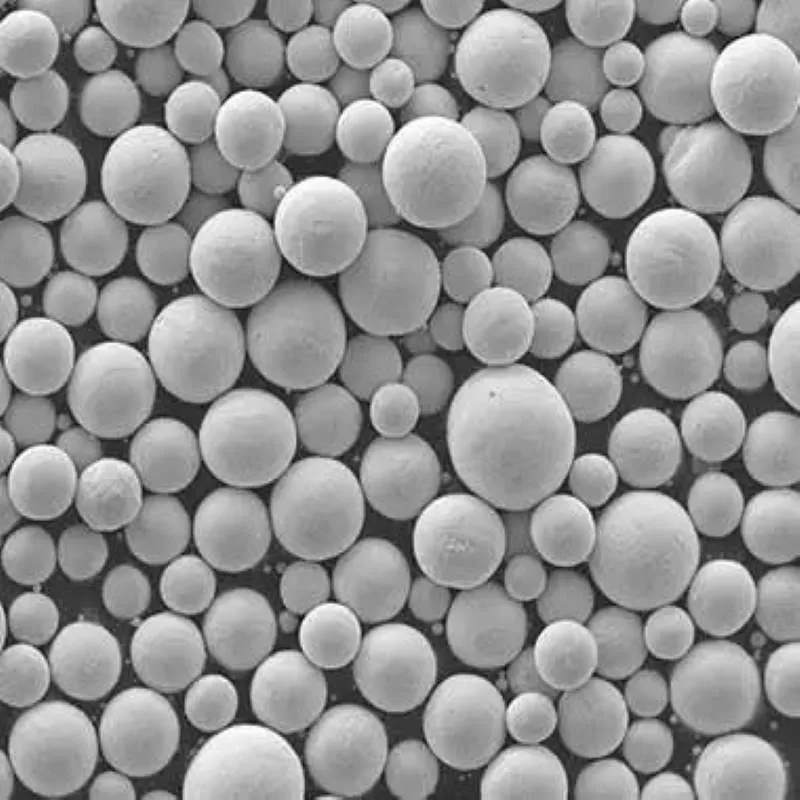
Spherical ASTM A514 Steel Powder, grade F
Product Code : SP-CSTI-540-CU
We provide Spherical ASTM A514 Steel Powder, grade F,Spherical ASTM A514 Steel Powder, grade F is suitable for laser/electron beam augmentation, hot isostatic pressing, laser cladding, hot/cold spraying, and so on. The particles can be irregular and spherical. The particle distribution can reach the nanometer scale.,Spherical Particle Size,0-15μm,,15-45um,15-53μm, 20-63um,45-105um,45-150μm , 50-150um,75-150μm,or customized,Product purity and oxygen content can be customized according to requirements.
Please contact us if you need customized services. We will contact you with the price and availability in 24 hours.
ASTM A514 Steel Spherical Powder, grade F, plate thickness 64 - 150 mm Product Information
-:-
For detailed product information, please contact sales.
-:
ASTM A514 Steel Spherical Powder, grade F, plate thickness 64 - 150 mm Synonyms
-:-
For detailed product information, please contact sales.
-:
-:-
For detailed product information, please contact sales.
-:
Spherical ASTM A514 Steel Powder, grade F characteristics
-:-
For detailed product information, please contact sales.
-:
Spherical ASTM A514 Steel Powder, grade F Particle Size
-:-
For detailed product information, please contact sales.
-:
-:-
-:-
0-15μm ,5-25μm, 15-45μm, 15-53μm,20-63um, 45-75μm, 45-105μm, 45-150μm ,75-150μm.
(Various granularities can be customized according to customer requirements)
-:-
For detailed product information, please contact sales.
-:
Spherical ASTM A514 Steel Powder, grade F Applicable processes
-:-
For detailed product information, please contact sales.
-:
Laser/electron beam additive manufacturing (SLM/EBM, 3D printing)
Direct laser deposition (DLD)
Used in thermal spray (TSA)
Powder hot isostatic pressing (HIP)
Metal injection molding (MIM)
Powder metallurgy (PM)
Laser cladding (LC), etc.
-:-
For detailed product information, please contact sales.
-:
Spherical ASTM A514 Steel Powder, grade F Chemical Composition
-:-
For detailed product information, please contact sales.
-:
-:-
For detailed product information, please contact sales.
-:
ASTM A514 Steel, grade F, plate thickness 64 - 150 mm Product Information
-:-
For detailed product information, please contact sales.
-:
## **Technical Data Sheet: ASTM A514 Grade F Steel Plate (Thickness 64-150 mm / 2.5-6.0 in)**
### **1. Product Overview**
ASTM A514 Grade F is an ultra-high-strength, quenched and tempered alloy steel plate engineered for the most demanding structural applications requiring exceptional fracture toughness, deep hardenability, and weldability in extreme thickness ranges. Developed specifically for fracture-critical applications in severe environments, Grade F plates from 64 to 150 mm thickness provide reliable performance in conditions where conventional high-strength steels may fail due to low-temperature brittleness or inadequate through-thickness properties. This grade represents the pinnacle of heavy plate technology for critical infrastructure, offshore structures, and heavy machinery operating in Arctic or severe service conditions.
### **2. International Standards & Specifications**
- **Primary Standard:** ASTM A514/A514M - Standard Specification for High-Yield-Strength, Quenched and Tempered Alloy Steel Plate, Suitable for Welding
- **Supplementary Standards:** ASTM A20/A20M (General Requirements for Pressure Vessel Plates - often specified for thick plate quality)
- **Dimensional Standard:** ASTM A6/A6M
- **International Equivalents:**
- **EN Standard:** EN 10025-6 Grade S690QL1 (strength equivalent with toughness requirements)
- **ISO Standard:** ISO 4950-3 Grade EQ690 with supplementary toughness requirements
- **JIS Standard:** JIS G3128 SHY685-F (thick plate high-toughness grade)
- **Offshore Standards:** API 2W Grade 60, EN 10225 S690QL1 (offshore structural applications)
- **Nuclear Standards:** ASME SA517 Grade F (for nuclear applications when specified)
### **3. Chemical Composition (Heat Analysis, % by Weight)**
| Element | Min (%) | Max (%) | Metallurgical Function for Thick Sections |
|---------|---------|---------|------------------------------------------|
| Carbon (C) | 0.10 | 0.20 | Carefully controlled for optimal strength-toughness balance in slow-cooling sections |
| Manganese (Mn) | 0.70 | 1.20 | Enhanced range for improved hardenability in extreme thickness |
| Phosphorus (P) | - | 0.025 | Ultra-low maximum to prevent centerline brittleness |
| Sulfur (S) | - | 0.015 | Extremely low to minimize segregation and improve Z-direction properties |
| Silicon (Si) | 0.15 | 0.35 | Deoxidizer with controlled range for optimal toughness |
| Chromium (Cr) | 0.40 | 0.80 | Enhanced maximum for improved through-thickness hardenability |
| Nickel (Ni) | 0.50 | 0.80 | Significantly increased for superior low-temperature toughness at mid-thickness |
| Molybdenum (Mo) | 0.25 | 0.40 | Enhanced for deep hardenability and temper resistance |
| Copper (Cu) | 0.15 | 0.40 | Atmospheric corrosion resistance with controlled maximum |
| Vanadium (V) | 0.01 | 0.08 | Grain refinement with reduced maximum to prevent precipitation embrittlement |
| Boron (B) | 0.001 | 0.005 | Critical for achieving required hardenability in 150 mm sections |
| Titanium (Ti) | 0.006 | 0.025 | Mandatory for grain size control and boron protection |
| Calcium (Ca) | - | 0.006 | Often added for inclusion shape control (typically 0.002-0.005%) |
**Special Requirements for Thick Plate:**
- **Vacuum Degassing:** Mandatory for plates >100 mm thickness
- **Inclusion Control:** Sulfur ≤ 0.010% often specified for offshore applications
- **Tramp Elements:** Strict control of Sn, As, Sb, Pb (<0.015% each)
### **4. Mechanical Properties by Thickness Range**
**Minimum Required Properties:**
| Thickness Range | Yield Strength Min | Tensile Strength Min | Elongation Min | Reduction of Area Min |
|-----------------|-------------------|---------------------|----------------|----------------------|
| **64-100 mm** | **90 ksi (620 MPa)** | **105 ksi (725 MPa)** | **16%** | **40%** |
| **100-125 mm** | **85 ksi (585 MPa)** | **100 ksi (690 MPa)** | **16%** | **35%** |
| **125-150 mm** | **85 ksi (585 MPa)** | **100 ksi (690 MPa)** | **16%** | **35%** |
**Enhanced Toughness Properties (Typical/Required):**
- **Charpy V-Notch Impact at -60°F (-51°C):** 27 J minimum (often specified for Arctic applications)
- **Charpy V-Notch Impact at -50°F (-46°C):** 35-60 J (typical surface), 27-40 J (typical mid-thickness)
- **Charpy V-Notch Impact at -18°C (0°F):** 60-100 J (surface), 40-70 J (mid-thickness)
- **Fracture Toughness (CTOD) at -10°C:** Typically ≥ 0.25 mm for offshore applications
- **Z-Direction Properties:** Reduction of Area ≥ 25% for through-thickness tensile tests
**Through-Thickness Property Gradients:**
| Property | Surface Value | 1/4 Thickness | Mid-Thickness |
|----------|---------------|---------------|---------------|
| **Yield Strength** | +5-10% above min | At minimum | -5-10% below min |
| **Charpy Impact** | Highest values | Intermediate | Lowest but still above specification |
| **Hardness (HBW)** | 230-260 | 220-250 | 210-240 |
### **5. Physical Properties**
- **Modulus of Elasticity:** 29,000 ksi (200 GPa) - consistent through thickness
- **Shear Modulus:** 11,200 ksi (77 GPa)
- **Poisson's Ratio:** 0.29
- **Density:** 0.284 lb/in³ (7.85 g/cm³)
- **Thermal Conductivity:** 26-28 W/m·K at 100°C (reduced due to alloy content)
- **Coefficient of Thermal Expansion:** 11.3 × 10⁻⁶/°C (20-100°C)
- **Specific Heat:** 0.45 kJ/kg·K at 20°C
- **Electrical Resistivity:** 0.25 μΩ·m at 20°C
### **6. Heat Treatment & Metallurgical Characteristics**
- **Condition:** Quenched and Tempered with specialized processing for thick sections
- **Quenching Method:** Intensive water quenching with agitation or high-pressure spray systems
- **Tempering Range:** 1200-1350°F (649-732°C) - extended times for thick sections
- **Cooling Rate Control:** Critical to achieve required centerline properties
- **Microstructure:** Tempered martensite with minimal bainite transformation at mid-thickness
- **Prior Austenite Grain Size:** ASTM 6-8 (surface), ASTM 5-7 (center)
- **Hardenability (DI):** 7-9 inches (Jominy equivalent)
- **Segregation Control:** Electroslag remelting (ESR) or vacuum arc remelting (VAR) may be specified for critical applications
### **7. Key Product Characteristics for Extreme Thickness**
1. **Exceptional Through-Thickness Toughness:** Maintains fracture resistance even at 150 mm centerline
2. **Minimal Property Gradient:** Reduced strength/toughness drop from surface to center
3. **Superior Weldability:** Lower carbon equivalent despite high alloy content
4. **Excellent Z-Direction Properties:** Resistance to lamellar tearing in heavy welded joints
5. **Consistent Ultrasonic Quality:** Minimal internal discontinuities even at extreme thickness
6. **Atmospheric Corrosion Resistance:** Suitable for unpainted applications in moderate environments
### **8. Primary Applications**
**Offshore & Marine Structures:**
- Offshore platform node joints and tubular joints (>100 mm thickness)
- Floating production storage and offloading (FPSO) hull components
- Subsea manifold and template structures
- Ice-class vessel structural components
- Offshore wind turbine foundation transition pieces
**Arctic & Cold Climate Infrastructure:**
- Arctic pipeline valve assemblies and compressor station components
- Ice road bridge piers and support structures
- Northern mining infrastructure critical components
- Cryogenic storage facility structural supports
**Power Generation:**
- Hydroelectric dam gate components and support structures
- Nuclear power plant structural components (when specified to nuclear codes)
- Large wind turbine hub castings and main shaft supports
- Thermal power plant critical structural supports
**Heavy Machinery & Mining:**
- Mining shovel bases and rotating frames (100-150 mm sections)
- Dragline machinery house structural components
- Large press foundations and columns for heavy forging
- Rolling mill housing blocks and backup roll chocks
**Defense & Special Applications:**
- Naval vessel structural components
- Specialized heavy transport equipment
- Critical infrastructure protective structures
- Space launch facility structural components
### **9. Fabrication Guidelines for Extreme Thickness**
**Welding Requirements (Stringent):**
- **Filler Metals:** Specialty grades with Ni content matching base metal (1.5-2.5% Ni)
- **Preheat Requirements:**
- 64-100 mm: 300-350°F (149-177°C)
- 100-125 mm: 350-400°F (177-204°C)
- 125-150 mm: 400-450°F (204-232°C)
- **Interpass Temperature:** Strictly controlled between 400-500°F (204-260°C)
- **Post-Weld Heat Treatment:** **Mandatory** - typically 1100-1150°F (593-621°C) for 2 hours per inch + 2 hours
- **Welding Processes:** SAW with tandem wires, FCAW with gas shielding, specialized SMAW
- **Buttering Layers:** Often required on groove faces for highly restrained joints
**Cutting & Edge Preparation:**
- **Oxy-Fuel Cutting:** Requires 400-600°F (204-316°C) preheat depending on thickness
- **Plasma Cutting:** Limited to approximately 75-100 mm without special equipment
- **Abrasive Waterjet:** Suitable but economically limited for thickness >100 mm
- **Machined Edges:** Often specified for critical applications
- **UT After Cutting:** Essential to verify absence of cutting-induced cracks
**Machining Operations:**
- **Equipment Requirements:** Heavy-duty machining centers with high torque
- **Tool Materials:** Premium carbide grades or ceramic inserts for roughing
- **Cutting Parameters:** 80-150 SFM with heavy feeds for roughing
- **Coolant Systems:** High-pressure through-tool coolant essential
- **Stress Relief:** Intermediate stress relief during heavy machining recommended
**Forming & Bending:**
- **Hot Forming Required:** For any significant deformation
- **Forming Temperature:** 1700-1850°F (927-1010°C)
- **Post-Forming Heat Treatment:** Full re-austenitizing and tempering required
- **Minimum Bend Radii:** 6-8× plate thickness
### **10. Quality Assurance & Testing for Thick Plate**
**Mandatory Testing:**
- **Tensile Testing:** Surface, 1/4T, and 1/2T locations (longitudinal and transverse)
- **Charpy Impact:** Surface, 1/4T, 1/2T at multiple test temperatures
- **Hardness Surveys:** Complete through-thickness mapping
- **Chemical Analysis:** Multiple locations including centerline segregation assessment
**Supplementary Requirements (Typically Specified):**
- **S1:** Ultrasonic examination per ASTM A578/A578M, Acceptance Level 1
- **S8:** Maximum carbon equivalent (CE ≤ 0.63 typical)
- **S9:** Additional Charpy tests from 1/2-thickness location
- **S14:** Restricted chemistry variations (±20% of specified ranges)
- **S17:** Vacuum degassing mandatory
- **S18:** Fine austenitic grain size (ASTM 6 or finer at mid-thickness)
- **S19.** Through-thickness tensile testing
- **S21.** Hydrogen content ≤ 2 ppm
**Non-Destructive Examination:**
- **Ultrasonic Testing:** 100% volume scanning with digital recording
- **Time of Flight Diffraction (TOFD):** For critical weld preparations
- **Phased Array UT:** For complex geometries
- **Magnetic Particle Testing:** All surfaces after final machining
### **11. Design Considerations for Extreme Thickness**
1. **Section Size Effects:** Significant reduction factors for centerline properties
2. **Residual Stress Management:** Critical in design of welded structures
3. **Fracture Mechanics Design:** Essential for thicknesses >100 mm
3. **Lamellar Tearing Prevention:** Careful joint design and Z-quality verification
4. **Fatigue Design:** Reduced fatigue strength for thick sections in corrosive environments
5. **Welding Distortion Control:** Major consideration in fabrication planning
6. **Inspection Access:** Must be considered in design phase
### **12. Comparison with Other Thick Plate Grades**
| Aspect | A514 Grade F (64-150 mm) | ASTM A517 Grade F | EN 10025-6 S690QL1 |
|--------|--------------------------|-------------------|-------------------|
| **Thickness Capability** | Up to 150 mm | Up to 100 mm (typical) | Up to 120 mm |
| **Low-Temp Toughness** | **Excellent (-60°F/-51°C)** | Very Good (-50°F/-46°C) | Good (-40°F/-40°C) |
| **Z-Direction Properties** | **Excellent (RA ≥ 25%)** | Good (RA ≥ 20%) | Moderate |
| **Typical Applications** | Fracture-critical thick sections | General heavy plate | European heavy plate |
| **Certification** | Full through-thickness testing | Standard testing | Standard testing |
### **13. Storage, Handling & Transportation**
**Special Requirements for Heavy Plate:**
- **Handling Equipment:** 100+ ton cranes typically required
- **Storage Support:** Multiple heavy-duty supports to prevent sagging
- **Transportation:** Special permits for plates >120 mm thick and >5 meters long
- **Temperature Management:** Protection from thermal shock during handling
- **Identification:** Permanent stamping plus painted markings at multiple locations
### **14. Technical Support & Project Services**
**Available from Specialized Mills:**
- **Design Phase Consultation:** Material selection and specification development
- **Fabrication Engineering:** Welding procedure development and qualification
- **Testing Coordination:** Arrangement of specialized testing services
- **Quality Planning:** Development of inspection and test plans (ITPs)
- **Project Management:** Coordination of manufacturing and delivery
- **Field Support:** Technical assistance during fabrication and erection
### **15. Limitations & Special Considerations**
1. **Maximum Available Thickness:** 150 mm as rolled; thicker available as forged
2. **Delivery Lead Times:** 20-30 weeks typical due to specialized processing
3. **Minimum Order Quantities:** Significant due to heat treat furnace requirements
4. **Geometric Limitations:** Width and length constrained by mill capabilities
5. **Cost Factors:** Premium pricing for thickness >100 mm with special requirements
6. **Fabrication Expertise:** Requires experienced fabricators with heavy plate capability
### **16. Environmental & Regulatory Compliance**
- **Recyclability:** 100% recyclable with high scrap value
- **Environmental Manufacturing:** Produced in ISO 14001 certified facilities
- **Chemical Compliance:** Meets EU RoHS, REACH, and global environmental standards
- **Certification:** Full material traceability and certification per nuclear-quality standards when required
### **17. Industry Codes & References**
- **Offshore:** API RP 2Z, DNV-OS-C401, ABS Steel Vessel Rules
- **Nuclear:** ASME Section III, RCC-M, KTA standards
- **Bridge:** AASHTO LRFD with fracture control provisions
- **Welding:** AWS D1.1 with toughness provisions, API 1104 for pipelines
- **Fracture Mechanics:** BS 7910, API 579, ASME FFS-1
### **18. Project Specification Guidelines**
**Essential Elements for Specification:**
1. **Thickness Range & Tolerances:** Per ASTM A6/A6M or tighter
2. **Mechanical Properties:** Minimum values at surface, 1/4T, and 1/2T locations
3. **Toughness Requirements:** Charpy values at specified temperatures for all test locations
4. **Chemical Requirements:** Full composition with special element restrictions
5. **Supplementary Requirements:** Specific ASTM A20 supplementary requirements
6. **Non-Destructive Examination:** UT level, reporting requirements, acceptance criteria
7. **Certification:** Level of certification and documentation requirements
8. **Special Processing:** Vacuum degassing, inclusion control, heat treatment parameters
### **19. Economic Considerations**
- **Material Cost:** 2-3× conventional structural steel
- **Fabrication Cost:** 1.5-2× due to specialized procedures
- **Life Cycle Cost:** Often lower due to extended service life and reduced maintenance
- **Insurance & Liability:** May reduce insurance costs for critical structures
- **Project Schedule Impact:** Extended lead times must be considered in planning
### **20. Future Developments & Trends**
- **Advanced Processing:** Thermo-mechanical controlled processing (TMCP) applications
- **Digital Twins:** Material digital passports for lifetime tracking
- **Additive Manufacturing:** Hybrid manufacturing approaches
- **Enhanced Testing:** Automated UT with AI analysis
- **Sustainability:** Lower carbon footprint manufacturing processes
### **21. Disclaimer & Critical Notes**
**Essential Precautions for Users:**
1. **Design Validation:** Independent verification of design assumptions recommended
2. **Fabrication Qualification:** All procedures must be qualified for the specific application
3. **Quality Assurance:** Implement comprehensive QA/QC programs
4. **Personnel Qualification:** Specialized training for welding and NDT personnel
5. **Regulatory Compliance:** Verify compliance with all applicable local and international regulations
6. **Manufacturer Consultation:** Early engagement with steel producer strongly recommended
**Limitation of Liability:**
The information contained herein is provided for technical reference only. The steel producer's liability is limited to replacement of material proven to not meet the specified requirements. All designs and applications using this material must be verified by qualified engineering professionals.
*For critical applications requiring A514 Grade F in 64-150 mm thickness, contact our Technical Advisory Group during the project conceptual phase for feasibility assessment and technical collaboration.*
-:-
For detailed product information, please contact sales.
-:
ASTM A514 Steel, grade F, plate thickness 64 - 150 mm Specification
Dimensions
Size:
Diameter 20-1000 mm Length <5919 mm
Size:We can customized as required
Standard:
Per your request or drawing
We can customized as required
Properties(Theoretical)
Chemical Composition
-:-
For detailed product information, please contact sales.
-:
ASTM A514 Steel, grade F, plate thickness 64 - 150 mm Properties
-:-
For detailed product information, please contact sales.
-:
Spherical ASTM A514 Steel Powder, grade F Particle Size Description
-:-
For detailed product information, please contact sales.
-:
Applications of Spherical ASTM A514 Steel Powder, grade F
-:-
For detailed product information, please contact sales.
-:
-:-
For detailed product information, please contact sales.
-:
Applications of ASTM A514 Steel Spherical Powder, grade F, plate thickness 64 - 150 mm
-:-
For detailed product information, please contact sales.
-:
Chemical Identifiers ASTM A514 Steel Spherical Powder, grade F, plate thickness 64 - 150 mm
-:-
For detailed product information, please contact sales.
-:
Packing of ASTM A514 Steel Spherical Powder, grade F, plate thickness 64 - 150 mm
-:-
For detailed product information, please contact sales.
-:
Standard Packing:
-:-
For detailed product information, please contact sales.
-:
Typical bulk packaging includes palletized plastic 5 gallon/25 kg. pails, fiber and Steel Spherical Powder drums to 1 ton super sacks in full container (FCL) or truck load (T/L) quantities. Research and sample quantities and hygroscopic, oxidizing or other air sensitive materials may be packaged under argon or vacuum. Solutions are packaged in polypropylene, plastic or glass jars up to palletized 2390 gallon liquid totes Special package is available on request. E FORUs’ is carefully handled to minimize damage during storage and transportation and to preserve the quality of our products in their original condition