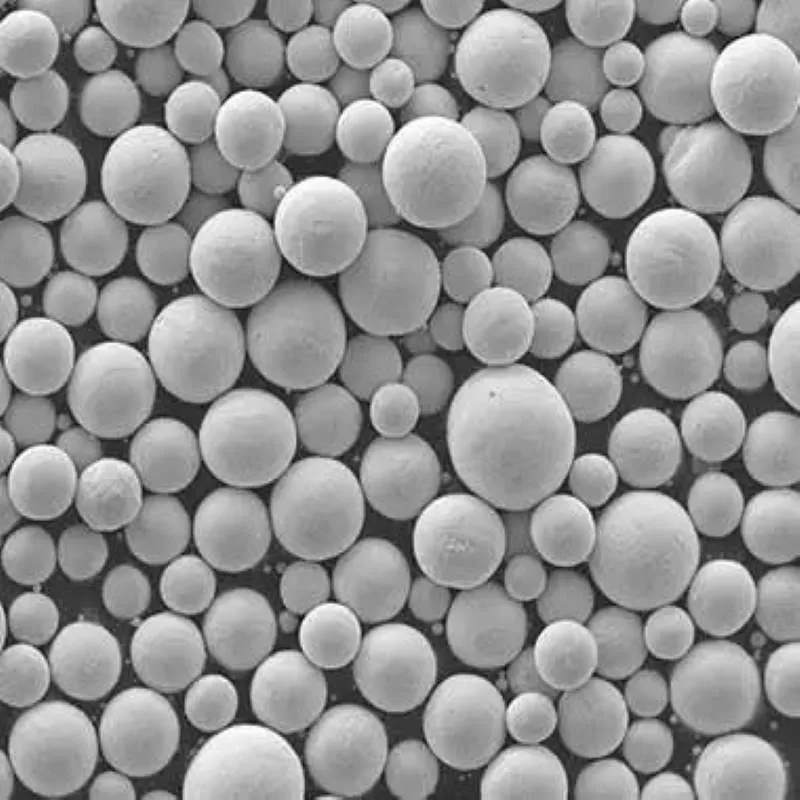
Spherical ASTM A514 Steel Powder, grade J
Product Code : SP-CSTI-543-CU
We provide Spherical ASTM A514 Steel Powder, grade J,Spherical ASTM A514 Steel Powder, grade J is suitable for laser/electron beam augmentation, hot isostatic pressing, laser cladding, hot/cold spraying, and so on. The particles can be irregular and spherical. The particle distribution can reach the nanometer scale.,Spherical Particle Size,0-15μm,,15-45um,15-53μm, 20-63um,45-105um,45-150μm , 50-150um,75-150μm,or customized,Product purity and oxygen content can be customized according to requirements.
Please contact us if you need customized services. We will contact you with the price and availability in 24 hours.
ASTM A514 Steel Spherical Powder, grade J, plate thickness ≤ 19 mm Product Information
-:-
For detailed product information, please contact sales.
-:
ASTM A514 Steel Spherical Powder, grade J, plate thickness ≤ 19 mm Synonyms
-:-
For detailed product information, please contact sales.
-:
-:-
For detailed product information, please contact sales.
-:
Spherical ASTM A514 Steel Powder, grade J characteristics
-:-
For detailed product information, please contact sales.
-:
Spherical ASTM A514 Steel Powder, grade J Particle Size
-:-
For detailed product information, please contact sales.
-:
-:-
-:-
0-15μm ,5-25μm, 15-45μm, 15-53μm,20-63um, 45-75μm, 45-105μm, 45-150μm ,75-150μm.
(Various granularities can be customized according to customer requirements)
-:-
For detailed product information, please contact sales.
-:
Spherical ASTM A514 Steel Powder, grade J Applicable processes
-:-
For detailed product information, please contact sales.
-:
Laser/electron beam additive manufacturing (SLM/EBM, 3D printing)
Direct laser deposition (DLD)
Used in thermal spray (TSA)
Powder hot isostatic pressing (HIP)
Metal injection molding (MIM)
Powder metallurgy (PM)
Laser cladding (LC), etc.
-:-
For detailed product information, please contact sales.
-:
Spherical ASTM A514 Steel Powder, grade J Chemical Composition
-:-
For detailed product information, please contact sales.
-:
-:-
For detailed product information, please contact sales.
-:
ASTM A514 Steel, grade J, plate thickness ≤ 19 mm Product Information
-:-
For detailed product information, please contact sales.
-:
## **Technical Data Sheet: ASTM A514 Steel, Grade J (Plate Thickness ≤ 19 mm / 0.75 in)**
### **1. Product Overview**
ASTM A514 Grade J is a specialized, ultra-high-strength, quenched and tempered alloy steel plate engineered to provide exceptional combination of strength and toughness for critical structural applications in thin sections. As one of the premium grades within the A514 family, Grade J delivers a **minimum yield strength of 100 ksi (690 MPa)** for thicknesses up to 19 mm, distinguished by its optimized chemistry that prioritizes excellent weldability and fracture toughness. This grade is particularly valuable for dynamically loaded components in demanding environments where both structural efficiency and reliability under impact loading are essential requirements.
### **2. International Standards & Specifications**
- **Primary Standard:** ASTM A514/A514M - *Standard Specification for High-Yield-Strength, Quenched and Tempered Alloy Steel Plate, Suitable for Welding*
- **Dimensional Standard:** ASTM A6/A6M
- **Supplementary Standards:**
- ASTM A770 (Through-Thickness Tension Testing when specified)
- ASTM A898 (Straight Beam Ultrasonic Examination when required)
- **International Equivalents:**
- **EN Standard:** EN 10025-6 Grade **S690QL1** (similar strength and toughness philosophy)
- **ISO Standard:** ISO 4950-3 Grade **EQ 690** (equivalent quality class)
- **JIS Standard:** JIS G3128 **SHY685-F** (Japanese high-strength steel with toughness focus)
- **GB/T Standard:** GB/T 16270 **Q690F** (Chinese high-strength steel with toughness requirements)
- **Note:** Direct chemical equivalents are limited due to Grade J's specific alloying approach
### **3. Chemical Composition (Heat Analysis, % by Weight)**
| Element | Min (%) | Max (%) | Metallurgical Function |
|---------|---------|---------|------------------------|
| Carbon (C) | 0.10 | 0.18 | Lower maximum carbon content enhances weldability and toughness |
| Manganese (Mn) | 0.80 | 1.10 | Balanced range for optimal hardenability and toughness |
| Phosphorus (P) | — | 0.035 | Strict impurity control for improved weldability |
| Sulfur (S) | — | 0.040 | Impurity control |
| Silicon (Si) | 0.20 | 0.35 | Lower silicon content improves toughness and reduces HAZ hardness |
| Chromium (Cr) | 0.40 | 0.65 | Provides hardenability and moderate corrosion resistance |
| Nickel (Ni) | 0.40 | 0.65 | **Enhanced nickel content for superior low-temperature toughness** |
| Molybdenum (Mo) | 0.20 | 0.30 | Improves hardenability and tempering resistance |
| Copper (Cu) | 0.15 | 0.35 | Provides atmospheric corrosion resistance |
| Vanadium (V) | 0.01 | 0.05 | Controlled addition for grain refinement without excessive hardening |
| Titanium (Ti) | 0.006 | 0.025 | Grain size control and boron protection |
| Boron (B) | 0.001 | 0.003 | Carefully controlled for hardenability without compromising toughness |
| **Aluminum (Al)** | **0.010** | **0.050** | **Grain refinement and deoxidization** |
**Key Distinguishing Features:**
- **Lower Carbon Content:** Maximum 0.18% C improves weldability
- **Enhanced Nickel:** 0.40-0.65% Ni provides exceptional toughness
- **Carbon Equivalent (Ceq):** Typically 0.52-0.58 (IIW formula), optimized for welding
- **Nickel Equivalent:** Approximately 1.5-2.0, indicating excellent toughness potential
### **4. Mechanical & Physical Properties (For Thickness ≤ 19 mm)**
| Property | Specification Requirement | Typical Value | Test Standard |
|----------|--------------------------|---------------|-------------|
| **Yield Strength (Rp0.2), min** | **100 ksi (690 MPa)** | 105 – 112 ksi (725 – 770 MPa) | ASTM A370 |
| **Tensile Strength (Rm)** | **115 – 135 ksi (790 – 930 MPa)** | 120 – 128 ksi (825 – 880 MPa) | ASTM A370 |
| **Elongation in 2 in. (50 mm), min** | **18%** | 20 – 25% | ASTM A370 |
| **Reduction of Area, min** | **45%** | 50 – 65% | ASTM A370 |
| **Brinell Hardness** | **235 – 293 HBW** | 240 – 275 HBW | ASTM E10 |
| **Charpy V-Notch Impact Energy** | | **Exceptional Toughness** | ASTM A370 |
| • At **-60°F (-51°C)** | **20 ft-lb (27 J) min** (often specified) | 35 – 70 J | |
| • At -18°C (0°F) | Exceeds minimum significantly | 60 – 100 J | |
| • At +20°C (68°F) | — | 80 – 120 J | |
| **Modulus of Elasticity** | — | 29,000 ksi (200 GPa) | — |
| **Shear Modulus** | — | 11,200 ksi (77 GPa) | — |
| **Poisson's Ratio** | — | 0.29 | — |
| **Density** | — | 0.284 lb/in³ (7.85 g/cm³) | — |
| **Thermal Conductivity** | — | ~28 W/m·K at 100°C | — |
| **Coefficient of Thermal Expansion** | — | 11.5 × 10⁻⁶/°C (20-100°C) | — |
| **Fracture Toughness (K₁c)** | — | 120 – 180 MPa√m at room temperature | ASTM E399 |
### **5. Heat Treatment & Microstructural Characteristics**
- **Condition as Supplied:** Quenched and Tempered (Q&T)
- **Quenching Method:** Controlled water or polymer quenching
- **Tempering Temperature:** 1150-1300°F (621-704°C) - higher than standard grades for optimal toughness
- **Microstructure:** Fine tempered martensite with uniform, fine carbide distribution
- **Prior Austenite Grain Size:** ASTM 8 or finer
- **Inclusion Control:** Calcium treatment often used for improved toughness
- **Temper Embrittlement Resistance:** Excellent due to low impurity elements and nickel content
### **6. Key Product Characteristics**
1. **Exceptional Low-Temperature Toughness:** Maintains high impact resistance down to -60°F (-51°C) and below
2. **Enhanced Weldability:** Lower carbon content and carbon equivalent reduce preheat requirements
3. **Superior Fracture Resistance:** Excellent for fracture-critical applications
4. **Balanced Strength/Toughness Ratio:** Optimized for dynamic loading conditions
5. **Good Fatigue Performance:** Particularly in corrosive or low-temperature environments
6. **Minimal Anisotropy:** Consistent properties in all directions
### **7. Primary Applications**
**Offshore & Marine Structures:**
- Offshore platform node connections and critical braces
- Arctic offshore structure components
- Ice-class vessel structural members
- Subsea equipment support structures
**Critical Infrastructure:**
- Seismic-resistant building structural components
- Fracture-critical bridge members
- Nuclear power plant structural supports (when specified to nuclear codes)
- Dam gate components and critical supports
**Heavy Equipment for Cold Regions:**
- Mining equipment for Arctic operations
- Excavator and shovel components for extreme cold
- Offshore crane structural members
- Heavy haul equipment for northern climates
**Energy & Power Generation:**
- Wind turbine components for cold climate installations
- Hydroelectric turbine critical components
- Pipeline compressor station structural supports
- Power transmission tower critical members
**Transportation & Defense:**
- Military vehicle components for Arctic deployment
- Railway bridge tension members in cold regions
- Specialized transportation equipment for extreme environments
- Aerospace ground support equipment
### **8. Fabrication Guidelines**
**Welding (Requires Careful Control):**
- **Filler Metals:** Nickel-bearing electrodes (E11018-Ni, E12018-Ni or equivalent)
- **Preheat Temperature:** **200-300°F (93-149°C)** depending on thickness and restraint
- **Interpass Temperature:** Maximum **350°F (177°C)**
- **Post-Weld Heat Treatment:** Recommended, especially for restrained joints
- **Welding Processes:** GTAW preferred for root passes; SMAW, GMAW, FCAW with strict control
- **Essential Practice:** Ultra-low hydrogen procedures with properly baked electrodes
**Cutting & Edge Preparation:**
- **Plasma Cutting:** Preferred method with minimal heat input
- **Abrasive Waterjet:** Excellent for precision cutting with no HAZ
- **Laser Cutting:** Suitable for thicknesses within machine capacity
- **Oxy-Fuel Cutting:** Not recommended for critical applications
- **Edge Preparation:** All cut edges must be ground to bright metal before welding
**Machining Operations:**
- **Tool Materials:** Carbide grades with positive rake geometry
- **Cutting Parameters:** 150-250 SFM with moderate feeds
- **Coolant:** Water-soluble coolant recommended
- **Workholding:** Rigid setups to prevent vibration
- **Machinability Rating:** Approximately 65% of 1212 steel
**Forming & Bending:**
- Minimum bend radius: 3-4× plate thickness
- Cold forming possible with proper equipment
- Hot forming requires subsequent heat treatment
- Springback allowance: 10-15° for typical 90° bends
### **9. Quality Assurance & Testing**
**Standard Testing:**
- Tensile testing per ASTM A370
- Charpy V-notch impact testing at multiple temperatures
- Hardness testing across plate surface
- Chemical analysis with special attention to tramp elements
**Supplementary Testing (Often Specified):**
- **S1:** Ultrasonic examination per ASTM A578 Level 2 or higher
- **S5:** Charpy testing at multiple temperatures including -60°F (-51°C)
- **S8:** Maximum tensile strength limitation
- **S9:** Through-thickness testing
- **Fracture Toughness Testing:** CTOD or K₁c testing for critical applications
**Special Requirements:**
- **Hydrogen Content:** Typically specified ≤ 2 ppm
- **Tramp Elements:** Strict control of Sn, As, Sb, Pb (<0.015% each)
- **Inclusion Rating:** ASTM E45 Method A, maximum severity levels specified
### **10. Comparison with Other A514 Grades (≤19 mm)**
| Property | Grade J | Grade F | Grade H |
|----------|---------|---------|---------|
| **Yield Strength** | 100 ksi (690 MPa) | 100 ksi (690 MPa) | 110 ksi (760 MPa) |
| **Key Advantage** | **Ultimate Toughness** | Excellent Toughness | Maximum Strength |
| **Charpy @ -60°F (-51°C)** | **35-70 J** | 25-50 J | 20-40 J |
| **Nickel Content** | **0.40-0.65%** | 0.25-0.50% | 0.25-0.50% |
| **Carbon Equivalent** | **0.52-0.58** | 0.58-0.65 | 0.65-0.72 |
| **Typical Applications** | Fracture-critical cold service | General low-temperature | Maximum strength |
### **11. Design Considerations**
1. **Fracture Control:** Essential for thicknesses >12 mm in critical applications
2. **Low-Temperature Design:** Properties remain excellent to -60°F (-51°C)
3. **Welding Design:** Lower preheat requirements than other high-strength grades
4. **Fatigue Design:** Good fatigue strength, but consider environmental effects
5. **Corrosion Considerations:** Moderate atmospheric corrosion resistance
### **12. Economic Considerations**
- **Material Cost:** Premium pricing due to nickel content and special processing
- **Fabrication Cost:** Similar to other high-strength steels with proper procedures
- **Life Cycle Cost:** Often favorable for critical applications in severe environments
- **Availability:** May require longer lead times than standard grades
### **13. Industry Codes & References**
- **API RP 2Z:** Preproduction Qualification for Steel Plates for Offshore Structures
- **AWS D1.1/D1.8:** Structural Welding Code / Seismic Supplement
- **ASME Section III:** Nuclear Facility Components
- **AISC:** Steel Construction Manual - Chapter N (High-Strength Steel)
- **BS 7910:** Guide to Methods for Assessing the Acceptability of Flaws in Metallic Structures
### **14. Limitations & Special Considerations**
1. **Not Recommended For:**
- Applications where standard toughness grades are adequate
- Continuous service above 800°F (427°C)
- Highly abrasive environments without protection
- Applications with severe stress corrosion cracking risk
2. **Special Handling:**
- Protect from hydrogen contamination during storage and handling
- Maintain low-hydrogen conditions throughout fabrication
- Avoid contamination from dissimilar metals
### **15. Future Developments**
- **Advanced Metallurgy:** Further optimization of nickel and microalloying elements
- **Processing Improvements:** Enhanced quenching and tempering controls
- **Welding Technology:** Development of matching high-toughness consumables
- **Digital Integration:** Real-time toughness monitoring during fabrication
### **16. Disclaimer & Critical Notes**
**Essential User Responsibilities:**
1. Verify suitability for specific application through fracture mechanics analysis
2. Conduct comprehensive welding procedure qualifications
3. Implement rigorous quality control during fabrication
4. Consider all service conditions including temperature extremes
5. Engage experienced fabricators with expertise in high-toughness steels
**Manufacturer's Limitations:**
- Properties are guaranteed only as tested per ASTM standards
- Performance in fabricated structures depends on proper design and workmanship
- No warranty of fitness for particular application without specific agreement
*For fracture-critical applications in severe environments, ASTM A514 Grade J represents the optimal balance of strength and toughness, but requires meticulous attention to specification, fabrication, and quality assurance throughout the project lifecycle.*
-:-
For detailed product information, please contact sales.
-:
ASTM A514 Steel, grade J, plate thickness ≤ 19 mm Specification
Dimensions
Size:
Diameter 20-1000 mm Length <5924 mm
Size:We can customized as required
Standard:
Per your request or drawing
We can customized as required
Properties(Theoretical)
Chemical Composition
-:-
For detailed product information, please contact sales.
-:
ASTM A514 Steel, grade J, plate thickness ≤ 19 mm Properties
-:-
For detailed product information, please contact sales.
-:
Spherical ASTM A514 Steel Powder, grade J Particle Size Description
-:-
For detailed product information, please contact sales.
-:
Applications of Spherical ASTM A514 Steel Powder, grade J
-:-
For detailed product information, please contact sales.
-:
-:-
For detailed product information, please contact sales.
-:
Applications of ASTM A514 Steel Spherical Powder, grade J, plate thickness ≤ 19 mm
-:-
For detailed product information, please contact sales.
-:
Chemical Identifiers ASTM A514 Steel Spherical Powder, grade J, plate thickness ≤ 19 mm
-:-
For detailed product information, please contact sales.
-:
Packing of ASTM A514 Steel Spherical Powder, grade J, plate thickness ≤ 19 mm
-:-
For detailed product information, please contact sales.
-:
Standard Packing:
-:-
For detailed product information, please contact sales.
-:
Typical bulk packaging includes palletized plastic 5 gallon/25 kg. pails, fiber and Steel Spherical Powder drums to 1 ton super sacks in full container (FCL) or truck load (T/L) quantities. Research and sample quantities and hygroscopic, oxidizing or other air sensitive materials may be packaged under argon or vacuum. Solutions are packaged in polypropylene, plastic or glass jars up to palletized 2395 gallon liquid totes Special package is available on request. E FORUs’ is carefully handled to minimize damage during storage and transportation and to preserve the quality of our products in their original condition