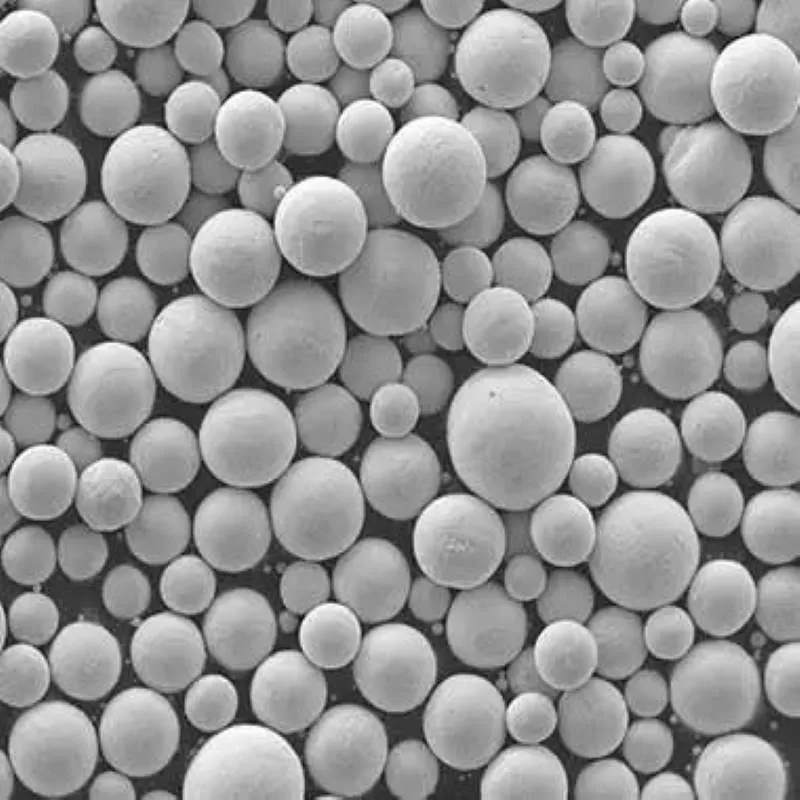
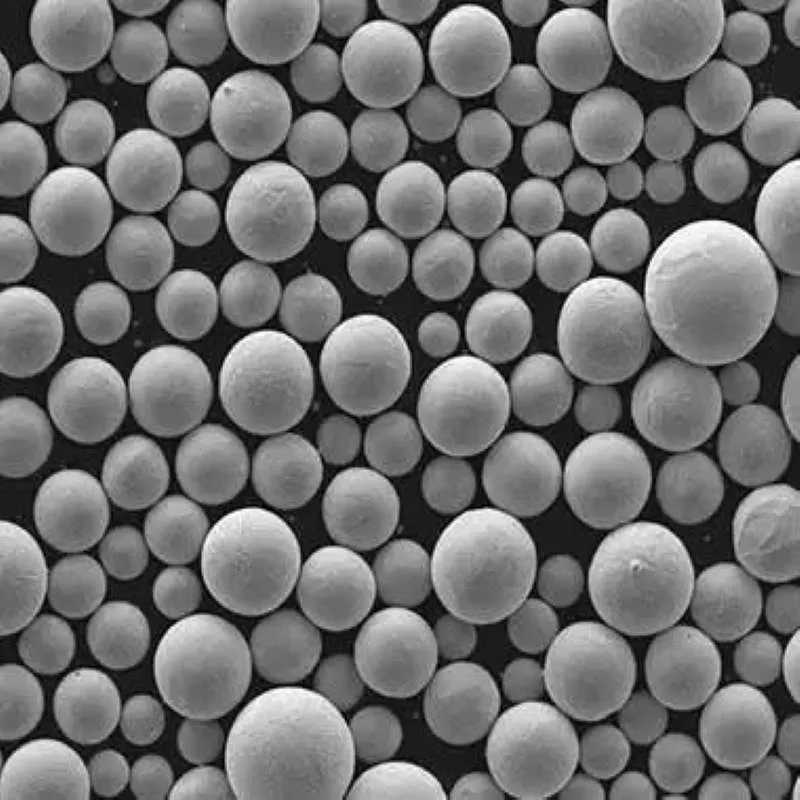
Spherical ASTM A514 Steel Powder, grade M
Product Code : SP-CSTI-546-CU
We provide Spherical ASTM A514 Steel Powder, grade M,Spherical ASTM A514 Steel Powder, grade M is suitable for laser/electron beam augmentation, hot isostatic pressing, laser cladding, hot/cold spraying, and so on. The particles can be irregular and spherical. The particle distribution can reach the nanometer scale.,Spherical Particle Size,0-15μm,,15-45um,15-53μm, 20-63um,45-105um,45-150μm , 50-150um,75-150μm,or customized,Product purity and oxygen content can be customized according to requirements.
Please contact us if you need customized services. We will contact you with the price and availability in 24 hours.
ASTM A514 Steel Spherical Powder, grade M, plate thickness 19-64 mm Product Information
-:-
For detailed product information, please contact sales.
-:
ASTM A514 Steel Spherical Powder, grade M, plate thickness 19-64 mm Synonyms
-:-
For detailed product information, please contact sales.
-:
-:-
For detailed product information, please contact sales.
-:
Spherical ASTM A514 Steel Powder, grade M characteristics
-:-
For detailed product information, please contact sales.
-:
Spherical ASTM A514 Steel Powder, grade M Particle Size
-:-
For detailed product information, please contact sales.
-:
-:-
-:-
0-15μm ,5-25μm, 15-45μm, 15-53μm,20-63um, 45-75μm, 45-105μm, 45-150μm ,75-150μm.
(Various granularities can be customized according to customer requirements)
-:-
For detailed product information, please contact sales.
-:
Spherical ASTM A514 Steel Powder, grade M Applicable processes
-:-
For detailed product information, please contact sales.
-:
Laser/electron beam additive manufacturing (SLM/EBM, 3D printing)
Direct laser deposition (DLD)
Used in thermal spray (TSA)
Powder hot isostatic pressing (HIP)
Metal injection molding (MIM)
Powder metallurgy (PM)
Laser cladding (LC), etc.
-:-
For detailed product information, please contact sales.
-:
Spherical ASTM A514 Steel Powder, grade M Chemical Composition
-:-
For detailed product information, please contact sales.
-:
-:-
For detailed product information, please contact sales.
-:
ASTM A514 Steel, grade M, plate thickness 19-64 mm Product Information
-:-
For detailed product information, please contact sales.
-:
## **Technical Data Sheet: ASTM A514 Steel, Grade M (Plate Thickness 19-64 mm / 0.75-2.5 in)**
### **1. Product Overview**
ASTM A514 Grade M is an advanced ultra-high-strength weathering steel plate engineered to deliver exceptional atmospheric corrosion resistance combined with superior mechanical strength across intermediate thickness ranges. Representing the pinnacle of weathering steel technology within the A514 specification, Grade M provides **minimum yield strengths of 100 ksi (690 MPa) in 19-38 mm thickness** and **90 ksi (620 MPa) in 38-64 mm thickness**, while maintaining corrosion resistance **four times greater than conventional carbon steel**. This specialized alloy is designed for critical exposed structural applications where maximum durability, structural efficiency, and maintenance-free service converge, making it ideal for long-span bridges, architectural landmarks, offshore structures, and specialized industrial applications in aggressive environments.
### **2. International Standards & Specifications**
- **Primary Standard:** ASTM A514/A514M - Standard Specification for High-Yield-Strength, Quenched and Tempered Alloy Steel Plate, Suitable for Welding
- **Dimensional Standard:** ASTM A6/A6M
- **Weathering Performance Standards:** ASTM G101, ASTM G50
- **Supplementary Standards:** ASTM A20/A20M (General Requirements for Steel Plates)
- **International Equivalents:**
- **EN Standard:** EN 10025-6 Grade S690QL with EN 10025-5 weathering characteristics
- **ISO Standard:** ISO 4950-3 EQ 690 + ISO 5952 weathering requirements
- **JIS Standard:** JIS G3128 SWH 685C (Japanese weathering high-strength steel)
- **GB/T Standard:** GB/T 4171 Q690NH (Chinese weathering high-strength steel)
- **Canadian Standard:** CSA G40.21 690W (Canadian weathering high-strength steel)
- **Arctic Standards:** DNV-OS-C401 with weathering steel requirements
### **3. Chemical Composition (Heat Analysis, % by Weight)**
| Element | Min (%) | Max (%) | Metallurgical Function for Thick Plate |
|---------|---------|---------|----------------------------------------|
| Carbon (C) | 0.13 | 0.20 | Balanced for strength while maintaining weathering performance in thick sections |
| Manganese (Mn) | 1.00 | 1.40 | Provides deep hardenability for consistent through-thickness properties |
| Phosphorus (P) | — | 0.025 | Ultra-low maximum for optimal weldability and centerline toughness |
| Sulfur (S) | — | 0.010 | Extremely low to minimize segregation and enhance Z-direction properties |
| Silicon (Si) | 0.20 | 0.40 | Controlled range optimized for weathering steel performance |
| **Chromium (Cr)** | **0.50** | **0.80** | **Essential for atmospheric corrosion resistance in thick sections** |
| **Copper (Cu)** | **0.25** | **0.45** | **Primary weathering element for protective patina formation** |
| Nickel (Ni) | 0.30 | 0.60 | Enhances toughness and supports corrosion resistance at mid-thickness |
| Molybdenum (Mo) | 0.20 | 0.35 | Provides necessary hardenability and temper resistance |
| Vanadium (V) | 0.03 | 0.08 | Controlled grain refinement and precipitation strengthening |
| Titanium (Ti) | 0.010 | 0.030 | Grain size control and nitride formation |
| Zirconium (Zr) | 0.05 | 0.15 | Grain refinement and inclusion shape control |
| **Boron (B)** | **0.001** | **0.005** | **Critical for achieving required hardenability in 64 mm sections** |
| **Niobium (Nb)** | **0.010** | **0.040** | **Advanced grain refinement (when specified for enhanced properties)** |
| **Calcium (Ca)** | **—** | **0.005** | **Sulfide shape control (typically 0.002-0.004%)** |
**Advanced Weathering Chemistry:**
- **Cu + Cr + Ni Total:** ≥ 0.85% for enhanced weathering performance in thick sections
- **Carbon Equivalent (Ceq):** 0.65-0.72 (IIW formula), optimized for thick plate
- **Weathering Index:** ≥ 0.80 per ASTM G101 calculation
- **Microcleanliness:** Stringent inclusion control for optimal corrosion resistance
### **4. Mechanical Properties by Thickness Range**
**Minimum Required Properties per ASTM A514:**
| Thickness Range | Yield Strength Min | Tensile Strength Range | Elongation Min | Reduction of Area Min |
|-----------------|-------------------|----------------------|----------------|----------------------|
| **19-38 mm** | **100 ksi (690 MPa)** | 115-135 ksi (790-930 MPa) | 16% | 40% |
| **38-51 mm** | **90 ksi (620 MPa)** | 105-125 ksi (725-860 MPa) | 16% | 40% |
| **51-64 mm** | **90 ksi (620 MPa)** | 105-125 ksi (725-860 MPa) | 16% | 40% |
**Typical Achieved Properties:**
- **Yield Strength:** 105-115 ksi (725-795 MPa) for 19-38 mm; 95-105 ksi (655-725 MPa) for 38-64 mm
- **Tensile Strength:** 120-130 ksi (825-895 MPa) for 19-38 mm; 110-120 ksi (760-825 MPa) for 38-64 mm
- **Elongation:** 18-22% (maintains good ductility)
- **Reduction of Area:** 45-60%
- **Brinell Hardness:** 235-293 HBW (19-38 mm); 217-269 HBW (38-64 mm)
**Enhanced Toughness Properties:**
- **Charpy V-Notch at -18°C (0°F):** 35-70 J (exceeds 27 J minimum)
- **Through-Thickness Consistency:** Surface to mid-thickness toughness ratio >0.75
- **Fracture Toughness:** Good resistance to brittle fracture in weathering conditions
### **5. Physical Properties**
- **Modulus of Elasticity:** 29,500 ksi (203 GPa)
- **Shear Modulus:** 11,500 ksi (79 GPa)
- **Poisson's Ratio:** 0.29
- **Density:** 0.284 lb/in³ (7.85 g/cm³)
- **Thermal Conductivity:** 27 W/m·K at 100°C
- **Coefficient of Thermal Expansion:** 11.3 × 10⁻⁶/°C (20-100°C)
- **Specific Heat:** 0.46 kJ/kg·K at 20°C
- **Atmospheric Corrosion Rate:** 0.3-0.5 mils/year (7.6-12.7 μm/year) in rural atmosphere
- **Corrosion Resistance Factor:** 4× carbon steel (minimum)
### **6. Heat Treatment & Microstructural Characteristics**
- **Condition as Supplied:** Quenched and Tempered (Q&T) with advanced processing
- **Quenching Method:** Intensive water quenching with controlled agitation
- **Tempering Range:** 1150-1300°F (621-704°C) - optimized for thick sections
- **Microstructure:** Fine tempered martensite with uniform carbide distribution
- **Prior Austenite Grain Size:** ASTM 7-8 (surface), ASTM 6-7 (mid-thickness)
- **Hardenability (DI):** 7-9 inches (Jominy equivalent)
- **Weathering Mechanism:** Forms exceptionally dense, adherent protective patina (α-FeOOH)
- **Patina Characteristics:** Uniform dark charcoal gray appearance with enhanced protective qualities
### **7. Key Product Characteristics**
1. **Maximum Strength-to-Weight Ratio with Weathering Performance:** Unique combination for thick plate applications
2. **Superior Atmospheric Corrosion Resistance:** 4× better than carbon steel in thick sections
3. **Exceptional Through-Thickness Consistency:** Maintains properties from surface to centerline
4. **Advanced Patina Development:** Rapid, uniform patina formation with enhanced protection
5. **Reduced Life Cycle Costs:** Eliminates painting maintenance while maximizing structural efficiency
6. **Environmental Sustainability:** Superior environmental profile throughout service life
### **8. Weathering Performance in Thick Plate Applications**
**Patina Formation Characteristics:**
- **Development Timeline:** 18-36 months for full patina development on thick sections
- **Color Progression:** Orange-brown → dark reddish-brown → charcoal gray/black
- **Uniformity:** Excellent due to consistent through-thickness chemistry and processing
- **Protective Quality:** Enhanced protective layer with superior self-healing properties
- **Adherence:** Exceptional bond strength to substrate, resistant to spalling
**Environmental Performance:**
- **Optimal Conditions:** Alternating wet/dry cycles with moderate pollution levels
- **Extended Capability:** Better performance in moderate marine environments than standard weathering steels
- **Temperature Range:** Effective performance from -50°F to +800°F (-46°C to +427°C)
### **9. Primary Applications**
**Long-Span Bridge & Infrastructure:**
- Major river and estuary crossing bridge structural components
- Coastal bridge structures exposed to salt spray
- Movable bridge machinery supports and structural members
- Highway sign support structures in aggressive environments
- Railway bridge exposed structural members
**Architectural & Monumental Structures:**
- Iconic building exposed structural elements and façades
- Stadium and arena long-span roof structural systems
- Monumental and public art structural supports
- Airport terminal exposed structural components
- Museum and cultural center architectural structures
**Offshore & Marine Structures:**
- Offshore platform exposed structural components
- Coastal defense and harbor structures
- Bridge structures in marine environments
- Port and terminal structural components
- Offshore wind farm transition pieces and bases
**Energy & Industrial Facilities:**
- Power plant exposed structural components in corrosive atmospheres
- Chemical plant structural supports requiring minimal maintenance
- Mining infrastructure in aggressive environments
- Material handling systems in port applications
- Industrial plant structures requiring both strength and corrosion resistance
**Specialized Transportation:**
- Heavy haul bridge components in corrosive environments
- Railway infrastructure in coastal regions
- Port and intermodal facility structural components
- Specialized transportation infrastructure requiring minimal maintenance
### **10. Fabrication Guidelines**
**Welding Requirements (Stringent Controls Essential):**
- **Filler Metals:** Weathering steel compatible high-strength consumables (E11018-G, E12018-G or specialty grades)
- **Preheat Temperatures:**
- 19-25 mm: 250°F (121°C) minimum
- 25-38 mm: 300°F (149°C) minimum
- 38-64 mm: 350°F (177°C) minimum
- **Interpass Control:** Maximum 350°F (177°C)
- **Post-Weld Heat Treatment:** **Mandatory** for thicknesses >25 mm
- **Welding Processes:** SAW with precise control; GTAW for critical root passes
- **Essential Practice:** Ultra-low hydrogen procedures with proper electrode baking
**Cutting & Edge Preparation:**
- **Plasma Cutting:** Preferred method for thicknesses up to 50 mm
- **Oxy-Fuel Cutting:** Requires preheat ≥300°F (149°C) and post-cut UT
- **Abrasive Waterjet:** Excellent for complex shapes with no thermal distortion
- **Machined Edges:** Recommended for critical weld preparations
- **Edge Examination:** MT or PT of all thermally cut edges
**Machining Operations:**
- **Tool Materials:** Premium carbide grades with positive rake geometry
- **Cutting Parameters:** 150-220 SFM with moderate feeds
- **Drilling:** Heavy-duty drills with peck cycle and high-pressure coolant
- **Coolant:** Water-soluble coolant recommended
- **Machinability Rating:** Approximately 60% of 1212 steel
**Forming & Bending:**
- Minimum bend radius: 4-5× plate thickness
- Hot forming at 1650-1750°F (899-954°C) with full re-heat treatment
- Cold forming limited to simple shapes with generous radii
- Springback allowance: 12-18° for typical bends
### **11. Surface Management & Weathering Control**
**During Fabrication:**
- Protect from oil, grease, and dissimilar metal contamination
- Use weathering steel compatible marking materials
- Consider abrasive blasting for uniform initial surface condition
- Protect from concrete, mortar, and alkaline material splatter
**Patina Development Management:**
- **Natural Process:** Allow standard atmospheric exposure for optimal results
- **Accelerated Methods:** Available for controlled patina development
- **Quality Monitoring:** Regular inspection during patina formation
- **Maintenance:** Generally maintenance-free after patina maturation
### **12. Quality Assurance & Testing**
**Standard Testing per Heat:**
- Tensile testing at surface, 1/4T, and 1/2T locations
- Charpy impact testing at multiple temperatures and through-thickness positions
- Hardness surveys across plate surfaces and through thickness
- Complete chemical analysis with weathering index calculation
**Supplementary Testing (Typically Specified):**
- **S1:** Ultrasonic examination per ASTM A578 Level 1 or better
- **S5:** Charpy testing at -40°F (-40°C) or lower temperatures
- **S8:** Maximum carbon equivalent limitation
- **S17:** Vacuum degassing requirement for plates >38 mm
- **S18:** Fine grain size requirement (ASTM 6 or finer)
- **Weathering Performance:** ASTM G101 testing and verification
- **Corrosion Testing:** Cyclic corrosion testing for project-specific conditions
**Certification Requirements:**
- Certified Mill Test Reports (CMTRs) with full traceability
- Weathering steel performance certification
- Third-party inspection and certification available
- Project-specific testing and documentation
### **13. Design Considerations**
1. **Fracture Control Design:** Essential for thicknesses >25 mm in critical applications
2. **Weathering Performance Integration:** Design details to optimize patina formation
3. **Thermal Movement:** Account for expansion/contraction in exposed conditions
4. **Connection Design:** Use weathering steel compatible fasteners and details
5. **Drainage Design:** Critical for optimal weathering performance
6. **Maintenance Planning:** Design for inspection access despite reduced maintenance needs
### **14. Economic Analysis**
**Cost-Benefit Considerations:**
- **Material Cost:** 40-60% premium over conventional structural steel
- **Fabrication Cost:** Higher due to specialized procedures
- **Painting Cost Elimination:** Saves $15-40/ft² typically
- **Maintenance Cost Reduction:** 80-90% reduction over 50-year life cycle
- **Life Cycle Cost:** 30-50% lower than painted high-strength steel structures
- **Insurance Implications:** May reduce premiums for properly designed structures
### **15. Environmental & Sustainability Benefits**
- **Zero VOC Emissions:** No paint solvent emissions during service life
- **Energy Conservation:** Eliminates energy for paint manufacturing and application
- **Resource Efficiency:** Higher strength reduces material usage by 30-50%
- **Recyclability:** 100% recyclable at end of service life
- **LEED Contributions:** Multiple credit opportunities in sustainable design
- **Carbon Footprint:** Reduced environmental impact throughout life cycle
### **16. Industry Codes & References**
- **AISC:** Steel Construction Manual - Design Guide for Weathering Steel
- **AWS D1.1/D1.5:** Structural Welding Code with weathering steel provisions
- **AASHTO LRFD:** Bridge Design Specifications - Weathering Steel Sections
- **ASTM G101:** Guide for Estimating Atmospheric Corrosion Resistance
- **FHWA Technical Advisory:** Use of Weathering Steel in Highway Structures
- **NCHRP Reports:** Weathering steel performance and design guidelines
### **17. Comparison with Other Materials**
| Aspect | A514 Grade M | ASTM A588 | Painted High-Strength Steel |
|--------|--------------|-----------|----------------------------|
| **Yield Strength** | 90-100 ksi (620-690 MPa) | 50 ksi (345 MPa) | 90-100 ksi (620-690 MPa) |
| **Corrosion Resistance** | **4× carbon steel** | 2× carbon steel | Depends on coating system |
| **Life Cycle Cost** | **Lowest** | Moderate | Highest |
| **Environmental Impact** | **Lowest** | Low | Higher |
| **Maintenance Requirements** | **Minimal** | Low | Regular painting required |
| **Aesthetic Character** | Natural evolving patina | Natural patina | Maintained painted finish |
### **18. Limitations & Special Considerations**
1. **Not Recommended For:**
- Constant immersion or submerged applications
- Extreme marine splash zones without additional protection
- Applications where initial runoff staining is unacceptable
- Contact with incompatible materials
2. **Environmental Limitations:**
- Performance reduced in constantly wet conditions
- Additional protection may be needed in severe industrial atmospheres
- Verify compatibility with specific local environmental conditions
3. **Aesthetic Considerations:**
- Color and texture consistency cannot be guaranteed
- Initial staining of adjacent materials may occur
- Surface appearance evolves over several years
### **19. Project Specification Guidelines**
**Essential Specification Elements:**
1. Material grade and thickness range requirements
2. Mechanical property requirements by thickness
3. Toughness requirements at service temperatures
4. Weathering performance expectations and testing requirements
5. Fabrication and welding procedure requirements
6. Surface preparation and protection requirements
7. Certification and documentation requirements
8. Patina development timeline and quality expectations
### **20. Future Developments**
- **Advanced Alloy Design:** Enhanced corrosion resistance for more aggressive environments
- **Surface Engineering:** Controlled patina formation technologies
- **Digital Monitoring:** IoT integration for real-time performance tracking
- **Sustainable Manufacturing:** Reduced carbon footprint production methods
- **BIM Integration:** Weathering performance modeling in digital twins
### **21. Disclaimer & Critical Notes**
**Essential Project Considerations:**
1. Verify local environmental suitability for weathering steel applications
2. Engage experienced architects, engineers, and fabricators
3. Consider all lifecycle stages in design decisions
4. Allow adequate time for patina development in project scheduling
5. Implement comprehensive quality assurance throughout fabrication
**Performance Limitations:**
- Actual weathering performance depends on specific environmental conditions
- Fabrication quality significantly affects long-term performance
- Proper design details are critical for successful weathering performance
**Manufacturer's Liability:**
The steel producer's liability is limited to material compliance with specified chemical and mechanical requirements. Performance in service depends on proper design, fabrication, and environmental conditions.
*For project-specific technical consultation, weathering performance analysis, or customized specification development for ASTM A514 Grade M applications in 19-64 mm thickness, contact our Technical Services Group with complete project details and performance requirements.*
-:-
For detailed product information, please contact sales.
-:
ASTM A514 Steel, grade M, plate thickness 19-64 mm Specification
Dimensions
Size:
Diameter 20-1000 mm Length <5931 mm
Size:We can customized as required
Standard:
Per your request or drawing
We can customized as required
Properties(Theoretical)
Chemical Composition
-:-
For detailed product information, please contact sales.
-:
ASTM A514 Steel, grade M, plate thickness 19-64 mm Properties
-:-
For detailed product information, please contact sales.
-:
Spherical ASTM A514 Steel Powder, grade M Particle Size Description
-:-
For detailed product information, please contact sales.
-:
Applications of Spherical ASTM A514 Steel Powder, grade M
-:-
For detailed product information, please contact sales.
-:
-:-
For detailed product information, please contact sales.
-:
Applications of ASTM A514 Steel Spherical Powder, grade M, plate thickness 19-64 mm
-:-
For detailed product information, please contact sales.
-:
Chemical Identifiers ASTM A514 Steel Spherical Powder, grade M, plate thickness 19-64 mm
-:-
For detailed product information, please contact sales.
-:
Packing of ASTM A514 Steel Spherical Powder, grade M, plate thickness 19-64 mm
-:-
For detailed product information, please contact sales.
-:
Standard Packing:
-:-
For detailed product information, please contact sales.
-:
Typical bulk packaging includes palletized plastic 5 gallon/25 kg. pails, fiber and Steel Spherical Powder drums to 1 ton super sacks in full container (FCL) or truck load (T/L) quantities. Research and sample quantities and hygroscopic, oxidizing or other air sensitive materials may be packaged under argon or vacuum. Solutions are packaged in polypropylene, plastic or glass jars up to palletized 2402 gallon liquid totes Special package is available on request. E FORUs’ is carefully handled to minimize damage during storage and transportation and to preserve the quality of our products in their original condition