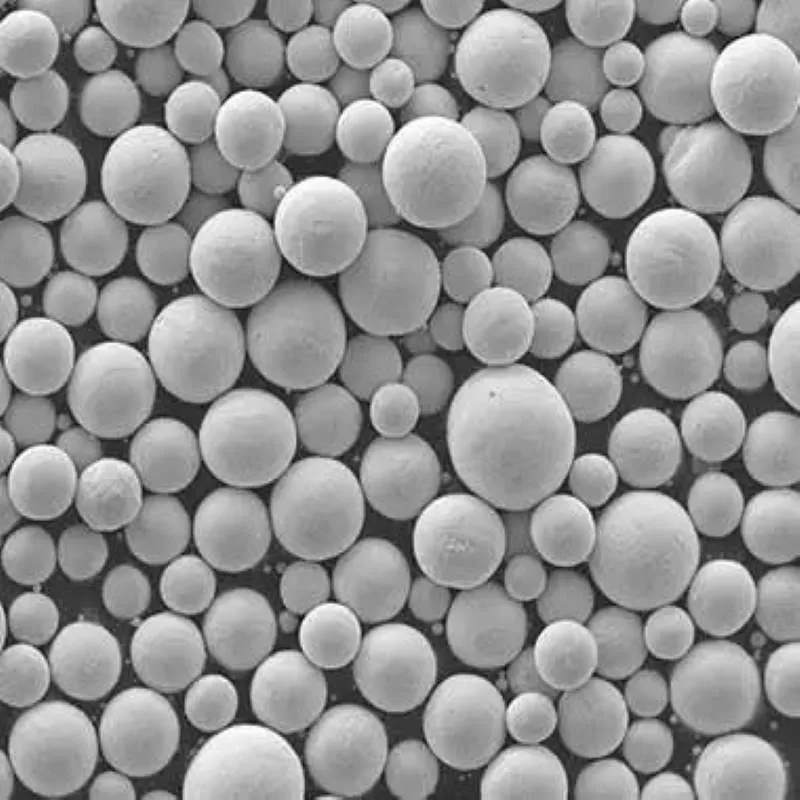
Spherical ASTM A515 Carbon Steel Powder, Grade 55
Product Code : SP-CSTI-624-CU
We provide Spherical ASTM A515 Carbon Steel Powder, Grade 55,Spherical ASTM A515 Carbon Steel Powder, Grade 55 is suitable for laser/electron beam augmentation, hot isostatic pressing, laser cladding, hot/cold spraying, and so on. The particles can be irregular and spherical. The particle distribution can reach the nanometer scale.,Spherical Particle Size,0-15μm,,15-45um,15-53μm, 20-63um,45-105um,45-150μm , 50-150um,75-150μm,or customized,Product purity and oxygen content can be customized according to requirements.
Please contact us if you need customized services. We will contact you with the price and availability in 24 hours.
ASTM A515 Carbon Steel Spherical Powder, Grade 55 Product Information
-:-
For detailed product information, please contact sales.
-:
ASTM A515 Carbon Steel Spherical Powder, Grade 55 Synonyms
-:-
For detailed product information, please contact sales.
-:
-:-
For detailed product information, please contact sales.
-:
Spherical ASTM A515 Carbon Steel Powder, Grade 55 characteristics
-:-
For detailed product information, please contact sales.
-:
Spherical ASTM A515 Carbon Steel Powder, Grade 55 Particle Size
-:-
For detailed product information, please contact sales.
-:
-:-
-:-
0-15μm ,5-25μm, 15-45μm, 15-53μm,20-63um, 45-75μm, 45-105μm, 45-150μm ,75-150μm.
(Various granularities can be customized according to customer requirements)
-:-
For detailed product information, please contact sales.
-:
Spherical ASTM A515 Carbon Steel Powder, Grade 55 Applicable processes
-:-
For detailed product information, please contact sales.
-:
Laser/electron beam additive manufacturing (SLM/EBM, 3D printing)
Direct laser deposition (DLD)
Used in thermal spray (TSA)
Powder hot isostatic pressing (HIP)
Metal injection molding (MIM)
Powder metallurgy (PM)
Laser cladding (LC), etc.
-:-
For detailed product information, please contact sales.
-:
Spherical ASTM A515 Carbon Steel Powder, Grade 55 Chemical Composition
-:-
For detailed product information, please contact sales.
-:
-:-
For detailed product information, please contact sales.
-:
ASTM A515 Carbon Steel, Grade 55 Product Information
-:-
For detailed product information, please contact sales.
-:
# **Product Introduction: ASTM A515 Grade 55 Carbon Steel Plate**
**ASTM A515 Grade 55** is a **medium to high-temperature carbon-silicon steel plate** specifically designed for **fusion welded pressure vessels and other pressure-containing components** operating at elevated temperatures. This grade is part of the A515 specification, which covers carbon steel plates of intermediate and higher tensile strengths primarily intended for service in **moderately elevated temperature applications** (typically up to 650°F or 345°C). Grade 55 offers a minimum yield strength of 55 ksi (380 MPa), providing a balance between strength, fabricability, and cost-effectiveness for general pressure vessel service.
---
## **1. Key International Standards & Specifications**
* **Primary Standard:** **ASTM A515/A515M** - Standard Specification for Pressure Vessel Plates, Carbon Steel, for Intermediate- and Higher-Temperature Service
* **Governing Standard:** **ASTM A20/A20M** - General Requirements for Steel Plates for Pressure Vessels
* **ASME Code Adoption:** **SA-515 Grade 55** in ASME Boiler and Pressure Vessel Code, Section II, Part A
* **International Equivalents:**
* **EN 10028-2:** P275GH (similar application, slightly lower strength: 275 MPa min yield)
* **ISO 9328-2:** Steel flat products for pressure purposes - Part 2: Non-alloy and alloy steels with specified elevated temperature properties
* **JIS G3115:** SPV315 (Japanese pressure vessel steel, 315 MPa min yield)
* **GB 713:** Q245R (Chinese pressure vessel steel, 245 MPa min yield)
* **Common Supplementary Standards:**
* ASME Section VIII, Division 1: Rules for Construction of Pressure Vessels
* ASME Section I: Power Boilers (for applicable components)
---
## **2. Chemical Composition (Weight %)**
| Element | Composition Range (%) | Metallurgical Function & Notes |
|---------|----------------------|--------------------------------|
| Carbon (C) | 0.18-0.25 (max 0.28 for >2 in thick) | Primary strengthener; controlled for weldability and notch toughness |
| Manganese (Mn) | 0.60-0.90 (max 0.98 for >1.5 in thick) | Enhances strength and hardenability; deoxidizer |
| Phosphorus (P) | 0.035 max | Impurity control; minimized for improved toughness |
| Sulfur (S) | 0.040 max | Impurity control; minimized for improved weldability and ductility |
| Silicon (Si) | 0.15-0.40 | **Key element:** Enhances elevated temperature strength through solid solution strengthening; deoxidizer |
| Copper (Cu) | 0.35 max (when specified) | Optional for improved atmospheric corrosion resistance |
### **Heat-Affected Zone (HAZ) Hardening Considerations:**
- **Carbon Equivalent (CE) Calculation (IIW):** CE = C + Mn/6 + (Cr+Mo+V)/5 + (Ni+Cu)/15
- **Typical CE Range:** 0.35-0.45 (moderate, indicates good weldability with proper procedures)
- **Weldability Classification:** Good to very good for carbon steel of this strength level
### **Key Composition Characteristics:**
1. **Silicon-Enhanced:** Higher silicon content compared to room temperature pressure vessel steels (e.g., A516) for improved high-temperature strength
2. **Controlled Carbon:** Optimized balance between strength and weldability
3. **Moderate Manganese:** Provides adequate strength without excessive hardenability
4. **Semi-Killed or Fully Killed:** Typically semi-killed steel, but fully killed may be specified for improved properties
---
## **3. Mechanical & Physical Properties**
### **Minimum Room Temperature Mechanical Properties:**
- **Tensile Strength:** **450-560 MPa** (65,000-81,000 psi)
- **Yield Strength (0.2% offset, min):** **380 MPa** (55,000 psi)
- **Elongation in 2 in. (50 mm):** **23% minimum** (for plates ≤ ¾ in / 19 mm thick)
- **Elongation in 8 in. (200 mm):** **19% minimum**
- **Reduction of Area:** Typically 40-50%
### **Thickness-Dependent Property Adjustments:**
| Thickness Range | Minimum Yield Strength | Minimum Tensile Strength | Notes |
|-----------------|------------------------|--------------------------|-------|
| ≤ ¾ in (19 mm) | 380 MPa (55 ksi) | 450 MPa (65 ksi) | Full properties |
| > ¾ to 1½ in (19-38 mm) | 365 MPa (53 ksi) | 450 MPa (65 ksi) | Slight yield reduction |
| > 1½ to 2½ in (38-64 mm) | 350 MPa (51 ksi) | 450 MPa (65 ksi) | Further reduction |
| > 2½ to 4 in (64-102 mm) | 330 MPa (48 ksi) | 450 MPa (65 ksi) | Significant reduction |
| > 4 to 8 in (102-203 mm) | 315 MPa (46 ksi) | 450 MPa (65 ksi) | Consult manufacturer |
### **Elevated Temperature Properties:**
- **Maximum Recommended Metal Temperature:** **650°F (345°C)** for long-term service
- **Allowable Stresses:** Governed by ASME Section II, Part D, Table 1A
- **Creep Considerations:** Not suitable for extended service above 800°F (425°C)
- **Oxidation Resistance:** Similar to carbon steel; scaling occurs above 1000°F (540°C)
### **Impact Toughness (When Specified):**
- **Charpy V-Notch Testing:** Not required unless specified
- **Typical Test Temperature:** +70°F (+21°C) or higher when required
- **Typical Absorbed Energy:** 20-40 J (15-30 ft-lb) at room temperature
### **Physical Properties:**
| Property | Value | Conditions / Notes |
|----------|-------|-------------------|
| Density | 7.85 g/cm³ (0.284 lb/in³) | Room temperature |
| Modulus of Elasticity | 200 GPa (29×10⁶ psi) | Room temperature |
| Shear Modulus | 77 GPa (11.2×10⁶ psi) | Room temperature |
| Poisson's Ratio | 0.29 | - |
| Coefficient of Thermal Expansion | 11.7×10⁻⁶/°C | 70-212°F (20-100°C) |
| Thermal Conductivity | 51.9 W/m·K | 212°F (100°C) |
| Specific Heat | 434 J/kg·K | 212°F (100°C) |
| Electrical Resistivity | 0.22 μΩ·m | Room temperature |
---
## **4. Heat Treatment & Microstructure**
### **Typical Supply Conditions:**
1. **As-Rolled:** For thinner plates (typically < 1 in / 25 mm)
2. **Normalized:** For thicker plates to ensure uniform properties
3. **Stress Relieved:** When specified for dimensional stability
### **Normalizing Practice (When Applied):**
- **Temperature:** 1600-1700°F (870-925°C)
- **Time:** 1 hour per inch of thickness (minimum 1 hour)
- **Cooling:** Still air
### **Resulting Microstructure:**
- **Primary Phase:** Ferrite with pearlite (typical 20-30% pearlite)
- **Grain Size:** ASTM 5-7 (refined through controlled rolling or normalizing)
- **Inclusions:** Typically low level with modern steelmaking practices
### **Post-Fabrication Heat Treatment:**
- **Stress Relief:** Recommended for thick sections and highly restrained welds
- **Temperature:** 1100-1200°F (595-650°C)
- **Time:** 1 hour per inch of thickness, minimum 1 hour
---
## **5. Key Characteristics & Advantages**
### **Elevated Temperature Performance:**
- **Good Strength Retention:** Maintains strength better than A36 or A283 at moderate temperatures
- **Cost-Effective:** More economical than alloy steels for ≤650°F (345°C) service
- **Proven Service History:** Extensive use in pressure vessel industry
### **Fabrication Advantages:**
- **Excellent Weldability:** Lower carbon equivalent than higher-strength steels
- **Good Formability:** Can be cold formed with adequate radii
- **Machinability:** Approximately 70% of free-machining steel (1212)
- **Predictable Behavior:** Well-established fabrication procedures
### **Economic Considerations:**
- **Material Cost:** Moderate - between A36 and alloy steels
- **Fabrication Cost:** Lower than alloy steels due to easier processing
- **Lifecycle Cost:** Good for designed service conditions
### **Limitations:**
- **Temperature Limit:** Not suitable for high-temperature service (>650°F / 345°C)
- **Corrosion Resistance:** Similar to carbon steel (requires protection in corrosive environments)
- **Toughness:** Not optimized for low-temperature service without supplemental requirements
---
## **6. Product Applications**
### **Pressure Vessels (Primary Application):**
- **Boiler Components:**
- Steam drums (moderate pressure/temperature)
- Mud drums
- Economizer headers
- Non-critical boiler parts
- **Process Vessels:**
- Columns and towers (distillation, absorption)
- Reactors (moderate temperature chemical processes)
- Separators and scrubbers
- Heat exchanger shells
- **Storage Vessels:**
- Hot water storage tanks
- Process liquid storage
- Compressed air receivers
- Industrial gas storage
### **Power Generation:**
- **Fossil Fuel Plants:**
- Feedwater heaters
- Deaerators
- Low-pressure steam piping
- Auxiliary vessel components
### **Petrochemical & Refining:**
- **Moderate Temperature Process Equipment:**
- Intermediate temperature vessels
- Support structures for high-temperature equipment
- Utility service vessels
### **General Industrial:**
- **Heat Recovery Equipment:**
- Heat recuperators
- Thermal oxidizer components
- Waste heat boiler sections
- **Manufacturing Equipment:**
- Autoclaves
- Pressure chambers
- Industrial oven components
---
## **7. Fabrication Guidelines**
### **Welding Procedures:**
#### **General Welding Characteristics:**
- **Weldability Rating:** Excellent for carbon steel of this strength
- **Preheat Requirements:** Generally minimal for thinner sections
- **Filler Metal Selection:** Straightforward with common electrodes
#### **Recommended Preheat Temperatures:**
| Thickness Range | Minimum Preheat | Notes |
|-----------------|-----------------|-------|
| ≤ ¾ in (19 mm) | Usually none required | For simple joints, low restraint |
| ¾ to 1½ in (19-38 mm) | 50-150°F (10-65°C) | For moderate restraint |
| > 1½ in (>38 mm) | 150-250°F (65-120°C) | For thick sections, high restraint |
| **Ambient < 32°F (0°C)** | **Minimum 50°F (10°C)** | Regardless of thickness |
#### **Filler Metal Selection:**
- **SMAW (Stick):** E7018, E7016, E6013 (low hydrogen preferred for thicker sections)
- **FCAW (Flux-cored):** E71T-1, E70T-1
- **GMAW (MIG):** ER70S-6, ER70S-3
- **SAW (Submerged):** F7A0-EM12K, F7A2-EM12K
#### **Post-Weld Heat Treatment (PWHT):**
- **Generally Not Required** for thicknesses ≤ 1¼ in (32 mm) with proper procedures
- **Recommended** for thicknesses > 1¼ in (32 mm) or highly restrained joints
- **Typical PWHT:** 1100-1200°F (595-650°C) for 1 hour per inch of thickness
### **Cutting & Machining:**
- **Oxy-Fuel Cutting:** Excellent results with standard practices
- **Plasma Cutting:** Suitable for all thicknesses
- **Mechanical Cutting:** Shearing, sawing suitable
- **Machining Parameters:** Standard carbon steel practices apply
### **Forming Operations:**
- **Cold Forming:** Minimum bend radius = 2× thickness (for 90° bends)
- **Hot Forming:** 1650-1800°F (900-980°C) recommended for complex shapes
- **Post-Forming Stress Relief:** Recommended after hot forming of thick sections
---
## **8. Design Considerations**
### **Pressure Vessel Design (ASME Section VIII, Division 1):**
- **Maximum Allowable Stress Values:** Refer to ASME Section II, Part D, Table 1A
- **Typical Design Temperature Range:** -20°F to +650°F (-29°C to +345°C)
- **Joint Efficiency:** 0.70-1.00 depending on examination level
- **Corrosion Allowance:** Typically ⅛ in (3 mm) for general service
### **Thickness Limitations in Design:**
- **Minimum Thickness:** Often governed by corrosion allowance rather than stress
- **Maximum Thickness:** Available up to 12 in (300 mm) from some producers
- **Property Derating:** Account for thickness effects in design calculations
### **Temperature Considerations:**
- **Minimum Design Metal Temperature (MDMT):** Can be as low as -20°F (-29°C) without impact testing
- **For Lower MDMT:** Impact testing required per ASME UCS-66
- **Hydrotest Considerations:** Maintain metal temperature above MDMT during testing
---
## **9. Comparison with Related Grades**
### **A515 Grade 55 vs. A516 Grade 55:**
| Parameter | A515 Grade 55 | A516 Grade 55 | Selection Guidance |
|-----------|---------------|---------------|-------------------|
| **Primary Application** | Intermediate/high temperature | Low/moderate temperature | Temperature dictates choice |
| **Silicon Content** | 0.15-0.40% | 0.13-0.45% (typically lower) | A515 optimized for elevated temp |
| **Typical Use Temperature** | Up to 650°F (345°C) | Up to 650°F (but not optimized) | A515 preferred for >400°F |
| **Cost** | Slightly higher | Slightly lower | Similar pricing |
| **Market Preference** | For elevated temp service | General pressure vessels | A516 more common overall |
### **A515 Grade 55 vs. A285 Grade C:**
| Aspect | A515 Grade 55 | A285 Grade C | Advantages |
|--------|---------------|--------------|------------|
| **Yield Strength** | 380 MPa (55 ksi) | 205 MPa (30 ksi) | A515 stronger |
| **Temperature Capability** | Up to 650°F | Up to 650°F | Both suitable |
| **Cost** | Higher | Lower | A285 more economical |
| **Applications** | Higher pressure vessels | Lower pressure vessels | Pressure dictates choice |
### **A515 Grade 55 vs. A36 Structural Steel:**
| Consideration | A515 Grade 55 | A36 | Application Differences |
|---------------|---------------|-----|------------------------|
| **Yield Strength** | 380 MPa (55 ksi) | 250 MPa (36 ksi) | A515 52% stronger |
| **Design Codes** | ASME Pressure Vessel | AISC Structural | Different governing codes |
| **Quality Requirements** | More stringent | General structural | A515 for pressure containment |
| **Testing** | More extensive | Basic mechanical tests | Different quality levels |
---
## **10. Quality Control & Certification**
### **Standard Testing Requirements:**
1. **Chemical Analysis:** Ladle analysis required; product analysis optional
2. **Tensile Testing:** One test per plate as-rolled, per heat if normalized
3. **Bend Test:** Often required for weld procedure qualification
4. **Hardness Testing:** Optional unless specified
### **Additional Tests (When Specified):**
- **Charpy Impact Testing:** At specified temperature
- **Ultrasonic Examination:** Per ASTM A435/A577
- **Radiographic Examination:** For critical applications
- **Hydrostatic Testing:** After fabrication
### **Certification Requirements:**
- **Mill Test Certificate:** To ASTM A20 requirements
- **Heat Treatment Records:** If normalized or stress relieved
- **Traceability:** Complete from melt to finished plate
- **Marking:** ASTM designation, grade, heat number, size
### **Common Supplemental Requirements:**
- **Restricted Chemistry Ranges:** For specific properties
- **Enhanced Testing Frequency:** For critical applications
- **Third-Party Inspection:** For code or customer requirements
---
**Technical Summary:** ASTM A515 Grade 55 is a well-established carbon-silicon steel plate optimized for pressure vessel applications operating at moderately elevated temperatures up to 650°F (345°C). Its 55 ksi minimum yield strength, combined with good weldability and formability, makes it a cost-effective choice for a wide range of pressure-containing equipment in power generation, petrochemical, and general industrial applications. While largely similar to A516 Grade 55 in room temperature properties, A515 is specifically formulated with higher silicon content for better elevated temperature performance. The material offers an excellent balance between performance and cost for its intended service range, with extensive industry experience and established fabrication procedures. For new designs, engineers should consider A515 Grade 55 when designing pressure vessels for continuous service between 400-650°F (205-345°C), where its optimized properties provide economic advantages over both lower-strength carbon steels and more expensive alloy steels.
-:-
For detailed product information, please contact sales.
-:
ASTM A515 Carbon Steel, Grade 55 Specification
Dimensions
Size:
Diameter 20-1000 mm Length <6019 mm
Size:We can customized as required
Standard:
Per your request or drawing
We can customized as required
Properties(Theoretical)
Chemical Composition
-:-
For detailed product information, please contact sales.
-:
ASTM A515 Carbon Steel, Grade 55 Properties
-:-
For detailed product information, please contact sales.
-:
Spherical ASTM A515 Carbon Steel Powder, Grade 55 Particle Size Description
-:-
For detailed product information, please contact sales.
-:
Applications of Spherical ASTM A515 Carbon Steel Powder, Grade 55
-:-
For detailed product information, please contact sales.
-:
-:-
For detailed product information, please contact sales.
-:
Applications of ASTM A515 Carbon Steel Spherical Powder, Grade 55
-:-
For detailed product information, please contact sales.
-:
Chemical Identifiers ASTM A515 Carbon Steel Spherical Powder, Grade 55
-:-
For detailed product information, please contact sales.
-:
Packing of ASTM A515 Carbon Steel Spherical Powder, Grade 55
-:-
For detailed product information, please contact sales.
-:
Standard Packing:
-:-
For detailed product information, please contact sales.
-:
Typical bulk packaging includes palletized plastic 5 gallon/25 kg. pails, fiber and Steel Spherical Powder drums to 1 ton super sacks in full container (FCL) or truck load (T/L) quantities. Research and sample quantities and hygroscopic, oxidizing or other air sensitive materials may be packaged under argon or vacuum. Solutions are packaged in polypropylene, plastic or glass jars up to palletized 2490 gallon liquid totes Special package is available on request. E FORUs’ is carefully handled to minimize damage during storage and transportation and to preserve the quality of our products in their original condition