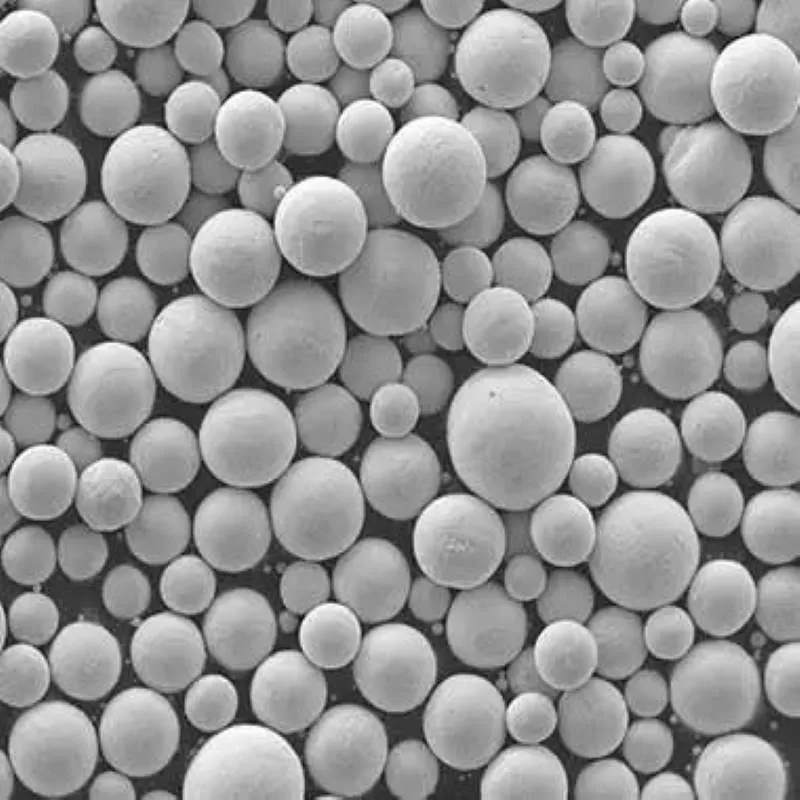
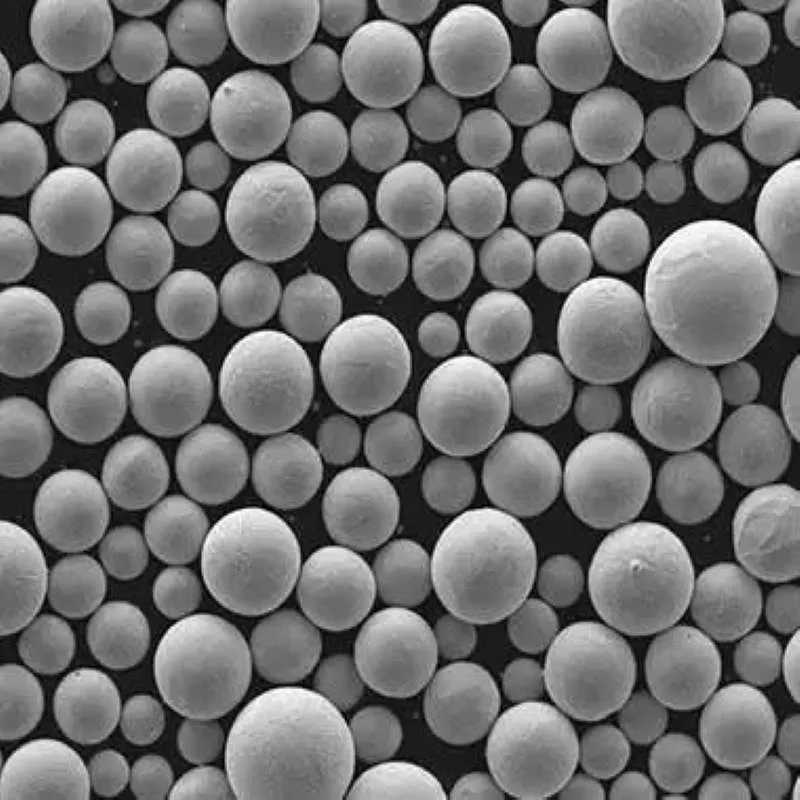
Spherical ASTM A529 Steel Powder
Product Code : SP-CSTI-548-CU
We provide Spherical ASTM A529 Steel Powder,Spherical ASTM A529 Steel Powder is suitable for laser/electron beam augmentation, hot isostatic pressing, laser cladding, hot/cold spraying, and so on. The particles can be irregular and spherical. The particle distribution can reach the nanometer scale.,Spherical Particle Size,0-15μm,,15-45um,15-53μm, 20-63um,45-105um,45-150μm , 50-150um,75-150μm,or customized,Product purity and oxygen content can be customized according to requirements.
Please contact us if you need customized services. We will contact you with the price and availability in 24 hours.
ASTM A529 Steel Spherical Powder Product Information
-:-
For detailed product information, please contact sales.
-:
ASTM A529 Steel Spherical Powder Synonyms
-:-
For detailed product information, please contact sales.
-:
-:-
For detailed product information, please contact sales.
-:
Spherical ASTM A529 Steel Powder characteristics
-:-
For detailed product information, please contact sales.
-:
Spherical ASTM A529 Steel Powder Particle Size
-:-
For detailed product information, please contact sales.
-:
-:-
-:-
0-15μm ,5-25μm, 15-45μm, 15-53μm,20-63um, 45-75μm, 45-105μm, 45-150μm ,75-150μm.
(Various granularities can be customized according to customer requirements)
-:-
For detailed product information, please contact sales.
-:
Spherical ASTM A529 Steel Powder Applicable processes
-:-
For detailed product information, please contact sales.
-:
Laser/electron beam additive manufacturing (SLM/EBM, 3D printing)
Direct laser deposition (DLD)
Used in thermal spray (TSA)
Powder hot isostatic pressing (HIP)
Metal injection molding (MIM)
Powder metallurgy (PM)
Laser cladding (LC), etc.
-:-
For detailed product information, please contact sales.
-:
Spherical ASTM A529 Steel Powder Chemical Composition
-:-
For detailed product information, please contact sales.
-:
-:-
For detailed product information, please contact sales.
-:
ASTM A529 Steel Product Information
-:-
For detailed product information, please contact sales.
-:
## **Technical Data Sheet: ASTM A529 Steel**
### **1. Product Overview**
ASTM A529 is a high-strength carbon-manganese structural steel specification covering shapes, plates, and bars for general construction applications. This steel provides enhanced mechanical properties compared to standard carbon steels like ASTM A36, offering two strength grades (42 and 50) with minimum yield strengths of 42 ksi (290 MPa) and 50 ksi (345 MPa) respectively. Primarily strengthened through increased manganese content rather than extensive alloying, A529 represents a cost-effective bridge between conventional carbon steels and more expensive high-strength low-alloy (HSLA) steels. It is particularly suitable for bolted or riveted construction in bridges, buildings, and other structures where higher load-bearing capacity is required without the need for premium alloy content.
### **2. International Standards & Specifications**
- **Primary Standard:** ASTM A529/A529M - *Standard Specification for High-Strength Carbon-Manganese Steel of Structural Quality*
- **Associated Standards:**
- ASTM A6/A6M: *General Requirements for Rolled Structural Steel Bars, Plates, Shapes, and Sheet Piling*
- ASTM A673/A673M: *Sampling Procedure for Impact Testing of Structural Steel*
- **International Equivalents:**
- **EN Standard:** EN 10025-2: S275JR (similar to Grade 42) and S355JR (similar to Grade 50)
- **JIS Standard:** JIS G3101 SS400 (Grade 42 equivalent) and JIS G3106 SM490 (Grade 50 equivalent)
- **ISO Standard:** ISO 630-2: E275 (Grade 42) and E355 (Grade 50)
- **GB/T Standard:** GB/T 700 Q275 (Grade 42) and GB/T 1591 Q355 (Grade 50)
- **CSA Standard:** CSA G40.21 350W (similar to Grade 50)
- **Australian Standard:** AS/NZS 3678: Grade 350 (similar to Grade 50)
### **3. Chemical Composition (Heat Analysis, % by Weight)**
**Grade 42:**
| Element | Minimum (%) | Maximum (%) | Notes |
|---------|-------------|-------------|-------|
| Carbon (C) | - | 0.27 | Provides strength and hardenability |
| Manganese (Mn) | 0.85 | 1.20 | Primary strengthening element |
| Phosphorus (P) | - | 0.04 | Impurity control for weldability |
| Sulfur (S) | - | 0.05 | Impurity control for ductility |
| Silicon (Si) | 0.15 | 0.40 | Deoxidizer, enhances strength |
| Copper (Cu)* | 0.20 | - | Optional for corrosion resistance |
**Grade 50:**
| Element | Minimum (%) | Maximum (%) | Notes |
|---------|-------------|-------------|-------|
| Carbon (C) | - | 0.27 | Same as Grade 42, strength from processing |
| Manganese (Mn) | 0.85 | 1.35 | Slightly higher range for greater strength |
| Phosphorus (P) | - | 0.04 | Standard impurity control |
| Sulfur (S) | - | 0.05 | Standard impurity control |
| Silicon (Si) | 0.15 | 0.40 | Deoxidizer |
| Copper (Cu)* | 0.20 | - | Optional for corrosion resistance |
*Copper requirement applies only when specified for enhanced atmospheric corrosion resistance. When not specified, copper is not required.
**Key Metallurgical Characteristics:**
- **Carbon Equivalent (CE):** Typically 0.38-0.42 for Grade 50 (based on IIW formula)
- **Deoxidation Practice:** Semi-killed or killed steel as required
- **Microstructure:** Predominantly ferrite-pearlite with grain refinement
### **4. Mechanical Properties**
**Minimum Requirements:**
| Property | Grade 42 | Grade 50 | Test Method |
|----------|----------|----------|-------------|
| **Tensile Strength, min** | 60 ksi (415 MPa) | 65 ksi (450 MPa) | ASTM A370 |
| **Yield Strength, min** | 42 ksi (290 MPa) | 50 ksi (345 MPa) | ASTM A370 |
| **Elongation in 8 in. (200 mm), min** | 19% | 18% | ASTM A370 |
| **Elongation in 2 in. (50 mm), min** | 23% | 21% | ASTM A370 |
**Typical Achieved Properties:**
- **Grade 42:**
- Yield Strength: 45-50 ksi (310-345 MPa)
- Tensile Strength: 65-72 ksi (450-495 MPa)
- Elongation: 22-26% in 8 inches
- **Grade 50:**
- Yield Strength: 55-60 ksi (380-415 MPa)
- Tensile Strength: 70-78 ksi (480-540 MPa)
- Elongation: 20-24% in 8 inches
**Impact Properties (When Specified):**
- Charpy V-notch testing available as supplementary requirement
- Typical test temperature: 70°F (21°C)
- Minimum absorbed energy: 15 ft-lb (20 J)
- Can be specified for lower temperatures if required
### **5. Physical Properties**
- **Modulus of Elasticity:** 29,000 ksi (200 GPa)
- **Shear Modulus:** 11,200 ksi (77 GPa)
- **Poisson's Ratio:** 0.29
- **Density:** 0.283 lb/in³ (7.83 g/cm³)
- **Thermal Conductivity:** 52 W/m·K at 100°C
- **Coefficient of Thermal Expansion:** 6.5 × 10⁻⁶/°F (11.7 × 10⁻⁶/°C) from 68-212°F
- **Specific Heat:** 0.46 kJ/kg·K at 20°C
- **Electrical Resistivity:** 0.16 μΩ·m at 20°C
### **6. Material Forms & Availability**
- **Shapes:** Wide-flange beams, channels, angles, tees, zees, and other structural shapes
- **Plates:** Available in thicknesses typically up to 8 inches (200 mm)
- **Bars:** Rounds, squares, flats, and other bar configurations
- **Sheet Piling:** Available when specified
- **Standard Sizes:** Produced in standard structural dimensions per ASTM A6
### **7. Heat Treatment & Processing**
- **As-Rolled Condition:** Typically supplied in hot-rolled condition
- **Normalizing:** Optional when specified for improved properties
- **Stress Relieving:** Available when required for specific applications
- **Microstructural Control:** Achieved through controlled rolling practices
### **8. Key Product Characteristics**
1. **Enhanced Strength:** Higher yield and tensile strengths than conventional carbon steels
2. **Excellent Weldability:** Moderate carbon equivalent allows conventional welding practices
3. **Good Formability:** Can be formed using standard equipment and practices
4. **Cost-Effective:** Provides strength increase without premium alloy costs
5. **Atmospheric Corrosion Resistance:** Copper-bearing version offers improved durability
6. **Predictable Performance:** Consistent mechanical properties across product forms
### **9. Primary Applications**
**Building Construction:**
- Multi-story building structural frames and columns
- Industrial building primary and secondary framing
- Commercial building structural systems
- Roof trusses and support structures
- Mezzanine floors and platforms
**Bridge Construction:**
- Secondary bridge members and components
- Pedestrian and light vehicular bridges
- Bridge approach spans and ramps
- Temporary and movable bridges
- Bridge repair and reinforcement components
**Industrial Structures:**
- Factory and warehouse structural systems
- Material handling equipment supports
- Equipment platforms and walkways
- Storage rack structural components
- Industrial stairs, ladders, and railings
**Infrastructure Projects:**
- Electrical transmission tower components
- Highway sign and signal support structures
- Sound barrier wall framing
- Retaining wall structural elements
- Utility buildings and shelters
**Transportation Equipment:**
- Heavy truck chassis components
- Trailer structural members
- Railroad car underframes
- Marine barge structural elements
- Heavy equipment structural supports
**Agricultural Applications:**
- Farm building structural systems
- Grain storage facility supports
- Equipment shelters and covers
- Agricultural machinery frames
### **10. Fabrication Guidelines**
**Welding:**
- **Recommended Processes:** SMAW, GMAW, FCAW, SAW
- **Electrode Selection:** E70XX series for Grade 42; E70XX or E80XX for Grade 50
- **Preheat Requirements:** Generally not required for thicknesses < 1 inch; 150-250°F for thicker sections
- **Interpass Temperature:** Maximum 400°F recommended
- **Procedure Qualification:** Follow AWS D1.1 requirements
**Cutting:**
- **Oxy-Fuel Cutting:** Most common method, produces clean edges
- **Plasma Cutting:** Suitable for thicknesses up to 1.5 inches
- **Mechanical Cutting:** Sawing, shearing, and punching all appropriate
- **Edge Preparation:** Standard practices apply for weld preparations
**Machining:**
- **Tool Materials:** High-speed steel or carbide tools
- **Cutting Speeds:** 200-350 SFM for turning operations
- **Feeds & Depths:** Moderate feeds with standard depths of cut
- **Coolant:** Water-soluble coolants generally sufficient
**Forming:**
- **Cold Forming:** Good formability with standard equipment
- **Bend Radius:** Minimum 1× thickness for 90° bends
- **Hot Forming:** Possible when required for complex shapes
- **Springback:** Predictable and manageable in tooling design
### **11. Corrosion Protection**
**Atmospheric Exposure:**
- **Copper-Bearing Steel:** 0.20% Cu minimum provides improved corrosion resistance
- **Corrosion Rate:** Approximately 1.5-2.0× better than plain carbon steel
- **Surface Preparation:** Standard abrasive blasting for painting
- **Coating Systems:** Excellent adhesion with proper surface preparation
**Protection Methods:**
- Painting systems (primers, intermediate, and top coats)
- Hot-dip galvanizing with proper pretreatment
- Metallizing for specialized applications
- Weathering steel version available when specified
### **12. Quality Assurance & Testing**
**Standard Requirements:**
- Chemical analysis from each heat of steel
- Tensile testing from each heat and thickness combination
- Dimensional verification per ASTM A6 requirements
- Visual inspection for surface quality
**Supplementary Requirements (Available when Specified):**
- S1: Impact testing (Charpy V-notch)
- S2: Additional tension tests
- S3: Fine austenitic grain size
- S5: Charpy V-notch impact test at specified temperature
- S14: Restricted chemical composition
**Certification:**
- Mill test reports documenting compliance
- Heat number traceability maintained
- Third-party inspection available upon request
### **13. Comparison with Similar Steels**
| Characteristic | A529 Grade 50 | A36 | A572 Grade 50 |
|----------------|---------------|-----|---------------|
| **Yield Strength** | 50 ksi (345 MPa) | 36 ksi (250 MPa) | 50 ksi (345 MPa) |
| **Chemistry** | C-Mn steel | Plain carbon steel | HSLA (V, Nb, etc.) |
| **Cost Factor** | Moderate | Low | Higher |
| **Weldability** | Very Good | Excellent | Good |
| **Formability** | Very Good | Excellent | Good |
| **Primary Use** | General structures | Light structures | Heavy structures |
### **14. Design Considerations**
**Structural Design:**
- Use AISC Steel Construction Manual for design parameters
- Allowable stresses based on yield strength of 42 or 50 ksi
- Consider local buckling in slender sections
- Account for deflection limitations in beam design
**Connection Design:**
- Bolted connections per AISC specifications
- Welded connections per AWS D1.1 requirements
- Consider shear lag effects in tension members
- Account for block shear in connection design
**Fatigue Considerations:**
- Apply AISC fatigue design provisions for cyclic loading
- Detail connections to minimize stress concentrations
- Consider impact loading conditions
### **15. Economic Considerations**
**Cost Factors:**
- **Material Cost:** Approximately 10-15% premium over A36 steel
- **Fabrication Cost:** Similar to other structural steels
- **Life Cycle Cost:** Competitive for many structural applications
- **Availability:** Generally good with standard lead times
**Value Proposition:**
- Higher strength allows material savings compared to A36
- Reduced weight for transportation and erection
- Compatibility with standard fabrication methods
- Cost-effective alternative to HSLA steels for many applications
### **16. Industry Codes & References**
- **AISC 360:** Specification for Structural Steel Buildings
- **AWS D1.1/D1.8:** Structural Welding Code / Seismic Supplement
- **AASHTO LRFD:** Bridge Design Specifications
- **ASCE 7:** Minimum Design Loads for Buildings
- **IBC:** International Building Code
### **17. Limitations & Special Considerations**
1. **Not Recommended For:**
- Pressure vessel applications (use appropriate pressure vessel grades)
- Cryogenic service without impact testing
- Highly corrosive environments without adequate protection
- Applications requiring guaranteed impact properties unless specified
2. **Temperature Limitations:**
- Maximum service temperature: 800°F (427°C)
- Minimum service temperature: -50°F (-46°C) with proper toughness specification
3. **Size Limitations:**
- Properties may vary with section size and thickness
- Thicker sections may exhibit different mechanical properties
### **18. Environmental & Sustainability**
- **Recyclability:** 100% recyclable without property degradation
- **Energy Efficiency:** Higher strength reduces material requirements
- **Manufacturing Impact:** Standard steel production processes
- **Life Cycle Assessment:** Favorable environmental profile
- **Sustainable Construction:** Contributes to efficient structural designs
### **19. Project Specification Guidelines**
**Essential Specification Elements:**
1. ASTM designation and grade (A529, Grade 42 or 50)
2. Copper requirement if enhanced corrosion resistance needed
3. Supplementary testing requirements (impact tests, etc.)
4. Certification and documentation requirements
5. Any special processing requirements
**Sample Specification Language:**
"Structural steel shall conform to ASTM A529, Grade 50. Material shall have a minimum yield strength of 50 ksi and minimum tensile strength of 65 ksi. Charpy V-notch impact testing shall be conducted at 70°F with minimum absorbed energy of 15 ft-lb when specified."
### **20. Future Developments & Trends**
- **Processing Improvements:** Enhanced rolling techniques for better properties
- **Sustainability:** Reduced carbon footprint in production
- **Digital Integration:** Improved traceability through digital documentation
- **Alloy Optimization:** Potential refinements in composition for specific applications
### **21. Disclaimer & Important Notes**
**User Responsibilities:**
1. Select appropriate grade based on specific application requirements
2. Verify material properties meet design assumptions
3. Follow proper fabrication, erection, and maintenance procedures
4. Consider all service conditions in structural design
5. Comply with all applicable codes and regulations
**Manufacturer's Limitations:**
- Properties guaranteed as tested per ASTM A529 requirements
- Performance in service depends on proper design and fabrication
- No warranty of fitness for particular application without specific agreement
*ASTM A529 provides a practical, economical solution for structural applications requiring moderate strength increases over conventional carbon steels while maintaining excellent fabricability and broad availability.*
-:-
For detailed product information, please contact sales.
-:
ASTM A529 Steel Specification
Dimensions
Size:
Diameter 20-1000 mm Length <5933 mm
Size:We can customized as required
Standard:
Per your request or drawing
We can customized as required
Properties(Theoretical)
Chemical Composition
-:-
For detailed product information, please contact sales.
-:
ASTM A529 Steel Properties
-:-
For detailed product information, please contact sales.
-:
Spherical ASTM A529 Steel Powder Particle Size Description
-:-
For detailed product information, please contact sales.
-:
Applications of Spherical ASTM A529 Steel Powder
-:-
For detailed product information, please contact sales.
-:
-:-
For detailed product information, please contact sales.
-:
Applications of ASTM A529 Steel Spherical Powder
-:-
For detailed product information, please contact sales.
-:
Chemical Identifiers ASTM A529 Steel Spherical Powder
-:-
For detailed product information, please contact sales.
-:
Packing of ASTM A529 Steel Spherical Powder
-:-
For detailed product information, please contact sales.
-:
Standard Packing:
-:-
For detailed product information, please contact sales.
-:
Typical bulk packaging includes palletized plastic 5 gallon/25 kg. pails, fiber and Steel Spherical Powder drums to 1 ton super sacks in full container (FCL) or truck load (T/L) quantities. Research and sample quantities and hygroscopic, oxidizing or other air sensitive materials may be packaged under argon or vacuum. Solutions are packaged in polypropylene, plastic or glass jars up to palletized 2404 gallon liquid totes Special package is available on request. E FORUs’ is carefully handled to minimize damage during storage and transportation and to preserve the quality of our products in their original condition