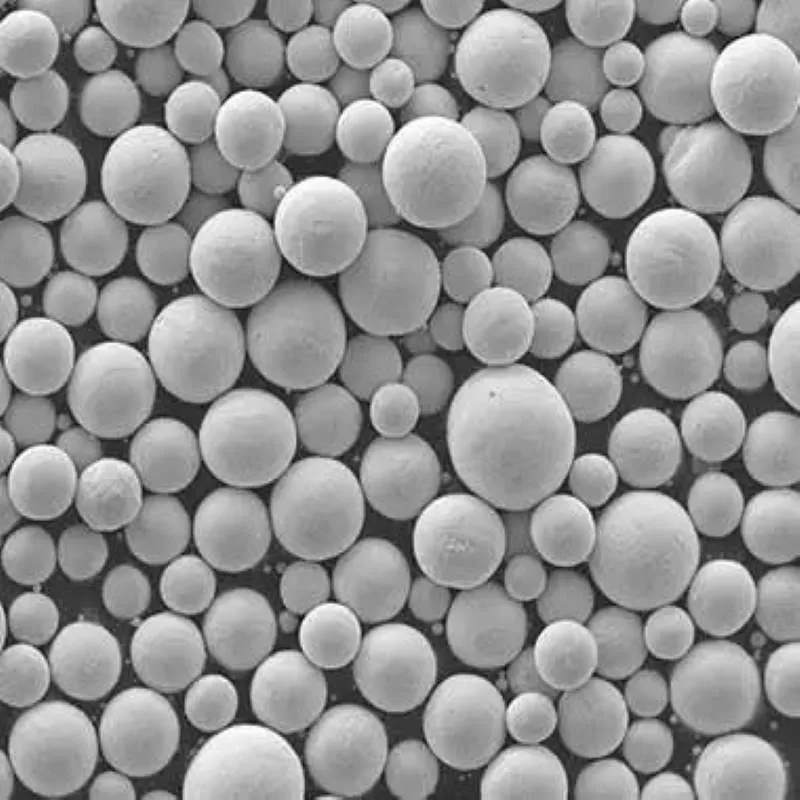
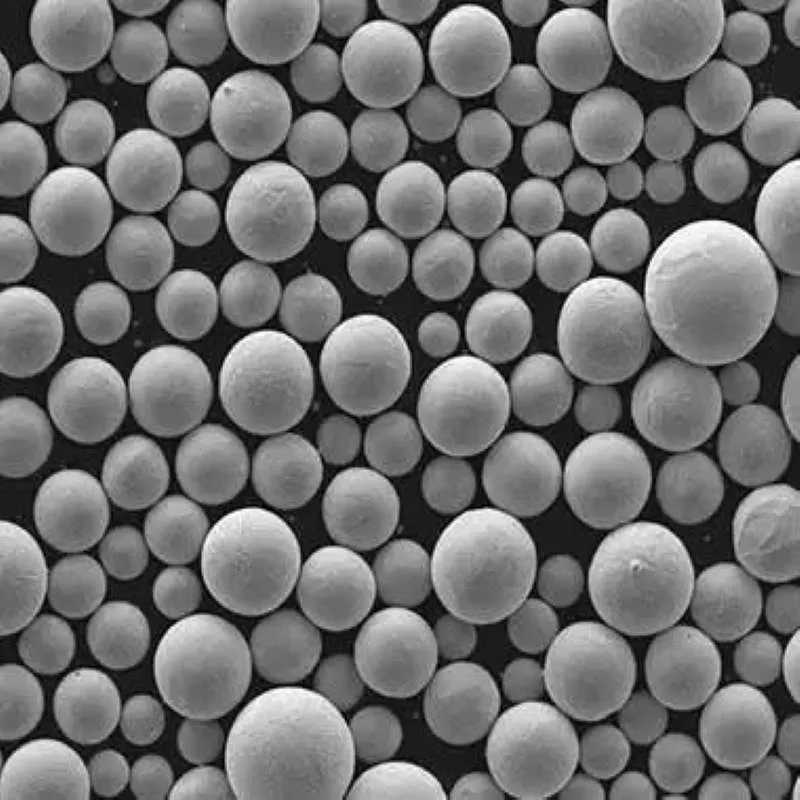
Spherical ASTM A678 Steel Powder, grade B
Product Code : SP-CSTI-564-CU
We provide Spherical ASTM A678 Steel Powder, grade B,Spherical ASTM A678 Steel Powder, grade B is suitable for laser/electron beam augmentation, hot isostatic pressing, laser cladding, hot/cold spraying, and so on. The particles can be irregular and spherical. The particle distribution can reach the nanometer scale.,Spherical Particle Size,0-15μm,,15-45um,15-53μm, 20-63um,45-105um,45-150μm , 50-150um,75-150μm,or customized,Product purity and oxygen content can be customized according to requirements.
Please contact us if you need customized services. We will contact you with the price and availability in 24 hours.
ASTM A678 Steel Spherical Powder, grade B Product Information
-:-
For detailed product information, please contact sales.
-:
ASTM A678 Steel Spherical Powder, grade B Synonyms
-:-
For detailed product information, please contact sales.
-:
-:-
For detailed product information, please contact sales.
-:
Spherical ASTM A678 Steel Powder, grade B characteristics
-:-
For detailed product information, please contact sales.
-:
Spherical ASTM A678 Steel Powder, grade B Particle Size
-:-
For detailed product information, please contact sales.
-:
-:-
-:-
0-15μm ,5-25μm, 15-45μm, 15-53μm,20-63um, 45-75μm, 45-105μm, 45-150μm ,75-150μm.
(Various granularities can be customized according to customer requirements)
-:-
For detailed product information, please contact sales.
-:
Spherical ASTM A678 Steel Powder, grade B Applicable processes
-:-
For detailed product information, please contact sales.
-:
Laser/electron beam additive manufacturing (SLM/EBM, 3D printing)
Direct laser deposition (DLD)
Used in thermal spray (TSA)
Powder hot isostatic pressing (HIP)
Metal injection molding (MIM)
Powder metallurgy (PM)
Laser cladding (LC), etc.
-:-
For detailed product information, please contact sales.
-:
Spherical ASTM A678 Steel Powder, grade B Chemical Composition
-:-
For detailed product information, please contact sales.
-:
-:-
For detailed product information, please contact sales.
-:
ASTM A678 Steel, grade B Product Information
-:-
For detailed product information, please contact sales.
-:
## **Technical Specification: ASTM A678 Grade B Quenched & Tempered High-Strength Structural Steel Plate**
---
### **1. PRODUCT OVERVIEW**
**Standard Designation:** ASTM A678/A678M
**Full Title:** *Standard Specification for Quenched-and-Tempered Carbon and Alloy Steel Plates for Structural Applications*
**Grade:** B
**International Standard:** ASTM International (American Society for Testing and Materials)
**Material Classification:** High-strength, quenched and tempered carbon-manganese steel plate
**Primary Distinction:** The standard intermediate-strength grade in the A678 family, offering an optimal balance of strength, toughness, and weldability for general structural applications
---
### **2. MATERIAL CHARACTERISTICS & METALLURGY**
ASTM A678 Grade B is a **heat-treated structural steel** produced through controlled quenching and tempering processes. Unlike as-rolled steels, it undergoes a precise thermal cycle: austenitizing followed by rapid quenching (typically in water) and subsequent tempering at elevated temperatures. This produces a refined **tempered martensite or bainitic microstructure**, resulting in superior mechanical properties with excellent through-thickness consistency.
**Key Manufacturing Advantages:**
- **Property Uniformity:** Heat treatment ensures consistent mechanical properties throughout the plate cross-section, minimizing property variations common in as-rolled products.
- **Enhanced Toughness:** The quenched and tempered microstructure provides superior notch toughness and impact resistance compared to non-heat-treated steels of similar strength.
- **Controlled Residual Stresses:** The tempering process relieves internal stresses from quenching, improving dimensional stability during fabrication.
- **Thickness Capability:** Maintains specified properties in thicker sections better than normalized or controlled-rolled steels.
---
### **3. CHEMICAL COMPOSITION REQUIREMENTS**
The composition is balanced to achieve hardenability during quenching while maintaining good weldability and toughness after tempering.
| Element | Composition (% by weight, maximum unless range is shown) |
|---------|----------------------------------------------------------|
| **Carbon (C)** | 0.20 - 0.28 |
| **Manganese (Mn)** | 0.90 - 1.50 |
| **Phosphorus (P)** | 0.035 |
| **Sulfur (S)** | 0.040 |
| **Silicon (Si)** | 0.15 - 0.50 |
| **Copper (Cu)** | 0.20 max (report when added) |
| **Nickel (Ni)** | 0.25 max (report when added) |
| **Chromium (Cr)** | 0.25 max (report when added) |
| **Molybdenum (Mo)** | 0.08 max (report when added) |
| **Vanadium (V)** | 0.05 max (report when added) |
**Carbon Equivalent (CE) for Weldability:**
Typically ranges from 0.45 to 0.55 based on the formula:
**CE = C + Mn/6 + (Cr+Mo+V)/5 + (Ni+Cu)/15**
This indicates **good weldability with proper procedures**, though preheating is often required for thicker sections.
---
### **4. MECHANICAL PROPERTIES**
#### **Minimum Required Properties (per ASTM A678):**
- **Yield Strength (0.2% offset):** **60 ksi minimum (415 MPa minimum)**
- **Tensile Strength:** **80 - 100 ksi (550 - 690 MPa)**
- **Elongation in 8-inch gauge length:** **16% minimum**
- **Elongation in 2-inch gauge length:** **18% minimum**
#### **Impact Toughness (Charpy V-Notch):**
- **Test Temperature:** +70°F (+21°C) unless otherwise specified
- **Minimum Average Energy:** **15 ft-lbf (20 J)** for three specimens
- **Minimum Individual Value:** **12 ft-lbf (16 J)** for any single specimen
- **Optional Lower Temperatures:** Can be specified for applications requiring improved low-temperature toughness
#### **Typical Property Range:**
- **Yield Strength:** 65 - 75 ksi (typical mill production)
- **Tensile Strength:** 85 - 95 ksi (typical mill production)
- **Yield-to-Tensile Ratio:** 0.70 - 0.80
- **Hardness:** 220 - 260 HB (Brinell)
- **Modulus of Elasticity:** 29,000 ksi (200 GPa)
- **Shear Modulus:** 11,500 ksi (79 GPa)
- **Reduction of Area:** 45 - 55% (typical)
#### **Physical Properties:**
- **Density:** 0.284 lb/in³ (7,850 kg/m³)
- **Poisson's Ratio:** 0.29
- **Coefficient of Thermal Expansion:** 6.5 × 10⁻⁶/°F (11.7 × 10⁻⁶/°C) from 68-212°F (20-100°C)
- **Thermal Conductivity:** 26 Btu·in/(hr·ft²·°F) [42 W/(m·K)] at 212°F (100°C)
- **Specific Heat:** 0.10 Btu/(lb·°F) [420 J/(kg·K)] at 68°F (20°C)
---
### **5. FABRICATION CHARACTERISTICS**
#### **Formability:**
- **Good** for its strength level; suitable for moderate bending and forming
- **Minimum recommended bend radius:** 3 × plate thickness for 90° bends
- Cold forming is acceptable but may require stress relief for severe deformation
- Hot forming should be performed at temperatures below the lower critical temperature (approximately 1300°F/705°C) to avoid altering the heat-treated properties
#### **Weldability:**
- **Good to Fair** when using appropriate low-hydrogen procedures
- **Recommended processes:** SMAW (E7018 electrodes), GMAW (ER70S-6 wire), FCAW (E71T-1), SAW
- **Preheating requirements:**
- Up to 1" thickness: 150-200°F (65-95°C)
- 1-2" thickness: 200-250°F (95-120°C)
- Over 2" thickness: 250-300°F (120-150°C)
- **Interpass temperature:** Should not exceed 400°F (205°C)
- Post-weld heat treatment is generally not required but may be specified for severe restraint conditions or thick sections
#### **Machinability:**
- **Fair** (approximately 60% relative to AISI 1212 free-machining steel)
- Requires rigid tooling, positive rake angles, and adequate cooling
- **Recommended cutting speeds:** 100-150 SFPM for turning operations
- Carbide tooling is recommended for production machining
#### **Cutting Operations:**
- **Flame cutting:** Excellent; no preheating required for thicknesses under 2 inches
- **Plasma cutting:** Excellent for all thicknesses
- **Laser cutting:** Suitable for thinner plates (typically < 1 inch)
- **Shearing:** Acceptable for thinner gauges; may require higher tonnage than mild steel
---
### **6. PRIMARY APPLICATIONS**
Grade B is specified for structural applications requiring strength superior to conventional structural steels (A36, A572) with enhanced toughness and fatigue resistance.
#### **Heavy Construction & Infrastructure:**
- Bridge girders, floor beams, and diaphragms
- High-rise building columns and heavy truss members
- Crane runway girders and supporting structures
- Dam gate components and hydroelectric plant structures
- Stadium and arena roof support systems
#### **Transportation Equipment:**
- Railroad car center sills, bolsters, and side frames
- Heavy-duty truck frames and trailer chassis
- Mining vehicle structural components
- Port container handling equipment frames
- Railroad bridge repair plates and splice materials
#### **Industrial Machinery & Equipment:**
- Press frames, hammer bases, and machine tool foundations
- Excavator and crane boom sections
- Hydraulic cylinder barrels and structural components
- Conveyor system heavy-duty trusses and supports
- Industrial oven and furnace structural frames
#### **Material Handling & Storage:**
- Heavy-duty storage rack uprights for warehouse systems
- Crane and hoist support structures
- Industrial mezzanine primary beams and columns
- Bulk material handling equipment frames
#### **Energy Sector Applications:**
- Wind turbine tower flanges and structural components
- Power plant structural supports and platforms
- Pump and compressor bases
- Pipeline compressor station structures
---
### **7. COMPARATIVE ANALYSIS**
#### **Within ASTM A678 Family:**
| Property | Grade A | **Grade B** | Grade C | Grade D |
|----------|---------|-------------|---------|---------|
| **Min Yield (ksi)** | 50 | **60** | 65 | 75 |
| **Min Tensile (ksi)** | 70-90 | **80-100** | 90-110 | 100-120 |
| **Typical CE** | 0.40-0.48 | **0.45-0.55** | 0.48-0.58 | 0.50-0.60 |
| **Corrosion Resistance** | Enhanced | Standard | Standard | Standard |
| **Relative Cost Factor** | 1.10 | **1.00** | 1.15 | 1.30 |
#### **Competitive/Alternative Materials:**
- **ASTM A572 Grade 50:** High-strength low-alloy, as-rolled, lower cost but less consistent through-thickness properties
- **ASTM A514 Grade B:** Quenched & tempered alloy steel, higher strength (100 ksi yield) but more expensive and less weldable
- **ASTM A709 Grade 50:** Bridge steel, similar strength but different processing (may be as-rolled or normalized)
- **EN 10025-6 S460Q:** European Q&T steel with similar strength characteristics
- **JIS G3106 SM490YB:** Japanese weldable rolled steel for bridges, slightly lower strength
---
### **8. QUALITY ASSURANCE & TESTING**
#### **Mandatory Testing:**
- Heat analysis for chemical composition
- Tensile testing from each heat and thickness group
- Charpy V-notch impact testing from each heat
#### **Supplementary Requirements (Optional):**
- **S1. Ultrasonic Examination:** For critical applications requiring internal soundness verification
- **S2. Vacuum Treatment:** For improved internal cleanliness and reduced segregation
- **S3. Fine Austenitic Grain Size:** For enhanced toughness
- **S4. Charpy Impact Test Temperature:** Custom test temperatures other than +70°F
- **S5. Maximum Tensile Strength:** Upper limit specification
- **S6. Tension Test Orientation:** Transverse testing requirements
#### **Standard Testing Methods:**
- **Tension Testing:** ASTM A370 (longitudinal specimens)
- **Impact Testing:** ASTM A673 (Frequency H - each heat tested)
- **Bend Testing:** ASTM E290 (when required by specification)
- **Hardness Testing:** ASTM E10 (Brinell) or E18 (Rockwell)
- **Ultrasonic Testing:** ASTM A578/A578M (when supplementary requirement S1 is specified)
---
### **9. DESIGN & SPECIFICATION GUIDELINES**
#### **Structural Design Considerations:**
- Utilize 60 ksi minimum yield strength for all structural calculations
- Account for reduced ductility compared to lower-strength steels in seismic design
- Consider potential for lamellar tearing in highly restrained connections
- For fatigue applications, reference appropriate fatigue detail categories from AISC or bridge design specifications
#### **Connection Design:**
- **Bolted Connections:** Use ASTM A325 or A490 bolts; ensure joint design accounts for higher bearing strength
- **Welded Connections:** Design welds for the full strength of the connected material; consider matching strength filler metals
- **Shear Connection:** Higher shear strength allows for more compact connection designs
#### **Recommended Specification Language:**
```
Structural Steel Plate: ASTM A678, Grade B
Condition: Quenched and Tempered
Thickness: [Specify] inches (mm)
Width x Length: [Specify] inches (mm)
Impact Test: Charpy V-notch at +70°F (21°C)
Minimum Average: 15 ft-lbf (20 J)
Minimum Individual: 12 ft-lbf (16 J)
Supplementary Requirements: [List any, e.g., S1 - Ultrasonic Examination]
Special Requirements: [Any additional requirements]
```
---
### **10. GLOBAL EQUIVALENTS & CROSS-REFERENCES**
#### **International Standard Equivalents:**
- **ISO 4950-2:** Grade 550 (similar yield strength, Q&T condition)
- **EN 10025-6:** S460Q/QL/QL1 (similar strength Q&T steels)
- **JIS G3106:** SM570 (Japanese high tensile strength steel)
- **GB/T 16270:** Q460q (Chinese high strength bridge steel)
- **AS/NZS 3678:** Grade 450 (Australian/New Zealand structural steel)
#### **Related Industry Specifications:**
- **AASHTO M270M/M270:** Grade 345W/345 (bridge steel specification)
- **AWS D1.1/D1.5:** Structural Welding Code (qualification requirements)
- **AISC 360:** Specification for Structural Steel Buildings (design values)
- **API 2H:** Offshore Platform Steel (more stringent toughness requirements)
- **ABS:** Grade AH40 (marine application equivalent)
---
### **11. ENVIRONMENTAL & SUSTAINABILITY ASPECTS**
#### **Sustainability Benefits:**
- **Material Efficiency:** Higher strength allows for reduced section sizes and weight savings
- **Life Cycle Performance:** Superior fatigue resistance extends service life in dynamic loading applications
- **Recyclability:** 100% recyclable at end of service life without property degradation
- **Energy Efficiency:** Weight reduction in mobile applications (transportation equipment) reduces fuel consumption
#### **Environmental Considerations:**
- Requires protective coating (paint or other systems) for corrosion protection in most environments
- Compatible with various coating systems including conventional paints, epoxies, and metallization
- Manufacturing process (quenching) requires careful water management and potential heat recovery systems
#### **Life Cycle Cost Advantages:**
- Reduced transportation costs due to lighter structures
- Lower foundation costs from reduced dead load
- Extended maintenance intervals in properly coated applications
- Potential for design life exceeding 50 years in protected environments
---
### **12. ORDERING INFORMATION & AVAILABILITY**
#### **Typical Supply Conditions:**
- **Thickness Range:** 0.25 to 4.0 inches (6 to 100 mm) commonly available
- **Width Range:** Up to 150 inches (3800 mm) depending on mill capability
- **Length Range:** Up to 600 inches (15,000 mm) or as required
- **Surface Condition:** Mill scale (as-rolled surface) or blast cleaned if specified
- **Edge Condition:** Mill edge, cut edge, or machined edge as required
#### **Lead Time Considerations:**
- Standard grades: 4-8 weeks typically
- Special requirements (ultrasonic testing, specific heat treatment): Additional 2-4 weeks
- Heat treatment lot sizes may affect minimum order quantities
---
### **CONCLUSION**
ASTM A678 Grade B represents a **cost-effective, high-performance structural steel** that bridges the gap between conventional structural steels and premium quenched & tempered alloys. Its 60 ksi minimum yield strength, combined with excellent toughness and good weldability, makes it an ideal choice for a wide range of structural applications where weight reduction, fatigue resistance, and reliability are important.
**Key Advantages of Specification:**
1. **Property Consistency:** Heat treatment ensures uniform mechanical properties through the plate thickness
2. **Design Efficiency:** Higher strength-to-weight ratio enables lighter, more efficient structures
3. **Fabrication Flexibility:** Good weldability and formability for its strength level
4. **Proven Performance:** Extensive history of successful use in demanding structural applications
5. **Code Recognition:** Widely accepted in AISC, AASHTO, and other structural design codes
**Optimal Application Scenarios:**
- Structures requiring strength above A572 Grade 50 but below premium Q&T alloys
- Applications where through-thickness property consistency is critical
- Dynamic loading conditions requiring good fatigue resistance
- Fabrications where welding is required but preheating must be minimized
- Weight-sensitive designs where material efficiency is paramount
When properly specified and fabricated according to recommended guidelines, ASTM A678 Grade B provides exceptional value through its combination of performance, fabricability, and cost-effectiveness for structural applications.
---
*This technical data is based on ASTM A678/A678M-19. For critical applications, always consult the latest edition of the specification and certified mill test reports. Engineering judgment should be exercised for specific application requirements.*
-:-
For detailed product information, please contact sales.
-:
ASTM A678 Steel, grade B Specification
Dimensions
Size:
Diameter 20-1000 mm Length <5949 mm
Size:We can customized as required
Standard:
Per your request or drawing
We can customized as required
Properties(Theoretical)
Chemical Composition
-:-
For detailed product information, please contact sales.
-:
ASTM A678 Steel, grade B Properties
-:-
For detailed product information, please contact sales.
-:
Spherical ASTM A678 Steel Powder, grade B Particle Size Description
-:-
For detailed product information, please contact sales.
-:
Applications of Spherical ASTM A678 Steel Powder, grade B
-:-
For detailed product information, please contact sales.
-:
-:-
For detailed product information, please contact sales.
-:
Applications of ASTM A678 Steel Spherical Powder, grade B
-:-
For detailed product information, please contact sales.
-:
Chemical Identifiers ASTM A678 Steel Spherical Powder, grade B
-:-
For detailed product information, please contact sales.
-:
Packing of ASTM A678 Steel Spherical Powder, grade B
-:-
For detailed product information, please contact sales.
-:
Standard Packing:
-:-
For detailed product information, please contact sales.
-:
Typical bulk packaging includes palletized plastic 5 gallon/25 kg. pails, fiber and Steel Spherical Powder drums to 1 ton super sacks in full container (FCL) or truck load (T/L) quantities. Research and sample quantities and hygroscopic, oxidizing or other air sensitive materials may be packaged under argon or vacuum. Solutions are packaged in polypropylene, plastic or glass jars up to palletized 2420 gallon liquid totes Special package is available on request. E FORUs’ is carefully handled to minimize damage during storage and transportation and to preserve the quality of our products in their original condition