Titanium Zirconium Hafnium Tungsten Niobium High-Entropy Alloy Spherical Powder
Product Code : SP-HEA-275-CU
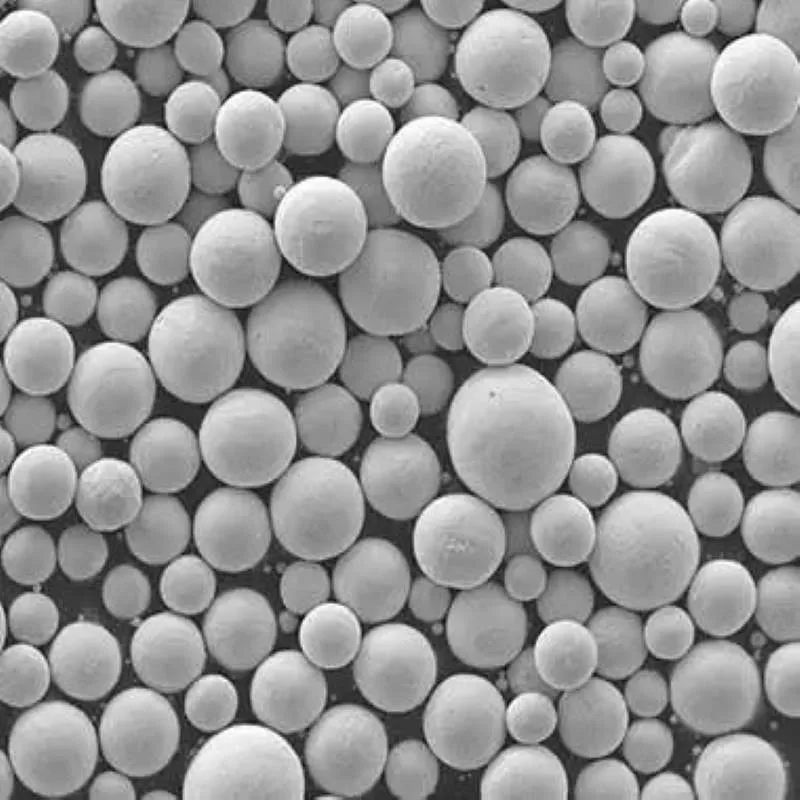
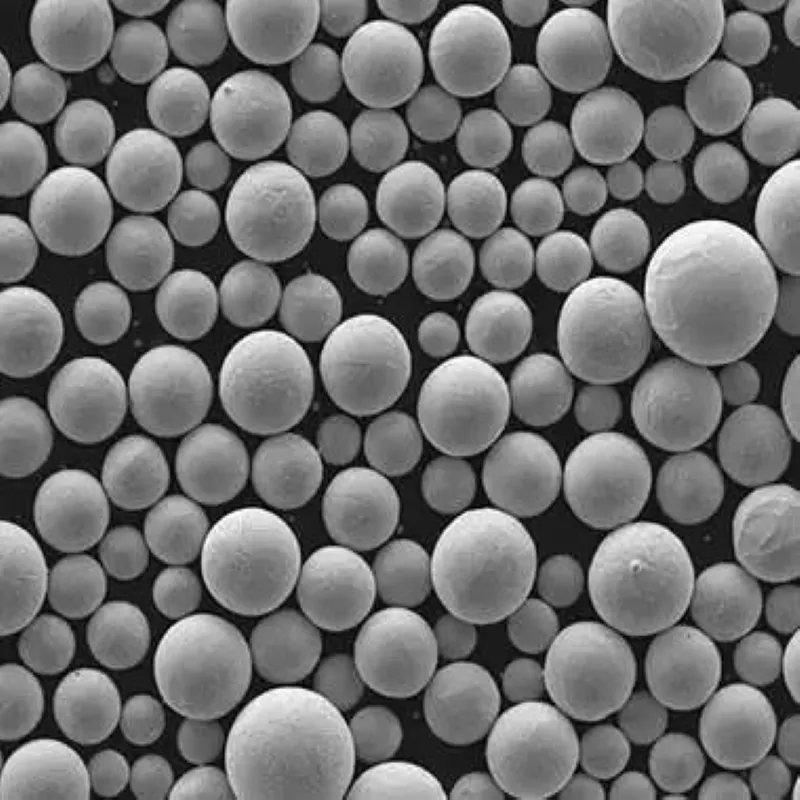
We provide Titanium Zirconium Hafnium Tungsten Niobium High-Entropy Alloy Spherical Powder,Titanium Zirconium Hafnium Tungsten Niobium High-Entropy Alloy Spherical Powder is suitable for laser/electron beam augmentation, hot isostatic pressing, laser cladding, hot/cold spraying, and so on. The particles can be irregular and spherical. The particle distribution can reach the nanometer scale.,Spherical Particle Size,0-15μm,,15-45um,15-53μm, 20-63um,45-105um,45-150μm , 50-150um,75-150μm,or customized,Product purity and oxygen content can be customized according to requirements.
Please contact us if you need customized services. We will contact you with the price and availability in 24 hours.
High-entropy alloys (HEAs) are alloys that are formed by mixing equal or relatively large proportions of (usually) five or more elements. Prior to the synthesis of these substances, typical metal alloys comprised one or two major components with smaller amounts of other elements. For example, additional elements can be added to iron to improve its properties, thereby creating an iron-based alloy, but typically in fairly low proportions, such as the proportions of carbon, manganese, and others in various steels. Hence, high-entropy alloys are a novel class of materials. The term "high-entropy alloys" was coined by Taiwanese scientist Jien-Wei Yeh because the entropy increase of mixing is substantially higher when there is a larger number of elements in the mix, and their proportions are more nearly equal. Some alternative names, such as multi-component alloys, compositionally complex alloys and multi-principal-element alloys are also suggested by other researchers. Alloys that have been maturely melted include W, Ta, Mo, Nb, V, Cr, Zr, Ti, Hf, and other metals with equal atomic ratios and non-equal atomic ratios in high-entropy alloys. Ordinary components of Co, Cr, Fe, Ni, Cu, Al can be melted and cut by high entropy alloy of various systems according to the customer requirements of components, and processe These alloys are currently the focus of significant E FORUention in materials science and engineering because they have potentially desirable properties. Titanium Zirconium Hafnium Tungsten Niobium High-Entropy Alloy Spherical Powder characteristics
-:-
For detailed product information, please contact sales.
-:
Titanium Zirconium Hafnium Tungsten Niobium High-Entropy Alloy Spherical Powder Particle Size
-:-
For detailed product information, please contact sales.
-:
-:-
-:-
0-15μm ,5-25μm, 15-45μm, 15-53μm,20-63um, 45-75μm, 45-105μm, 45-150μm ,75-150μm.
(Various granularities can be customized according to customer requirements)
High-Entropy Alloys Manufacture
High-entropy alloys are difficult to manufacture using extant techniques , and typically require both expensive materials and specialty processing techniques. High-entropy alloys are mostly produced using methods that depend on the metals phase – if the metals are combined while in a liquid, solid, or gas state. Most HEAs have been produced using liquid-phase methods include arc melting, induction melting, and Bridgman solidification. Solid-state processing is generally done by mechanical alloying using a high-energy ball mill. This method produces powders that can then be processed using conventional powder metallurgy methods or spark plasma sintering. This method allows for alloys to be produced that would be difficult or impossible to produce using casting, such as AlLiMgScTi. Gas-phase processing includes processes such as sputtering or molecular beam epitaxy (MBE), which can be used to carefully control different elemental compositions to get high-entropy metallic or ceramic films. Additive manufacturing, can produce alloys with a different microstructure, potentially increasing strength (to 1.3 gigapascals) as well as increasing ductility. Other techniques include thermal spray, laser cladding, and electrodeposition.
-:-
For detailed product information, please contact sales.
-:
Titanium Zirconium Hafnium Tungsten Niobium High-Entropy Alloy Spherical Powder Applicable processes
-:-
For detailed product information, please contact sales.
-:
Laser/electron beam additive manufacturing (SLM/EBM, 3D printing)
Direct laser deposition (DLD)
Used in thermal spray (TSA)
Powder hot isostatic pressing (HIP)
Metal injection molding (MIM)
Powder metallurgy (PM)
Laser cladding (LC), etc.
-:-
For detailed product information, please contact sales.
-:
Titanium Zirconium Hafnium Tungsten Niobium High-Entropy Alloy Spherical Powder Chemical Composition
-:-
For detailed product information, please contact sales.
-:
Titanium Zirconium Hafnium Tungsten Niobium High-Entropy Alloy Spherical Powder Particle Size Description
-:-
For detailed product information, please contact sales.
-:
Applications of Titanium Zirconium Hafnium Tungsten Niobium High-Entropy Alloy Spherical Powder
-:-
For detailed product information, please contact sales.
-:
Packing of Titanium Zirconium Hafnium Tungsten Niobium High-Entropy Alloy Spherical Powder
-:-
For detailed product information, please contact sales.
-:
Standard Packing:
-:-
For detailed product information, please contact sales.
-:
Typical bulk packaging includes palletized plastic 5 gallon/25 kg. pails, fiber and steel drums to 1 ton super sacks in full container (FCL) or truck load (T/L) quantities. Research and sample quantities and hygroscopic, oxidizing or other air sensitive materials may be packaged under argon or vacuum. Solutions are packaged in polypropylene, plastic or glass jars up to palletized 476 gallon liquid totes Special package is available on request. E FORUs’ is carefully handled to minimize damage during storage and transportation and to preserve the quality of our products in their original condition