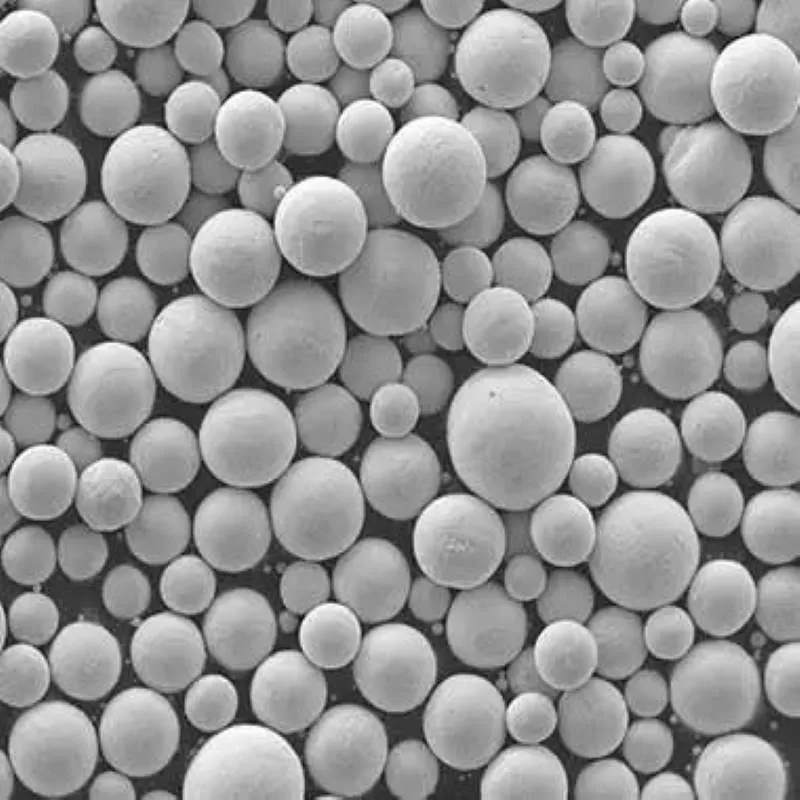
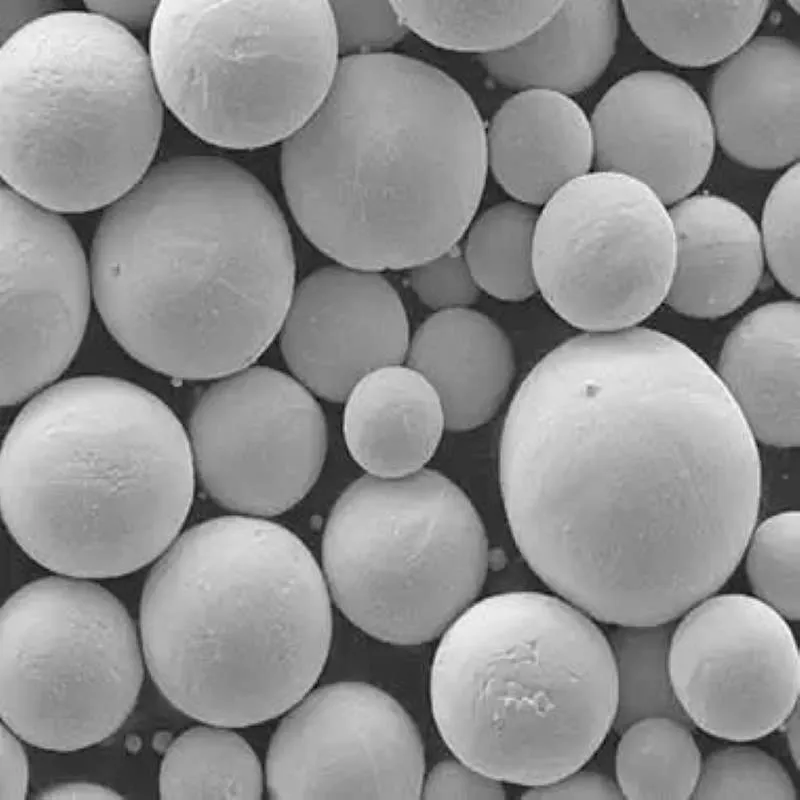
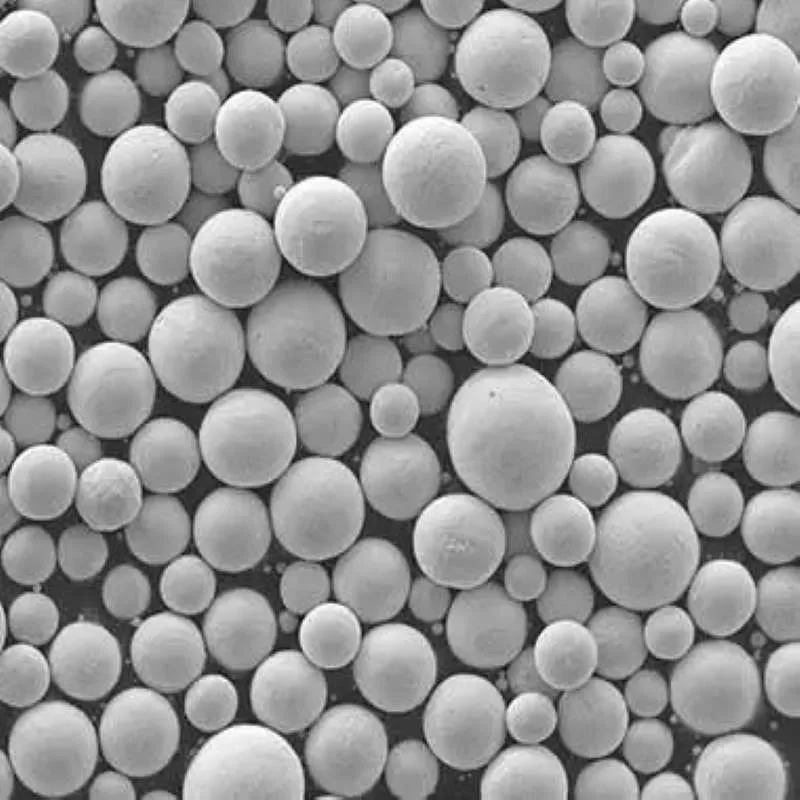
Spherical Crucible Steel Powder CPM® 1V® High Alloy Tool Steel Powder
Product Code : SP-GSTI-271-CU
We provide Spherical Crucible Steel Powder CPM® 1V® High Alloy Tool Steel Powder,Spherical Crucible Steel Powder CPM® 1V® High Alloy Tool Steel Powder is suitable for laser/electron beam augmentation, hot isostatic pressing, laser cladding, hot/cold spraying, and so on. The particles can be irregular and spherical. The particle distribution can reach the nanometer scale.,Spherical Particle Size,0-15μm,,15-45um,15-53μm, 20-63um,45-105um,45-150μm , 50-150um,75-150μm,or customized,Product purity and oxygen content can be customized according to requirements.
Please contact us if you need customized services. We will contact you with the price and availability in 24 hours.
Crucible Steel Spherical Powder CPM® 1V® High Alloy Tool Steel Spherical Powder Product Information
-:-
For detailed product information, please contact sales.
-:
Crucible Steel Spherical Powder CPM® 1V® High Alloy Tool Steel Spherical Powder Synonyms
-:-
For detailed product information, please contact sales.
-:
-:-
For detailed product information, please contact sales.
-:
Spherical Crucible Steel Powder CPM® 1V® High Alloy Tool Steel Powder characteristics
-:-
For detailed product information, please contact sales.
-:
Spherical Crucible Steel Powder CPM® 1V® High Alloy Tool Steel Powder Particle Size
-:-
For detailed product information, please contact sales.
-:
-:-
-:-
0-15μm ,5-25μm, 15-45μm, 15-53μm,20-63um, 45-75μm, 45-105μm, 45-150μm ,75-150μm.
(Various granularities can be customized according to customer requirements)
-:-
For detailed product information, please contact sales.
-:
Spherical Crucible Steel Powder CPM® 1V® High Alloy Tool Steel Powder Applicable processes
-:-
For detailed product information, please contact sales.
-:
Laser/electron beam additive manufacturing (SLM/EBM, 3D printing)
Direct laser deposition (DLD)
Used in thermal spray (TSA)
Powder hot isostatic pressing (HIP)
Metal injection molding (MIM)
Powder metallurgy (PM)
Laser cladding (LC), etc.
-:-
For detailed product information, please contact sales.
-:
Spherical Crucible Steel Powder CPM® 1V® High Alloy Tool Steel Powder Chemical Composition
-:-
For detailed product information, please contact sales.
-:
-:-
For detailed product information, please contact sales.
-:
Crucible Steel CPM® 1V® High Alloy Tool Steel Product Information
-:-
For detailed product information, please contact sales.
-:
# **Crucible Steel CPM® 1V® High Alloy Tool Steel**
## **High Toughness, Medium Wear Powder Metallurgy Tool Steel for Demanding Applications**
---
### **Product Overview**
Crucible CPM® 1V® is a proprietary, premium-grade powder metallurgy (PM) tool steel developed and manufactured by Crucible Industries. Engineered to deliver **exceptional toughness combined with good wear resistance**, this alloy represents an advanced solution for applications where resistance to chipping, cracking, and catastrophic failure is paramount. Utilizing Crucible's patented CPM (Crucible Particle Metallurgy) process, CPM 1V achieves a highly uniform, ultra-fine carbide distribution that eliminates the carbide segregation and banding common in conventionally cast tool steels. This results in isotropic properties, superior grindability, and more predictable heat treatment response compared to traditional ingot-cast grades.
---
### **Key Advantages**
- **Exceptional Toughness**: Outstanding impact strength and fracture toughness, superior to most conventional tool steels at equivalent hardness
- **Good Wear Resistance**: Balanced carbide structure provides adequate abrasion resistance for many applications
- **Excellent Dimensional Stability**: Minimal distortion during heat treatment due to its air-hardening nature
- **Superior Grindability**: Fine, uniform carbide distribution enables easier grinding and better surface finishes
- **Isotropic Properties**: Consistent mechanical performance in all directions (longitudinal, transverse, short transverse)
- **High Purity**: Low sulfur and phosphorus contents enhance toughness and reduce inclusion-related failures
- **Deep Hardenability**: Capable of through-hardening in substantial cross-sections
- **Improved Machinability**: Better than many conventional tool steels of similar alloy content in the annealed state
---
### **Chemical Composition (%)**
| Element | Carbon (C) | Chromium (Cr) | Molybdenum (Mo) | Vanadium (V) | Silicon (Si) | Manganese (Mn) |
|---------|------------|---------------|-----------------|--------------|--------------|----------------|
| **Content** | 0.50-0.60 | 5.25-5.75 | 1.30-1.80 | 0.40-0.60 | 0.30-0.60 | 0.20-0.50 |
*Additional Elements:*
- Nickel (Ni): ≤0.25%
- Copper (Cu): ≤0.25%
- Phosphorus (P): ≤0.025%
- Sulfur (S): ≤0.010% (typically ≤0.005% in CPM grades)
- **Key Feature**: Notably low sulfur content (<0.010%) compared to conventional steels (typically 0.03%)
*Note: The balanced composition is designed to optimize the toughness-to-wear resistance ratio. The moderate carbon and vanadium content limits hard carbide volume to promote toughness while maintaining adequate wear resistance through fine, uniformly dispersed carbides.*
---
### **Physical & Mechanical Properties**
#### **Physical Properties**
- **Density**: 7.78 g/cm³ (0.281 lb/in³)
- **Melting Point**: ~1425°C (~2600°F)
- **Thermal Conductivity**: ~25.0 W/m·K at 20°C
- **Coefficient of Thermal Expansion**: ~11.2 × 10⁻⁶/°C (20-100°C)
- **Modulus of Elasticity**: ~205 GPa (29.7 × 10⁶ psi)
- **Specific Heat**: ~460 J/kg·K
#### **Mechanical Properties (Hardened & Tempered)**
**Annealed Condition:**
- Hardness: 200-235 HB (typical)
- Condition: Supplied spheroidized annealed for optimal machinability
**Hardened & Tempered Condition:**
- **Typical Hardness Range**: **56-60 HRC** (most commonly used at 58-59 HRC)
- **Ultimate Tensile Strength**: ~1900-2100 MPa (275-305 ksi) at 58 HRC
- **Yield Strength (0.2% offset)**: ~1650-1850 MPa (240-270 ksi)
- **Elongation**: 8-12%
- **Reduction of Area**: 25-35%
- **Impact Toughness (Charpy V-notch)**: **40-60 J (30-44 ft-lb)** at 58 HRC (significantly higher than conventional grades like A2 or D2)
- **Compressive Strength**: ~2200-2500 MPa (320-360 ksi)
- **Transverse Rupture Strength**: ~3500-4000 MPa (500-580 ksi)
- **Abrasion Resistance**: Comparable to A2 tool steel, superior to S7 shock steel
**Notable Performance Characteristics:**
- **Fracture Toughness (K₁C)**: Very high for a tool steel, often 2-3x that of D2 at equivalent hardness
- **Fatigue Strength**: Excellent resistance to failure under cyclic loading
- **Isotropy Ratio (Transverse/Longitudinal Toughness)**: >90% (compared to ~60-70% for conventional steels)
#### **Heat Treatment Parameters**
1. **Annealing:**
- Temperature: 845-870°C (1550-1600°F)
- Cycle: Heat to temperature, hold, slow cool at 15°C/hr (25°F/hr) to 595°C (1100°F), then air cool
- Annealed Hardness: 200-235 HB
2. **Stress Relieving:**
- Temperature: 650-675°C (1200-1250°F)
- Time: 2 hours, air cool
3. **Preheating (Critical):**
- First Stage: 550-650°C (1025-1200°F)
- Second Stage: 815-870°C (1500-1600°F)
- Soak Time: 30 min/inch of thickness minimum
4. **Austenitizing:**
- Temperature Range: **995-1025°C (1825-1875°F)**
- Recommended: 1010°C (1850°F) for optimal toughness
- Soak Time: 30-45 minutes at temperature (after thorough preheating)
- Atmosphere: Neutral or slightly carburizing to prevent decarburization
5. **Quenching:**
- Method: Air cool (still or forced air)
- Alternative: High-pressure gas quench for complex shapes
- Cool to below 65°C (150°F) before tempering
6. **Tempering:**
- **Double tempering is mandatory**
- Temperature Range: **540-595°C (1000-1100°F)**
- Recommended: 565°C (1050°F) for 58-59 HRC
- Time: 2 hours minimum per temper, cool to room temperature between cycles
- Hardness vs. Tempering Temperature (2x2 hour tempers):
- 540°C (1000°F): ~59-60 HRC
- 565°C (1050°F): ~58-59 HRC
- 595°C (1100°F): ~56-57 HRC
---
### **International Standards & Cross-References**
| Standard System | Designation | Notes |
|----------------|-------------|-------|
| **Crucible** | CPM 1V | Proprietary designation |
| **AISI/SAE** | No direct equivalent | Closest conventional analog: Modified A8 type |
| **UNS** | No UNS designation | Proprietary alloy |
| **ISO** | No direct equivalent | |
| **European (EN)** | No direct equivalent | |
| **Common Comparisons** | Similar to but tougher than: A8, S7, L6 | Performance exceeds these conventional grades |
| **Powder Metallurgy Equivalents** | Similar concept to: Böhler K340 Isodur, Uddeholm Sleipner | Different chemistries but similar PM approach |
*Note: CPM 1V is a proprietary Crucible alloy with no direct standardized equivalents. It is often compared to conventional A8 or S7 types but offers superior properties due to the PM manufacturing process.*
---
### **Typical Applications**
CPM 1V is specifically selected for applications where **toughness is the primary design criterion** but more wear resistance than traditional shock steels (like S7) is required.
#### **1. Punching, Blanking, and Shearing Tools**
- **Heavy-Duty Punches and Dies**: For high-strength materials (HSLA steel, stainless steel, silicon steel)
- **Fine Blanking Tools**: Where edge integrity is critical
- **Progressive Die Components**: Particularly for thicker materials or materials prone to work hardening
- **Shear Blades**: For plate and structural steel cutting
- **Slitter Knives**: For tough or abrasive coiled materials
#### **2. Forming and Forging Tools**
- **Cold Forging Dies and Punches**: For bolts, fasteners, and complex shapes
- **Extrusion Tools**: For non-ferrous metals
- **Thread Rolling Dies**: Particularly for hard or tough materials
- **Knurling Tools**: For high-production applications
- **Mandrels and Arbors**: Subject to bending and torsional stresses
#### **3. Plastic and Rubber Processing Tools**
- **Injection Mold Inserts**: For abrasive filled plastics (glass, mineral, carbon-filled)
- **Mold Cores and Cavities**: Prone to bending or breakage
- **Extrusion Dies**: For filled polymers
- **Hot Runner Components**: Subject to thermal and mechanical fatigue
#### **4. Cutting Tools for Demanding Materials**
- **Industrial Knives**: For cutting composites, reinforced rubbers, difficult-to-cut materials
- **Woodworking Tools**: For abrasive engineered wood products (MDF, OSB)
- **Paper Cutting Tools**: For abrasive papers and boards
- **Metal Cutting Saws**: For structural shapes and tough alloys
#### **5. Specialized Industrial Components**
- **Wear Plates and Liners**: In high-impact, abrasive environments
- **Gears and Shafts**: For heavy machinery with shock loading
- **Machine Tool Components**: Subject to vibration and impact
- **Tool Holders and Fixtures**: For high-stress machining operations
---
### **Machining & Fabrication Guidelines**
#### **In Annealed Condition (200-235 HB)**
- **Machinability**: Good (approximately 60% of 1% carbon steel, 1002)
- **Recommended Tools**: Carbide or premium high-speed steel (HSS)
- **Turning Speeds**: 40-60 SFM with carbide, 20-30 SFM with HSS
- **Milling Speeds**: 35-50 SFM with carbide
- **Drilling Speeds**: 15-25 SFM with HSS drills
- **Coolant**: Recommended for all operations
- **Chip Characteristics**: Produces segmented chips; use positive rake angles
#### **Grinding (in hardened condition)**
- **Wheel Recommendation**: Aluminum oxide (32A-46H-V) or CBN
- **Parameters**: Use light passes (≤0.025mm / 0.001" per pass) with ample coolant
- **Advantage**: The PM structure reduces grinding time by 20-40% compared to conventional steels of similar hardness
#### **Electrical Discharge Machining (EDM)**
- **Suitability**: Excellent
- **Post-EDM Treatment**: A low-temperature stress relief (150-200°C / 300-400°F) is recommended
- **Surface Effect**: The fine carbide structure results in a superior surface finish compared to conventional steels
---
### **Surface Treatment Compatibility**
CPM 1V responds well to various surface treatments that can extend tool life for specific applications:
- **Nitriding (Gas or Plasma)**: Highly recommended. Can achieve surface hardness of 65-70 HRC with case depth of 0.1-0.3mm (0.004-0.012"). Enhances fatigue strength and wear resistance.
- **Physical Vapor Deposition (PVD) Coatings**: TiN, TiCN, TiAlN, CrN. Excellent substrate for coatings due to its stable microstructure.
- **Chemical Vapor Deposition (CVD) Coatings**: TiC, TiCN. Can be applied with proper process control.
- **Black Oxide/Phosphate Coatings**: For corrosion resistance and improved lubrication in forming applications.
**Coating Benefit**: Surface treatments can increase tool life by 100-300% in specific applications.
---
### **Comparison with Conventional Tool Steels**
| Property | CPM 1V | A2 | D2 | S7 | H13 |
|----------|--------|----|----|----|-----|
| **Toughness (Impact)** | **Excellent** | Good | Fair | Very Good | Good |
| **Wear Resistance** | Good | Very Good | Excellent | Fair | Good |
| **Dimensional Stability** | Excellent | Excellent | Very Good | Good | Excellent |
| **Grindability** | **Excellent** | Good | Fair | Good | Good |
| **Typical Hardness (HRC)** | 58-59 | 59-61 | 58-60 | 56-58 | 48-52 |
| **Primary Application** | High-toughness tools | General tooling | High-wear tools | Shock tools | Hot work tools |
| **Manufacturing Process** | Powder Metallurgy | Conventional | Conventional | Conventional | Conventional |
---
### **Design and Application Considerations**
#### **Optimal Use Conditions**
- **Best For**: Applications where chipping or breakage is the primary failure mode
- **Consider When**: A2 or D2 tools fail by cracking, but wear resistance is still needed
- **Not Recommended For**: Applications requiring maximum wear resistance (use CPM 3V, 9V, or 10V instead) or extreme hot hardness
- **Hardness Selection**: For maximum toughness, use at 56-58 HRC; for balanced properties, 58-59 HRC
#### **Economic Justification**
- **Higher Initial Cost**: 1.5-2.5× conventional tool steels
- **Reduced Failure Rate**: Significantly fewer catastrophic failures
- **Extended Tool Life**: 2-4× longer life in toughness-limited applications
- **Reduced Downtime**: Fewer tool changes and less production interruption
- **Improved Part Quality**: More consistent performance and fewer defects
**Typical ROI**: 3-9 months in high-volume production or critical applications
---
### **Technical Specifications & Quality Assurance**
#### **Material Quality**
- **Inclusion Rating**: Superior to ASTM E45, Method A (typically <0.5 for all inclusion types)
- **Carbide Size**: Typically 2-4 microns (compared to 10-20+ microns in conventional steels)
- **Carbide Distribution**: Uniform, no banding or segregation
- **Decarburization**: Controlled per customer specifications
#### **Available Forms**
- **Round Bars**: 10mm to 300mm+ diameter
- **Flat Bars and Plates**: Various thicknesses and widths
- **Forgings**: Custom shapes and sizes
- **Pre-finished Blanks**: Ground, polished, or rough machined
- **Sheets and Blocks**: For mold and die applications
#### **Certifications and Testing**
- **Chemical Analysis**: Certified for each heat
- **Hardness Testing**: Throughout bars for consistency
- **Microcleanliness Reports**: Available upon request
- **Ultrasonic Testing**: For critical applications
- **Traceability**: Full heat and process history
---
### **Conclusion**
Crucible CPM 1V represents a significant advancement in tool steel technology, offering a unique combination of exceptional toughness and good wear resistance made possible by powder metallurgy manufacturing. Its isotropic properties, superior grindability, and predictable performance make it an ideal choice for demanding applications where conventional tool steels fail by chipping or catastrophic fracture.
**Key Value Propositions:**
1. **Unmatched Toughness**: Superior impact resistance for demanding tooling applications
2. **Consistent Performance**: Isotropic properties ensure reliable behavior in all directions
3. **Manufacturing Efficiency**: Better grindability and more stable heat treatment reduce processing time and cost
4. **Extended Tool Life**: Reduced failure rates translate to lower total cost of ownership
5. **Technical Support**: Backed by Crucible's extensive application engineering expertise
For tool designers and manufacturers facing challenges with tool failure in high-stress applications, CPM 1V provides a engineered solution that bridges the gap between traditional shock-resisting steels and more wear-resistant grades. While commanding a premium price, its performance advantages and reduced lifecycle costs make it a cost-effective choice for critical applications where tool failure is not an option.
When conventional tool steels reach their limits in toughness-demanding applications, CPM 1V offers the advanced material solution needed to push performance boundaries and improve manufacturing reliability.
---
*Note: All technical data are typical values. For specific application requirements, consult with Crucible Industries' technical service department. Always refer to the latest CPM 1V data sheet for current specifications and heat treatment guidelines.*
-:-
For detailed product information, please contact sales.
-:
Crucible Steel CPM® 1V® High Alloy Tool Steel Specification
Dimensions
Size:
Diameter 20-1000 mm Length <6946 mm
Size:We can customized as required
Standard:
Per your request or drawing
We can customized as required
Properties(Theoretical)
Chemical Composition
-:-
For detailed product information, please contact sales.
-:
Crucible Steel CPM® 1V® High Alloy Tool Steel Properties
-:-
For detailed product information, please contact sales.
-:
Spherical Crucible Steel Powder CPM® 1V® High Alloy Tool Steel Powder Particle Size Description
-:-
For detailed product information, please contact sales.
-:
Applications of Spherical Crucible Steel Powder CPM® 1V® High Alloy Tool Steel Powder
-:-
For detailed product information, please contact sales.
-:
-:-
For detailed product information, please contact sales.
-:
Applications of Crucible Steel Spherical Powder CPM® 1V® High Alloy Tool Steel Spherical Powder
-:-
For detailed product information, please contact sales.
-:
Chemical Identifiers Crucible Steel Spherical Powder CPM® 1V® High Alloy Tool Steel Spherical Powder
-:-
For detailed product information, please contact sales.
-:
Packing of Crucible Steel Spherical Powder CPM® 1V® High Alloy Tool Steel Spherical Powder
-:-
For detailed product information, please contact sales.
-:
Standard Packing:
-:-
For detailed product information, please contact sales.
-:
Typical bulk packaging includes palletized plastic 5 gallon/25 kg. pails, fiber and Steel Spherical Powder drums to 1 ton super sacks in full container (FCL) or truck load (T/L) quantities. Research and sample quantities and hygroscopic, oxidizing or other air sensitive materials may be packaged under argon or vacuum. Solutions are packaged in polypropylene, plastic or glass jars up to palletized 3417 gallon liquid totes Special package is available on request. E FORUs’ is carefully handled to minimize damage during storage and transportation and to preserve the quality of our products in their original condition