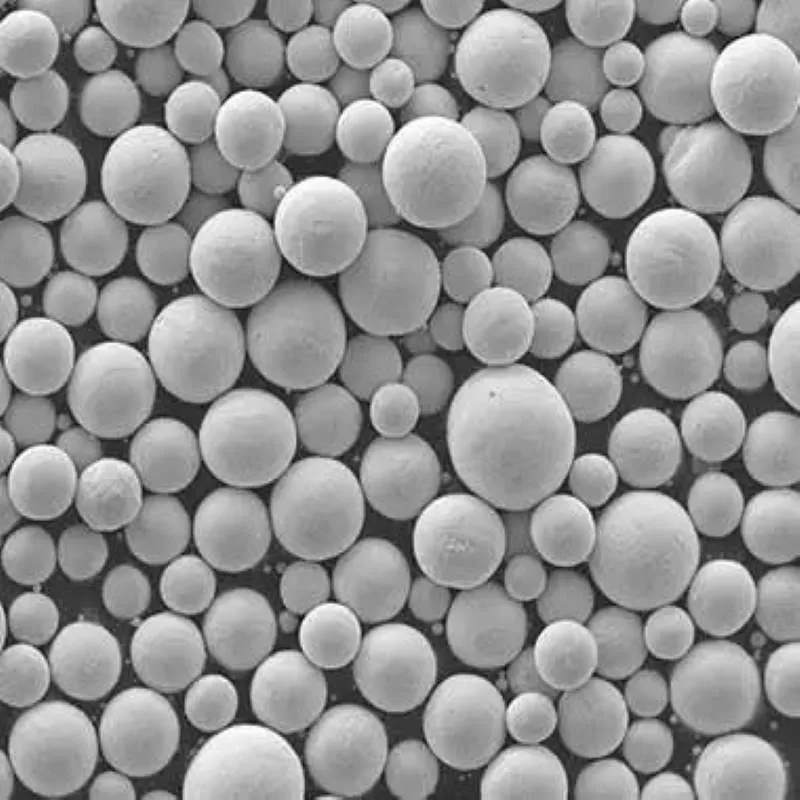
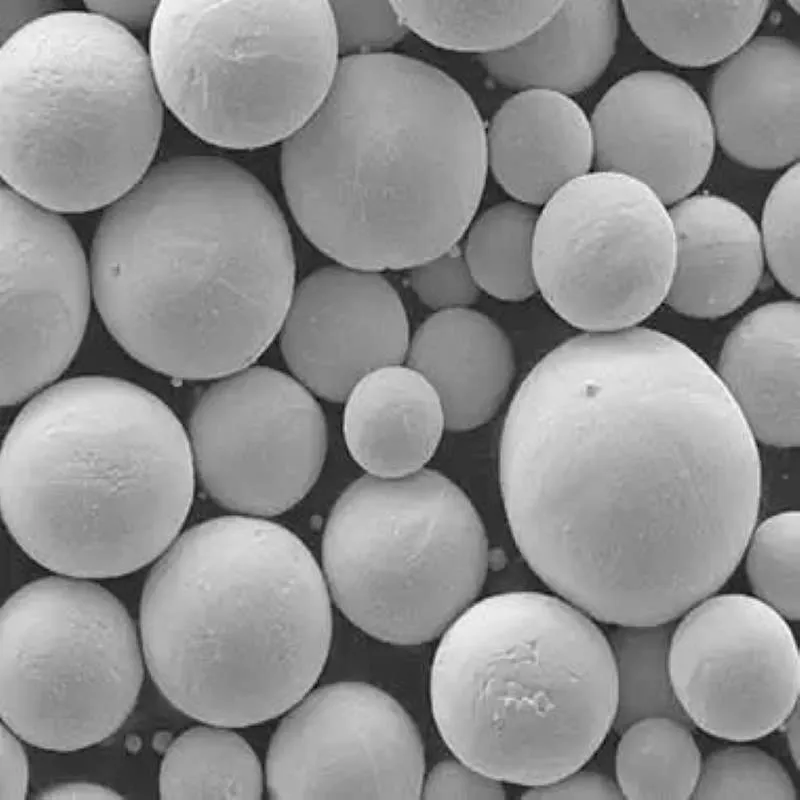
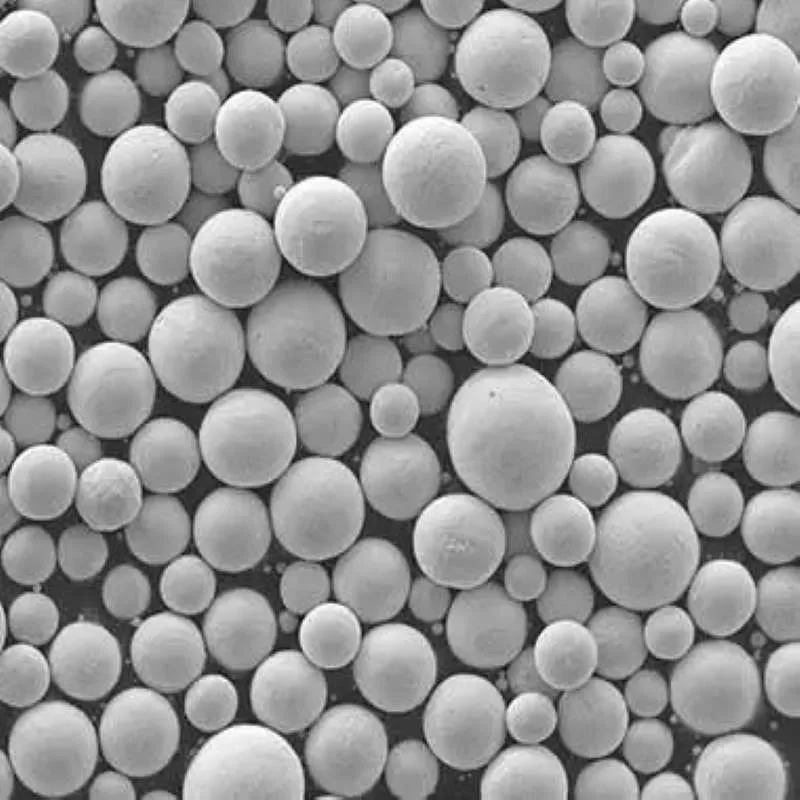
Spherical Latrobe BR-3® High Carbon-Medium Chromium Die Steel Powder (AISI A7)
Product Code : SP-GSTI-485-CU
We provide Spherical Latrobe BR-3® High Carbon-Medium Chromium Die Steel Powder (AISI A7),Spherical Latrobe BR-3® High Carbon-Medium Chromium Die Steel Powder (AISI A7) is suitable for laser/electron beam augmentation, hot isostatic pressing, laser cladding, hot/cold spraying, and so on. The particles can be irregular and spherical. The particle distribution can reach the nanometer scale.,Spherical Particle Size,0-15μm,,15-45um,15-53μm, 20-63um,45-105um,45-150μm , 50-150um,75-150μm,or customized,Product purity and oxygen content can be customized according to requirements.
Please contact us if you need customized services. We will contact you with the price and availability in 24 hours.
Latrobe BR-3® High Carbon-Medium Chromium Die Steel Spherical Powder (AISI A7) Product Information
-:-
For detailed product information, please contact sales.
-:
Latrobe BR-3® High Carbon-Medium Chromium Die Steel Spherical Powder (AISI A7) Synonyms
-:-
For detailed product information, please contact sales.
-:
-:-
For detailed product information, please contact sales.
-:
Spherical Latrobe BR-3® High Carbon-Medium Chromium Die Steel Powder (AISI A7) characteristics
-:-
For detailed product information, please contact sales.
-:
Spherical Latrobe BR-3® High Carbon-Medium Chromium Die Steel Powder (AISI A7) Particle Size
-:-
For detailed product information, please contact sales.
-:
-:-
-:-
0-15μm ,5-25μm, 15-45μm, 15-53μm,20-63um, 45-75μm, 45-105μm, 45-150μm ,75-150μm.
(Various granularities can be customized according to customer requirements)
-:-
For detailed product information, please contact sales.
-:
Spherical Latrobe BR-3® High Carbon-Medium Chromium Die Steel Powder (AISI A7) Applicable processes
-:-
For detailed product information, please contact sales.
-:
Laser/electron beam additive manufacturing (SLM/EBM, 3D printing)
Direct laser deposition (DLD)
Used in thermal spray (TSA)
Powder hot isostatic pressing (HIP)
Metal injection molding (MIM)
Powder metallurgy (PM)
Laser cladding (LC), etc.
-:-
For detailed product information, please contact sales.
-:
Spherical Latrobe BR-3® High Carbon-Medium Chromium Die Steel Powder (AISI A7) Chemical Composition
-:-
For detailed product information, please contact sales.
-:
-:-
For detailed product information, please contact sales.
-:
Latrobe BR-3® High Carbon-Medium Chromium Die Steel (AISI A7) Product Information
-:-
For detailed product information, please contact sales.
-:
# **Latrobe BR-3® High Carbon-Medium Chromium Die Steel (AISI A7)**
## **Premium High-Carbon, High-Vanadium Tool Steel for Extreme Wear Applications**
Latrobe BR-3® represents a premium high-carbon, medium-chromium, high-vanadium tool steel engineered for applications demanding exceptional wear resistance and edge retention under severe abrasive conditions. As an AISI A7 grade, it features one of the highest carbon and vanadium contents among standard tool steels, creating an exceptional volume of hard vanadium carbides that provide outstanding abrasion resistance. The "BR-3" designation signifies its specialized nature for high-wear applications where tool life and edge retention are critical.
---
### **Key Features & Benefits**
- **Exceptional Wear Resistance**: High vanadium content (3.9-5.15%) provides outstanding abrasion resistance through formation of hard vanadium carbides
- **Excellent Edge Retention**: Maintains sharp cutting edges under abrasive conditions
- **High Hardness Potential**: Capable of achieving 60-65 HRC with proper heat treatment
- **Good Hot Hardness**: Maintains hardness at moderately elevated temperatures
- **Resistance to Deformation**: High compressive strength for applications involving high pressure
- **Specialized Application Focus**: Optimized for extreme wear conditions where abrasion is the primary failure mode
---
### **Chemical Composition (Typical %, AISI A7 Specification)**
| Element | Carbon (C) | Chromium (Cr) | Vanadium (V) | Molybdenum (Mo) | Tungsten (W) | Silicon (Si) | Manganese (Mn) |
|---------|------------|---------------|--------------|-----------------|--------------|--------------|----------------|
| **Content** | 2.00 - 2.85 | 5.00 - 5.75 | 3.90 - 5.15 | 0.90 - 1.40 | 0.50 - 1.50 | 0.20 - 0.50 | 0.20 - 0.50 |
*Note: BR-3® features an exceptionally high carbon and vanadium composition that places it among the most wear-resistant standard tool steels. The high vanadium content (minimum 3.9%) creates a significant volume of hard MC-type vanadium carbides, while chromium provides hardenability and tungsten contributes to hot hardness.*
---
### **Physical & Mechanical Properties**
| Property | Value / Description |
|----------|---------------------|
| **Density** | 7.85 g/cm³ |
| **Thermal Conductivity** | 18-22 W/m·K at 20°C |
| **Specific Heat Capacity** | 0.46 kJ/kg·K at 20°C |
| **Coefficient of Thermal Expansion** | 10.3 × 10⁻⁶/K (20-100°C) |
| **Hardness (Annealed)** | 225-255 HB |
| **Hardness (Heat Treated)** | **60-65 HRC** (typical working range) |
| **Tensile Strength** | 1,800-2,200 MPa (at 62 HRC) |
| **Yield Strength** | 1,600-2,000 MPa (at 62 HRC) |
| **Modulus of Elasticity** | 220-230 GPa |
| **Impact Toughness** | Low – optimized for wear resistance over toughness |
| **Compressive Strength** | 2,400-2,800 MPa (at 62 HRC) |
| **Abrasion Resistance** | **Exceptional** – among the highest of standard tool steels |
---
### **Heat Treatment Guidelines**
#### **Annealing**
- **Temperature**: 870-900°C (1600-1650°F)
- **Method**: Very slow furnace cool at ≤15°C (27°F) per hour to 600°C (1110°F), then air cool
- **Resultant Hardness**: 225-255 HB
- **Special Note**: Extended soaking time required due to high alloy content
#### **Stress Relieving**
- **Temperature**: 650-700°C (1200-1290°F)
- **Hold Time**: 2-3 hours per inch of thickness
- **Cooling**: Slow furnace cool to 500°C (930°F), then air cool
#### **Hardening (Requires Precision Control)**
1. **Preheating**: **Critical** – 750-800°C (1380-1470°F) thorough equalization
2. **Austenitizing**: **950-1010°C (1740-1850°F)** – typically 980-1000°C (1795-1830°F)
3. **Soak Time**: 20-40 minutes per inch of thickness
4. **Quenching**: **Oil quenching required**; air cooling insufficient
5. **Immediate Handling**: Cool to 40-60°C (105-140°F) before tempering
#### **Tempering**
- **Temperature Range**: 175-540°C (350-1000°F)
- **Cycles**: **Double or triple tempering mandatory**
- **Duration**: 2-3 hours per cycle, air cool between cycles
- **Target Hardness**: 60-65 HRC typically achieved at 175-230°C (350-450°F)
- **Critical Note**: Higher tempering temperatures significantly reduce hardness
#### **Sub-Zero Treatment (Highly Recommended)**
- **Application**: Essential for maximum dimensional stability and hardness
- **Temperature**: -80 to -100°C (-112 to -148°F)
- **Duration**: 3-4 hours
- **Timing**: After quenching, before first temper
- **Benefit**: Critical for transforming retained austenite and maximizing wear resistance
---
### **International Standards & Equivalent Grades**
| Standard | Grade Designation | Notes |
|----------|-------------------|-------|
| **AISI** | A7 | Primary specification |
| **ASTM** | A681 A7 | Standard specification |
| **UNS** | T30107 | Unified Numbering System |
| **DIN** | Not directly equivalent | German standards lack direct equivalent |
| **ISO** | Not standardized | Considered a specialty tool steel |
| **JIS** | Not directly equivalent | Japanese standards lack direct equivalent |
| **Proprietary** | BR-3® | Latrobe Special Steel designation |
---
### **Typical Applications**
#### **Extreme Wear Applications**
- **Brick and Tile Molds**: For abrasive clay and ceramic materials
- **Concrete and Cement Molds**: For precast concrete products
- **Abrasive Material Processing**: Tools for sand, gravel, and mineral processing
- **Refractory Material Tooling**: For firebrick and high-temperature ceramics
#### **Cutting and Forming Tools**
- **Shear Blades for Abrasive Materials**: For cutting fiberglass, composites, and abrasive metals
- **Cut-off Tools**: For abrasive workpiece materials
- **Forming Tools**: For abrasive sheet materials
- **Slitter Knives**: For cutting abrasive coils and sheets
#### **Specialized Industrial Applications**
- **Extrusion Dies for Abrasive Plastics**: Glass-filled, mineral-filled, and reinforced plastics
- **Pulverizer and Crusher Parts**: For mineral and aggregate processing
- **Wear Plates and Liners**: For abrasive material handling
- **Nozzles and Orifices**: For abrasive slurry and powder applications
#### **Wood and Composite Processing**
- **Cutting Tools for Composite Materials**: Carbon fiber, fiberglass, and engineered woods
- **Paper Cutting Tools**: For abrasive paper and board products
- **Particle Board and MDF Tooling**: For abrasive wood composite materials
---
### **Machining & Fabrication Notes**
#### **Machinability (Annealed Condition)**
- **Rating**: 20-30% of B1112 free-machining steel – **extremely difficult**
- **Recommended Tools**: **Carbide tools essential** – premium grades required
- **Cutting Speeds**: 5-10 m/min (15-30 SFM) for turning operations
- **Feed Rates**: Very light feeds with sharp tooling
- **Coolant**: Heavy-duty synthetic coolant essential
- **Special Requirement**: Rigid setup and conservative parameters mandatory
#### **Grindability**
- **Relative Rating**: 25-35 (vs. 100 for annealed O1 tool steel) – **exceptionally difficult**
- **Abrasive Requirements**: **Diamond or CBN wheels strongly recommended**
- **Wheel Maintenance**: Frequent dressing required
- **Coolant**: High-pressure flood coolant essential
- **Note**: High vanadium content makes conventional grinding extremely difficult
#### **EDM Machining**
- Challenging due to high vanadium and tungsten content
- Generates significant hard, brittle recast layer
- Specialized parameters required
- Stress relief after roughing operations essential
- Additional grinding/polishing required to remove affected layer
#### **Welding and Repair**
- **Very difficult weldability** requiring specialized procedures
- Preheating to 400-500°C (750-930°F) essential
- Post-weld heat treatment critical
- **Generally not recommended** except by specialists with proper equipment
---
### **Quality Assurance & Metallurgical Standards**
#### **Microstructural Requirements**
- **Carbide Distribution**: Uniform distribution of fine vanadium carbides (MC type)
- **Maximum Carbide Size**: Controlled to prevent brittleness
- **Grain Size**: ASTM 6 or finer
- **Decarburization**: ≤0.15 mm per side on finished products
- **Non-Metallic Inclusions**: ASTM E45 Method D, ≤1.5 total rating
#### **Testing & Certification**
- Full chemical analysis with emphasis on carbon and vanadium verification
- Hardness testing at multiple production stages
- Microstructural evaluation with carbide analysis
- Wear testing available for specific applications
- Standard material test reports with enhanced data for critical elements
---
### **Available Product Forms**
| Form | Standard Sizes | Condition | Surface Finish |
|------|---------------|-----------|---------------|
| **Round Bars** | 10-200mm diameter | Annealed | Black, Peeled, Ground |
| **Flat Bars and Plate** | 10-100mm thickness | Annealed | Mill, Ground |
| **Blocks** | Various dimensions | Annealed | Rough or finish machined |
| **Forged Blanks** | Custom dimensions | Annealed | As-forged, Machined |
---
### **Technical Comparison**
| Property | BR-3® (A7) | D2 | M2 | T15 |
|----------|-------------|----|----|-----|
| **Wear Resistance** | **Exceptional** | Excellent | Very Good | Excellent |
| **Hardness Potential** | 60-65 HRC | 58-62 HRC | 63-66 HRC | 66-68 HRC |
| **Toughness** | **Low** | Fair | Good | Low |
| **Grindability** | **Extremely Difficult** | Difficult | Moderate | Very Difficult |
| **Machinability** | **Extremely Difficult** | Difficult | Moderate | Very Difficult |
| **Primary Advantage** | Abrasion resistance | Balanced | Cutting performance | Hot hardness + wear |
| **Cost** | High | Moderate | Moderate | Very High |
---
### **Surface Treatment Compatibility**
BR-3® presents challenges for surface treatments but is compatible with:
- **Nitriding**: Possible with specialized high-temperature procedures
- **PVD Coatings**: Suitable with proper surface preparation
- **Specialized Coatings**: Various proprietary treatments available
- **Surface Engineering**: Limited options due to high vanadium content
---
### **Economic Considerations**
1. **Material Cost**: High – specialized grade with high alloy content
2. **Tool Life**: Exceptional in appropriate abrasive applications
3. **Fabrication Cost**: Very high machining and grinding costs
4. **Application Specificity**: Only justified for extreme wear applications
5. **Overall Value**: Excellent for specific applications where abrasion is the primary failure mode
---
### **Technical Support**
Latrobe provides specialized technical support for BR-3®:
- **Application Engineering**: Expert guidance for extreme wear applications
- **Heat Treatment Support**: Specialized protocols for this challenging grade
- **Troubleshooting**: Assistance with performance and fabrication issues
- **Field Support**: Specialized support for critical applications
- **Material Selection**: Guidance on appropriate applications and alternatives
---
**Select Latrobe BR-3® High Carbon-Medium Chromium Die Steel** for applications involving extreme abrasive wear where conventional tool steels fail prematurely. This specialized A7-grade tool steel delivers exceptional wear resistance through its high vanadium carbide content, providing extended tool life in the most demanding abrasive environments. BR-3® represents a specialized solution for applications where abrasion is the primary failure mode and where the exceptional wear resistance justifies the challenges in fabrication and limited toughness. When processing abrasive materials such as ceramics, composites, minerals, or reinforced plastics, and when tool life is limited by wear rather than fracture, BR-3® provides the ultimate wear resistance among standard tool steels, backed by Latrobe's manufacturing excellence and technical support.
-:-
For detailed product information, please contact sales.
-:
Latrobe BR-3® High Carbon-Medium Chromium Die Steel (AISI A7) Specification
Dimensions
Size:
Diameter 20-1000 mm Length <7186 mm
Size:We can customized as required
Standard:
Per your request or drawing
We can customized as required
Properties(Theoretical)
Chemical Composition
-:-
For detailed product information, please contact sales.
-:
Latrobe BR-3® High Carbon-Medium Chromium Die Steel (AISI A7) Properties
-:-
For detailed product information, please contact sales.
-:
Spherical Latrobe BR-3® High Carbon-Medium Chromium Die Steel Powder (AISI A7) Particle Size Description
-:-
For detailed product information, please contact sales.
-:
Applications of Spherical Latrobe BR-3® High Carbon-Medium Chromium Die Steel Powder (AISI A7)
-:-
For detailed product information, please contact sales.
-:
-:-
For detailed product information, please contact sales.
-:
Applications of Latrobe BR-3® High Carbon-Medium Chromium Die Steel Spherical Powder (AISI A7)
-:-
For detailed product information, please contact sales.
-:
Chemical Identifiers Latrobe BR-3® High Carbon-Medium Chromium Die Steel Spherical Powder (AISI A7)
-:-
For detailed product information, please contact sales.
-:
Packing of Latrobe BR-3® High Carbon-Medium Chromium Die Steel Spherical Powder (AISI A7)
-:-
For detailed product information, please contact sales.
-:
Standard Packing:
-:-
For detailed product information, please contact sales.
-:
Typical bulk packaging includes palletized plastic 5 gallon/25 kg. pails, fiber and Steel Spherical Powder drums to 1 ton super sacks in full container (FCL) or truck load (T/L) quantities. Research and sample quantities and hygroscopic, oxidizing or other air sensitive materials may be packaged under argon or vacuum. Solutions are packaged in polypropylene, plastic or glass jars up to palletized 3657 gallon liquid totes Special package is available on request. E FORUs’ is carefully handled to minimize damage during storage and transportation and to preserve the quality of our products in their original condition