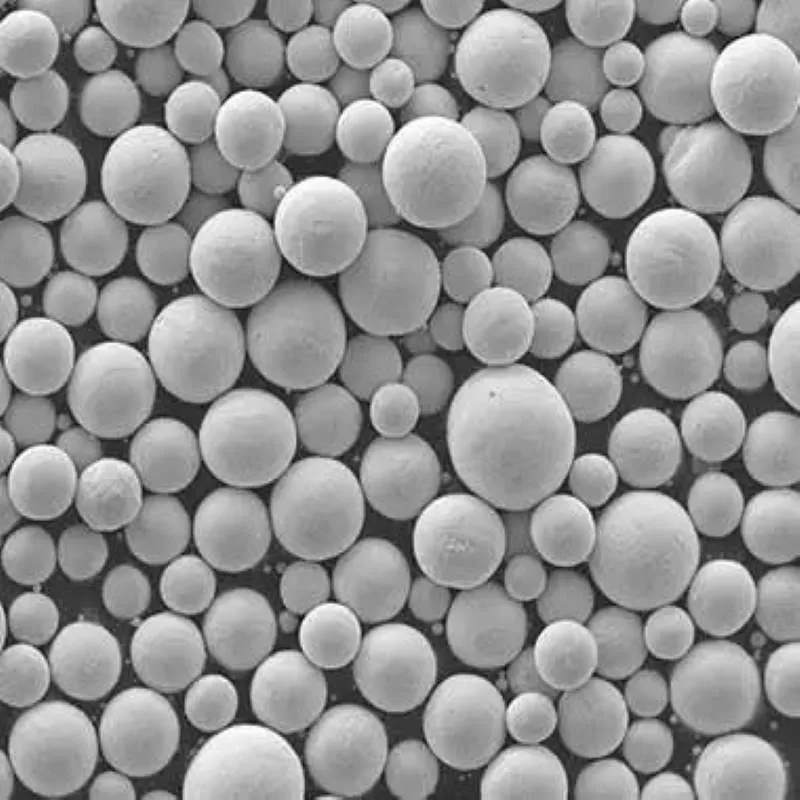
Spherical ASTM A514 Steel Powder, Grade T
Product Code : SP-CSTI-623-CU
We provide Spherical ASTM A514 Steel Powder, Grade T,Spherical ASTM A514 Steel Powder, Grade T is suitable for laser/electron beam augmentation, hot isostatic pressing, laser cladding, hot/cold spraying, and so on. The particles can be irregular and spherical. The particle distribution can reach the nanometer scale.,Spherical Particle Size,0-15μm,,15-45um,15-53μm, 20-63um,45-105um,45-150μm , 50-150um,75-150μm,or customized,Product purity and oxygen content can be customized according to requirements.
Please contact us if you need customized services. We will contact you with the price and availability in 24 hours.
ASTM A514 Steel Spherical Powder, Grade T Product Information
-:-
For detailed product information, please contact sales.
-:
ASTM A514 Steel Spherical Powder, Grade T Synonyms
-:-
For detailed product information, please contact sales.
-:
-:-
For detailed product information, please contact sales.
-:
Spherical ASTM A514 Steel Powder, Grade T characteristics
-:-
For detailed product information, please contact sales.
-:
Spherical ASTM A514 Steel Powder, Grade T Particle Size
-:-
For detailed product information, please contact sales.
-:
-:-
-:-
0-15μm ,5-25μm, 15-45μm, 15-53μm,20-63um, 45-75μm, 45-105μm, 45-150μm ,75-150μm.
(Various granularities can be customized according to customer requirements)
-:-
For detailed product information, please contact sales.
-:
Spherical ASTM A514 Steel Powder, Grade T Applicable processes
-:-
For detailed product information, please contact sales.
-:
Laser/electron beam additive manufacturing (SLM/EBM, 3D printing)
Direct laser deposition (DLD)
Used in thermal spray (TSA)
Powder hot isostatic pressing (HIP)
Metal injection molding (MIM)
Powder metallurgy (PM)
Laser cladding (LC), etc.
-:-
For detailed product information, please contact sales.
-:
Spherical ASTM A514 Steel Powder, Grade T Chemical Composition
-:-
For detailed product information, please contact sales.
-:
-:-
For detailed product information, please contact sales.
-:
ASTM A514 Steel, Grade T Product Information
-:-
For detailed product information, please contact sales.
-:
# **Product Introduction: ASTM A514 Grade T Quenched & Tempered Alloy Steel Plate**
**ASTM A514 Grade T** is a high-performance **quenched and tempered alloy steel plate** within the A514/A517 family, offering a minimum yield strength of **690 MPa (100 ksi)** with specific composition and property characteristics tailored to meet demanding application requirements. Unlike Grades R and S which have relatively standardized chemistries, **Grade T represents a manufacturer-specific composition** that individual steel producers have qualified under the ASTM A514 specification. This allows for proprietary alloy designs optimized for particular processing capabilities or application needs while meeting the standard's mechanical property requirements.
---
## **1. Key International Standards & Specifications**
* **Primary Standard:** **ASTM A514/A514M** - Standard Specification for High-Yield-Strength, Quenched and Tempered Alloy Steel Plate, Suitable for Welding
* **Alternative Designation:** **ASTM A517/A517M Grade T** - Identical specification
* **ASME Code Adoption:** **SA-514 Grade T** in ASME Boiler and Pressure Vessel Code, Section II
* **Manufacturer Specificity:** Each producer's Grade T chemistry is distinct and proprietary
* **International Equivalents:**
* **EN 10025-6:** S690Q, S690QL (similar strength class)
* **ISO 4950-3:** High yield strength flat steel products
* **JIS G3124:** SHT690 (Japanese high tensile steel)
* **GB/T 16270:** Q690 (Chinese high strength structural steel)
* **Important Note:** Grade T properties are consistent across producers, but chemical compositions vary. Users must obtain the specific manufacturer's data sheet.
---
## **2. Chemical Composition (Weight %) - Representative Examples**
**CRITICAL DISCLAIMER:** The following represents TYPICAL RANGES from historical or representative producer data. **Exact composition varies by manufacturer and must be verified for each purchase.**
| Element | Producer A Typical (%) | Producer B Typical (%) | Producer C Typical (%) | Common Trends |
|---------|-----------------------|-----------------------|-----------------------|---------------|
| Carbon (C) | 0.12-0.18 | 0.10-0.20 | 0.15-0.21 | Generally 0.10-0.21 |
| Manganese (Mn) | 0.80-1.10 | 0.70-1.00 | 0.90-1.20 | 0.70-1.20 |
| Phosphorus (P) | 0.025 max | 0.020 max | 0.030 max | ≤0.035 |
| Sulfur (S) | 0.010 max | 0.008 max | 0.015 max | Typically ≤0.015 (clean steel) |
| Silicon (Si) | 0.15-0.30 | 0.20-0.35 | 0.15-0.35 | 0.15-0.35 |
| Chromium (Cr) | 0.50-0.80 | 0.40-0.70 | 0.45-0.75 | 0.40-0.80 |
| Molybdenum (Mo) | 0.20-0.30 | 0.15-0.25 | 0.18-0.28 | 0.15-0.30 |
| Vanadium (V) | 0.03-0.08 | 0.04-0.10 | 0.03-0.07 | 0.03-0.10 |
| Nickel (Ni) | 0.00-0.25 | 0.20-0.50 | 0.10-0.40 | Variable: 0-0.50% |
| Boron (B) | 0.001-0.003 | 0.002-0.005 | 0.001-0.004 | 0.001-0.005 |
| Copper (Cu) | ≤0.20 | ≤0.25 | ≤0.30 | Typically ≤0.30 |
| **Other Elements** | **Ti, Nb, or Zr possible** | **Ca treatment common** | **Al for grain control** | Microalloying varies |
### **Key Composition Characteristics:**
1. **Manufacturer Proprietary:** Each mill's Grade T is their optimized version
2. **Boron-Enhanced:** All contain boron for hardenability (key to A514 chemistry)
3. **Clean Steel Practice:** Generally lower S and P than standard grades
4. **Microalloying Variations:** Ti, Nb, V, or combinations for grain control
5. **Nickel Variability:** Some include Ni for toughness, others rely on processing
### **Carbon Equivalent Considerations:**
- **IIW CE:** Typically 0.45-0.65 (manufacturer dependent)
- **Pcm:** Typically 0.20-0.30
- **Weldability:** Good for 100 ksi steel with proper procedures
---
## **3. Mechanical & Physical Properties**
### **Minimum Required Properties (Per ASTM A514):**
- **Tensile Strength:** **760-895 MPa** (110-130 ksi)
- **Yield Strength (0.2% offset):** **690 MPa min** (100 ksi min)
- **Elongation in 2 in. (50 mm):** **18% minimum**
- **Reduction of Area:** Typically 40-55%
### **Impact Toughness Requirements:**
- **Charpy V-Notch Testing:** Required
- **Test Temperature:** Typically **-18°C (0°F)** unless otherwise specified
- **Minimum Absorbed Energy:** **34 J (25 ft-lb)** minimum average
- **Manufacturer Variations:** Some producers offer enhanced toughness grades
### **Thickness Limitations & Derating:**
| Thickness Range | Minimum Yield Strength | Notes |
|-----------------|------------------------|-------|
| ≤ 1.5 in (38 mm) | 690 MPa (100 ksi) | Full properties |
| 1.5-2.5 in (38-63.5 mm) | 690 MPa (100 ksi) | Slight toughness reduction possible |
| 2.5-4.0 in (63.5-102 mm) | 620 MPa (90 ksi) | Consult manufacturer |
| > 4.0 in (>102 mm) | Further reduction | Special processing required |
### **Physical Properties (Typical):**
| Property | Value Range | Notes |
|----------|-------------|-------|
| Density | 7.85 g/cm³ | Standard steel density |
| Modulus of Elasticity | 200 GPa (29×10⁶ psi) | Similar to all steels |
| Shear Modulus | 77 GPa (11.2×10⁶ psi) | - |
| Poisson's Ratio | 0.29 | - |
| Coefficient of Thermal Expansion | 11.7-12.0×10⁻⁶/°C | 20-100°C range |
| Thermal Conductivity | 40-45 W/m·K | Slightly lower than carbon steel |
| Specific Heat | 450-470 J/kg·K | - |
| Electrical Resistivity | 0.25-0.30 μΩ·m | Room temperature |
### **Hardness Properties:**
- **Typical Range:** 235-293 HB
- **Maximum Typically Allowed:** 321 HB
- **Through-Thickness Uniformity:** Good due to boron hardenability
---
## **4. Heat Treatment & Microstructure**
### **Standard Processing:**
1. **Austenitizing:** 900-955°C (1650-1750°F) - precise control critical
2. **Quenching:** Accelerated cooling (water or polymer)
3. **Tempering:** 595-690°C (1100-1275°F) - manufacturer optimized
4. **Optional Supplementary Treatments:** Stress relieving, temper embrittlement treatments
### **Microstructural Characteristics:**
- **Primary Phase:** Tempered martensite (possible bainitic components)
- **Grain Size:** ASTM 7 or finer
- **Carbide Distribution:** Fine, dispersed alloy carbides
- **Inclusion Control:** Manufacturer dependent but generally good
### **Manufacturer-Specific Processing Advantages:**
- **Proprietary Quenching Systems:** Optimized for uniform through-thickness properties
- **Special Temper Cycles:** For optimal toughness-strength balance
- **Surface Condition Controls:** For improved fatigue performance
---
## **5. Key Characteristics & Advantages**
### **Performance Characteristics:**
- **High Strength-to-Weight Ratio:** Enables lightweight designs
- **Good Toughness:** Meets standard impact requirements
- **Weldability:** Good for 100 ksi steel with proper procedures
- **Fabricability:** Can be formed and machined with appropriate techniques
### **Manufacturer-Specific Advantages:**
1. **Processing Optimization:** Each producer optimizes for their equipment
2. **Consistent Quality:** Proprietary controls ensure batch-to-batch consistency
3. **Technical Support:** Manufacturers provide application-specific guidance
4. **Special Variants:** Some offer enhanced versions (better toughness, etc.)
### **Economic Considerations:**
- **Competitive Pricing:** Multiple producers create competitive market
- **Availability:** Generally good from North American producers
- **Lead Times:** Vary by producer and market conditions
---
## **6. Product Applications**
### **Construction & Mining Equipment:**
- **Crane Components:** Boom sections, outriggers, structural members
- **Excavator Arms and Buckets:** For demanding digging applications
- **Mining Shovel Components:** Dipper sticks, handles
- **Drilling Equipment:** Structural components
### **Material Handling:**
- **Heavy-Duty Forklift Masts:** High-strength components
- **Conveyor System Structures:** For heavy bulk materials
- **Stacker/Reclaimer Booms:** In mining and port facilities
### **Transportation:**
- **Specialized Truck Components:** Frames for heavy haul applications
- **Trailer Components:** High-strength structural members
- **Railroad Equipment:** Couplers, yokes, structural components
### **Industrial & Energy:**
- **Heavy Machinery Frames:** Presses, rollers, forming equipment
- **Support Structures:** For heavy equipment
- **Energy Component Fabrication:** Non-pressure structural parts
### **Note on Application Specificity:**
Grade T is often selected based on:
1. **Manufacturer Preference:** Historical relationships
2. **Regional Availability:** Proximity to producer
3. **Specific Property Needs:** Slight variations between producers
4. **Cost Considerations:** Competitive bidding situations
---
## **7. Fabrication Guidelines**
### **General Guidelines (Verify with Specific Manufacturer):**
#### **Welding Procedures:**
- **Preheat Temperature:** Typically **150-200°C (300-400°F)**
- **Interpass Temperature:** Typically 150-230°C (300-450°F)
- **Post-Weld Heat Treatment:** Generally not required for thicknesses ≤ 2.5 in
- **Filler Metals:** E11018, E12018 or equivalent
#### **Cutting & Machining:**
- **Plasma Cutting:** Generally acceptable
- **Oxy-Fuel Cutting:** Requires preheat and controlled cooling
- **Machining:** Use positive rake tools, adequate cooling
#### **Forming:**
- **Cold Forming:** Limited to simple bends with generous radii
- **Hot Forming:** Recommended for complex shapes
- **Post-Forming Heat Treatment:** May be required after hot forming
### **Critical Considerations for Grade T:**
1. **Always obtain** the specific manufacturer's fabrication guidelines
2. **Welding procedures** may need requalification when changing suppliers
3. **Chemical composition differences** can affect heat treatment response
---
## **8. Design Considerations**
### **Structural Design:**
- **Allowable Stresses:** Typically 0.60 × yield strength for static loads
- **Fatigue Design:** Refer to applicable codes
- **Connection Design:** Both welded and bolted connections suitable
### **Temperature Limitations:**
- **Minimum Service Temperature:** Typically -18°C (0°F) based on standard testing
- **Maximum Service Temperature:** ~400°C (750°F) for intermittent service
- **For Extreme Conditions:** Consult manufacturer for specific Grade T capabilities
### **Quality Assurance:**
- **Source Documentation:** Essential due to manufacturer variations
- **Testing Verification:** May require additional testing for critical applications
- **Manufacturer Certification:** Ensure complete documentation package
---
## **9. Comparison with Other A514 Grades**
### **Grade T vs. Grades R and S:**
| Aspect | Grade T | Grade R | Grade S |
|--------|---------|---------|---------|
| **Chemistry** | Manufacturer proprietary | Standardized | Standardized with Ni |
| **Consistency** | Consistent per manufacturer | Consistent across producers | Consistent across producers |
| **Technical Support** | Direct from manufacturer | General industry knowledge | General industry knowledge |
| **Price Flexibility** | Potentially more competitive | More stable | More stable |
| **Application History** | Manufacturer-specific | Broad industry experience | Broad for cold climates |
### **Selection Considerations:**
1. **For Standard Applications:** Grades R or S offer predictable properties
2. **For Cost-Sensitive Projects:** Grade T may offer competitive advantage
3. **When Manufacturer Relationship Exists:** Grade T from known supplier
4. **For Critical Applications:** May prefer standardized Grades R or S
---
## **10. Procurement & Quality Assurance**
### **Procurement Specifications:**
When ordering ASTM A514 Grade T, specify:
1. **ASTM A514 Grade T**
2. **Manufacturer name** (if preferred)
3. **Additional requirements** (impact test temperature, etc.)
4. **Testing and certification requirements**
### **Required Documentation:**
- **Mill Test Certificate** with actual chemistry
- **Mechanical test results**
- **Impact test results**
- **Heat treatment records**
- **Manufacturer's fabrication guidelines**
### **Quality Verification:**
1. **Chemistry Verification:** Confirm within manufacturer's range
2. **Property Verification:** Tensile and impact tests
3. **Traceability:** Complete from melt to plate
4. **Third-Party Inspection:** Consider for critical applications
---
**Technical Summary:** ASTM A514 Grade T represents a manufacturer-specific version of 100 ksi yield strength quenched and tempered steel that meets the mechanical property requirements of ASTM A514 but with proprietary chemical compositions. This allows steel producers to optimize the alloy design for their specific processing capabilities while providing users with a competitively priced high-strength option. While offering generally equivalent mechanical properties to Grades R and S, Grade T requires additional diligence in procurement, documentation, and fabrication procedure development due to its manufacturer-specific nature. It is particularly suitable for applications where cost competitiveness is important and where the specific manufacturer has a proven track record with the end user or fabricator. For critical applications or where interchangeability between suppliers is required, the standardized Grades R or S may be preferable. Regardless of selection, proper fabrication procedures and quality control are essential to achieve optimal performance from these high-strength steels.
-:-
For detailed product information, please contact sales.
-:
ASTM A514 Steel, Grade T Specification
Dimensions
Size:
Diameter 20-1000 mm Length <6018 mm
Size:We can customized as required
Standard:
Per your request or drawing
We can customized as required
Properties(Theoretical)
Chemical Composition
-:-
For detailed product information, please contact sales.
-:
ASTM A514 Steel, Grade T Properties
-:-
For detailed product information, please contact sales.
-:
Spherical ASTM A514 Steel Powder, Grade T Particle Size Description
-:-
For detailed product information, please contact sales.
-:
Applications of Spherical ASTM A514 Steel Powder, Grade T
-:-
For detailed product information, please contact sales.
-:
-:-
For detailed product information, please contact sales.
-:
Applications of ASTM A514 Steel Spherical Powder, Grade T
-:-
For detailed product information, please contact sales.
-:
Chemical Identifiers ASTM A514 Steel Spherical Powder, Grade T
-:-
For detailed product information, please contact sales.
-:
Packing of ASTM A514 Steel Spherical Powder, Grade T
-:-
For detailed product information, please contact sales.
-:
Standard Packing:
-:-
For detailed product information, please contact sales.
-:
Typical bulk packaging includes palletized plastic 5 gallon/25 kg. pails, fiber and Steel Spherical Powder drums to 1 ton super sacks in full container (FCL) or truck load (T/L) quantities. Research and sample quantities and hygroscopic, oxidizing or other air sensitive materials may be packaged under argon or vacuum. Solutions are packaged in polypropylene, plastic or glass jars up to palletized 2489 gallon liquid totes Special package is available on request. E FORUs’ is carefully handled to minimize damage during storage and transportation and to preserve the quality of our products in their original condition