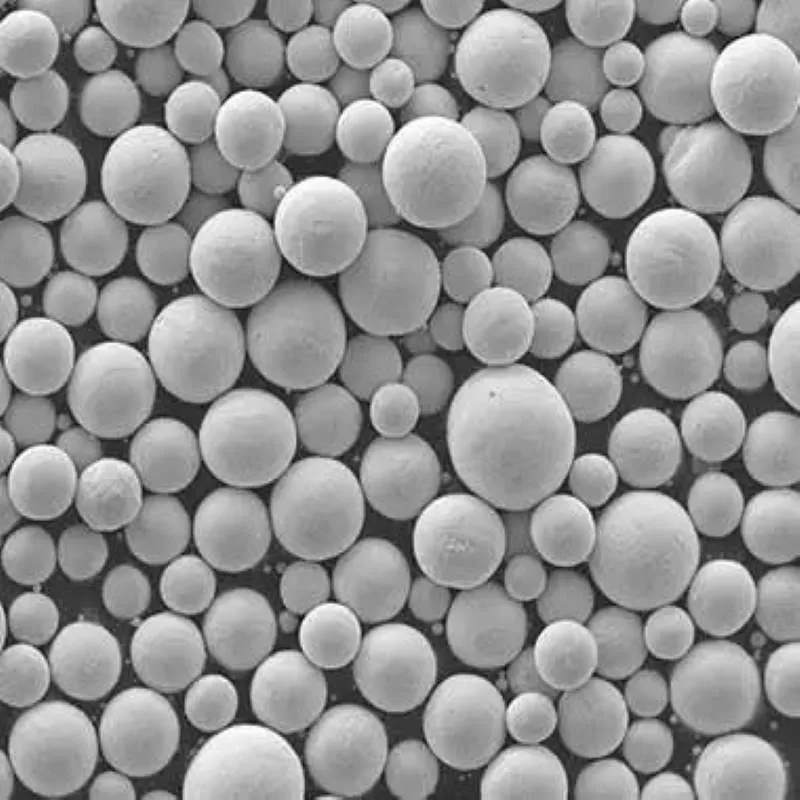
Spherical ASTM A515 Carbon Steel Powder, Grade 65
Product Code : SP-CSTI-626-CU
We provide Spherical ASTM A515 Carbon Steel Powder, Grade 65,Spherical ASTM A515 Carbon Steel Powder, Grade 65 is suitable for laser/electron beam augmentation, hot isostatic pressing, laser cladding, hot/cold spraying, and so on. The particles can be irregular and spherical. The particle distribution can reach the nanometer scale.,Spherical Particle Size,0-15μm,,15-45um,15-53μm, 20-63um,45-105um,45-150μm , 50-150um,75-150μm,or customized,Product purity and oxygen content can be customized according to requirements.
Please contact us if you need customized services. We will contact you with the price and availability in 24 hours.
ASTM A515 Carbon Steel Spherical Powder, Grade 65 Product Information
-:-
For detailed product information, please contact sales.
-:
ASTM A515 Carbon Steel Spherical Powder, Grade 65 Synonyms
-:-
For detailed product information, please contact sales.
-:
-:-
For detailed product information, please contact sales.
-:
Spherical ASTM A515 Carbon Steel Powder, Grade 65 characteristics
-:-
For detailed product information, please contact sales.
-:
Spherical ASTM A515 Carbon Steel Powder, Grade 65 Particle Size
-:-
For detailed product information, please contact sales.
-:
-:-
-:-
0-15μm ,5-25μm, 15-45μm, 15-53μm,20-63um, 45-75μm, 45-105μm, 45-150μm ,75-150μm.
(Various granularities can be customized according to customer requirements)
-:-
For detailed product information, please contact sales.
-:
Spherical ASTM A515 Carbon Steel Powder, Grade 65 Applicable processes
-:-
For detailed product information, please contact sales.
-:
Laser/electron beam additive manufacturing (SLM/EBM, 3D printing)
Direct laser deposition (DLD)
Used in thermal spray (TSA)
Powder hot isostatic pressing (HIP)
Metal injection molding (MIM)
Powder metallurgy (PM)
Laser cladding (LC), etc.
-:-
For detailed product information, please contact sales.
-:
Spherical ASTM A515 Carbon Steel Powder, Grade 65 Chemical Composition
-:-
For detailed product information, please contact sales.
-:
-:-
For detailed product information, please contact sales.
-:
ASTM A515 Carbon Steel, Grade 65 Product Information
-:-
For detailed product information, please contact sales.
-:
# **Product Introduction: ASTM A515 Grade 65 Carbon Steel Plate**
**ASTM A515 Grade 65** is a **higher-strength, carbon-silicon steel plate** specifically engineered for **fusion welded pressure vessels and pressure-containing components** requiring elevated temperature service capability. As the highest strength grade within the A515 specification, it is designed for **intermediate and higher temperature service** (typically up to 650°F or 345°C) while providing a minimum yield strength of 65 ksi (450 MPa). This grade represents the optimal balance between elevated temperature performance and cost-effectiveness for applications requiring higher strength than Grades 55 or 60 can provide, without resorting to more expensive alloy steels.
---
## **1. Key International Standards & Specifications**
* **Primary Standard:** **ASTM A515/A515M** - Standard Specification for Pressure Vessel Plates, Carbon Steel, for Intermediate- and Higher-Temperature Service
* **Governing Standard:** **ASTM A20/A20M** - General Requirements for Steel Plates for Pressure Vessels
* **ASME Code Adoption:** **SA-515 Grade 65** in ASME Boiler and Pressure Vessel Code, Section II, Part A
* **International Equivalents:**
* **EN 10028-2:** P355GH (similar application, but lower strength: 355 MPa min yield)
* **ISO 9328-2:** Steel flat products for pressure purposes - Part 2: Non-alloy and alloy steels
* **JIS G3115:** SPV410 (Japanese pressure vessel steel, 410 MPa min yield - closest match)
* **GB 713:** Q370R (Chinese pressure vessel steel, 370 MPa min yield)
* **DIN 17155:** HIII (German elevated temperature steel)
*Note: Direct strength equivalents are limited due to A515 Grade 65's specific 65 ksi yield strength position in the carbon steel market.*
---
## **2. Chemical Composition (Weight %)**
| Element | Composition Range (%) | Metallurgical Function |
|---------|----------------------|------------------------|
| Carbon (C) | 0.24-0.31 (max 0.33 for >2 in thick) | Primary strengthener; carefully balanced for weldability vs. strength |
| Manganese (Mn) | 0.80-1.20 (max 1.30 for >1.5 in thick) | Enhances strength and hardenability; refines grain structure |
| Phosphorus (P) | 0.035 max | Impurity control; minimized for improved toughness |
| Sulfur (S) | 0.040 max | Impurity control; minimized for enhanced weldability and ductility |
| Silicon (Si) | 0.15-0.40 | **Critical:** Provides solid solution strengthening at elevated temperatures; deoxidizer |
| Copper (Cu) | 0.35 max (when specified) | Optional for atmospheric corrosion resistance |
### **Carbon Equivalent Analysis:**
- **IIW Formula:** CE = C + Mn/6 + (Cr+Mo+V)/5 + (Ni+Cu)/15
- **Typical CE Range:** 0.45-0.60 (moderate to high, indicates need for careful welding procedures)
- **Pcm Formula:** C + Si/30 + Mn/20 + Cu/20 + Ni/60 + Cr/20 + Mo/15 + V/10 + 5B
- **Typical Pcm:** 0.25-0.35
- **Weldability Classification:** Fair to good with proper procedures; requires more control than lower grades
### **Key Composition Features:**
1. **Highest Carbon Content:** Among A515 grades, enabling 65 ksi yield strength
2. **Elevated Manganese:** Up to 1.20% for enhanced strength and hardenability
3. **Silicon Optimization:** Maintains 0.15-0.40% for high-temperature strength retention
4. **Deoxidation Practice:** Typically silicon-killed; fully killed available for improved properties
5. **Clean Steel Practice:** Modern steelmaking ensures low residuals despite higher strength
---
## **3. Mechanical & Physical Properties**
### **Minimum Room Temperature Mechanical Properties:**
- **Tensile Strength:** **515-655 MPa** (75,000-95,000 psi)
- **Yield Strength (0.2% offset, min):** **450 MPa** (65,000 ksi)
- **Elongation in 2 in. (50 mm):** **17% minimum** (for plates ≤ ¾ in / 19 mm thick)
- **Elongation in 8 in. (200 mm):** **15% minimum**
- **Reduction of Area:** Typically 35-45%
### **Thickness-Dependent Property Adjustments:**
| Thickness Range | Minimum Yield Strength | Minimum Tensile Strength | Property Retention |
|-----------------|------------------------|--------------------------|-------------------|
| ≤ ¾ in (19 mm) | 450 MPa (65 ksi) | 515 MPa (75 ksi) | 100% |
| > ¾ to 1½ in (19-38 mm) | 435 MPa (63 ksi) | 515 MPa (75 ksi) | 96% |
| > 1½ to 2½ in (38-64 mm) | 415 MPa (60 ksi) | 515 MPa (75 ksi) | 92% |
| > 2½ to 4 in (64-102 mm) | 400 MPa (58 ksi) | 515 MPa (75 ksi) | 89% |
| > 4 to 8 in (102-203 mm) | 380 MPa (55 ksi) | 515 MPa (75 ksi) | 84% |
### **Elevated Temperature Properties:**
- **Maximum Recommended Metal Temperature:** **650°F (345°C)** for long-term service
- **Allowable Stresses:** Governed by ASME Section II, Part D, Table 1A
- **Typical Stress Values:** ~18.6 ksi at 650°F (345°C)
- **Creep Considerations:** Not suitable for extended service above 800°F (425°C)
- **Oxidation Resistance:** Standard carbon steel behavior; scaling above 1000°F (540°C)
### **Impact Toughness (When Specified):**
- **Charpy V-Notch Testing:** Not mandatory unless specified
- **Typical Test Temperature:** +70°F (+21°C) when required
- **Typical Absorbed Energy:** 15-30 J (11-22 ft-lb) at room temperature
- **For Lower Temperature Service:** Impact testing per ASME UCS-66 required
### **Physical Properties:**
| Property | Value | Conditions |
|----------|-------|------------|
| Density | 7.85 g/cm³ (0.284 lb/in³) | Room temperature |
| Modulus of Elasticity | 200 GPa (29×10⁶ psi) | Room temperature |
| Shear Modulus | 77 GPa (11.2×10⁶ psi) | Room temperature |
| Poisson's Ratio | 0.29 | - |
| Coefficient of Thermal Expansion | 11.7×10⁻⁶/°C | 20-100°C |
| Thermal Conductivity | 50.5 W/m·K | 100°C |
| Specific Heat | 460 J/kg·K | 100°C |
| Thermal Diffusivity | 14.3 mm²/s | 100°C |
### **Hardness Properties:**
- **Typical Range:** 190-240 HB (Brinell)
- **Maximum Typically:** 250 HB for weldability considerations
- **Through-Thickness Uniformity:** Good in normalized condition, but gradients possible in thick sections
---
## **4. Heat Treatment & Microstructure**
### **Standard Supply Conditions:**
1. **Normalized:** **Strongly recommended** for all thicknesses; often required for >1 in (25 mm)
2. **As-Rolled:** Occasionally for thinner plates with specific customer approval
3. **Normalized & Tempered:** For special applications requiring enhanced properties
### **Normalizing Practice:**
- **Temperature Range:** 1650-1750°F (900-955°C)
- **Soaking Time:** 1 hour per inch of thickness, minimum 1 hour
- **Cooling Method:** Still air or controlled air cooling
- **Purpose:** Ensures uniform microstructure and consistent mechanical properties
### **Microstructural Characteristics:**
- **Primary Structure:** Ferrite with increased pearlite content (typically 35-50% pearlite)
- **Grain Size:** ASTM 5-7 (refined through normalizing)
- **Pearlite Morphology:** Fine lamellar structure contributing to strength
- **Inclusion Control:** Modern practices ensure clean steel despite higher strength
### **Post-Fabrication Heat Treatment:**
- **Stress Relief:** **Highly recommended** for most applications
- **Temperature Range:** 1100-1200°F (595-650°C)
- **Soaking Time:** 1 hour per inch of thickness, minimum 1 hour
- **Heating/Cooling Rate:** Controlled to prevent distortion and residual stresses
---
## **5. Key Characteristics & Advantages**
### **Elevated Temperature Performance:**
- **Superior Strength Retention:** Best among carbon steels at 400-650°F (205-345°C)
- **Cost-Effective High Strength:** Most economical 65 ksi option for elevated temperature service
- **Proven Service History:** Extensive use in demanding pressure vessel applications
- **Silicon Enhancement:** Optimized chemistry for high-temperature performance
### **Fabrication Characteristics:**
- **Good Weldability for Strength Level:** Requires proper procedures but achievable
- **Adequate Formability:** For moderate forming with proper techniques
- **Machinability:** ~60% of free-machining steel (1212)
- **Predictable Behavior:** Well-documented fabrication guidelines available
### **Design & Economic Advantages:**
- **Weight Reduction:** Higher strength enables thinner sections vs. Grades 55/60
- **Material Cost Savings:** More economical than alloy steels with similar temperature capability
- **Fabrication Economy:** Lower processing costs than alloy steels
- **Design Flexibility:** Allows more efficient pressure vessel designs
### **Limitations & Special Considerations:**
- **Temperature Limit:** 650°F (345°C) maximum for continuous service
- **Weldability Concerns:** Higher carbon equivalent requires careful welding procedures
- **Thickness Limitations:** Significant property derating in thicker sections
- **Low-Temperature Brittleness:** Not suitable for cryogenic service without special requirements
---
## **6. Product Applications**
### **Pressure Vessels (Primary Application):**
- **High-Pressure/Large Diameter Vessels:**
- Steam drums for industrial boilers
- High-pressure reactors in chemical processing
- Large diameter distillation columns
- Pressure vessels for power generation
- **Power Generation Equipment:**
- High-pressure feedwater heaters
- Steam separators and moisture separators
- Boiler external piping systems
- Auxiliary pressure vessels in power plants
- **Petrochemical & Refining:**
- Process vessels operating consistently at 400-650°F
- High-pressure separators
- Regeneration vessels
- Catalyst support structures
### **Storage & Transportation:**
- **High-Pressure Storage Systems:**
- Compressed air storage receivers
- Industrial gas storage (oxygen, nitrogen, etc.)
- LPG storage vessels (within temperature limits)
- Process liquid storage at elevated temperatures/pressures
### **Industrial Processing Equipment:**
- **High-Temperature Processing Vessels:**
- Autoclaves for chemical processing
- Industrial reactors with pressure requirements
- Thermal treatment chambers
- Curing and processing vessels
- **Heat Transfer Equipment:**
- Shell-and-tube heat exchangers
- Air preheaters
- Waste heat recovery units
---
## **7. Fabrication Guidelines**
### **Welding Procedures (Critical for Success):**
#### **Preheat Requirements:**
| Thickness Range | Minimum Preheat | Recommended Range | Critical Notes |
|-----------------|-----------------|-------------------|----------------|
| ≤ ½ in (13 mm) | 150°F (65°C) | 200-250°F (95-120°C) | **Mandatory** even for thin sections |
| ½ to 1 in (13-25 mm) | 200°F (95°C) | 250-300°F (120-150°C) | Essential for crack prevention |
| 1 to 2 in (25-50 mm) | 250°F (120°C) | 300-350°F (150-175°C) | High restraint applications |
| > 2 in (>50 mm) | 300°F (150°C) | 350-400°F (175-205°C) | Critical for thick sections |
| **Any thickness, cold weather** | **200°F (95°C)** | **250-300°F (120-150°C)** | Minimum regardless of thickness |
#### **Interpass Temperature Control:**
- **Maximum Interpass:** 400°F (205°C)
- **Optimal Range:** 300-350°F (150-175°C)
- **Monitoring:** Continuous for all critical welds
#### **Filler Metal Selection:**
- **SMAW (Stick):** E7018, E7018-1, E8018-C3 (low hydrogen **essential**)
- **FCAW (Flux-cored):** E71T-1, E70T-5 (for out-of-position welding)
- **GMAW (MIG):** ER70S-6, ER70S-3
- **SAW (Submerged):** F7A2-EM12K, F8A0-EA2-A2
- **For Maximum Toughness:** E8018-C3 or equivalent
#### **Post-Weld Heat Treatment:**
- **Generally Required:** For thickness > ¾ in (19 mm)
- **Temperature Range:** 1100-1200°F (595-650°C)
- **Soaking Time:** 1 hour per inch of thickness, minimum 1 hour
- **Heating/Cooling Rate:** Max 400°F/h (205°C/h) through 800°F (425°C)
### **Cutting & Edge Preparation:**
- **Plasma Cutting:** Preferred method; minimal HAZ
- **Oxy-Fuel Cutting:** Requires preheat ≥200°F (95°C) for >½ in
- **Mechanical Cutting:** Suitable with proper equipment
- **Edge Preparation:** Critical for welding; remove all cutting defects
### **Forming Operations:**
- **Cold Bending:** Minimum radius = 3.5× thickness for 90° bends
- **Hot Forming:** Recommended at 1650-1800°F (900-980°C)
- **Post-Forming Treatment:** Stress relief **required** after hot forming
- **Local Heating:** Control temperature and cooling rates carefully
### **Machining:**
- **Tool Materials:** Carbide tools recommended
- **Cutting Speeds:** Moderate to slow (100-200 SFM for turning)
- **Coolant:** Essential for heavy cuts
- **Drilling/Tapping:** Use sharp tools, adequate lubrication
---
## **8. Design Considerations**
### **Pressure Vessel Design (ASME Section VIII, Div. 1):**
- **Allowable Stress Values:** Refer to ASME Section II, Part D, Table 1A
- **Typical Values:** 21.7 ksi at 100°F, 18.6 ksi at 650°F (150 MPa at 38°C, 128 MPa at 345°C)
- **Joint Efficiency:** 0.70-1.00 based on examination level
- **Corrosion Allowance:** Typically ⅛ in (3.2 mm) minimum
### **Temperature Design Limits:**
- **Minimum Design Metal Temperature (MDMT):** Typically -20°F (-29°C) without impact testing
- **For Lower MDMT:** Impact testing per ASME UCS-66 required
- **Maximum Continuous Service:** 650°F (345°C)
- **Short-Term Exposure:** Up to 750°F (400°C) with appropriate design considerations
### **Thickness Design Strategy:**
- **Optimum Thickness Range:** ¼ to 2 inches (6 to 50 mm)
- **Thick Section Considerations:** Significant property derating requires careful calculation
- **Minimum Practical Thickness:** Often governed by fabrication constraints rather than stress
### **Fatigue & Cyclic Service:**
- **Moderate Fatigue Resistance:** Adequate for most pressure vessel applications
- **Notch Sensitivity:** Higher than lower-strength grades; careful detailing required
- **Weld Profile Control:** Essential for fatigue performance
---
## **9. Comparison with Related Grades**
### **A515 Grade 65 vs. A515 Grade 60:**
| Parameter | Grade 65 | Grade 60 | Advantages |
|-----------|----------|----------|------------|
| **Yield Strength** | 450 MPa (65 ksi) | 415 MPa (60 ksi) | Grade 65: 8.4% stronger |
| **Tensile Strength** | 515-655 MPa | 485-620 MPa | Higher strength capacity |
| **Carbon Content** | 0.24-0.31% | 0.18-0.28% | Higher carbon for strength |
| **Manganese** | 0.80-1.20% | 0.70-1.00% | Enhanced hardenability |
| **Elongation** | 17% min | 19% min | Grade 60 more ductile |
| **Weldability** | More challenging | Good with procedures | Grade 60 easier to weld |
| **Cost Premium** | ~8-15% higher | Baseline | Grade 60 more economical |
### **A515 Grade 65 vs. A516 Grade 65:**
| Aspect | A515 Grade 65 | A516 Grade 65 | Selection Guidance |
|--------|---------------|---------------|-------------------|
| **Primary Design Focus** | Elevated temperature strength | Moderate temperature service | Temperature requirement dictates |
| **Silicon Content** | 0.15-0.40% | 0.13-0.45% | Similar, but A515 optimized |
| **Typical Applications** | Sustained 400-650°F service | General pressure vessels | A515 for high-temp advantage |
| **Market Availability** | Less common | More widely available | A516 easier to source |
| **Fabrication Considerations** | Similar | Similar | Procedures largely interchangeable |
### **A515 Grade 65 vs. A387 Grade 2 (1¼Cr-½Mo):**
| Consideration | A515 Grade 65 | A387 Grade 2 | Economic & Technical Balance |
|---------------|---------------|--------------|------------------------------|
| **Temperature Limit** | 650°F (345°C) | 900°F (480°C) | Clear temperature boundary |
| **Material Cost** | Lower | 2.5-3.5× higher | A515 significantly more economical |
| **Fabrication Cost** | Lower | Higher (PWHT required) | A515 cheaper to fabricate |
| **Weldability** | Good with care | Requires strict procedures | A515 simpler |
| **Best Application** | ≤650°F, cost-sensitive | 650-900°F, high reliability | Temperature is key differentiator |
### **International Equivalents Comparison:**
| Standard | Equivalent Grade | Yield Strength | Notes |
|----------|-----------------|---------------|-------|
| **EN 10028-2** | P355GH | 355 MPa | Lower strength; European preference for alloy steels at this strength level |
| **JIS G3115** | SPV410 | 410 MPa | Closest Japanese equivalent |
| **GB 713** | Q370R | 370 MPa | Lower strength Chinese equivalent |
| **ISO 9328-2** | P355GH | 355 MPa | International standard lags in high-strength carbon steel grades |
### **Grade 65 vs. Higher Strength Alternatives:**
| Material Option | Yield Strength | Temperature Limit | Cost Relative to A515-65 |
|----------------|---------------|-------------------|--------------------------|
| **A515 Grade 65** | 65 ksi | 650°F | 1.0× (Baseline) |
| **A387 Grade 2** | 60 ksi | 900°F | 2.5-3.5× |
| **A517 Grade F** | 100 ksi | 650°F | 3-4× |
| **304 Stainless** | 30 ksi | 1500°F | 4-5× |
---
## **10. Quality Control & Certification**
### **Standard Testing Requirements:**
1. **Chemical Analysis:** Ladle analysis mandatory; product analysis often required
2. **Tensile Testing:** Per heat treatment charge; transverse properties may be specified
3. **Bend Testing:** For material and weld procedure qualification
4. **Hardness Testing:** Often specified for weldability assessment
### **Enhanced Testing (Commonly Specified):**
- **Charpy V-Notch Impact:** Increasingly specified even when not code-required
- **Ultrasonic Examination:** Per ASTM A435/A577 for plate quality
- **Through-Thickness Testing:** For critical applications in thick sections
- **Macroetch Examination:** For microstructure evaluation
### **Certification Requirements:**
- **Complete Mill Test Certificate:** Including actual chemistry and mechanical properties
- **Heat Treatment Documentation:** Full records for normalized material
- **Traceability:** Unbroken from melt to finished plate
- **Marking:** ASTM designation, grade, heat number, size, manufacturer identification
### **Special Quality Provisions:**
- **Restricted Chemistry:** Often specified for improved weldability
- **Enhanced Cleanliness:** Lower sulfur/phosphorus limits
- **Special Heat Treatment:** For specific property profiles
- **Third-Party Inspection:** Common for critical applications
### **Industry Acceptance & Codes:**
- **ASME Section VIII:** Fully approved for pressure vessel construction
- **National Board:** Recognized for code stamping
- **Major Petrochemical Companies:** Typically approved with proper documentation
- **International Projects:** May require additional testing per project specifications
---
**Technical Summary:** ASTM A515 Grade 65 represents the highest strength carbon-silicon steel plate specifically optimized for elevated temperature pressure vessel service up to 650°F (345°C). Its 65 ksi minimum yield strength provides designers with a cost-effective alternative to alloy steels for applications where higher strength than Grades 55 or 60 is required but service temperatures remain within carbon steel capabilities. While offering economic advantages over alloy steels, Grade 65 requires more careful fabrication procedures than lower-strength carbon steels, particularly regarding welding practices and heat treatment. The material finds its optimal application in pressure vessels, heat exchangers, and storage systems operating consistently in the 400-650°F range where its combination of strength, elevated temperature performance, and cost-effectiveness provides significant value. Proper material selection should consider not only design requirements but also fabrication capabilities, as the higher carbon equivalent of Grade 65 demands more stringent welding controls than lower-strength alternatives.
-:-
For detailed product information, please contact sales.
-:
ASTM A515 Carbon Steel, Grade 65 Specification
Dimensions
Size:
Diameter 20-1000 mm Length <6021 mm
Size:We can customized as required
Standard:
Per your request or drawing
We can customized as required
Properties(Theoretical)
Chemical Composition
-:-
For detailed product information, please contact sales.
-:
ASTM A515 Carbon Steel, Grade 65 Properties
-:-
For detailed product information, please contact sales.
-:
Spherical ASTM A515 Carbon Steel Powder, Grade 65 Particle Size Description
-:-
For detailed product information, please contact sales.
-:
Applications of Spherical ASTM A515 Carbon Steel Powder, Grade 65
-:-
For detailed product information, please contact sales.
-:
-:-
For detailed product information, please contact sales.
-:
Applications of ASTM A515 Carbon Steel Spherical Powder, Grade 65
-:-
For detailed product information, please contact sales.
-:
Chemical Identifiers ASTM A515 Carbon Steel Spherical Powder, Grade 65
-:-
For detailed product information, please contact sales.
-:
Packing of ASTM A515 Carbon Steel Spherical Powder, Grade 65
-:-
For detailed product information, please contact sales.
-:
Standard Packing:
-:-
For detailed product information, please contact sales.
-:
Typical bulk packaging includes palletized plastic 5 gallon/25 kg. pails, fiber and Steel Spherical Powder drums to 1 ton super sacks in full container (FCL) or truck load (T/L) quantities. Research and sample quantities and hygroscopic, oxidizing or other air sensitive materials may be packaged under argon or vacuum. Solutions are packaged in polypropylene, plastic or glass jars up to palletized 2492 gallon liquid totes Special package is available on request. E FORUs’ is carefully handled to minimize damage during storage and transportation and to preserve the quality of our products in their original condition