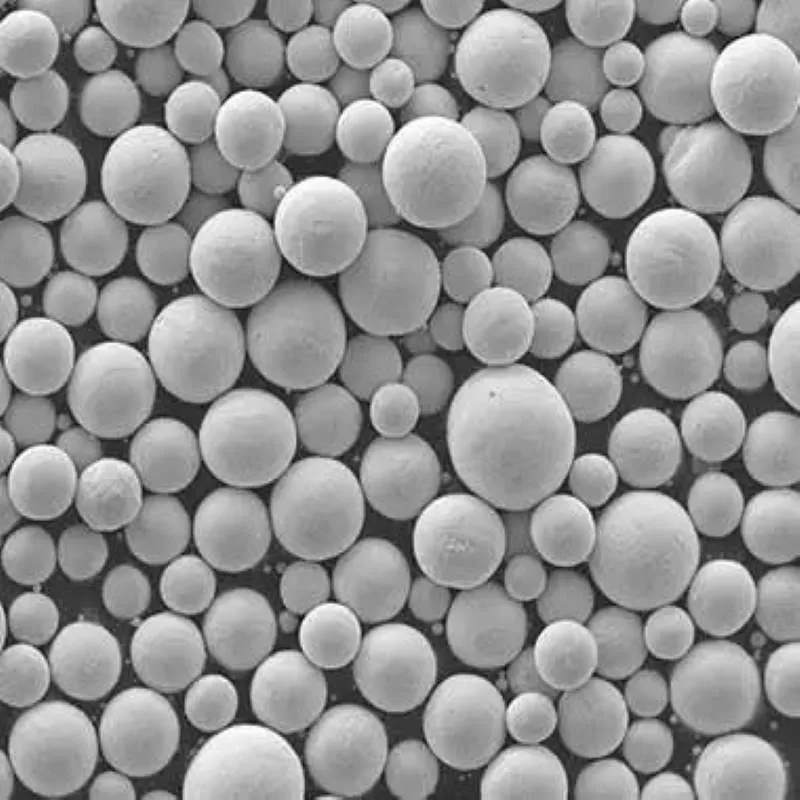
Spherical ASTM A203 Low Alloy Steel Powder, Grade E
Product Code : SP-CSTI-583-CU
We provide Spherical ASTM A203 Low Alloy Steel Powder, Grade E,Spherical ASTM A203 Low Alloy Steel Powder, Grade E is suitable for laser/electron beam augmentation, hot isostatic pressing, laser cladding, hot/cold spraying, and so on. The particles can be irregular and spherical. The particle distribution can reach the nanometer scale.,Spherical Particle Size,0-15μm,,15-45um,15-53μm, 20-63um,45-105um,45-150μm , 50-150um,75-150μm,or customized,Product purity and oxygen content can be customized according to requirements.
Please contact us if you need customized services. We will contact you with the price and availability in 24 hours.
ASTM A203 Low Alloy Steel Spherical Powder, Grade E Product Information
-:-
For detailed product information, please contact sales.
-:
ASTM A203 Low Alloy Steel Spherical Powder, Grade E Synonyms
-:-
For detailed product information, please contact sales.
-:
-:-
For detailed product information, please contact sales.
-:
Spherical ASTM A203 Low Alloy Steel Powder, Grade E characteristics
-:-
For detailed product information, please contact sales.
-:
Spherical ASTM A203 Low Alloy Steel Powder, Grade E Particle Size
-:-
For detailed product information, please contact sales.
-:
-:-
-:-
0-15μm ,5-25μm, 15-45μm, 15-53μm,20-63um, 45-75μm, 45-105μm, 45-150μm ,75-150μm.
(Various granularities can be customized according to customer requirements)
-:-
For detailed product information, please contact sales.
-:
Spherical ASTM A203 Low Alloy Steel Powder, Grade E Applicable processes
-:-
For detailed product information, please contact sales.
-:
Laser/electron beam additive manufacturing (SLM/EBM, 3D printing)
Direct laser deposition (DLD)
Used in thermal spray (TSA)
Powder hot isostatic pressing (HIP)
Metal injection molding (MIM)
Powder metallurgy (PM)
Laser cladding (LC), etc.
-:-
For detailed product information, please contact sales.
-:
Spherical ASTM A203 Low Alloy Steel Powder, Grade E Chemical Composition
-:-
For detailed product information, please contact sales.
-:
-:-
For detailed product information, please contact sales.
-:
ASTM A203 Low Alloy Steel, Grade E Product Information
-:-
For detailed product information, please contact sales.
-:
## **ASTM A203 Grade E 3.5% Nickel Alloy Steel for Cryogenic Service**
### **1. Product Overview**
**ASTM A203 Grade E** is a **higher-strength variant of 3.5% nickel alloy steel** designed for **pressure vessel applications requiring both exceptional low-temperature toughness and elevated tensile strength**. As part of the ASTM A203 specification (*Standard Specification for Pressure Vessel Plates, Alloy Steel, Nickel*), Grade E shares the same nickel content as Grade D but achieves **significantly higher yield and tensile strengths** through modified chemistry and heat treatment. This grade is engineered for applications where material efficiency and weight reduction are critical, without compromising safety at cryogenic temperatures down to **-150°F (-101°C)**.
Grade E represents an optimized material solution for modern cryogenic engineering, particularly where design pressures have increased or where reducing vessel wall thickness offers economic advantages in fabrication, transportation, and installation.
### **2. Key International Standards & Specifications**
| Standard System | Equivalent Designation | Notes |
|-----------------|------------------------|-------|
| **ASTM/ASME** | **ASTM A203/A203M Grade E** / **SA-203 Grade E** | Primary specification for ASME Code construction |
| **European (EN)** | **EN 10028-4: 13Ni14** (higher strength variant) | Similar chemistry with strength adjustments |
| **Japanese (JIS)** | **JIS G3127 SLA 365B** | Higher strength 3.5% Ni steel variant |
| **International** | **ISO 9328-4** | Similar international classification |
**Classification Society Approvals:** Available through supplementary requirements from ABS, DNV, LR, BV, and other major societies for marine applications.
### **3. Chemical Composition (% by Weight)**
| Element | ASTM A203 Grade E Requirements | Metallurgical Purpose |
|---------|--------------------------------|------------------------|
| **Carbon (C)** | 0.20% maximum | Slightly higher than Grade D for increased strength |
| **Manganese (Mn)** | 0.70-1.00% | Enhanced range for improved strength and hardenability |
| **Phosphorus (P)** | 0.035% maximum | Strict impurity control |
| **Sulfur (S)** | 0.040% maximum | Controlled for weldability and toughness |
| **Silicon (Si)** | 0.15-0.40% | Deoxidizer with strengthening effect |
| **Nickel (Ni)** | **3.25-3.75%** | Primary alloying element for low-temperature toughness |
| **Copper (Cu)** | 0.35% maximum (residual) | - |
**Key Metallurgical Features:**
- **Carbon Equivalent (CE):** 0.40-0.50% (IIW formula)
- **Nickel-Carbon Balance:** Optimized for strength-toughness combination
- **Manganese Enhancement:** Higher Mn range contributes to strength increase
### **4. Mechanical & Physical Properties**
#### **4.1 Tensile Properties**
| Property | Minimum Requirement | Typical Range | Test Standard |
|----------|---------------------|---------------|---------------|
| **Yield Strength (0.2% offset)** | **45 ksi (310 MPa)** | 48-55 ksi (330-380 MPa) | ASTM A370 |
| **Tensile Strength** | **75-90 ksi (515-620 MPa)** | 78-85 ksi (540-585 MPa) | ASTM A370 |
| **Elongation (in 8" gauge)** | **22%** minimum | 23-28% | ASTM A370 |
| **Reduction of Area** | Not specified | Typically 50-60% | ASTM A370 |
#### **4.2 Impact Properties (Mandatory Requirement)**
| Test Temperature | Minimum Charpy V-Notch Energy | Requirements |
|------------------|-------------------------------|--------------|
| **-150°F (-101°C)** | **15 ft-lb (20 J) average** | Same as Grade D |
#### **4.3 Physical Properties**
| Property | Value | Conditions |
|----------|-------|------------|
| **Density** | 7.88 g/cm³ | Room temperature |
| **Modulus of Elasticity** | 29,000 ksi (200 GPa) | 20°C |
| **Thermal Conductivity** | 43 W/m·K | 20°C |
| **Coefficient of Expansion** | 11.2 × 10⁻⁶/°C | 20-100°C |
### **5. Heat Treatment Requirements**
ASTM A203 Grade E is supplied in:
1. **Normalized and Tempered** (primary condition)
2. **Quenched and Tempered** (for special requirements)
**Typical Heat Treatment Cycle:**
- Normalizing: 900-925°C (1650-1700°F)
- Tempering: 600-650°C (1110-1200°F)
- Cooling: Air cooling from tempering temperature
### **6. Product Applications**
#### **6.1 Primary Applications**
| Application Area | Specific Uses | Advantages of Grade E |
|------------------|---------------|-----------------------|
| **LNG Industry** | - Modern LNG storage tanks
- High-pressure LNG transport
- LNG fuel tanks for vessels | Reduced wall thickness, weight savings |
| **Industrial Gases** | - High-pressure cryogenic vessels
- Transportable containers
- Process equipment | Higher design pressures possible |
| **Chemical Processing** | - Cryogenic reactors
- High-pressure low-temperature vessels | Material efficiency |
| **Energy Transition** | - Liquid hydrogen infrastructure
- Energy storage systems | Future-proof design capability |
#### **6.2 Design Advantages Over Grade D**
- **25-30% higher yield strength** allows thinner wall designs
- **Weight reduction** up to 20% for equivalent pressure rating
- **Improved material utilization** in fabrication
- **Reduced welding volume** due to thinner sections
### **7. Fabrication Characteristics**
#### **7.1 Weldability**
| Parameter | Grade E Characteristics |
|-----------|--------------------------|
| **Carbon Equivalent** | 0.45-0.55% (higher than Grade D) |
| **Preheat Requirements** | More stringent, especially for thickness > 1" |
| **Recommended Processes** | SMAW, GTAW, SAW with nickel-modified consumables |
| **PWHT Requirement** | Mandatory for thickness > 1.5" |
**Welding Consumables:** AWS A5.23 F11PZ-EB3R or equivalent with proper strength matching
#### **7.2 Forming & Machining**
- **Hot Forming:** Similar to Grade D but requires tighter temperature control
- **Cold Forming:** More challenging due to higher strength
- **Machinability:** 55-60% of free-cutting steel (compared to 60-65% for Grade D)
### **8. Comparative Analysis**
#### **8.1 Grade E vs. Grade D**
| Property | Grade D | Grade E | Advantage |
|----------|---------|---------|-----------|
| **Minimum Yield Strength** | 37 ksi | 45 ksi | **+22%** |
| **Tensile Strength Range** | 65-77 ksi | 75-90 ksi | **Higher** |
| **Elongation** | 23% min | 22% min | Slightly lower |
| **Fabrication Ease** | Excellent | Good | Grade D easier |
| **Cost Premium** | Base | 10-15% higher | Grade D more economical |
#### **8.2 Application Selection Guidelines**
**Choose Grade E when:**
- Design pressures exceed 150 psi for large diameter vessels
- Weight reduction is economically significant
- Transportation limitations exist
- Advanced fabrication capabilities are available
**Choose Grade D when:**
- Standard design conditions apply
- Fabrication simplicity is prioritized
- Cost sensitivity is high
- Proven traditional designs are used
### **9. Design Considerations**
#### **9.1 Advantages**
1. **Material Efficiency:** Higher strength-to-weight ratio
2. **Modern Design Compatibility:** Suitable for advanced engineering approaches
3. **Code Compliance:** Fully ASME and international code approved
4. **Performance Proven:** Established track record in demanding applications
#### **9.2 Limitations**
1. **Fabrication Complexity:** Requires more sophisticated welding and heat treatment
2. **Cost Increment:** 10-15% premium over Grade D
3. **Availability:** Less commonly stocked than Grade D
4. **Experience Required:** Fabricators need specific Grade E expertise
### **10. Market Position & Trends**
#### **10.1 Current Usage**
- **Primary Market:** LNG infrastructure modernization
- **Growth Area:** Hydrogen economy development
- **Specialized Applications:** Aerospace and defense cryogenic systems
- **Regional Preference:** More common in Asian and European projects
#### **10.2 Future Outlook**
- Increasing adoption as design pressures increase
- Growing importance in hydrogen storage and transport
- Potential for further strength optimization
- Integration with advanced manufacturing techniques
### **11. Procurement & Specification**
#### **11.1 Key Specification Points**
When ordering ASTM A203 Grade E, specify:
- ASTM A203/A203M Grade E explicitly
- Heat treatment condition (typically normalized and tempered)
- Impact test requirements (-150°F/-101°C)
- Additional testing as needed (UT, hardness surveys)
- Special marking and certification requirements
#### **11.2 Supplier Qualification**
- Require demonstrated experience with Grade E production
- Verify heat treatment capabilities
- Check references for similar applications
- Confirm testing and certification procedures
### **12. Technical Recommendations**
#### **12.1 Design Optimization**
- Utilize finite element analysis for optimized thickness
- Consider fracture mechanics approach for critical applications
- Implement advanced NDT for quality assurance
- Plan fabrication sequence considering higher strength
#### **12.2 Fabrication Best Practices**
- Develop and qualify specific welding procedures
- Implement strict heat treatment controls
- Conduct thorough pre-production testing
- Maintain comprehensive documentation
### **13. Case Study Example**
**Project:** Modern LNG Storage Tank
**Location:** Asia-Pacific region
**Grade E Application:** Inner tank shell
**Results:**
- 18% reduction in wall thickness compared to Grade D
- 15% weight saving for entire tank
- Reduced foundation requirements
- Successful commissioning and operation
- Estimated fabrication cost saving: 12%
### **14. Conclusion**
**ASTM A203 Grade E** represents an **advanced evolution of nickel alloy cryogenic steel**, offering engineers a **higher-strength alternative** to traditional Grade D for demanding applications. While requiring more sophisticated fabrication techniques, its **enhanced mechanical properties** enable more efficient and economical designs for modern cryogenic systems.
**Key Value Propositions:**
- **Strength Advantage:** 45 ksi minimum yield strength vs. 37 ksi for Grade D
- **Design Flexibility:** Enables thinner, lighter structures
- **Future-Ready:** Suitable for evolving cryogenic applications
- **Code-Compliant:** Full international recognition
**Recommended Application Scenarios:**
1. Large-scale LNG storage with economic weight optimization
2. High-pressure cryogenic transport systems
3. Advanced energy infrastructure (hydrogen, etc.)
4. Projects where material efficiency offsets fabrication complexity
As cryogenic technology advances and economic pressures increase, ASTM A203 Grade E provides a **technically sound, economically viable material solution** that bridges traditional design approaches with modern engineering requirements. Its successful implementation requires careful planning, qualified fabrication, and thorough quality assurance, but delivers significant benefits in appropriate applications.
**Final Selection Consideration:** The choice between Grade D and Grade E should be based on comprehensive life-cycle cost analysis, considering material costs, fabrication expenses, transportation savings, and long-term operational benefits. For many modern cryogenic projects, Grade E offers the optimal balance of performance and economics.
-:-
For detailed product information, please contact sales.
-:
ASTM A203 Low Alloy Steel, Grade E Specification
Dimensions
Size:
Diameter 20-1000 mm Length <5974 mm
Size:We can customized as required
Standard:
Per your request or drawing
We can customized as required
Properties(Theoretical)
Chemical Composition
-:-
For detailed product information, please contact sales.
-:
ASTM A203 Low Alloy Steel, Grade E Properties
-:-
For detailed product information, please contact sales.
-:
Spherical ASTM A203 Low Alloy Steel Powder, Grade E Particle Size Description
-:-
For detailed product information, please contact sales.
-:
Applications of Spherical ASTM A203 Low Alloy Steel Powder, Grade E
-:-
For detailed product information, please contact sales.
-:
-:-
For detailed product information, please contact sales.
-:
Applications of ASTM A203 Low Alloy Steel Spherical Powder, Grade E
-:-
For detailed product information, please contact sales.
-:
Chemical Identifiers ASTM A203 Low Alloy Steel Spherical Powder, Grade E
-:-
For detailed product information, please contact sales.
-:
Packing of ASTM A203 Low Alloy Steel Spherical Powder, Grade E
-:-
For detailed product information, please contact sales.
-:
Standard Packing:
-:-
For detailed product information, please contact sales.
-:
Typical bulk packaging includes palletized plastic 5 gallon/25 kg. pails, fiber and Steel Spherical Powder drums to 1 ton super sacks in full container (FCL) or truck load (T/L) quantities. Research and sample quantities and hygroscopic, oxidizing or other air sensitive materials may be packaged under argon or vacuum. Solutions are packaged in polypropylene, plastic or glass jars up to palletized 2445 gallon liquid totes Special package is available on request. E FORUs’ is carefully handled to minimize damage during storage and transportation and to preserve the quality of our products in their original condition