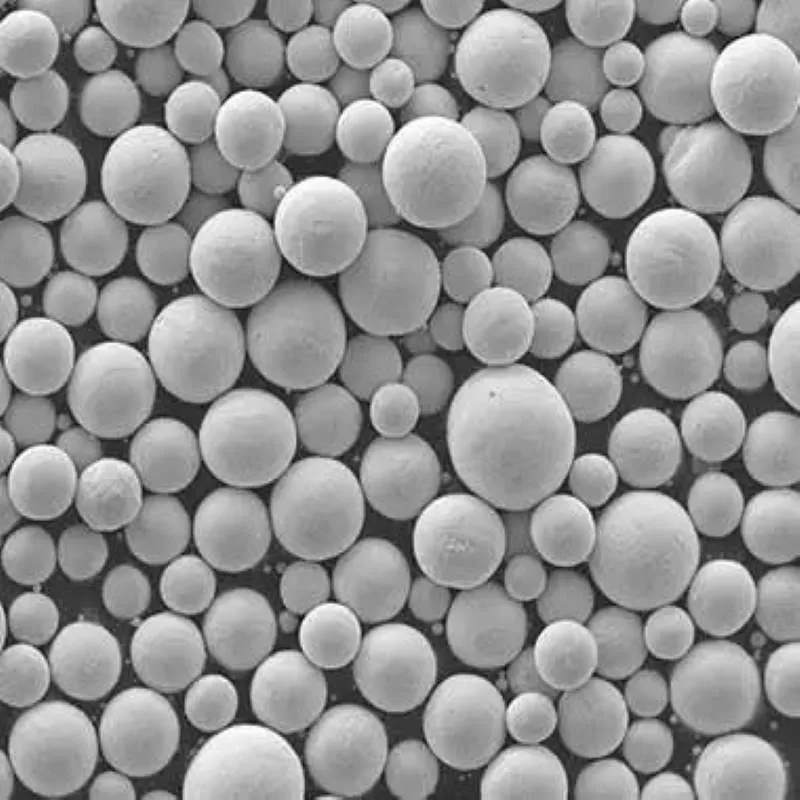
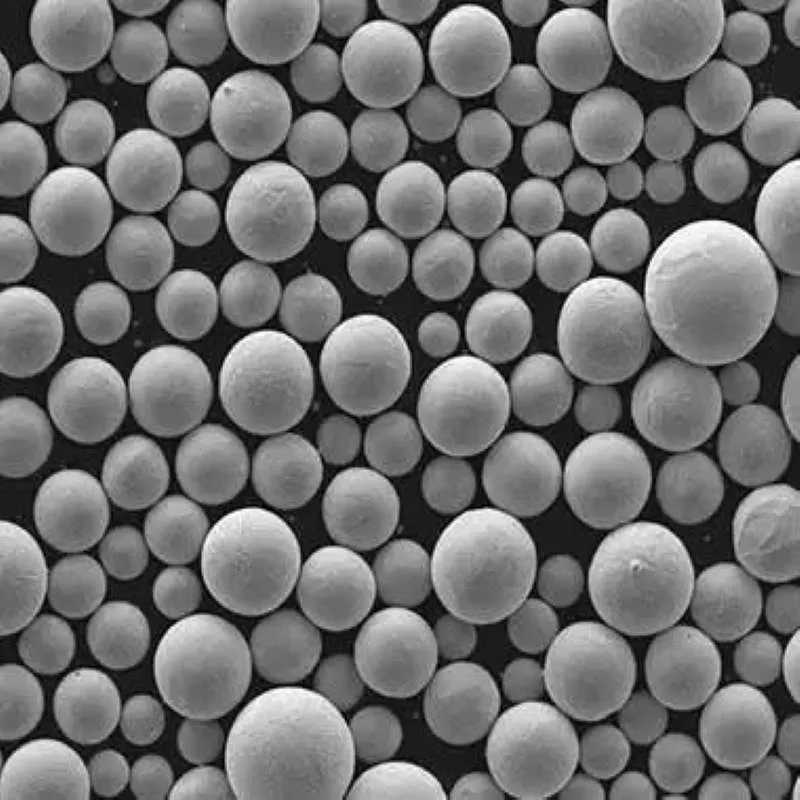
Spherical ASTM A203 Low Alloy Steel Powder, Grade F
Product Code : SP-CSTI-584-CU
We provide Spherical ASTM A203 Low Alloy Steel Powder, Grade F,Spherical ASTM A203 Low Alloy Steel Powder, Grade F is suitable for laser/electron beam augmentation, hot isostatic pressing, laser cladding, hot/cold spraying, and so on. The particles can be irregular and spherical. The particle distribution can reach the nanometer scale.,Spherical Particle Size,0-15μm,,15-45um,15-53μm, 20-63um,45-105um,45-150μm , 50-150um,75-150μm,or customized,Product purity and oxygen content can be customized according to requirements.
Please contact us if you need customized services. We will contact you with the price and availability in 24 hours.
ASTM A203 Low Alloy Steel Spherical Powder, Grade F Product Information
-:-
For detailed product information, please contact sales.
-:
ASTM A203 Low Alloy Steel Spherical Powder, Grade F Synonyms
-:-
For detailed product information, please contact sales.
-:
-:-
For detailed product information, please contact sales.
-:
Spherical ASTM A203 Low Alloy Steel Powder, Grade F characteristics
-:-
For detailed product information, please contact sales.
-:
Spherical ASTM A203 Low Alloy Steel Powder, Grade F Particle Size
-:-
For detailed product information, please contact sales.
-:
-:-
-:-
0-15μm ,5-25μm, 15-45μm, 15-53μm,20-63um, 45-75μm, 45-105μm, 45-150μm ,75-150μm.
(Various granularities can be customized according to customer requirements)
-:-
For detailed product information, please contact sales.
-:
Spherical ASTM A203 Low Alloy Steel Powder, Grade F Applicable processes
-:-
For detailed product information, please contact sales.
-:
Laser/electron beam additive manufacturing (SLM/EBM, 3D printing)
Direct laser deposition (DLD)
Used in thermal spray (TSA)
Powder hot isostatic pressing (HIP)
Metal injection molding (MIM)
Powder metallurgy (PM)
Laser cladding (LC), etc.
-:-
For detailed product information, please contact sales.
-:
Spherical ASTM A203 Low Alloy Steel Powder, Grade F Chemical Composition
-:-
For detailed product information, please contact sales.
-:
-:-
For detailed product information, please contact sales.
-:
ASTM A203 Low Alloy Steel, Grade F Product Information
-:-
For detailed product information, please contact sales.
-:
## **ASTM A203 Grade F 2.25% Nickel Alloy Steel for Intermediate Low-Temperature Service**
### **1. Product Overview**
**ASTM A203 Grade F** is a **specialized 2.25% nickel alloy steel plate** designed for **pressure vessel applications requiring reliable performance at moderately low temperatures**. As a distinct grade within the ASTM A203 specification (*Standard Specification for Pressure Vessel Plates, Alloy Steel, Nickel*), Grade F offers an optimized balance between the **low-temperature toughness of nickel steels** and **enhanced tensile strength** for applications operating in the **-50°F to -100°F (-45°C to -73°C)** range.
This grade is engineered for situations where service temperatures are not as severe as full cryogenic conditions but still demand better fracture resistance than carbon steels can provide. It represents a **cost-effective intermediate solution** between carbon-manganese steels and higher-nickel alloys, particularly suited for industrial processes involving refrigerated gases and chemicals.
### **2. Key International Standards & Specifications**
| Standard System | Equivalent Designation | Notes |
|-----------------|------------------------|-------|
| **ASTM/ASME** | **ASTM A203/A203M Grade F** / **SA-203 Grade F** | Primary specification for ASME Code construction |
| **European (EN)** | **EN 10028-4: 11Ni12** | Similar 2.25% Ni steel for moderate low-temperature service |
| **Japanese (JIS)** | **JIS G3127 SLA 325C** | Intermediate grade for low-temperature pressure vessels |
| **German (DIN)** | **1.5637** | Historical designation for 2.25% Ni steel |
| **International** | **ISO 9328-4** | International standardization framework |
**Classification Society Approvals:** Available through supplementary testing requirements from ABS, DNV, LR, and other marine classification societies for specific applications.
### **3. Chemical Composition (% by Weight)**
| Element | ASTM A203 Grade F Requirements | Metallurgical Purpose |
|---------|--------------------------------|------------------------|
| **Carbon (C)** | 0.20% maximum | Controlled for weldability while providing strength |
| **Manganese (Mn)** | 0.70-1.00% | Enhanced range for improved strength characteristics |
| **Phosphorus (P)** | 0.035% maximum | Impurity control to prevent embrittlement |
| **Sulfur (S)** | 0.040% maximum | Controlled for improved hot workability |
| **Silicon (Si)** | 0.15-0.40% | Deoxidizer with moderate strengthening effect |
| **Nickel (Ni)** | **2.00-2.50%** | Primary alloying element for low-temperature toughness enhancement |
| **Copper (Cu)** | 0.35% maximum (residual) | - |
| **Molybdenum (Mo)** | May be present up to 0.10% (residual) | Optional for improved hardenability |
**Key Metallurgical Features:**
- **Carbon Equivalent (CE):** Typically 0.40-0.50% (IIW formula)
- **Nickel Effect:** Provides adequate but not extreme low-temperature toughness
- **Balance:** Optimized for moderate temperature applications
- **Purity:** Controlled tramp elements for consistent performance
### **4. Mechanical & Physical Properties**
#### **4.1 Tensile Properties (Normalized and Tempered Condition)**
| Property | Minimum Requirement | Typical Range | Test Standard |
|----------|---------------------|---------------|---------------|
| **Yield Strength (0.2% offset)** | **43 ksi (295 MPa)** | 45-52 ksi (310-360 MPa) | ASTM A370 |
| **Tensile Strength** | **70-85 ksi (485-585 MPa)** | 72-80 ksi (495-550 MPa) | ASTM A370 |
| **Elongation (in 8" gauge)** | **22%** minimum | 23-27% | ASTM A370 |
| **Reduction of Area** | Not specified | Typically 50-58% | ASTM A370 |
#### **4.2 Impact Properties (Mandatory Requirement)**
| Test Temperature | Minimum Charpy V-Notch Energy | Requirements |
|------------------|-------------------------------|--------------|
| **-100°F (-73°C)** | **15 ft-lb (20 J) average** | Standard requirement |
| **-75°F (-59°C)** | **20 ft-lb (27 J) average** | Optional enhanced requirement |
**Note:** Impact testing is typically performed at -100°F (-73°C) unless otherwise specified.
#### **4.3 Physical Properties**
| Property | Value | Conditions |
|----------|-------|------------|
| **Density** | 7.87 g/cm³ (0.284 lb/in³) | Room temperature |
| **Modulus of Elasticity** | 29,000 ksi (200 GPa) | 20°C (68°F) |
| **Poisson's Ratio** | 0.29 | - |
| **Thermal Conductivity** | 45 W/m·K | 20°C (68°F) |
| **Specific Heat** | 460 J/kg·K | 20°C (68°F) |
| **Coefficient of Thermal Expansion** | 11.4 × 10⁻⁶/°C | 20-100°C (68-212°F) |
| **Electrical Resistivity** | 0.23 μΩ·m | 20°C (68°F) |
#### **4.4 Hardness Characteristics**
- **Typical Brinell Hardness:** 155-195 HB
- **Maximum Recommended Hardness:** 210 HB (for weldability)
- **Hardness Uniformity:** ≤ 35 HB points variation across plate
### **5. Heat Treatment Requirements**
ASTM A203 Grade F is typically supplied in one of the following conditions:
1. **Normalized:**
- Austenitizing temperature: 900-925°C (1650-1700°F)
- Cooling: Still air to room temperature
2. **Normalized and Tempered:**
- Normalized as above + Tempered at 600-650°C (1110-1200°F)
- Minimum tempering time: 1 hour per inch of thickness
**Grain Size Requirement:** ASTM No. 5 or finer for normalized material
### **6. Product Applications**
#### **6.1 Primary Industries & Applications**
| Industry | Specific Applications | Service Temperature Range |
|----------|----------------------|----------------------------|
| **Chemical Processing** | - Ammonia storage vessels
- Propylene/propane equipment
- Refrigerated chemical storage | -20°C to -50°C (-4°F to -58°F) |
| **Petrochemical** | - LPG (Liquefied Petroleum Gas) storage
- Butane/propane separation
- Refrigeration units | -30°C to -45°C (-22°F to -49°F) |
| **Refrigeration** | - Industrial refrigeration systems
- Cold storage facilities
- Process chillers | -40°C to -60°C (-40°F to -76°F) |
| **Industrial Gases** | - Carbon dioxide storage
- Refrigerated gas storage
- Intermediate temperature vessels | -50°C to -70°C (-58°F to -94°F) |
| **Marine & Offshore** | - Refrigerated cargo holds
- Offshore process equipment
- Arctic service components | -30°C to -50°C (-22°F to -58°F) |
#### **6.2 Design Temperature Limits**
- **Minimum Design Metal Temperature (MDMT):** -100°F (-73°C) with standard impact testing
- **Practical Operating Range:** -50°F to -100°F (-45°C to -73°C)
- **Maximum Service Temperature:** 400°C (750°F) for pressure parts
- **Not Recommended:** For full cryogenic service below -100°F (-73°C)
### **7. Fabrication Characteristics**
#### **7.1 Weldability**
**Weldability Rating:** **Very Good**
| Parameter | Value/Recommendation |
|-----------|----------------------|
| **Carbon Equivalent (Pcm)** | 0.20-0.25% (Pcm = C + Si/30 + Mn/20 + Cu/20 + Ni/60 + Cr/20 + Mo/15 + V/10 + 5B) |
| **Recommended Processes** | SMAW, GMAW, FCAW, SAW |
| **Preheat Temperature** | ≤ 1" thickness: Optional
1-2": 100-150°F (40-65°C)
> 2": 200-250°F (95-120°C) |
| **Interpass Temperature** | ≤ 350°F (175°C) |
| **Post-Weld Heat Treatment** | Recommended: 1100-1200°F (595-650°C)
Holding time: 1 hour/inch minimum |
#### **7.2 Welding Consumables**
- **AWS Classification:** AWS A5.23 F9PZ-EB2 or equivalent
- **Nickel Matching:** Consumables with 1.5-2.5% Ni recommended
- **Special Considerations:** Standard low hydrogen practices sufficient
#### **7.3 Forming & Machining**
| Operation | Conditions/Recommendations |
|-----------|----------------------------|
| **Hot Forming** | Temperature: 1650-1850°F (900-1010°C)
Post-forming normalization recommended |
| **Cold Forming** | Minimum bend radius: 2.5× thickness
Good formability for moderate deformation |
| **Machinability** | 65-70% of free-cutting steel (1212)
Recommended speeds: 80-100 SFM with HSS tools |
| **Cutting Methods** | All standard methods suitable |
### **8. Comparative Analysis**
#### **8.1 Grade F vs. Other A203 Grades**
| Property | Grade A (2.25% Ni) | Grade B (2.25% Ni) | **Grade F (2.25% Ni)** | Grade D (3.5% Ni) |
|----------|---------------------|---------------------|------------------------|-------------------|
| **Min. Yield Strength** | 37 ksi | 37 ksi | **43 ksi** | 37 ksi |
| **Tensile Range** | 65-77 ksi | 65-77 ksi | **70-85 ksi** | 65-77 ksi |
| **Impact Test Temp** | -75°F | -75°F | **-100°F** | -150°F |
| **Cost Factor** | 1.0x | 1.0x | **1.1-1.2x** | 1.4-1.6x |
| **Primary Use** | General low-temp | General low-temp | **Enhanced low-temp** | Cryogenic |
#### **8.2 Grade F vs. Carbon Steels**
| Aspect | A516 Grade 70 | A537 Class 1 | **A203 Grade F** |
|--------|---------------|--------------|------------------|
| **Low-Temp Capability** | Poor below -20°C | Moderate to -45°C | **Excellent to -73°C** |
| **Strength Level** | 38 ksi yield | 50 ksi yield | **43 ksi yield** |
| **Weldability** | Excellent | Very Good | **Very Good** |
| **Cost Factor** | 1.0x | 1.2x | **1.3-1.4x** |
| **Corrosion Resistance** | Standard | Standard | **Slightly Enhanced** |
### **9. Technical Advantages**
#### **9.1 Key Benefits**
1. **Optimized Performance:** Specifically engineered for -100°F (-73°C) service
2. **Enhanced Strength:** Higher yield strength than standard 2.25% Ni grades
3. **Cost Efficiency:** More economical than 3.5% Ni grades for moderate applications
4. **Proven Reliability:** Established performance in industrial applications
5. **Good Fabricability:** Easier to work with than higher alloy steels
#### **9.2 Economic Considerations**
- **Material Cost:** 15-25% premium over carbon steels
- **Fabrication Cost:** Similar to other low-alloy steels
- **Lifecycle Value:** Extended service life in low-temperature applications
- **Insurance Benefits:** Reduced risk of brittle fracture
### **10. Design Guidelines**
#### **10.1 Application Selection**
**Ideal for:**
- Refrigerated LPG and ammonia storage
- Industrial refrigeration systems
- Chemical processes operating at -45°C to -70°C
- Applications where A516 is marginal and 3.5% Ni is excessive
**Not Recommended for:**
- Full cryogenic service (LNG, LOX, LIN)
- Temperatures below -100°F (-73°C)
- Highly corrosive environments without protection
- Applications requiring >50 ksi yield strength
#### **10.2 Design Considerations**
- **Thickness Limitations:** Properties optimized for 0.5-3 inch (12-75 mm) thickness
- **Joint Design:** Standard pressure vessel designs applicable
- **Corrosion Allowance:** Similar to carbon steels in most environments
- **Fatigue Considerations:** Good fatigue resistance in low-temperature service
### **11. Quality Assurance**
#### **11.1 Mandatory Testing**
1. **Chemical Analysis:** Each heat and product verification
2. **Tensile Testing:** One per plate or 50 tons
3. **Impact Testing:** Charpy V-notch at -100°F (-73°C)
#### **11.2 Optional Testing**
- Ultrasonic examination per ASTM A578
- Hardness testing
- Bend tests for fabrication qualification
- Microstructural examination
### **12. Procurement & Specification**
#### **12.1 Ordering Information**
When specifying ASTM A203 Grade F:
- Clearly state "ASTM A203/A203M Grade F"
- Specify heat treatment condition
- Define impact test requirements
- Indicate any supplementary tests
- State certification requirements
#### **12.2 Availability**
- **Lead Time:** 6-10 weeks typical
- **Sizes:** Up to 4 inches (100 mm) thickness readily available
- **Quantities:** Suitable for both small and large projects
- **Mills:** Produced by specialized plate mills worldwide
### **13. Case Study Examples**
#### **13.1 Ammonia Storage Facility**
**Location:** Midwest United States
**Application:** Refrigerated ammonia storage vessel
**Grade F Benefits:**
- Operates at -28°F (-33°C) design temperature
- Provided safety margin over carbon steel
- Cost-effective compared to 3.5% Ni steel
- Successful 20+ year service history
#### **13.2 LPG Export Terminal**
**Location:** Middle East
**Application:** Propane storage tanks
**Results:**
- Operating temperature: -45°C (-49°F)
- Grade F allowed thinner walls than carbon steel
- Met all international safety standards
- Commissioned without issues
### **14. Industry Trends**
#### **14.1 Growing Applications**
1. **Energy Transition:** Intermediate hydrogen storage
2. **Food Industry:** Large-scale refrigeration
3. **Climate Adaptation:** Equipment for colder climates
4. **Safety Upgrades:** Replacement of aging carbon steel vessels
#### **14.2 Technical Developments**
- Improved heat treatment controls
- Enhanced testing methodologies
- Better welding consumables
- Advanced fracture mechanics analysis
### **15. Conclusion**
**ASTM A203 Grade F** represents a **purpose-engineered solution** for pressure vessel applications requiring reliable performance in the **-50°F to -100°F (-45°C to -73°C) temperature range**. It fills an important niche between standard carbon steels and full cryogenic nickel alloys, offering:
**Primary Advantages:**
1. **Targeted Performance:** Specifically designed for -100°F (-73°C) service
2. **Strength Enhancement:** Higher yield strength than standard 2.25% Ni grades
3. **Economic Efficiency:** Cost-effective for moderate low-temperature applications
4. **Proven Reliability:** Established track record in industrial service
5. **Good Fabricability:** Standard fabrication techniques applicable
**Ideal Application Scenarios:**
- Refrigerated gas storage (LPG, ammonia, CO₂)
- Industrial refrigeration systems
- Chemical processes with moderate cooling requirements
- Safety upgrades for existing carbon steel equipment
**Selection Considerations:**
- Evaluate actual operating temperature ranges
- Consider total lifecycle costs
- Assess fabrication capabilities
- Review applicable code requirements
ASTM A203 Grade F provides engineers with a **balanced, cost-effective material option** for applications that exceed the capabilities of carbon steels but don't require the extreme low-temperature performance of 3.5% nickel alloys. Its continued use in refining, chemical processing, and industrial refrigeration demonstrates its value as a **specialized solution for specific temperature challenges**.
For projects operating consistently in the -45°C to -70°C range, Grade F offers an optimal combination of performance, safety, and economy that makes it a **strategic choice for responsible engineering design**.
-:-
For detailed product information, please contact sales.
-:
ASTM A203 Low Alloy Steel, Grade F Specification
Dimensions
Size:
Diameter 20-1000 mm Length <5975 mm
Size:We can customized as required
Standard:
Per your request or drawing
We can customized as required
Properties(Theoretical)
Chemical Composition
-:-
For detailed product information, please contact sales.
-:
ASTM A203 Low Alloy Steel, Grade F Properties
-:-
For detailed product information, please contact sales.
-:
Spherical ASTM A203 Low Alloy Steel Powder, Grade F Particle Size Description
-:-
For detailed product information, please contact sales.
-:
Applications of Spherical ASTM A203 Low Alloy Steel Powder, Grade F
-:-
For detailed product information, please contact sales.
-:
-:-
For detailed product information, please contact sales.
-:
Applications of ASTM A203 Low Alloy Steel Spherical Powder, Grade F
-:-
For detailed product information, please contact sales.
-:
Chemical Identifiers ASTM A203 Low Alloy Steel Spherical Powder, Grade F
-:-
For detailed product information, please contact sales.
-:
Packing of ASTM A203 Low Alloy Steel Spherical Powder, Grade F
-:-
For detailed product information, please contact sales.
-:
Standard Packing:
-:-
For detailed product information, please contact sales.
-:
Typical bulk packaging includes palletized plastic 5 gallon/25 kg. pails, fiber and Steel Spherical Powder drums to 1 ton super sacks in full container (FCL) or truck load (T/L) quantities. Research and sample quantities and hygroscopic, oxidizing or other air sensitive materials may be packaged under argon or vacuum. Solutions are packaged in polypropylene, plastic or glass jars up to palletized 2446 gallon liquid totes Special package is available on request. E FORUs’ is carefully handled to minimize damage during storage and transportation and to preserve the quality of our products in their original condition