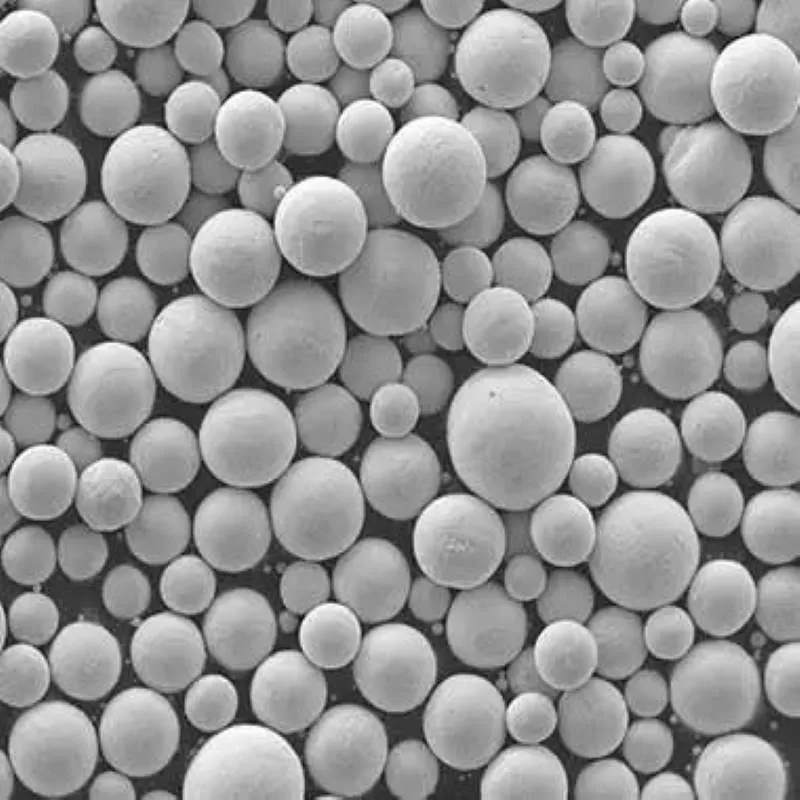
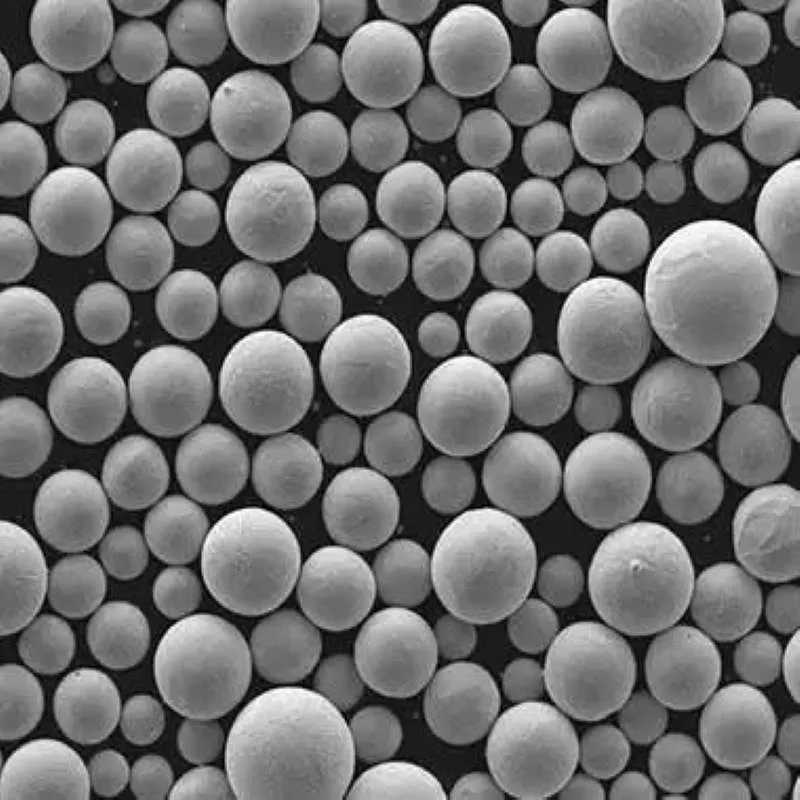
Spherical ASTM A501 Steel Powder
Product Code : SP-CSTI-534-CU
We provide Spherical ASTM A501 Steel Powder,Spherical ASTM A501 Steel Powder is suitable for laser/electron beam augmentation, hot isostatic pressing, laser cladding, hot/cold spraying, and so on. The particles can be irregular and spherical. The particle distribution can reach the nanometer scale.,Spherical Particle Size,0-15μm,,15-45um,15-53μm, 20-63um,45-105um,45-150μm , 50-150um,75-150μm,or customized,Product purity and oxygen content can be customized according to requirements.
Please contact us if you need customized services. We will contact you with the price and availability in 24 hours.
ASTM A501 Steel Spherical Powder Product Information
-:-
For detailed product information, please contact sales.
-:
ASTM A501 Steel Spherical Powder Synonyms
-:-
For detailed product information, please contact sales.
-:
-:-
For detailed product information, please contact sales.
-:
Spherical ASTM A501 Steel Powder characteristics
-:-
For detailed product information, please contact sales.
-:
Spherical ASTM A501 Steel Powder Particle Size
-:-
For detailed product information, please contact sales.
-:
-:-
-:-
0-15μm ,5-25μm, 15-45μm, 15-53μm,20-63um, 45-75μm, 45-105μm, 45-150μm ,75-150μm.
(Various granularities can be customized according to customer requirements)
-:-
For detailed product information, please contact sales.
-:
Spherical ASTM A501 Steel Powder Applicable processes
-:-
For detailed product information, please contact sales.
-:
Laser/electron beam additive manufacturing (SLM/EBM, 3D printing)
Direct laser deposition (DLD)
Used in thermal spray (TSA)
Powder hot isostatic pressing (HIP)
Metal injection molding (MIM)
Powder metallurgy (PM)
Laser cladding (LC), etc.
-:-
For detailed product information, please contact sales.
-:
Spherical ASTM A501 Steel Powder Chemical Composition
-:-
For detailed product information, please contact sales.
-:
-:-
For detailed product information, please contact sales.
-:
ASTM A501 Steel Product Information
-:-
For detailed product information, please contact sales.
-:
# **Product Technical Datasheet: ASTM A501 Hot-Formed Welded & Seamless Carbon Steel Structural Tubing**
## **1. Product Overview**
**ASTM A501** is a **hot-formed welded and seamless carbon steel structural tubing** specification designed for **heavy structural applications** requiring **enhanced dimensional stability, uniform mechanical properties, and improved impact resistance** compared to cold-formed alternatives. The hot-forming process results in stress-relieved material with a more homogeneous microstructure, making it particularly suitable for critical structural members, seismic applications, and environments with low-temperature service requirements.
## **2. Governing International Standards**
- **Primary Standard:** **ASTM A501/A501M** - Standard Specification for Hot-Formed Welded and Seamless Carbon Steel Structural Tubing
- **Key Distinction:** Hot-formed process differentiates it from cold-formed A500 tubing
- **Related Standards:**
- **ASTM A500** - Cold-formed counterpart specification
- **AISC 360** - Specification for Structural Steel Buildings (fully recognizes A501)
- **EN 10210-1/2** - Hot-finished structural hollow sections (European equivalent)
- **CSA G40.20/G40.21** - Canadian structural steel standards
- **JIS G 3466** - Carbon steel square and rectangular tubes
## **3. Chemical Composition**
The composition is balanced for optimal hot-forming characteristics and mechanical properties:
| Element | Maximum (%) | Typical Range (%) | Purpose |
|---------|-------------|-------------------|---------|
| **Carbon (C)** | 0.26 | 0.18-0.23 | Strength and hot-forming process compatibility |
| **Manganese (Mn)** | 1.35 | 0.80-1.20 | Solid solution strengthening, hot workability |
| **Phosphorus (P)** | 0.04 | 0.020-0.035 | Impurity control |
| **Sulfur (S)** | 0.05 | 0.020-0.035 | Impurity control |
| **Copper (Cu)** | 0.20 min* | 0.18-0.25 | Atmospheric corrosion resistance (optional) |
| **Silicon (Si)** | - | 0.15-0.35 | Deoxidizer, strength contributor |
*Note: Copper requirement is optional unless specified for enhanced atmospheric corrosion resistance.
**Hot-Forming Advantages:**
- **Lower Residual Stresses:** Natural stress relief during slow cooling
- **Improved Microstructure:** More uniform grain structure than cold-formed
- **Better Weldability:** Reduced susceptibility to weld cracking
- **Enhanced Toughness:** Particularly at lower temperatures
## **4. Physical & Mechanical Properties**
### **Minimum Mechanical Properties (ASTM A501):**
- **Tensile Strength:** 58 ksi min (400 MPa min)
- **Yield Strength (0.2% Offset):** 36 ksi min (250 MPa min)
- **Elongation in 2" (50 mm):** 23% min
### **Enhanced Properties from Hot-Forming:**
- **Uniform Properties:** Consistent through cross-section and length
- **Improved Impact Toughness:** Typically 20-30% better than cold-formed at low temperatures
- **Reduced Anisotropy:** More isotropic mechanical behavior
- **Better Fatigue Resistance:** Smoother surface and stress-relieved condition
### **Geometric Tolerances (Hot-Formed Advantages):**
- **Thicker Walls Available:** Up to 1.0" (25.4 mm) commonly available
- **Larger Sizes:** Typically up to 24" (600 mm) in square/rectangular sections
- **Consistent Corners:** More uniform corner radii
- **Better Straightness:** Lower residual stresses reduce camber and sweep
### **Physical Constants:**
- **Density:** 0.284 lb/in³ (7.85 g/cm³)
- **Modulus of Elasticity:** 29,000 ksi (200 GPa)
- **Poisson's Ratio:** 0.29
- **Coefficient of Thermal Expansion:** 6.5×10⁻⁶/°F (11.7×10⁻⁶/°C)
## **5. Manufacturing Process**
### **Hot-Forming Production Sequence:**
1. **Billet Preparation:** Continuously cast steel with controlled chemistry
2. **Heating:** Uniform heating above recrystallization temperature (1700-2200°F / 925-1200°C)
3. **Forming:**
- **Seamless:** Rotary piercing and elongation processes
- **Welded:** Hot rolling to strip, then forming and welding at elevated temperature
4. **Sizing:** Hot sizing to final dimensions
5. **Cooling:** Controlled cooling to optimize microstructure
6. **Straightening & Cutting:** Final processing operations
7. **Testing:** Comprehensive quality verification
### **Key Process Advantages:**
- **Stress Relief:** Natural annealing during slow cooling
- **Grain Refinement:** Recrystallization during hot working
- **Surface Quality:** Typically has mill scale, but can be descaled
- **Dimensional Stability:** Less springback than cold-formed products
## **6. Key Characteristics & Performance Advantages**
### **Structural Superiority:**
1. **Enhanced Toughness:** Superior impact resistance, especially at low temperatures
2. **Uniform Properties:** Consistent mechanical behavior in all directions
3. **Reduced Residual Stress:** Minimizes distortion during fabrication
4. **Better Weld Performance:** Reduced HAZ cracking susceptibility
5. **Improved Fatigue Life:** Stress-relieved condition enhances cyclic performance
### **Fabrication Benefits:**
1. **Easier Welding:** Lower preheat requirements than equivalent cold-formed material
2. **Reduced Distortion:** During cutting and welding operations
3. **Better Machinability:** More uniform chip formation
4. **Simplified Straightening:** Less prone to work hardening
### **Design Advantages:**
1. **Heavier Sections Available:** Thicker walls and larger sizes
2. **Predictable Behavior:** More linear stress-strain relationship
3. **Code Acceptance:** Recognized for critical and seismic applications
4. **Long-Term Stability:** Reduced stress relaxation over time
## **7. Typical Applications**
### **Critical Structural Applications:**
- **Seismic-Resistant Structures:** Moment frames, braced frames in high seismic zones
- **Heavy Industrial Structures:** Mill buildings, heavy crane runways
- **Bridge Components:** Primary members in truss and arch bridges
- **Offshore Structures:** Platforms and marine applications
- **Power Generation:** Support structures in power plants
### **Low-Temperature Applications:**
- **Cold Storage Facilities:** Structural members in freezer buildings
- **Arctic Structures:** Infrastructure in extreme cold environments
- **LNG Facilities:** Support structures for liquefied natural gas plants
- **Refrigeration Plants:** Heavy structural components
### **Heavy Construction:**
- **High-Rise Buildings:** Critical columns and transfer structures
- **Long-Span Structures:** Arena roofs, convention centers
- **Industrial Mezzanines:** Heavy-load platforms
- **Mining Structures:** Headframes, processing plant supports
### **Special Applications:**
- **Military Structures:** Blast-resistant designs
- **Nuclear Facilities:** Secondary containment structures
- **Research Facilities:** Where predictable material behavior is critical
- **Historic Renovations:** Matching existing hot-formed sections
## **8. Design Considerations**
### **AISC Design Approach:**
- **Same Design Values as A500 Grade B:** 36 ksi yield strength
- **Enhanced Performance:** Can justify higher design values for specific applications
- **Seismic Design:** Particularly advantageous for ductile detailing requirements
- **Fatigue Design:** Improved performance for cyclic loading
### **Connection Design Advantages:**
- **Reduced Preheat:** For welding thick sections
- **Better Weld Quality:** Lower risk of lamellar tearing
- **Improved Bolt Performance:** More uniform bearing behavior
- **Simplified Details:** Due to more predictable material response
## **9. Fabrication & Welding**
### **Cutting & Preparation:**
- **Thermal Cutting:** Oxy-fuel or plasma cutting with minimal HAZ effects
- **Saw Cutting:** Band saws or cold saws work well
- **Drilling:** Standard practices applicable
- **Surface Preparation:** Mill scale typically removed before painting
### **Welding Procedures:**
- **Lower Preheat:** Typically 50-100°F less than equivalent cold-formed material
- **Filler Metals:** Standard carbon steel electrodes (E70XX series)
- **Process Selection:** All common processes suitable (SMAW, GMAW, FCAW, SAW)
- **Post-Weld Treatment:** Generally not required for stress relief
### **Forming Operations:**
- **Cold Bending:** Possible within reasonable limits
- **Hot Bending:** Can be performed if required
- **Straightening:** Easier than cold-formed material
## **10. Comparison with ASTM A500**
| Property | **ASTM A501** (Hot-Formed) | ASTM A500 (Cold-Formed) |
|----------|---------------------------|-------------------------|
| **Process** | Hot-formed above recrystallization temperature | Cold-formed at room temperature |
| **Yield Strength** | 36 ksi min | 39-50 ksi min (Grades A-C) |
| **Toughness** | **Superior** (better low-temperature impact) | Standard |
| **Residual Stress** | **Lower** (stress-relieved) | Higher |
| **Surface Finish** | Mill scale (typically) | Clean, smooth surface |
| **Size Availability** | **Larger sizes, thicker walls** | Standard commercial sizes |
| **Cost** | Typically 10-20% higher | More economical |
| **Primary Application** | Critical, heavy, seismic applications | General structural applications |
## **11. Quality Control & Testing**
### **Standard Testing:**
- **Chemical Analysis:** Per heat of steel
- **Tensile Testing:** Standard specimen testing
- **Flattening Test:** For welded sections
- **Non-Destructive Testing:** UT or RT as specified
### **Enhanced Testing Options:**
- **Charpy Impact Testing:** Commonly specified for low-temperature applications
- **Ultrasonic Testing:** For thickness verification and defect detection
- **Hardness Testing:** For material verification
- **Macroetch Testing:** For weld and HAZ evaluation
## **12. Corrosion Protection**
### **Surface Conditions:**
- **As-Hot-Formed:** Mill scale surface (can be left intact for some applications)
- **Descaled:** Shot blasted or pickled for painting
- **Primed:** Shop primer often applied
### **Coating Systems:**
- **Painting:** Requires complete scale removal
- **Galvanizing:** Hot-dip galvanizing possible with proper surface preparation
- **Special Coatings:** Epoxy, polyurethane systems applicable
## **13. Economic Considerations**
### **Cost Factors:**
- **Material Cost:** Premium over cold-formed tubing (10-20%)
- **Fabrication Savings:** Potential savings in welding and straightening
- **Design Efficiency:** May allow simpler designs for equivalent performance
- **Life Cycle Cost:** Enhanced durability may justify initial premium
### **Value Proposition:**
1. **Critical Applications:** Where failure consequences are severe
2. **Low-Temperature Service:** Where enhanced toughness is required
3. **Heavy Sections:** Where cold-forming is impractical
4. **Seismic Design:** Where ductile behavior is essential
5. **Predictable Performance:** Where material consistency is paramount
## **14. Global Standards & Equivalents**
### **International Comparisons:**
- **Europe:** **EN 10210** - Direct equivalent for hot-finished sections
- **Japan:** JIS G 3466 (STKR) for hot-formed sections
- **Canada:** CSA G40.21 with specific hot-formed designations
- **Australia:** AS 1163 for structural steel hollow sections
### **Market Position:**
- **Niche Product:** For specific demanding applications
- **Quality Perception:** Viewed as premium structural material
- **Specialist Suppliers:** Limited number of producers
- **Technical Preference:** Often specified by engineers for critical applications
## **15. Technical Recommendations**
### **When to Specify A501:**
1. **Low-Temperature Applications:** Below 40°F (4°C) service temperature
2. **Seismic Zones:** High seismic design categories
3. **Heavy Sections:** Walls > 0.5" (12.7 mm) or sizes > 12" (300 mm)
4. **Critical Connections:** Where weld quality is paramount
5. **Fatigue Applications:** Significant cyclic loading conditions
6. **Historical Matching:** Renovation of existing hot-formed structures
### **Specification Guidelines:**
- **Clearly State:** ASTM A501 (not A500)
- **Specify Testing:** Particularly impact testing if needed
- **Surface Preparation:** Define requirements for coating
- **Tolerances:** Reference appropriate sections of standard
- **Certification:** Require mill test reports
## **16. Limitations & Considerations**
### **Availability Limitations:**
- **Longer Lead Times:** Typically longer than cold-formed products
- **Limited Suppliers:** Fewer mills produce hot-formed structural tubing
- **Size Restrictions:** While larger sizes available, not all sizes in all walls
### **Design Limitations:**
- **Lower Yield Strength:** 36 ksi vs. up to 50 ksi for A500 Grade C
- **Weight Penalty:** May require larger sections for same load capacity
- **Cost Premium:** Must be justified by performance requirements
### **Fabrication Considerations:**
- **Scale Removal:** Additional step if smooth surface required
- **Storage Handling:** Heavier sections require appropriate equipment
- **Cutting Equipment:** May need heavier-duty equipment
## **17. Future Trends**
### **Market Developments:**
- **Increased Seismic Awareness:** Growing specification in earthquake-prone regions
- **Sustainability Focus:** Hot-forming may have different energy profile
- **Digital Integration:** BIM compatibility and digital twins
- **Advanced Steels:** Potential for higher strength hot-formed products
### **Technical Advances:**
- **Process Optimization:** Improved temperature control and forming
- **Quality Enhancement:** Advanced inspection technologies
- **Coating Developments:** Better adhesion to hot-formed surfaces
- **Design Tools:** Improved software integration
## **18. Summary**
**ASTM A501 Hot-Formed Structural Tubing** represents a **premium structural material choice** for applications where **enhanced toughness, uniform properties, and predictable performance** outweigh the cost premium over cold-formed alternatives. The hot-forming process provides inherent advantages in **stress relief, microstructural uniformity, and weldability** that make it particularly suitable for **critical structures, low-temperature applications, and seismic-resistant designs**.
While commanding a **higher price point** and potentially having **longer lead times** than ASTM A500 products, A501 tubing delivers **measurable performance benefits** in demanding applications. Its **superior impact resistance, reduced residual stresses, and better weld performance** justify its specification for structures where material reliability is paramount.
For engineers designing **critical infrastructure, seismic-resistant buildings, or structures in extreme environments**, **ASTM A501 provides a technically superior material solution** that combines proven performance with enhanced fabrication characteristics. Its recognition in major building codes and specialized application history make it a **trusted choice for projects where structural integrity cannot be compromised**.
-:-
For detailed product information, please contact sales.
-:
ASTM A501 Steel Specification
Dimensions
Size:
Diameter 20-1000 mm Length <5906 mm
Size:We can customized as required
Standard:
Per your request or drawing
We can customized as required
Properties(Theoretical)
Chemical Composition
-:-
For detailed product information, please contact sales.
-:
ASTM A501 Steel Properties
-:-
For detailed product information, please contact sales.
-:
Spherical ASTM A501 Steel Powder Particle Size Description
-:-
For detailed product information, please contact sales.
-:
Applications of Spherical ASTM A501 Steel Powder
-:-
For detailed product information, please contact sales.
-:
-:-
For detailed product information, please contact sales.
-:
Applications of ASTM A501 Steel Spherical Powder
-:-
For detailed product information, please contact sales.
-:
Chemical Identifiers ASTM A501 Steel Spherical Powder
-:-
For detailed product information, please contact sales.
-:
Packing of ASTM A501 Steel Spherical Powder
-:-
For detailed product information, please contact sales.
-:
Standard Packing:
-:-
For detailed product information, please contact sales.
-:
Typical bulk packaging includes palletized plastic 5 gallon/25 kg. pails, fiber and Steel Spherical Powder drums to 1 ton super sacks in full container (FCL) or truck load (T/L) quantities. Research and sample quantities and hygroscopic, oxidizing or other air sensitive materials may be packaged under argon or vacuum. Solutions are packaged in polypropylene, plastic or glass jars up to palletized 2377 gallon liquid totes Special package is available on request. E FORUs’ is carefully handled to minimize damage during storage and transportation and to preserve the quality of our products in their original condition