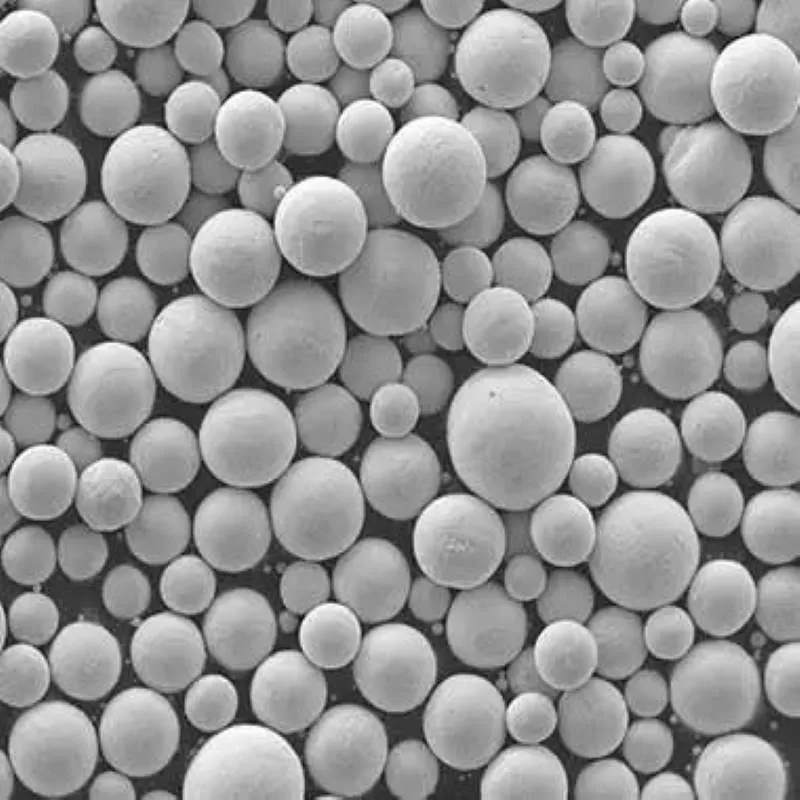
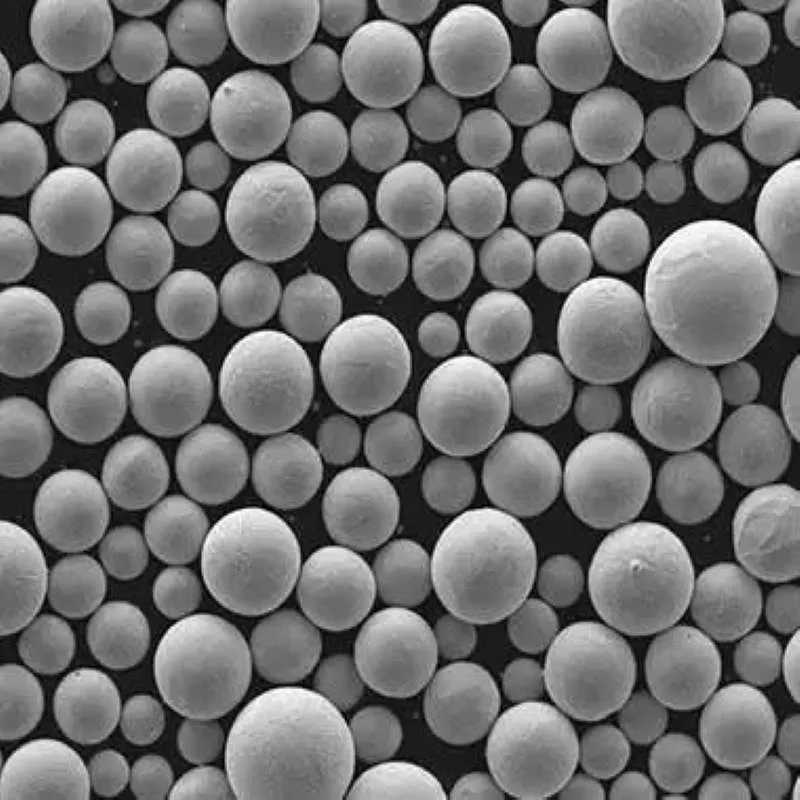
Spherical ASTM A517 Low Alloy Steel Powder, Grade F
Product Code : SP-CSTI-633-CU
We provide Spherical ASTM A517 Low Alloy Steel Powder, Grade F,Spherical ASTM A517 Low Alloy Steel Powder, Grade F is suitable for laser/electron beam augmentation, hot isostatic pressing, laser cladding, hot/cold spraying, and so on. The particles can be irregular and spherical. The particle distribution can reach the nanometer scale.,Spherical Particle Size,0-15μm,,15-45um,15-53μm, 20-63um,45-105um,45-150μm , 50-150um,75-150μm,or customized,Product purity and oxygen content can be customized according to requirements.
Please contact us if you need customized services. We will contact you with the price and availability in 24 hours.
ASTM A517 Low Alloy Steel Spherical Powder, Grade F Product Information
-:-
For detailed product information, please contact sales.
-:
ASTM A517 Low Alloy Steel Spherical Powder, Grade F Synonyms
-:-
For detailed product information, please contact sales.
-:
-:-
For detailed product information, please contact sales.
-:
Spherical ASTM A517 Low Alloy Steel Powder, Grade F characteristics
-:-
For detailed product information, please contact sales.
-:
Spherical ASTM A517 Low Alloy Steel Powder, Grade F Particle Size
-:-
For detailed product information, please contact sales.
-:
-:-
-:-
0-15μm ,5-25μm, 15-45μm, 15-53μm,20-63um, 45-75μm, 45-105μm, 45-150μm ,75-150μm.
(Various granularities can be customized according to customer requirements)
-:-
For detailed product information, please contact sales.
-:
Spherical ASTM A517 Low Alloy Steel Powder, Grade F Applicable processes
-:-
For detailed product information, please contact sales.
-:
Laser/electron beam additive manufacturing (SLM/EBM, 3D printing)
Direct laser deposition (DLD)
Used in thermal spray (TSA)
Powder hot isostatic pressing (HIP)
Metal injection molding (MIM)
Powder metallurgy (PM)
Laser cladding (LC), etc.
-:-
For detailed product information, please contact sales.
-:
Spherical ASTM A517 Low Alloy Steel Powder, Grade F Chemical Composition
-:-
For detailed product information, please contact sales.
-:
-:-
For detailed product information, please contact sales.
-:
ASTM A517 Low Alloy Steel, Grade F Product Information
-:-
For detailed product information, please contact sales.
-:
# **Product Introduction: ASTM A517 Grade F Quenched & Tempered High-Strength Alloy Steel Plate**
**ASTM A517 Grade F** is a **premium high-strength, quenched and tempered (Q&T) alloy steel plate** representing one of the most advanced grades within the A517/A514 family. Offering a minimum yield strength of **100 ksi (690 MPa)**, Grade F is specifically engineered for **maximum toughness and reliability** in the most demanding applications. Characterized by a **specialized, often proprietary chemistry**, this grade is optimized to deliver superior low-temperature impact properties, excellent through-thickness characteristics, and enhanced performance in critical structural and pressure vessel applications where failure is not an option.
---
## **1. Key International Standards & Specifications**
* **Primary Standard:** **ASTM A517/A517M** - Standard Specification for Pressure Vessel Plates, Alloy Steel, High-Strength, Quenched and Tempered
* **Alternative Designation:** **ASTM A514 Grade F** - Essentially identical specification
* **ASME Code Adoption:** **SA-517 Grade F** in ASME Boiler and Pressure Vessel Code, Section II, Part A
* **Industry Terminology:** **"T-1 Type F"** or **"Premium T-1"**
* **Military Specifications:** Often exceeds **MIL-S-23284** requirements
* **International Equivalents:**
* **EN 10025-6:** S690QL1, S690Q (European closest equivalents)
* **ISO 4950-3:** High yield strength flat steel products - Quenched and tempered steels
* **JIS G3124:** SHT690 (Japanese high tensile strength steel)
* **GB/T 16270:** Q690E (Chinese high strength structural steel with enhanced toughness)
---
## **2. Chemical Composition (Weight %)**
**Grade F typically features a specialized chemistry optimized for maximum toughness:**
| Element | Composition Range (%) | Metallurgical Function & Grade F Specifics |
|---------|----------------------|--------------------------------------------|
| Carbon (C) | 0.10-0.20 (often restricted to 0.15-0.18%) | Carefully minimized for maximum toughness and weldability |
| Manganese (Mn) | 0.80-1.20 | Enhanced for hardenability while maintaining toughness |
| Phosphorus (P) | 0.025 max (often ≤0.015%) | Extremely low for superior toughness |
| Sulfur (S) | 0.015 max (often ≤0.010%) | Ultra-low with advanced inclusion shape control |
| Silicon (Si) | 0.15-0.35 | Deoxidizer, controlled for optimal properties |
| Chromium (Cr) | 0.40-0.80 | Balanced for hardenability and tempering resistance |
| Molybdenum (Mo) | 0.20-0.30 | Enhanced for tempering stability and high-temperature strength |
| Vanadium (V) | 0.03-0.08 | Grain refinement, precipitation strengthening |
| **Boron (B)** | **0.001-0.005** | **Critical:** Maximizes hardenability efficiently |
| **Nickel (Ni)** | **0.40-0.80** (often 0.50-0.70%) | **Primary Grade F Feature:** Significantly enhances toughness |
| Copper (Cu) | ≤0.25 (typical) | Minimized to prevent hot shortness |
| **Additional Microalloys:** | **Ti, Nb, or Zr possible** | For grain refinement and precipitation strengthening |
### **Carbon Equivalent Analysis:**
- **IIW Formula:** CE = C + Mn/6 + (Cr+Mo+V)/5 + (Ni+Cu)/15 ≈ **0.50-0.65**
- **Pcm Formula:** C + Si/30 + (Mn+Cu+Cr)/20 + Ni/60 + Mo/15 + V/10 + 5B ≈ **0.22-0.32**
- **Weldability Classification:** Excellent for 100 ksi strength level
### **Key Composition Features (Grade F Distinctives):**
1. **High Nickel Content:** 0.40-0.80% for maximum toughness enhancement
2. **Ultra-Low Impurities:** Exceptionally low P and S for superior cleanliness
3. **Controlled Carbon:** Often restricted to lower range for optimal toughness
4. **Advanced Microalloying:** May include Ti, Nb for grain refinement
5. **Clean Steel Technology:** Often vacuum degassed or ESR refined
### **Grade F vs. Other Grades Composition Comparison:**
| Element | Grade F | Grade E | Grade B | Grade F Advantage |
|---------|---------|---------|---------|-------------------|
| **Nickel** | 0.40-0.80% | 0.25-0.50% | 0.20-0.40% | Highest for maximum toughness |
| **Phosphorus** | ≤0.025% (often ≤0.015%) | ≤0.035% | ≤0.035% | Ultra-low for fracture resistance |
| **Sulfur** | ≤0.015% (often ≤0.010%) | ≤0.040% | ≤0.040% | Minimized inclusions |
| **Primary Focus** | Maximum toughness | Enhanced toughness | Improved toughness | Premium toughness properties |
### **Metallurgical Philosophy of Grade F:**
1. **Toughness Maximization:** High nickel + ultra-clean steel for best fracture resistance
2. **Weldability Optimization:** Controlled chemistry despite high alloying
3. **Processing Precision:** Chemistry supports consistent, high-quality heat treatment
4. **Property Excellence:** Targets the best combination of strength, toughness, reliability
---
## **3. Mechanical & Physical Properties**
### **Minimum Mechanical Properties (Up to 2.5 in / 63.5 mm thick):**
- **Tensile Strength:** **760-895 MPa** (110,000-130,000 psi)
- **Yield Strength (0.2% offset):** **690 MPa minimum** (100,000 psi minimum)
- **Elongation in 2 in. (50 mm):** **16% minimum** (typically 18-22%)
- **Reduction of Area:** Typically 50-65% (superior to other grades)
- **Hardness Range:** 235-293 HB (Brinell)
### **Exceptional Impact Toughness (Grade F Hallmark):**
- **Charpy V-Notch Testing:** Mandatory with stringent requirements
- **Standard Test Temperature:** **-40°C (-40°F) or lower** commonly specified
- **Minimum Absorbed Energy:** **40 J (30 ft-lb)** minimum average often required
- **Individual Specimens:** Typically no single value < 34 J (25 ft-lb)
- **Ultra-Low Temperature Capability:** Can be specified to **-73°C (-100°F)** with proper testing
### **Thickness-Dependent Properties:**
| Thickness Range | Minimum Yield Strength | Toughness Performance | Grade F Superiority |
|-----------------|------------------------|-----------------------|---------------------|
| ≤ 1.5 in (38 mm) | 690 MPa (100 ksi) | Exceptional at -40°C or lower | Best in class low-temperature toughness |
| 1.5-2.5 in (38-63.5 mm) | 690 MPa (100 ksi) | Excellent at -40°C | Maintains toughness in moderate thickness |
| 2.5-4.0 in (63.5-102 mm) | 620 MPa (90 ksi) | Very good with proper processing | Superior to other grades in thick sections |
| > 4.0 in (>102 mm) | Consult manufacturer | Special processing available | Enhanced capability for critical applications |
### **Physical Properties:**
| Property | Value | Notes |
|----------|-------|-------|
| Density | 7.85 g/cm³ (0.284 lb/in³) | Similar to other steels |
| Modulus of Elasticity | 200 GPa (29×10⁶ psi) | Room temperature |
| Shear Modulus | 77 GPa (11.2×10⁶ psi) | Room temperature |
| Poisson's Ratio | 0.29 | - |
| Coefficient of Thermal Expansion | 11.8×10⁻⁶/°C | 20-100°C |
| Thermal Conductivity | 39-43 W/m·K | 100°C (lower due to higher alloying) |
| Specific Heat | 470-490 J/kg·K | 100°C |
| Electrical Resistivity | 0.28-0.34 μΩ·m | Room temperature |
### **Grade F Specific Property Characteristics:**
1. **Superior Toughness:** Best-in-class impact properties at low temperatures
2. **Excellent Fracture Resistance:** High fracture toughness (KIC) values
3. **Outstanding Low-Temperature Performance:** Maintains ductility at extreme cold
4. **Enhanced Fatigue Resistance:** Superior to other 100 ksi grades
5. **Exceptional HAZ Properties:** Heat-affected zone maintains excellent toughness
6. **Through-Thickness Consistency:** Minimal property gradient in thick sections
---
## **4. Heat Treatment & Microstructure**
### **Precision Heat Treatment:**
1. **Austenitizing:** 900-955°C (1650-1750°F) with exacting control
2. **Quenching:** Accelerated, uniform cooling (advanced polymer or water quench)
3. **Tempering:** 595-690°C (1100-1275°F) - optimized for maximum toughness
4. **Cooling:** Controlled cooling after tempering
### **Grade F Processing Excellence:**
- **Advanced Quenching:** Often uses specialized systems for uniform cooling
- **Precise Temperature Control:** Critical for achieving optimal properties
- **Extended Tempering:** May use longer times at optimal temperatures
- **Quality Monitoring:** Extensive in-process controls
### **Microstructural Characteristics:**
- **Primary Phase:** Fine tempered martensite/lower bainite
- **Carbide Distribution:** Ultra-fine, uniformly dispersed alloy carbides
- **Grain Size:** ASTM 8 or finer (≤11 μm prior austenite grain size)
- **Prior Austenite Grain:** Exceptionally fine and uniform
- **Microcleanliness:** Extremely clean with minimal inclusions (ASTM E45 ratings typically ≤1.0)
### **Through-Thickness Properties:**
- **Exceptional Hardenability:** Nickel + boron + optimized processing
- **Property Uniformity:** Minimal variation from surface to center
- **Thick Section Excellence:** Maintains properties in challenging thicknesses
---
## **5. Key Characteristics & Advantages**
### **Exceptional Toughness (Primary Advantage):**
- **Best-in-Class Impact Properties:** Superior Charpy values at low temperatures
- **Extremely Low Transition Temperature:** Minimal ductile-brittle transition
- **Outstanding Fracture Resistance:** Excellent resistance to crack initiation and propagation
- **Consistent Toughness:** Reliable across production with minimal variation
### **Strength & Reliability Excellence:**
- **100 ksi Yield Strength:** High strength for weight-efficient designs
- **Superior Weldability:** Optimized for welding despite high alloying
- **Excellent HAZ Properties:** Heat-affected zone maintains near-base metal toughness
- **Proven Reliability:** Extensive history in most demanding applications
### **Grade F Specific Advantages:**
1. **Maximum Toughness:** Best available in 100 ksi quenched and tempered steels
2. **Extreme Low-Temperature Capability:** Suitable for arctic and cryogenic applications
3. **Enhanced Fatigue Performance:** Superior to other high-strength grades
4. **Exceptional Cleanliness:** Ultra-low impurities for maximum reliability
5. **Premium Quality:** Represents the highest standard in this steel class
### **Performance & Economic Benefits:**
- **Risk Reduction:** Lowest probability of failure in critical applications
- **Lifecycle Advantages:** Potential for extended service life and reduced maintenance
- **Design Efficiency:** Enables more aggressive designs with confidence
- **Insurance Benefits:** Often results in most favorable insurance terms
### **Applications Justifying Grade F Premium:**
1. **Critical Safety Applications:** Where failure would have catastrophic consequences
2. **Extreme Low-Temperature Service:** Arctic, cryogenic, or deep space applications
3. **Dynamic Impact Loading:** Where shock resistance is paramount
4. **Fatigue-Critical Structures:** Where extended fatigue life is essential
5. **Thick Section Critical Components:** Where through-thickness properties are vital
---
## **6. Product Applications**
### **Ultra-Critical Construction & Mining:**
- **Super-Heavy Lift Crane Components:** Critical boom sections for maximum loads
- **Mega-Excavator Structural Members:** Arms and booms for largest equipment
- **Critical Mining Shovel Components:** Where failure would cause catastrophic downtime
- **Drilling Rig Structural Elements:** For extreme environments and loads
### **Extreme Environment Applications:**
- **Arctic Construction Equipment:** Operating regularly below -40°C (-40°F)
- **Polar Research Infrastructure:** Structures in Antarctica and Arctic regions
- **Cryogenic Facility Structures:** Support elements for LNG and other cryogenics
- **Space Launch Infrastructure:** Ground support equipment in cold climates
### **Energy & Power Generation:**
- **Critical Wind Turbine Components:** For arctic installations
- **Nuclear Power Plant Structures:** Safety-related components
- **Hydroelectric Critical Elements:** Gates and supports in extreme cold
- **Oil & Gas Arctic Infrastructure:** Platforms and equipment for polar regions
### **Transportation & Heavy Equipment:**
- **Critical Railway Components:** For heavy haul in extreme climates
- **Specialized Transport Frames:** For oversized loads in challenging conditions
- **Aircraft Carrier Equipment:** Critical handling and support structures
- **Heavy Haul Truck Frames:** For most severe service conditions
### **Defense & Aerospace:**
- **Military Arctic Vehicles:** Structural components for extreme cold operation
- **Missile Launch Systems:** Ground support equipment
- **Space Vehicle Support:** Structures for launch and recovery
- **Critical Defense Infrastructure:** Where reliability is paramount
### **Pressure Vessels for Extreme Service:**
- **Cryogenic Storage Vessels:** For LNG, liquid hydrogen, etc.
- **High-Pressure Arctic Service:** Vessels operating in extreme cold
- **Critical Process Equipment:** Where failure would have severe consequences
- **Nuclear Applications:** Where materials must meet highest standards
---
## **7. Fabrication Guidelines**
### **Welding Procedures (Exacting Requirements):**
#### **Preheat Requirements:**
| Thickness Range | Minimum Preheat | Recommended Range | Grade F Criticality |
|-----------------|-----------------|-------------------|---------------------|
| ≤ ¾ in (19 mm) | 150°C (300°F) | 175-225°C (350-440°F) | Essential for HAZ toughness |
| ¾ to 1½ in (19-38 mm) | 175°C (350°F) | 200-250°C (400-480°F) | Critical for property retention |
| 1½ to 2½ in (38-63.5 mm) | 200°C (400°F) | 225-275°C (440-530°F) | Must maintain to preserve toughness |
| > 2½ in (>63.5 mm) | 225°C (440°F) | 250-300°C (480-570°F) | Highest level of control required |
#### **Interpass Temperature Control:**
- **Maximum Interpass:** 250°C (480°F)
- **Optimal Range:** 175-225°C (350-440°F) for best toughness
- **Precision Monitoring:** Continuous with data logging often required
#### **Filler Metal Selection:**
- **SMAW:** E8018-C3, E9018-G, or specialty high-nickel electrodes
- **FCAW:** E81T1-Ni2, E91T1-K3 for maximum toughness
- **SAW:** F9A0-EA2-A2, specialty high-toughness fluxes and wires
- **GMAW:** ER80S-Ni2, ER90S-G for optimal property matching
- **Special Considerations:** Often require WPS qualification with actual material
#### **Post-Weld Heat Treatment:**
- **Often Recommended:** Even for moderate thicknesses to ensure optimal properties
- **Temperature Range:** 595-650°C (1100-1200°F)
- **Soaking Time:** 1-2 hours per inch of thickness
- **Critical Control:** Must not exceed original tempering temperature
### **Cutting & Machining:**
- **Laser or Plasma Cutting:** Preferred for minimal HAZ
- **Precision Requirements:** Often require specialized procedures
- **Machining:** Carbide tools with optimized parameters
- **Quality Control:** Extensive inspection of cut edges
### **Forming Operations:**
- **Hot Forming:** Strongly recommended at 870-925°C (1600-1700°F)
- **Post-Forming Treatment:** Often required to restore properties
- **Precision Control:** Temperature monitoring essential
- **Specialized Tooling:** May be required for complex shapes
### **Quality Assurance in Fabrication:**
- **Extensive NDT:** UT, MT, PT often required at multiple stages
- **Procedure Qualification:** Rigorous testing of all procedures
- **Documentation:** Comprehensive records of all fabrication steps
- **Third-Party Inspection:** Common for critical applications
---
## **8. Design Considerations**
### **Structural Design Excellence:**
- **Allowable Stresses:** Typically 0.60 × yield strength (414 MPa / 60 ksi)
- **Fatigue Design:** Enhanced factors possible due to superior toughness
- **Fracture Mechanics:** Can utilize advanced fracture mechanics approaches
- **Connection Design:** Requires specialized detailing for optimal performance
### **Temperature Design Limits:**
- **Minimum Design Temperature:** Can be as low as **-73°C (-100°F)** with proper testing
- **Standard MDMT:** -40°F to -100°F (-40°C to -73°C) range achievable
- **Maximum Service Temperature:** ~400°C (750°F) for intermittent service
- **For Extreme Conditions:** Extensive testing and qualification typically required
### **Fracture Mechanics Advantages:**
- **Highest Fracture Toughness:** Best KIC and CTOD values in class
- **Minimal Transition Temperature:** Very low ductile-brittle transition
- **Superior Crack Arrest:** Excellent resistance to crack propagation
- **Optimal Fatigue Performance:** Slowest crack growth rates
### **Grade F Selection Justification:**
1. **Safety-Critical Applications:** Where consequences of failure are catastrophic
2. **Extreme Environment Service:** Arctic, cryogenic, or space applications
3. **Maximum Reliability Requirements:** Nuclear, defense, or critical infrastructure
4. **Regulatory Mandates:** Where codes specify highest material standards
5. **Lifecycle Cost Optimization:** Where extended life justifies initial premium
### **Economic Analysis for Grade F:**
- **Highest Initial Cost:** Premium over other grades (20-40% typical)
- **Lifecycle Value:** Often provides best total cost of ownership
- **Risk Mitigation:** Lowest probability of failure-related costs
- **Insurance Optimization:** Most favorable insurance terms available
- **Operational Benefits:** Reduced inspection and maintenance requirements
---
## **9. Comparison with Other Grades**
### **Grade F vs. Grade E:**
| Parameter | Grade F | Grade E | Grade F Advantages |
|-----------|---------|---------|-------------------|
| **Nickel Content** | 0.40-0.80% | 0.25-0.50% | Higher for maximum toughness |
| **Impurity Control** | P≤0.025%, S≤0.015% | P≤0.035%, S≤0.040% | Significantly cleaner |
| **Low-Temp Toughness** | Exceptional | Excellent | Best available in class |
| **Typical Impact Test Temp** | -40°C to -73°C | -29°C to -60°C | Lower temperature capability |
| **Applications** | Ultra-critical | Critical | Grade F for most extreme demands |
### **Grade F vs. European S690QL1:**
| Aspect | A517 Grade F | S690QL1 (EN 10025-6) | Comparison |
|--------|--------------|----------------------|------------|
| **Yield Strength** | 690 MPa | 690 MPa | Same |
| **Toughness Temperature** | -40°C to -73°C typical | -60°C standard | Grade F can exceed |
| **Chemistry Approach** | High Ni with ultra-clean steel | Multi-microalloy approach | Different but both premium |
| **Quality Standards** | ASTM with premium requirements | EN with specific grades | Both represent highest standards |
| **Global Acceptance** | North American premium | European premium | Both internationally respected |
### **Grade F vs. A517 Other Grades:**
| Consideration | Grade F | Other Grades (A-E) | Grade F Superiority |
|---------------|---------|-------------------|-------------------|
| **Toughness** | Maximum | Good to Excellent | Clearly superior |
| **Cleanliness** | Ultra-clean | Standard to Enhanced | Best impurity control |
| **Low-Temp Capability** | Extreme | Moderate to Good | Best for arctic/cryogenic |
| **Cost** | Highest premium | Moderate to High | Most expensive |
| **Applications** | Most critical | General to Critical | Grade F for ultimate reliability |
### **Grade F vs. 9% Nickel Steel:**
| Factor | A517 Grade F | 9% Nickel Steel | Application Guidance |
|--------|--------------|-----------------|---------------------|
| **Yield Strength** | 690 MPa (100 ksi) | 585 MPa (85 ksi) typical | Grade F stronger |
| **Low-Temp Capability** | To -73°C (-100°F) | To -196°C (-321°F) | 9%Ni better for cryogenic |
| **Cost** | High | Very High | 9%Ni more expensive |
| **Weldability** | Good with procedures | Requires special procedures | Grade F more weldable |
| **Best For** | Structural to -73°C | Cryogenic to -196°C | Temperature requirement dictates |
---
## **10. Quality Control & Certification**
### **Premium Testing Requirements:**
| Test | Method | Grade F Requirements | Frequency & Notes |
|------|--------|----------------------|-------------------|
| **Chemical Analysis** | ASTM E415 | Full with ultra-low P/S verification | Per heat with product confirmation |
| **Tensile Testing** | ASTM A370 | Longitudinal, transverse, and through-thickness | Per heat treatment charge |
| **Charpy V-Notch** | ASTM A370 | Multiple temperatures, often -40°C to -73°C | Per heat treatment charge |
| **Drop-Weight Test** | ASTM E208 | Often required for critical applications | As specified |
| **CTOD Testing** | BS 7448 or ASTM E1820 | For fracture mechanics qualification | For critical applications |
| **Ultrasonic Testing** | ASTM A578 Level 1 or 2 | 100% for all material | All plates |
| **Macro/Micro Examination** | ASTM E381/E45 | Inclusion rating and microstructure | Per heat or as specified |
### **Special Requirements for Grade F:**
1. **Ultra-Low Impurity Verification:** Must confirm P≤0.025%, S≤0.015%
2. **Nickel Content Assurance:** Precise 0.40-0.80% verification
3. **Advanced Impact Testing:** Multiple temperatures including very low
4. **Fracture Mechanics Testing:** Often CTOD or similar for critical apps
5. **Comprehensive NDT:** UT, MT, PT as specified
### **Certification & Documentation:**
- **Premium MTC:** Comprehensive with all test results and heat treatment curves
- **Heat Treatment Records:** Complete time-temperature documentation with charts
- **Impact Test Reports:** Full Charpy data at multiple temperatures
- **NDT Reports:** Complete ultrasonic and other NDT documentation
- **Traceability:** Complete from melt to finished plate with full audit trail
- **Third-Party Certification:** Almost always required for critical applications
### **Industry Acceptance & Qualifications:**
- **ASME Code:** Fully approved, often with additional qualifications
- **Nuclear Qualifications:** Can meet ASME III requirements with proper documentation
- **Defense Standards:** Meets or exceeds MIL specifications
- **Major Energy Companies:** Subject to rigorous qualification processes
- **International Projects:** Requires extensive documentation for global acceptance
### **Special Certifications Often Required:**
1. **ASME NPT Stamp:** For nuclear applications
2. **CE Marking:** For European projects
3. **Specific Customer Qualifications:** For major energy companies
4. **Project-Specific Certifications:** For major infrastructure projects
---
**Technical Summary:** ASTM A517 Grade F represents the pinnacle of 100 ksi yield strength quenched and tempered alloy steel technology, offering maximum toughness, exceptional low-temperature performance, and premium reliability for the most demanding applications. Characterized by high nickel content (0.40-0.80%), ultra-low impurities, and specialized processing, Grade F delivers best-in-class fracture resistance while maintaining excellent strength and weldability. This premium material justifies its significant cost premium through superior performance in safety-critical applications, extreme environments, and situations where failure consequences would be catastrophic. Grade F finds its optimal application in arctic infrastructure, cryogenic support structures, critical defense components, nuclear applications, and other situations where material reliability is paramount. The selection of Grade F represents a commitment to maximum safety, extended service life, and optimal total cost of ownership rather than merely initial cost savings. Proper specification requires careful definition of testing requirements, particularly for low-temperature impact properties, and comprehensive documentation of material pedigree and processing history. For engineers and designers facing the most challenging material selection decisions, Grade F offers a proven, premium solution that has demonstrated reliability in the world's most demanding applications over decades of service.
-:-
For detailed product information, please contact sales.
-:
ASTM A517 Low Alloy Steel, Grade F Specification
Dimensions
Size:
Diameter 20-1000 mm Length <6028 mm
Size:We can customized as required
Standard:
Per your request or drawing
We can customized as required
Properties(Theoretical)
Chemical Composition
-:-
For detailed product information, please contact sales.
-:
ASTM A517 Low Alloy Steel, Grade F Properties
-:-
For detailed product information, please contact sales.
-:
Spherical ASTM A517 Low Alloy Steel Powder, Grade F Particle Size Description
-:-
For detailed product information, please contact sales.
-:
Applications of Spherical ASTM A517 Low Alloy Steel Powder, Grade F
-:-
For detailed product information, please contact sales.
-:
-:-
For detailed product information, please contact sales.
-:
Applications of ASTM A517 Low Alloy Steel Spherical Powder, Grade F
-:-
For detailed product information, please contact sales.
-:
Chemical Identifiers ASTM A517 Low Alloy Steel Spherical Powder, Grade F
-:-
For detailed product information, please contact sales.
-:
Packing of ASTM A517 Low Alloy Steel Spherical Powder, Grade F
-:-
For detailed product information, please contact sales.
-:
Standard Packing:
-:-
For detailed product information, please contact sales.
-:
Typical bulk packaging includes palletized plastic 5 gallon/25 kg. pails, fiber and Steel Spherical Powder drums to 1 ton super sacks in full container (FCL) or truck load (T/L) quantities. Research and sample quantities and hygroscopic, oxidizing or other air sensitive materials may be packaged under argon or vacuum. Solutions are packaged in polypropylene, plastic or glass jars up to palletized 2499 gallon liquid totes Special package is available on request. E FORUs’ is carefully handled to minimize damage during storage and transportation and to preserve the quality of our products in their original condition