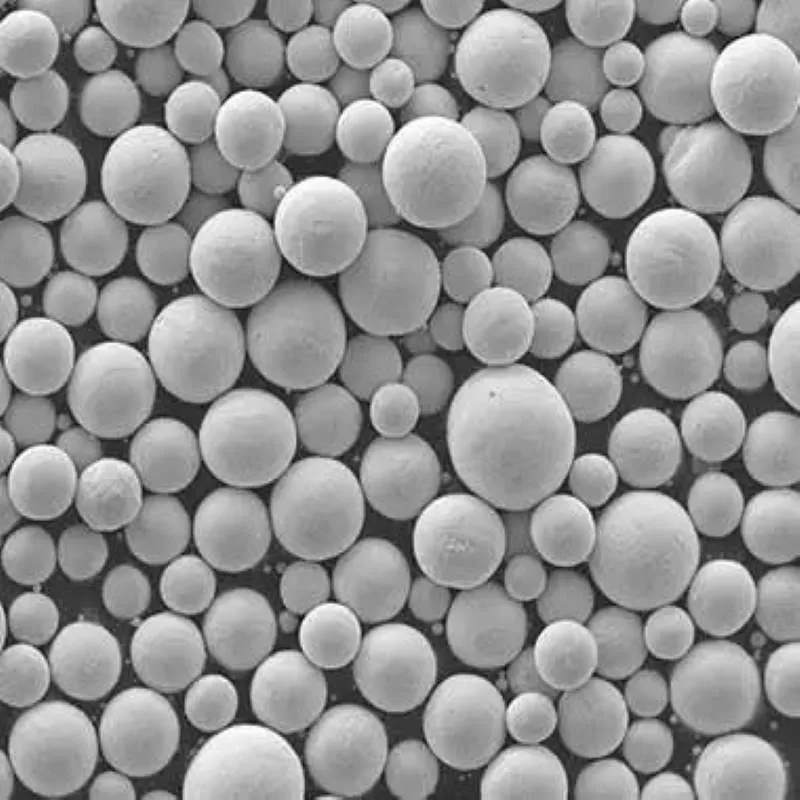
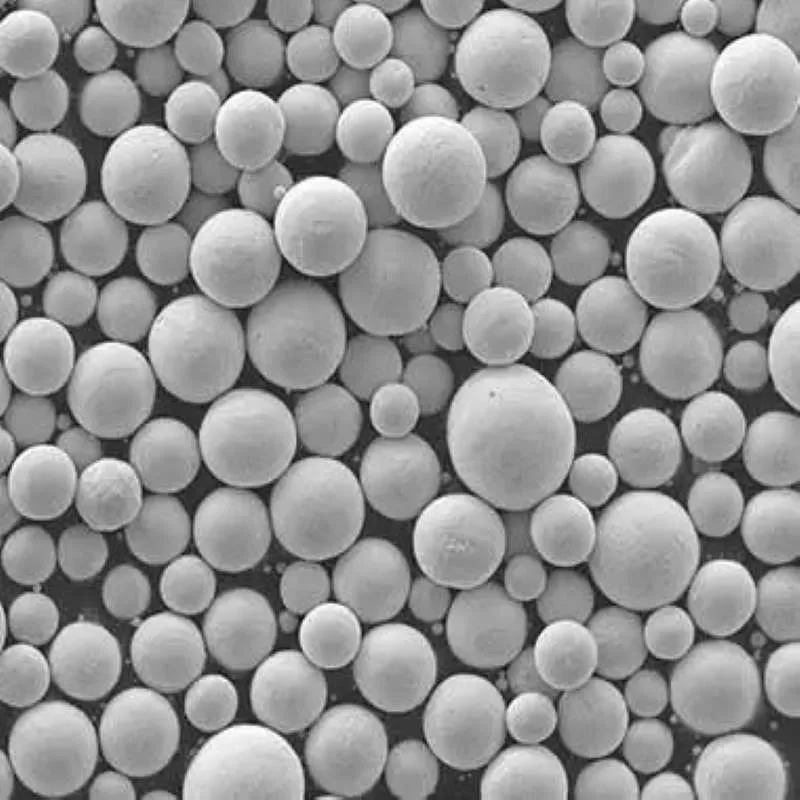
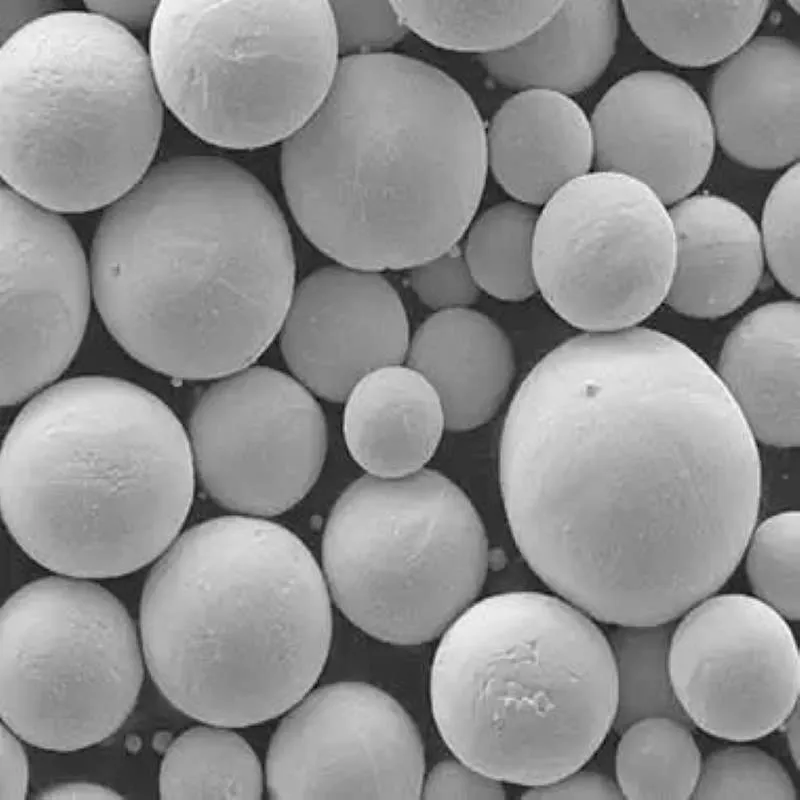
Spherical Latrobe Graph-Mo® Cold Work Tool Steel Powder (ASTM O6)
Product Code : SP-GSTI-500-CU
We provide Spherical Latrobe Graph-Mo® Cold Work Tool Steel Powder (ASTM O6),Spherical Latrobe Graph-Mo® Cold Work Tool Steel Powder (ASTM O6) is suitable for laser/electron beam augmentation, hot isostatic pressing, laser cladding, hot/cold spraying, and so on. The particles can be irregular and spherical. The particle distribution can reach the nanometer scale.,Spherical Particle Size,0-15μm,,15-45um,15-53μm, 20-63um,45-105um,45-150μm , 50-150um,75-150μm,or customized,Product purity and oxygen content can be customized according to requirements.
Please contact us if you need customized services. We will contact you with the price and availability in 24 hours.
Latrobe Graph-Mo® Cold Work Tool Steel Spherical Powder (ASTM O6) Product Information
-:-
For detailed product information, please contact sales.
-:
Latrobe Graph-Mo® Cold Work Tool Steel Spherical Powder (ASTM O6) Synonyms
-:-
For detailed product information, please contact sales.
-:
-:-
For detailed product information, please contact sales.
-:
Spherical Latrobe Graph-Mo® Cold Work Tool Steel Powder (ASTM O6) characteristics
-:-
For detailed product information, please contact sales.
-:
Spherical Latrobe Graph-Mo® Cold Work Tool Steel Powder (ASTM O6) Particle Size
-:-
For detailed product information, please contact sales.
-:
-:-
-:-
0-15μm ,5-25μm, 15-45μm, 15-53μm,20-63um, 45-75μm, 45-105μm, 45-150μm ,75-150μm.
(Various granularities can be customized according to customer requirements)
-:-
For detailed product information, please contact sales.
-:
Spherical Latrobe Graph-Mo® Cold Work Tool Steel Powder (ASTM O6) Applicable processes
-:-
For detailed product information, please contact sales.
-:
Laser/electron beam additive manufacturing (SLM/EBM, 3D printing)
Direct laser deposition (DLD)
Used in thermal spray (TSA)
Powder hot isostatic pressing (HIP)
Metal injection molding (MIM)
Powder metallurgy (PM)
Laser cladding (LC), etc.
-:-
For detailed product information, please contact sales.
-:
Spherical Latrobe Graph-Mo® Cold Work Tool Steel Powder (ASTM O6) Chemical Composition
-:-
For detailed product information, please contact sales.
-:
-:-
For detailed product information, please contact sales.
-:
Latrobe Graph-Mo® Cold Work Tool Steel (ASTM O6) Product Information
-:-
For detailed product information, please contact sales.
-:
# **Product Introduction: Latrobe Graph-Mo® Graphitic Cold Work Tool Steel (ASTM O6)**
**Latrobe Graph-Mo®** is a unique, **oil-hardening graphitic tool steel** classified under ASTM A681 Grade O6. This distinctive material combines the machinability of free-machining steels with the wear resistance and heat treatability of tool steels. Its defining characteristic is the presence of **graphite particles uniformly distributed throughout its microstructure**, which provide built-in lubrication, exceptional machining characteristics, and reduced galling tendencies. Graph-Mo® represents a specialized solution for applications requiring complex machining, superior surface finish, and resistance to material pickup.
Unlike conventional tool steels, Graph-Mo® offers **exceptional machinability (approaching that of free-machining steels) while achieving tool steel hardness levels** after heat treatment. This unique combination makes it particularly valuable for intricate tooling that would be expensive or difficult to produce from standard tool steels.
---
## **1. Chemical Composition**
Graph-Mo® features a unique composition designed to promote graphite formation while maintaining hardenability:
| Element | Content (%) | Function |
| :--- | :--- | :--- |
| Carbon (C) | 1.30 - 1.50 | Provides matrix hardness and promotes graphite formation |
| Manganese (Mn) | 0.30 - 1.00 | Controls graphite formation, improves hardenability |
| Silicon (Si) | 0.55 - 1.50 | Promotes graphitization, deoxidizer |
| Molybdenum (Mo) | 0.20 - 0.30 | Enhances hardenability and tempering resistance |
| Nickel (Ni) | 0.30 max | Improves toughness |
| **Graphite (C)** | 0.60 - 0.90 | *In nodular form* - Provides lubrication, improves machinability |
| **Balance** | Iron (Fe) | |
*(Note: The presence of free graphite is the defining characteristic. Composition conforms to ASTM A681 Grade O6 specifications)*
---
## **2. Physical & Mechanical Properties**
### **Annealed Condition Properties:**
- **Hardness:** 183 - 229 HB (Brinell)
- **Machinability:** **Excellent** (85-95% of 1212 free-machining steel standard)
- **Surface Finish:** Exceptionally smooth achievable (often < 32 μin Ra)
- **Thermal Conductivity:** 36.0 W/m·K at 20°C (higher than conventional tool steels)
- **Coefficient of Thermal Expansion:** 12.5 × 10⁻⁶/°C (20-100°C)
### **Heat Treatment Characteristics:**
- **Hardening Method:** Oil quenching
- **Austenitizing Temperature:** 790°C - 815°C (1450°F - 1500°F)
- **Preheating:** 650°C (1200°F) recommended
- **Quenching Medium:** Fast oil at 40-60°C (100-140°F)
- **Tempering Range:** 150°C - 260°C (300°F - 500°F)
- **Special Consideration:** The graphite structure remains stable through heat treatment
### **Hardened & Tempered Properties:**
- **Typical Hardness Range:** **58 - 62 HRC** (Rockwell C)
- **Transverse Rupture Strength:** 2,000 - 2,400 MPa (lower than non-graphitic grades)
- **Compressive Strength:** 2,200 - 2,600 MPa
- **Charpy Impact Value:** 10 - 15 J (lower due to graphite content)
- **Key Characteristics:**
- **Self-Lubricating:** Graphite particles reduce friction and prevent galling
- **Minimal Tool Wear:** During machining of Graph-Mo® itself
- **Chip Control:** Produces short, broken chips during machining
- **Reduced Distortion:** Typically 0.05-0.08% during heat treatment
---
## **3. International Standards & Cross-Reference**
| Country/Region | Standard | Designation |
| :--- | :--- | :--- |
| **United States** | ASTM A681 | Grade O6 |
| | AISI | O6 |
| | UNS | T31506 |
| **Germany** | DIN 17350 | 1.2326 |
| **Japan** | JIS G4404 | - |
| **United Kingdom** | BS 4659 | BO6 |
| **International** | Proprietary | *No exact equivalent* |
*(Note: Graph-Mo® is a proprietary grade with unique characteristics. While classified as O6, its performance differs significantly from conventional tool steels)*
---
## **4. Product Applications**
### **Primary Applications (Machining Advantages):**
- **Intricate Dies and Molds:** Where complex machining would be difficult with conventional tool steels
- **Thread Rolling Dies:** Excellent for non-ferrous materials due to anti-galling properties
- **Forming Rolls and Draw Dies:** Particularly for aluminum, copper, and soft steels
- **Knurling Tools:** Superior performance due to reduced material pickup
### **Wear Applications:**
- **Bushings and Bearings:** For low-speed applications where lubrication is difficult
- **Wear Plates:** In dry or marginally lubricated conditions
- **Guides and Slides:** Where galling is a concern
- **Punches:** For non-ferrous materials and plastics
### **Specialized Uses:**
- **Plastic Injection Molds:** For abrasive filled plastics (graphite acts as solid lubricant)
- **Glass Molding Tools:** Reduced sticking of glass to tool surface
- **Master Hobs and Gear Cutters:** For prototype and short-run production
- **Tool Holders and Fixtures:** Requiring precision machining
### **Limitations (NOT Recommended for):**
- High-impact applications
- Heavy blanking of hardened materials
- Applications requiring maximum toughness
- High-temperature service (>250°C/480°F)
---
## **5. Processing Guidelines**
### **Machining (Annealed State):**
- **Turning Speed:** 60-90 m/min (200-300 ft/min) - **Exceptional for tool steel**
- **Feed Rate:** 0.15-0.30 mm/rev (0.006-0.012 in/rev)
- **Tool Material:** High-speed steel (optimal) or carbide
- **Surface Finish:** Can achieve < 1.6 μm (63 μin) without grinding
- **Chip Formation:** Short, easily broken chips - minimal stringing
### **Heat Treatment Procedure:**
1. **Preheating:** 650°C (1200°F) for 20-30 minutes per inch
2. **Austenitizing:** 800°C (1475°F) for 15-25 minutes per inch
3. **Quenching:** Agitated oil at 50-70°C (120-160°F)
4. **Tempering:** Immediately after quenching to 175-205°C (350-400°F) for 2+2 hours
5. **Note:** The graphite structure remains unaffected by heat treatment
### **Grinding:**
- **Wheel Loading:** May occur due to graphite - use open-structure wheels
- **Wheel Selection:** Aluminum oxide, soft grade (G-H hardness)
- **Coolant:** Use water-soluble coolants (graphite can contaminate oil-based systems)
- **Surface Finish:** Excellent polish achievable due to graphite content
### **Special Considerations:**
- **EDM Machining:** Excellent performance, good surface finish
- **Polishing:** Can achieve mirror finishes with proper techniques
- **Joining:** Can be welded with proper procedures (preheat to 315°C/600°F)
- **Stress Relieving:** 540°C (1000°F) for 2 hours, furnace cool
---
## **6. Performance Comparison**
### **vs. Conventional Tool Steels:**
- **Machinability:** 3-4 times better than O1, 5-6 times better than D2
- **Surface Finish:** Superior as-machined finish
- **Tool Life:** 5-10 times longer when machining Graph-Mo® vs. conventional tool steels
- **Wear Resistance:** Moderate (less than D2, comparable to O1)
- **Toughness:** Lower than conventional tool steels at same hardness
### **vs. Free-Machining Steels:**
- **Hardness:** Can be hardened to 60+ HRC vs. 30 HRC maximum
- **Wear Resistance:** 5-10 times better
- **Dimensional Stability:** Much better during heat treatment
- **Cost:** Higher initial cost, but better performance
---
## **7. Technical Advantages**
### **Unique Benefits:**
1. **Reduced Manufacturing Costs:**
- Faster machining cycles
- Longer tool life during machining
- Reduced secondary operations (less grinding/polishing required)
2. **Improved Performance:**
- Reduced friction in service
- Less material pickup on forming tools
- Better surface finish on worked materials
3. **Design Flexibility:**
- Allows more complex geometries
- Enables thinner sections without machining difficulty
- Suitable for prototypes and short runs
### **Economic Considerations:**
- **Material Cost:** 20-30% higher than O1
- **Machining Cost:** 40-60% lower than conventional tool steels
- **Tooling Cost:** Reduced due to longer tool life
- **Lead Time:** Shorter due to faster machining
- **Total Cost:** Often lower for complex tools despite higher material cost
---
## **8. Availability & Specifications**
### **Standard Forms:**
- **Round Bars:** 10mm to 200mm diameter (0.375" to 8")
- **Flat Stock:** 6mm to 100mm thickness (0.25" to 4")
- **Square Bars:** 10mm to 100mm (0.375" to 4")
- **Custom Shapes:** Available through special order
### **Quality Standards:**
- **Microstructure:** Uniform graphite distribution (ASTM A247 Type II)
- **Cleanliness:** Low inclusion content
- **Hardness Uniformity:** Consistent throughout cross-section
- **Surface Quality:** Good finish in as-supplied condition
### **Certifications:**
- Mill test reports available
- Chemical analysis certification
- Hardness certification
- Traceability to heat/lot number
---
## **9. Special Notes for Designers**
### **Design Considerations:**
- **Section Size:** Full hardening to 50mm (2") diameter
- **Corner Radii:** Minimum 0.8mm (0.030") recommended
- **Wall Thickness:** Minimum 3mm (0.120") for heat treatment
- **Stress Concentrations:** Avoid sharp corners due to lower toughness
### **Application Guidelines:**
1. **Best For:** Intricate shapes, good surface finish requirements, non-ferrous forming
2. **Avoid:** High impact, heavy shock, extreme abrasion
3. **Consider:** When machining costs exceed material cost savings
### **Maintenance:**
- **Sharpening:** Easier than conventional tool steels
- **Repair:** Can be welded with proper procedure
- **Storage:** Standard tool steel practices apply
---
**Technical Summary:** Latrobe Graph-Mo® represents a **unique niche in the tool steel spectrum** – combining the machinability of free-cutting steels with the performance of hardened tool steels. Its graphitic structure provides inherent lubrication that benefits both the manufacturing process and the tool's performance in service. While not suitable for all applications, Graph-Mo® offers compelling advantages for complex, intricate tooling where machining costs and difficulty would be prohibitive with conventional tool steels. The grade is particularly valuable for low-to-medium production runs, prototype tooling, and applications involving non-ferrous materials where galling is a concern.
**Historical Note:** Graph-Mo® has been a specialty product in the Latrobe lineup for decades, valued by toolmakers for specific challenging applications where its unique properties provide solutions not available from conventional materials.
**Disclaimer:** The graphite content affects mechanical properties. For critical applications, testing under actual service conditions is recommended. Always consult Latrobe's technical data for the most current information and processing recommendations.
-:-
For detailed product information, please contact sales.
-:
Latrobe Graph-Mo® Cold Work Tool Steel (ASTM O6) Specification
Dimensions
Size:
Diameter 20-1000 mm Length <7201 mm
Size:We can customized as required
Standard:
Per your request or drawing
We can customized as required
Properties(Theoretical)
Chemical Composition
-:-
For detailed product information, please contact sales.
-:
Latrobe Graph-Mo® Cold Work Tool Steel (ASTM O6) Properties
-:-
For detailed product information, please contact sales.
-:
Spherical Latrobe Graph-Mo® Cold Work Tool Steel Powder (ASTM O6) Particle Size Description
-:-
For detailed product information, please contact sales.
-:
Applications of Spherical Latrobe Graph-Mo® Cold Work Tool Steel Powder (ASTM O6)
-:-
For detailed product information, please contact sales.
-:
-:-
For detailed product information, please contact sales.
-:
Applications of Latrobe Graph-Mo® Cold Work Tool Steel Spherical Powder (ASTM O6)
-:-
For detailed product information, please contact sales.
-:
Chemical Identifiers Latrobe Graph-Mo® Cold Work Tool Steel Spherical Powder (ASTM O6)
-:-
For detailed product information, please contact sales.
-:
Packing of Latrobe Graph-Mo® Cold Work Tool Steel Spherical Powder (ASTM O6)
-:-
For detailed product information, please contact sales.
-:
Standard Packing:
-:-
For detailed product information, please contact sales.
-:
Typical bulk packaging includes palletized plastic 5 gallon/25 kg. pails, fiber and Steel Spherical Powder drums to 1 ton super sacks in full container (FCL) or truck load (T/L) quantities. Research and sample quantities and hygroscopic, oxidizing or other air sensitive materials may be packaged under argon or vacuum. Solutions are packaged in polypropylene, plastic or glass jars up to palletized 3672 gallon liquid totes Special package is available on request. E FORUs’ is carefully handled to minimize damage during storage and transportation and to preserve the quality of our products in their original condition