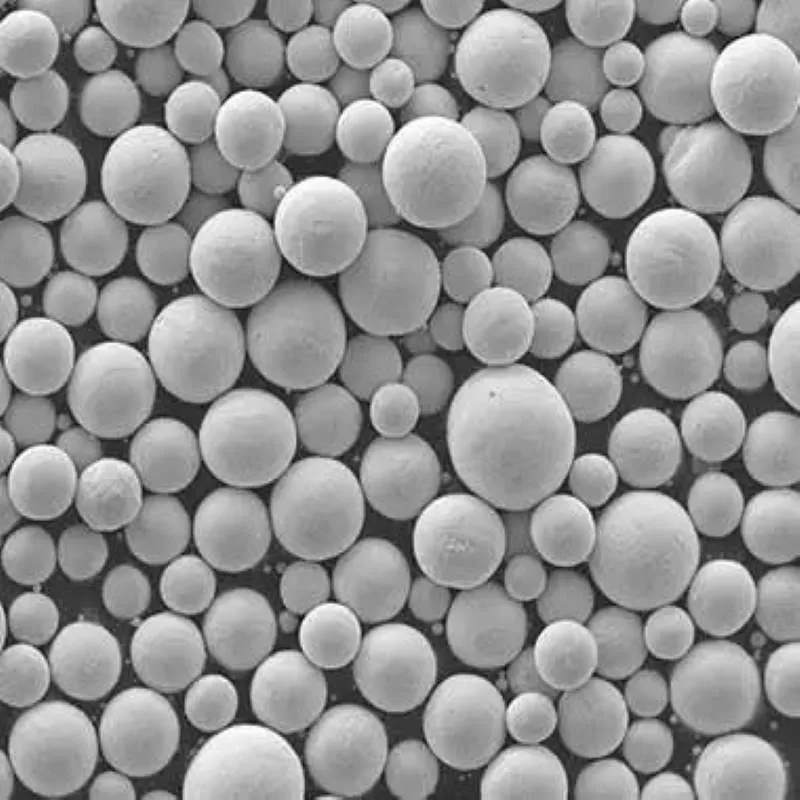
Spherical ASTM A182, Grade F11, Class 2
Product Code : SP-GSTI-530-CU
We provide Spherical ASTM A182, Grade F11, Class 2,Spherical ASTM A182, Grade F11, Class 2 is suitable for laser/electron beam augmentation, hot isostatic pressing, laser cladding, hot/cold spraying, and so on. The particles can be irregular and spherical. The particle distribution can reach the nanometer scale.,Spherical Particle Size,0-15μm,,15-45um,15-53μm, 20-63um,45-105um,45-150μm , 50-150um,75-150μm,or customized,Product purity and oxygen content can be customized according to requirements.
ASTM A182, Grade F11, Class 2 Product Information
-:-
For detailed product information, please contact sales.
-:
ASTM A182, Grade F11, Class 2 Synonyms
-:-
For detailed product information, please contact sales.
-:
-:-
For detailed product information, please contact sales.
-:
Spherical ASTM A182, Grade F11, Class 2 characteristics
-:-
For detailed product information, please contact sales.
-:
Spherical ASTM A182, Grade F11, Class 2 Particle Size
-:-
For detailed product information, please contact sales.
-:
-:-
-:-
0-15μm ,5-25μm, 15-45μm, 15-53μm,20-63um, 45-75μm, 45-105μm, 45-150μm ,75-150μm.
(Various granularities can be customized according to customer requirements)
-:-
For detailed product information, please contact sales.
-:
Spherical ASTM A182, Grade F11, Class 2 Applicable processes
-:-
For detailed product information, please contact sales.
-:
Laser/electron beam additive manufacturing (SLM/EBM, 3D printing)
Direct laser deposition (DLD)
Used in thermal spray (TSA)
Powder hot isostatic pressing (HIP)
Metal injection molding (MIM)
Powder metallurgy (PM)
Laser cladding (LC), etc.
-:-
For detailed product information, please contact sales.
-:
Spherical ASTM A182, Grade F11, Class 2 Chemical Composition
-:-
For detailed product information, please contact sales.
-:
-:-
For detailed product information, please contact sales.
-:
ASTM A182, Grade F11, Class 2 Product Information
-:-
For detailed product information, please contact sales.
-:
# **ASTM A182/A182M, Grade F11, Class 2: Forged or Rolled Alloy-Steel Pipe Flanges, Fittings, and Valves and Parts for High-Temperature Service**
## **Product Overview**
**ASTM A182 Grade F11 Class 2** is a chromium-molybdenum (Cr-Mo) low-alloy steel specification for forged or rolled components intended for high-temperature service, distinguished from Class 1 by its **quenched and tempered heat treatment condition**. This material belongs to the "1¼Cr-½Mo" alloy family (UNS K11597) and is specifically processed to achieve higher strength levels while maintaining adequate toughness and creep resistance. The "Class 2" designation indicates the material has been **austenitized, quenched, and tempered**, resulting in a tempered martensitic/bainitic microstructure that provides superior mechanical properties compared to the normalized and tempered Class 1 condition, particularly in thicker sections.
---
## **GOVERNING STANDARD**
- **Primary Standard:** ASTM A182/A182M - Standard Specification for Forged or Rolled Alloy and Stainless Steel Pipe Flanges, Forged Fittings, and Valves and Parts for High-Temperature Service
- **Latest Revision:** A182/A182M-24
- **Product Forms:** Forgings, rings, bars, and shaped pieces for piping components
- **Scope:** High-strength components for pressure vessels, valves, flanges, and fittings operating at elevated temperatures
---
## **CHEMICAL COMPOSITION**
### **Elemental Requirements (Heat Analysis, wt%)**
| Element | Minimum | Maximum | Metallurgical Function in Class 2 |
|---------|---------|---------|-----------------------------------|
| **Carbon (C)** | 0.10 | 0.20 | Higher carbon range for increased hardenability and strength |
| **Manganese (Mn)** | 0.30 | 0.80 | Enhanced for better hardenability in thicker sections |
| **Phosphorus (P)** | - | 0.025 | Impurity control (strict limit for toughness) |
| **Sulfur (S)** | - | 0.025 | Impurity control |
| **Silicon (Si)** | 0.50 | 1.00 | Deoxidizer, strength, oxidation resistance |
| **Chromium (Cr)** | 1.00 | 1.50 | Oxidation resistance, carbide formation, hardenability |
| **Molybdenum (Mo)** | 0.44 | 0.65 | Creep strength, temper resistance, hydrogen attack resistance |
| **Nickel (Ni)** | - | 0.50 | Impurity control (intentional addition rare) |
| **Copper (Cu)** | - | 0.25 | Impurity control |
| **Vanadium (V)** | - | 0.03 | Impurity control (intentional addition rare) |
### **Key Differences from Class 1:**
- **Carbon Content:** Higher maximum (0.20% vs 0.15%) to achieve required strength after quenching and tempering
- **Manganese Range:** Upper limit increased to 0.80% for improved through-thickness hardenability
- **Typical Chemistry:** Often balanced toward higher C (0.15-0.18%) and Mn (0.50-0.70%) for optimal quench response
---
## **HEAT TREATMENT REQUIREMENTS (Class 2)**
### **Mandatory Heat Treatment Sequence:**
1. **Austenitizing:** 954-1010°C (1750-1850°F) - fully austenitize
2. **Quenching:** Liquid quench (water or oil) to below 200°C (400°F)
3. **Tempering:** ≥ 677°C (1250°F) for sufficient time
4. **Cooling:** Air cool from tempering temperature
### **Minimum Tempering Parameters:**
- **Temperature:** 677°C (1250°F) minimum
- **Time:** 1 hour per inch (25 mm) of thickness, minimum 30 minutes
- **Purpose:** Achieve required mechanical properties, relieve quenching stresses
### **Microstructural Characteristics:**
- **As-Quenched:** Lath martensite with some bainite (depending on section size)
- **After Tempering:** Tempered martensite/bainite with fine, dispersed alloy carbides
- **Carbide Types:** M₃C, M₇C₃, Mo₂C
- **Prior Austenite Grain Size:** ASTM 5 or finer (typically finer than Class 1)
### **Section Size Considerations:**
- **Maximum Effective Quenched Thickness:** ~75-100 mm (3-4 inches) for full martensitic transformation
- **For Thicker Sections:** May require modified chemistry or special quenching techniques
---
## **MECHANICAL PROPERTIES**
### **Minimum Requirements (ASTM A182 Table 1)**
| Property | Minimum Requirement | Test Standard |
|----------|---------------------|---------------|
| **Tensile Strength** | 485 MPa (70 ksi) | ASTM A370 |
| **Yield Strength (0.2% offset)** | 275 MPa (40 ksi) | ASTM A370 |
| **Elongation (in 50 mm or 2 in)** | 20% | ASTM A370 |
| **Reduction of Area** | 30% | ASTM A370 |
| **Hardness** | ≤ 197 HB (≤ 93 HRB) | ASTM A370 |
### **Typical Achieved Properties (Quenched & Tempered):**
| Property | Typical Range | Comments |
|----------|---------------|----------|
| **Tensile Strength** | 550-690 MPa (80-100 ksi) | 15-20% higher than Class 1 |
| **Yield Strength** | 345-485 MPa (50-70 ksi) | 25-35% higher than Class 1 |
| **Elongation** | 22-30% | Slightly lower than Class 1 |
| **Reduction of Area** | 45-60% | |
| **Hardness** | 170-190 HB | Near maximum allowable |
### **High-Temperature Properties:**
| Temperature | Yield Strength (Typical) | Creep Rupture Strength (100,000h) |
|-------------|-------------------------|-----------------------------------|
| **427°C (800°F)** | ~275 MPa | ~85 MPa |
| **538°C (1000°F)** | ~200 MPa | ~38 MPa |
| **593°C (1100°F)** | ~155 MPa | ~16 MPa |
*Note: Slightly better high-temperature strength than Class 1 due to finer microstructure*
### **Impact Properties (if specified/tested):**
- **Charpy V-Notch @ 21°C (70°F):** Typically 40-80 J (30-60 ft-lb)
- **Ductile-to-Brittle Transition:** Lower than Class 1 due to finer microstructure
---
## **PHYSICAL PROPERTIES**
| Property | Value | Conditions |
|----------|-------|------------|
| **Density** | 7.85 g/cm³ (0.284 lb/in³) | Room temperature |
| **Melting Point** | ~1480°C (2700°F) | Approximate |
| **Thermal Conductivity** | 41.5 W/m·K | 100°C |
| | 38.0 W/m·K | 500°C |
| **Coefficient of Thermal Expansion** | 11.5 × 10⁻⁶/°C | 20-100°C |
| | 13.5 × 10⁻⁶/°C | 20-500°C |
| **Specific Heat Capacity** | 460 J/kg·K | 100°C |
| **Modulus of Elasticity** | 200 GPa (29 × 10⁶ psi) | Room temperature |
| | 170 GPa (24.7 × 10⁶ psi) | 500°C |
| **Poisson's Ratio** | 0.29 | |
---
## **HIGH-TEMPERATURE CHARACTERISTICS**
### **Oxidation Resistance:**
- **Service Limit:** Up to 593°C (1100°F) in oxidizing atmospheres
- **Scale Formation:** Protective Cr₂O₃ scale (similar to Class 1)
- **Long-term Stability:** Good up to design temperature
### **Creep and Rupture Strength:**
- **Design Basis:** ASME Boiler and Pressure Vessel Code, Section II, Part D
- **Maximum Allowable Stress Values:** Slightly higher than Class 1 at some temperatures
- **Creep Resistance:** Improved due to finer, more stable carbide distribution
### **Hydrogen Attack Resistance:**
- **Nelson Curve Compliant:** Per API 941 for hydrogen service
- **Temperature-Pressure Limits:** Identical to Class 1 (same chemistry base)
- **Advantage:** Potentially better resistance due to finer microstructure
---
## **INTERNATIONAL STANDARDS & EQUIVALENTS**
| Standard System | Designation | Equivalent Grade | Notes |
|-----------------|-------------|-----------------|-------|
| **ISO** | ISO 9327-2 | - | Similar Cr-Mo steels |
| **EN/DIN** | 13CrMo4-5 | 1.7335 | Similar chemistry, different heat treatment |
| **JIS** | SCMV 1 QT | - | Japanese quenched & tempered version |
| **GB (China)** | 15CrMoG | - | Chinese grade for high-temperature service |
| **ASME** | SA-182 F11 Class 2 | Identical | Same specification |
| **UNS** | K11597 | - | Unified Numbering System (same as Class 1) |
| **Common Names** | 1¼Cr-½Mo QT, 1.25Cr-0.5Mo QT | - | Industry terminology |
### **Related Material Specifications:**
- **Plate:** ASTM A387 Grade 11 Class 2
- **Pipe:** ASTM A335 P11 (typically Class 1 equivalent)
- **Tube:** ASTM A213 T11
- **Bar:** ASTM A739 Grade B11
---
## **MANUFACTURING & PROCESSING**
### **Forging Requirements:**
- **Forging Temperature Range:** 1093-1232°C (2000-2250°F)
- **Finishing Temperature:** ≥ 954°C (1750°F) for subsequent heat treatment
- **Important:** Final heat treatment must be after final shaping
### **Machinability:**
- **Relative Machinability:** 50% (compared to 100% for 1212 steel)
- **Cutting Tools:** Carbide recommended for production
- **Cutting Speed:** 25-40 m/min (turning)
- **Feed Rate:** 0.10-0.25 mm/rev
- **Coolant:** Essential for tool life and surface finish
- **Challenge:** Higher hardness than Class 1
### **Welding Characteristics:**
- **Weldability:** Good with proper procedures
- **Preheat Temperature:** 150-200°C (300-400°F) minimum
- **Interpass Temperature:** 150-300°C (300-572°F)
- **Post-Weld Heat Treatment:** Mandatory - 677-760°C (1250-1400°F)
- **Filler Metals:** AWS A5.5 E8018-B2, ER80S-B2
- **Special Consideration:** Higher restraint cracking risk due to higher strength
---
## **NONDESTRUCTIVE EXAMINATION REQUIREMENTS**
### **Mandatory Testing (per ASTM A182):**
- **Hydrostatic Testing:** Required for completed forgings
- **Visual Examination:** 100% of product surface
- **Dimensional Verification:** Per purchase order requirements
### **Additional for Class 2 (often specified):**
- **Ultrasonic Testing:** Per ASTM A388 for critical applications
- **Magnetic Particle Testing:** Per ASTM A275/A275M
- **Hardness Testing:** Multiple locations to verify heat treatment uniformity
---
## **PRIMARY APPLICATIONS**
### **Power Generation (High-Pressure/Temperature):**
- **Supercritical/Ultra-supercritical Boilers:** Headers, manifolds, attemperators
- **High-Pressure Steam Lines:** Main steam piping, hot reheat lines
- **Turbine Valves:** Stop valves, control valves, bypass valves
- **Boiler Feedwater Systems:** High-pressure pumps, valves
### **Petrochemical & Refining (Severe Service):**
- **Hydrocracker Units:** Reactor inlet/outlet piping, exchanger shells
- **Hydrotreater Units:** High-pressure piping, manifolds
- **Catalytic Reforming:** Reactor piping, heat exchanger shells
- **High-Pressure Separators:** Vessels and associated piping
### **Oil & Gas (High-Pressure Applications):**
- **Enhanced Oil Recovery:** Steam injection wellheads, piping (≥ 10 MPa)
- **Gas Compression:** Discharge piping, compressor valves
- **Subsea Systems:** High-pressure manifolds, connectors
- **Sour Gas Processing:** High-pressure vessels and piping
### **Chemical Processing:**
- **High-Pressure Reactors:** Closure components, nozzles
- **Ammonia Synthesis:** High-pressure exchanger shells, piping
- **Methanol Synthesis:** Loop piping, exchanger shells
- **Polyethylene/Polypropylene:** High-pressure reactor components
### **Industrial Boilers & Heaters:**
- **Waste Heat Boilers:** High-pressure modules
- **Process Heaters:** Coil supports, headers
- **Cogeneration Plants:** High-pressure steam components
---
## **DESIGN CONSIDERATIONS**
### **Advantages over Class 1:**
1. **Higher Strength:** Allows thinner walls for same pressure rating
2. **Better Through-Thickness Properties:** More uniform in thick sections
3. **Improved Toughness:** Finer grain structure
4. **Higher Allowable Stresses:** Particularly at intermediate temperatures
### **Pressure Vessel Design (ASME BPVC Section VIII):**
- **Maximum Allowable Stress:** Higher values than Class 1 in ASME Section II, Part D
- **Design Temperature Range:** -29°C to 593°C (-20°F to 1100°F)
- **Joint Efficiency:** Similar to Class 1
### **Piping Design (ASME B31.1/B31.3):**
- **Pressure-Temperature Ratings:** Higher than Class 1 for same wall thickness
- **Wall Thickness Reduction:** Potential 10-15% reduction compared to Class 1 for same service
---
## **CORROSION RESISTANCE**
### **Similar to Class 1:**
- **Atmospheric:** Good (better than carbon steel)
- **Fresh Water:** Good
- **Sea Water:** Limited (not recommended for continuous immersion)
- **High-Temperature Oxidation:** Good to 593°C (1100°F)
### **Hydrogen Service:**
- **Compliant with:** API 941 Nelson Curves
- **Temperature-Pressure Limits:** Same as Class 1
- **Microstructural Advantage:** Finer carbides may provide marginally better resistance
### **Special Considerations:**
- **Stress Corrosion Cracking:** Similar susceptibility to Class 1
- **Polythionic Acid SCC:** Susceptible during shutdowns - requires proper neutralization
---
## **QUALITY ASSURANCE & CERTIFICATION**
### **Enhanced Requirements for Class 2:**
- **Heat Treatment Documentation:** Detailed records of austenitizing, quenching, and tempering
- **Hardness Survey:** Often required to verify uniformity
- **Mechanical Testing:** Typically more extensive than Class 1
### **Mill Certification Requirements:**
- **Heat Number Traceability:** Required
- **Full Chemical Analysis:** Heat and product analysis
- **Mechanical Test Report:** Tensile, hardness, impact (if specified)
- **Heat Treatment Record:** Complete cycle documentation
- **NDE Reports:** If specified
---
## **STORAGE & HANDLING**
- **Indoor Storage:** Recommended to prevent rusting
- **Protective Coatings:** Oil or VCI protectants for long-term storage
- **Handling:** Standard steel handling - higher strength requires proper lifting equipment
- **Safety:** Standard industrial safety practices
---
## **LIMITATIONS & SPECIAL CONSIDERATIONS**
### **Temperature Limitations:**
- **Maximum Continuous:** 593°C (1100°F)
- **Short-term Excursions:** Up to 620°C (1150°F) acceptable
- **Minimum Temperature:** -29°C (-20°F) without impact testing
- **Thermal Fatigue:** Better resistance than Class 1 due to higher ductility
### **Fabrication Constraints:**
- **Post-Weld Heat Treatment:** Mandatory and critical
- **Hot Forming:** Requires re-quenching and tempering
- **Cold Forming:** More difficult than Class 1 due to higher strength
- **Machining:** More challenging than Class 1
### **Economic Considerations:**
- **Higher Cost:** Due to additional heat treatment steps
- **Justification:** Thinner sections, weight savings, higher pressure capability
- **Life Cycle Cost:** Often favorable despite higher initial cost
---
## **SELECTION CRITERIA: CLASS 1 vs CLASS 2**
| Parameter | F11 Class 1 | F11 Class 2 | Recommendation |
|-----------|-------------|-------------|----------------|
| **Strength Requirements** | Moderate | High | Choose Class 2 for high-pressure applications |
| **Section Thickness** | All | Preferably < 100 mm | Class 2 for thinner, high-strength sections |
| **Fabrication Complexity** | Standard | More complex | Class 1 for simpler fabrication |
| **Cost Sensitivity** | Cost-effective | Higher cost | Class 1 for budget-sensitive projects |
| **Temperature Service** | Up to 593°C | Up to 593°C | Similar |
| **Hydrogen Service** | Suitable | Suitable | Similar performance |
| **Delivery Time** | Shorter | Longer | Class 1 for faster delivery |
---
## **TECHNICAL REFERENCES**
1. **ASTM A182/A182M-24:** Governing material specification
2. **ASME Boiler and Pressure Vessel Code, Section II, Part D:** Material properties for design
3. **API 941:** Steels for Hydrogen Service at Elevated Temperatures and Pressures
4. **ASME B31.1 & B31.3:** Power & Process Piping Codes
5. **ASTM A388/A388M:** Practice for Ultrasonic Examination of Heavy Steel Forgings
6. **NACE MR0175/ISO 15156:** Materials for use in H₂S-containing environments
---
**Disclaimer:** This technical data sheet provides general information about ASTM A182 Grade F11 Class 2. For specific applications, always consult the latest edition of the ASTM standard, applicable codes (ASME, API, etc.), and conduct appropriate engineering analysis. Material properties can vary based on manufacturing processes, heat treatment, and section size. The quenched and tempered condition requires careful control and verification to ensure consistent properties.
-:-
For detailed product information, please contact sales.
-:
ASTM A182, Grade F11, Class 2 Specification
Dimensions
Size:
Diameter 20-1000 mm Length <7231 mm
Size:We can customized as required
Standard:
Per your request or drawing
We can customized as required
Properties(Theoretical)
Chemical Composition
-:-
For detailed product information, please contact sales.
-:
ASTM A182, Grade F11, Class 2 Properties
-:-
For detailed product information, please contact sales.
-:
Spherical ASTM A182, Grade F11, Class 2 Particle Size Description
-:-
For detailed product information, please contact sales.
-:
Applications of Spherical ASTM A182, Grade F11, Class 2
-:-
For detailed product information, please contact sales.
-:
-:-
For detailed product information, please contact sales.
-:
Applications of ASTM A182, Grade F11, Class 2
-:-
For detailed product information, please contact sales.
-:
Chemical Identifiers ASTM A182, Grade F11, Class 2
-:-
For detailed product information, please contact sales.
-:
Packing of ASTM A182, Grade F11, Class 2
-:-
For detailed product information, please contact sales.
-:
Standard Packing:
-:-
For detailed product information, please contact sales.
-:
Typical bulk packaging includes palletized plastic 5 gallon/25 kg. pails, fiber and Steel Spherical Powder drums to 1 ton super sacks in full container (FCL) or truck load (T/L) quantities. Research and sample quantities and hygroscopic, oxidizing or other air sensitive materials may be packaged under argon or vacuum. Solutions are packaged in polypropylene, plastic or glass jars up to palletized 3702 gallon liquid totes Special package is available on request. E FORUs’ is carefully handled to minimize damage during storage and transportation and to preserve the quality of our products in their original condition