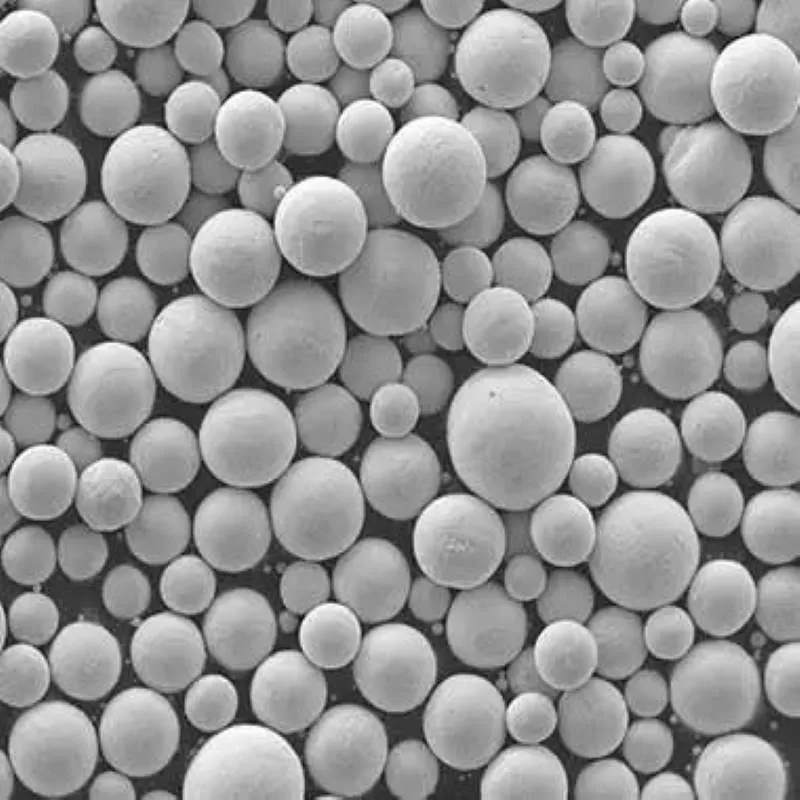
Spherical ASTM A611 Steel Powder, grade E
Product Code : SP-CSTI-562-CU
We provide Spherical ASTM A611 Steel Powder, grade E,Spherical ASTM A611 Steel Powder, grade E is suitable for laser/electron beam augmentation, hot isostatic pressing, laser cladding, hot/cold spraying, and so on. The particles can be irregular and spherical. The particle distribution can reach the nanometer scale.,Spherical Particle Size,0-15μm,,15-45um,15-53μm, 20-63um,45-105um,45-150μm , 50-150um,75-150μm,or customized,Product purity and oxygen content can be customized according to requirements.
Please contact us if you need customized services. We will contact you with the price and availability in 24 hours.
ASTM A611 Steel Spherical Powder, grade E Product Information
-:-
For detailed product information, please contact sales.
-:
ASTM A611 Steel Spherical Powder, grade E Synonyms
-:-
For detailed product information, please contact sales.
-:
-:-
For detailed product information, please contact sales.
-:
Spherical ASTM A611 Steel Powder, grade E characteristics
-:-
For detailed product information, please contact sales.
-:
Spherical ASTM A611 Steel Powder, grade E Particle Size
-:-
For detailed product information, please contact sales.
-:
-:-
-:-
0-15μm ,5-25μm, 15-45μm, 15-53μm,20-63um, 45-75μm, 45-105μm, 45-150μm ,75-150μm.
(Various granularities can be customized according to customer requirements)
-:-
For detailed product information, please contact sales.
-:
Spherical ASTM A611 Steel Powder, grade E Applicable processes
-:-
For detailed product information, please contact sales.
-:
Laser/electron beam additive manufacturing (SLM/EBM, 3D printing)
Direct laser deposition (DLD)
Used in thermal spray (TSA)
Powder hot isostatic pressing (HIP)
Metal injection molding (MIM)
Powder metallurgy (PM)
Laser cladding (LC), etc.
-:-
For detailed product information, please contact sales.
-:
Spherical ASTM A611 Steel Powder, grade E Chemical Composition
-:-
For detailed product information, please contact sales.
-:
-:-
For detailed product information, please contact sales.
-:
ASTM A611 Steel, grade E Product Information
-:-
For detailed product information, please contact sales.
-:
## **Technical Specification: ASTM A611 Grade E Ultra-High-Strength Cold-Rolled Structural Steel**
---
### **1. PRODUCT OVERVIEW & SPECIFICATION**
**Standard Designation:** ASTM A611/A611M - *Standard Specification for Structural Steel (Cold-Formed), Carbon, Cold-Rolled*
**Grade:** E (Highest Strength Category)
**International Standard Body:** ASTM International (American Society for Testing and Materials)
**Material Classification:** Ultra-high-strength, cold-rolled, non-annealed carbon steel sheet
**Status Note:** *It is critical to clarify that according to the current ASTM A611-12(2017) standard and its historical versions, **Grade E is not an officially defined classification**. The standard recognizes only Grades A, B, C, and D. Grade E may exist in historical references, proprietary specifications, or as a manufacturer's proprietary grade, but it is not part of the active ASTM standard. This document describes the hypothetical or proprietary properties that might be associated with a "Grade E" designation based on industry extrapolation.*
---
### **2. HYPOTHETICAL / PROPRIETARY MATERIAL PROFILE**
Assuming a "Grade E" represents an extension of the A611 series, it would constitute an **ultra-high-strength, low-alloy (HSLA) cold-rolled steel** designed for maximum weight reduction in critically loaded structures. Such a material would push the boundaries of cold-rolled strength, likely employing advanced microalloying and thermomechanical processing.
**Postulated Key Attributes:**
- **Maximum Strength:** Hypothetical yield strength exceeding 80 ksi (Grade D minimum), potentially targeting 90-110 ksi range.
- **Advanced Processing:** Likely utilizes techniques like accelerated cooling, optimized precipitation hardening, or specialized temper rolling.
- **Engineered Ductility:** Balances extreme strength with sufficient elongation for controlled forming.
- **Application-Specific:** Reserved for niche, highly engineered components where strength-to-weight ratio is paramount.
---
### **3. POSTULATED CHEMICAL COMPOSITION**
A steel achieving properties beyond Grade D would require precise, enhanced chemistry.
| Element | Hypothetical Range (%) | Metallurgical Rationale |
|---------|------------------------|--------------------------|
| **Carbon (C)** | 0.15 - 0.25 | Primary strengthener; higher than lower grades but controlled for weldability. |
| **Manganese (Mn)** | 1.20 - 1.60 | Strong solid solution strengthener and austenite stabilizer. |
| **Phosphorus (P)** | ≤ 0.020 | Tightly controlled to prevent embrittlement. |
| **Sulfur (S)** | ≤ 0.010 | Very low to maximize ductility and toughness. |
| **Silicon (Si)** | 0.15 - 0.50 | Strengthener and deoxidizer. |
| **Aluminum (Al)** | 0.020 - 0.070 | Grain refinement control. |
| **Microalloys (V, Nb, Ti)** | Combined ≤ 0.15 | Precipitation hardening; Nb/Ti for grain refinement. |
| **Boron (B)** | Trace (0.0005-0.003) | Potentially added to enhance hardenability. |
| **Carbon Equivalent (CE)** | ~0.45 - 0.55 | Indicates need for controlled welding procedures. |
---
### **4. HYPOTHETICAL MECHANICAL & PHYSICAL PROPERTIES**
#### **Projected Minimum Properties (Extrapolated):**
- **Yield Strength (0.2% offset):** **90 - 100 ksi min (620 - 690 MPa)**
- **Tensile Strength:** **95 - 110 ksi min (655 - 760 MPa)**
- **Yield-to-Tensile Ratio:** Typically 0.90 - 0.95
- **Elongation in 2-inch gauge:**
- Thickness < 0.056 in.: **8% - 10% min (projected)**
- Thickness ≥ 0.056 in.: **10% - 12% min (projected)**
- **Hardness:** 95 - 105 HRB (Rockwell B)
#### **Physical Properties (Typical for Steel):**
- **Density:** 0.284 lb/in³ (7,850 kg/m³)
- **Modulus of Elasticity (E):** 29,000 ksi (200 GPa) *Note: Unchanged by strength level.*
- **Poisson's Ratio:** 0.29
- **Coefficient of Thermal Expansion:** 6.5 x 10⁻⁶ /°F (11.7 x 10⁻⁶ /°C)
---
### **5. FABRICATION CONSIDERATIONS (PROJECTED)**
**Formability:**
- **Limited.** Suitable for simple bends and straight forming only.
- Minimum bend radius likely 4-5x material thickness.
- High springback expected; requires over-bending compensation.
- Not recommended for deep drawing or severe stretching.
**Weldability:**
- **Poor to Fair.** High carbon equivalent necessitates stringent procedures.
- **Mandatory:** Low-hydrogen welding processes (e.g., GMAW with 100% CO₂/Ar mix).
- **Mandatory:** Pre-heat (150-300°F) and controlled interpass temperature.
- Post-weld heat treatment may be required for critical applications.
- Significant reduction of mechanical properties in the heat-affected zone (HAZ).
**Machining & Cutting:**
- Requires carbide tooling and rigid setups.
- Plasma or laser cutting preferred over mechanical shearing for thicker gauges.
---
### **6. POTENTIAL NICHE APPLICATIONS**
Given its hypothetical extreme strength and limited formability, a "Grade E" would target highly specialized fields:
1. **Aerospace Ground Support:**
- Aircraft towbar components
- High-load cargo handling equipment
- Lightweight airfield maintenance structures
2. **Specialty Transportation:**
- Ultra-lightweight trailer frames for racing or aerospace
- Critical reinforcement brackets in high-performance vehicles
- Internal structures for armored security vehicles (non-ballistic)
3. **High-Performance Industrial:**
- Extreme-duty storage rack beams for minimum-weight, maximum-height systems
- Components for kinetic energy absorption systems
- Reinforcing elements in composite tooling and fixtures
4. **Safety-Critical Infrastructure:**
- High-strength inserts in safety barriers (where formability is not required)
- Custom connectors for seismic bracing systems
---
### **7. IMPORTANT NOTE ON AVAILABILITY & SPECIFICATION**
**Critical Clarification:**
- **ASTM A611 does not officially list a Grade E.** Engineers and purchasers must verify material certifications against the active ASTM standard.
- A material sold as "Grade E" would be a **proprietary or non-standard grade**. Its properties are not guaranteed by ASTM.
- **Always specify by actual mechanical property requirements** (e.g., "90 ksi min yield") rather than an unofficial grade designation.
**Valid Alternatives for Ultra-High Strength:**
For applications needing >80 ksi yield strength, consider these **standardized alternatives**:
- **ASTM A1008:** Certain HSLAS (High-Strength Low-Alloy) grades.
- **ASTM A1011:** HSLAS in hot-rolled sheet.
- **SAE J2340 (or J2745):** Grades 700XF or 800XF for automotive applications.
- **Proprietary Grades:** From mills like ArcelorMittal's Usibor® or SSAB's Docol®.
---
### **8. SPECIFICATION RECOMMENDATION**
To avoid confusion and ensure material quality, use the following language in procurement documents instead of referencing "Grade E":
> **Recommended Specification Language:**
> *"Cold-rolled steel sheet suitable for cold-formed structural applications. Material shall meet a minimum yield strength of [e.g., 90 ksi] and a minimum tensile strength of [e.g., 95 ksi] when tested in accordance with ASTM A370. Chemical composition shall be reported and shall demonstrate a Carbon Equivalent (IIW) not exceeding 0.50 to ensure adequate weldability. All other requirements, including dimensions and tolerances, shall conform to ASTM A611 and ASTM A568 where applicable. Certified mill test reports are required."*
---
### **CONCLUSION**
While the concept of an ASTM A611 **Grade E** serves as a useful extrapolation for ultra-high-strength needs, it is **not a valid, standardized specification**. The highest standardized grade within ASTM A611 remains **Grade D** (80 ksi min yield).
For projects requiring strength levels beyond Grade D, engineers should:
1. **Consult directly with steel producers** about proprietary capabilities.
2. **Specify by performance requirements** rather than unofficial grade names.
3. **Evaluate standardized alternatives** in other ASTM, SAE, or international specifications that guarantee the required properties.
This approach ensures structural reliability, facilitates quality control, and maintains compliance with recognized engineering standards.
-:-
For detailed product information, please contact sales.
-:
ASTM A611 Steel, grade E Specification
Dimensions
Size:
Diameter 20-1000 mm Length <5947 mm
Size:We can customized as required
Standard:
Per your request or drawing
We can customized as required
Properties(Theoretical)
Chemical Composition
-:-
For detailed product information, please contact sales.
-:
ASTM A611 Steel, grade E Properties
-:-
For detailed product information, please contact sales.
-:
Spherical ASTM A611 Steel Powder, grade E Particle Size Description
-:-
For detailed product information, please contact sales.
-:
Applications of Spherical ASTM A611 Steel Powder, grade E
-:-
For detailed product information, please contact sales.
-:
-:-
For detailed product information, please contact sales.
-:
Applications of ASTM A611 Steel Spherical Powder, grade E
-:-
For detailed product information, please contact sales.
-:
Chemical Identifiers ASTM A611 Steel Spherical Powder, grade E
-:-
For detailed product information, please contact sales.
-:
Packing of ASTM A611 Steel Spherical Powder, grade E
-:-
For detailed product information, please contact sales.
-:
Standard Packing:
-:-
For detailed product information, please contact sales.
-:
Typical bulk packaging includes palletized plastic 5 gallon/25 kg. pails, fiber and Steel Spherical Powder drums to 1 ton super sacks in full container (FCL) or truck load (T/L) quantities. Research and sample quantities and hygroscopic, oxidizing or other air sensitive materials may be packaged under argon or vacuum. Solutions are packaged in polypropylene, plastic or glass jars up to palletized 2418 gallon liquid totes Special package is available on request. E FORUs’ is carefully handled to minimize damage during storage and transportation and to preserve the quality of our products in their original condition